

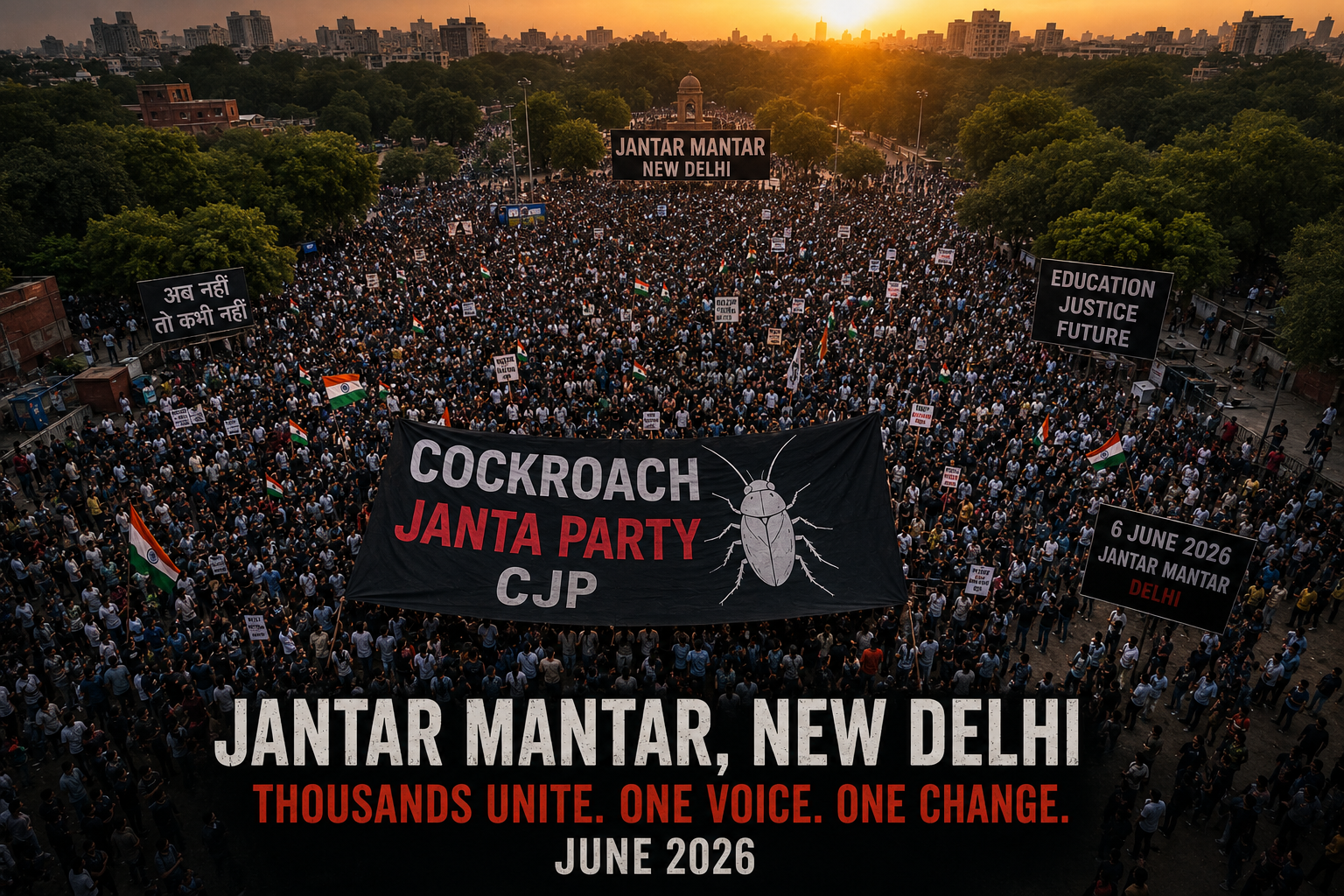
Right now — as you read this — Abhijeet Dipke is either on a flight or has already landed in India. Thousands of young Indians are making their way to Jantar Mantar in New Delhi. Delhi Police have deployed heavy security. The Delhi High Court has heard a plea against the protest. And 22 million social media followers are watching every update in real time. What happens in the next few hours will define the CJP movement’s future — and tell every young Indian something important about the state of their democracy. Here are the 4 most likely scenarios for today — and what each one means.
🎭 The Stage Is Set — What We Know Right Now
Before the scenarios, here are the confirmed facts as of this morning:
- Abhijeet Dipke publicly confirmed he left the United States and is returning to India to lead the protest
- The protest is scheduled at Jantar Mantar, New Delhi — India’s designated democratic protest venue
- Delhi Police have beefed up security around Jantar Mantar — confirming they are taking this seriously
- An NGO called Save India Foundation filed a plea in the Delhi High Court against the protest — the court heard it before a vacation bench
- CJP has appointed three spokespersons — investigative journalist Saurav Das, filmmaker Vijeta Dahiya, and former management consultant Ashutosh Ranka — signalling organised, peaceful intent
- Actor Prakash Raj has publicly expressed support for the movement
- Dipke has stated clearly: “Ready for arrest. Will stay here. Won’t return to US.”
- Supporters have said they will meet him at the airport and proceed together to Jantar Mantar
This is not a disorganised flash mob. This is a planned, constitutionally grounded, peaceful democratic protest. What the government does with it will reveal its own calculations about political cost and democratic values.
🔮 Scenario 1 — Dipke Is Arrested at the Airport
Probability: Medium
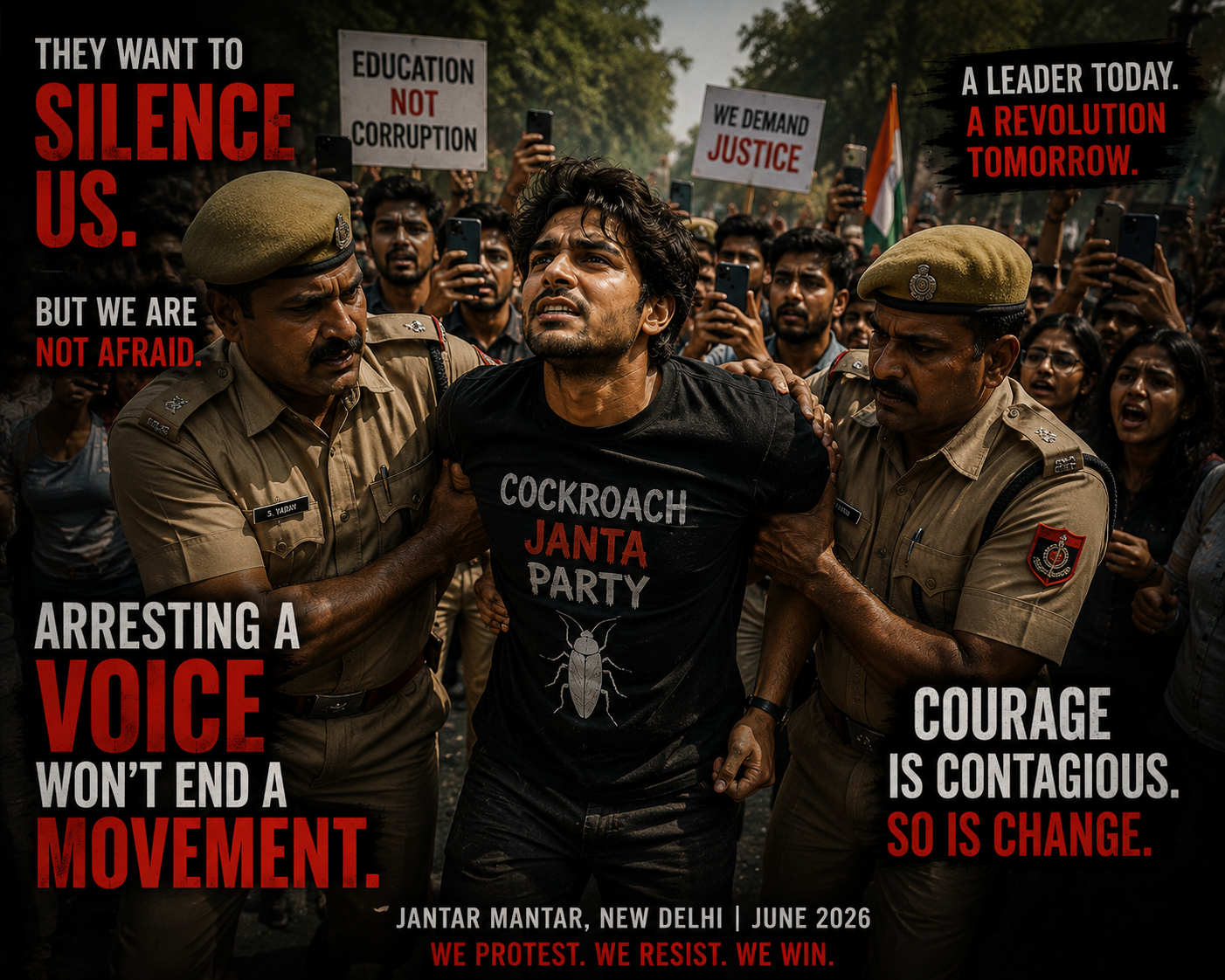
Dipke himself has anticipated this outcome. He has publicly said he expects to be arrested upon arrival. The government has legal tools available — preventive detention under Section 151 CrPC, which allows police to arrest someone to prevent commission of a cognizable offence. They do not need to wait for him to do anything at Jantar Mantar. They can arrest him the moment he steps off the plane.
What happens if he is arrested at the airport: This is the scenario the government should fear most — not because of what Dipke does, but because of what it looks like. Images of a 30-year-old man being handcuffed at an Indian airport for the crime of planning a peaceful protest will go around the world within minutes. International media — CBS News, Foreign Policy, Al Jazeera, BBC — are already watching this story. An airport arrest hands the CJP movement exactly the martyrdom narrative it needs to grow from 22 million followers to 50 million.
History is instructive here. When Anna Hazare was arrested in 2011 before his fast against corruption, the arrest itself triggered a massive public backlash that forced the government to release him within hours. The optics of arresting peaceful protesters in a democracy almost always backfire.
What this means for the movement: An airport arrest would be the single best thing that could happen to the CJP’s momentum. It would transform Dipke from a social media personality into a democratic martyr — and every arrest image would become a recruitment poster.
🕊️ Scenario 2 — He Is Allowed Through But Protest Is Blocked
Probability: High
This is the most likely scenario based on how Indian governments typically handle such situations. Dipke lands. He is not arrested at the airport. But when the crowd attempts to march to Jantar Mantar, police deny permission, set up barricades, and use Section 144 (prohibitory orders) to prevent assembly.
The Delhi High Court hearing on the NGO’s plea adds legal cover for this approach. If the court issues even a partial order — not banning the protest but placing conditions on it — police can use that as justification to block specific gatherings, specific routes, or specific activities.
What this means for the movement: A blocked protest still generates massive content. Supporters filming police barricades, Dipke speaking to cameras outside the protest zone, crowds gathering despite restrictions — all of this becomes viral material. The movement gets coverage without Dipke having to say a word from a stage. The government’s attempt to suppress the protest becomes the story.
✅ Scenario 3 — Protest Happens Peacefully and Powerfully
Probability: Medium
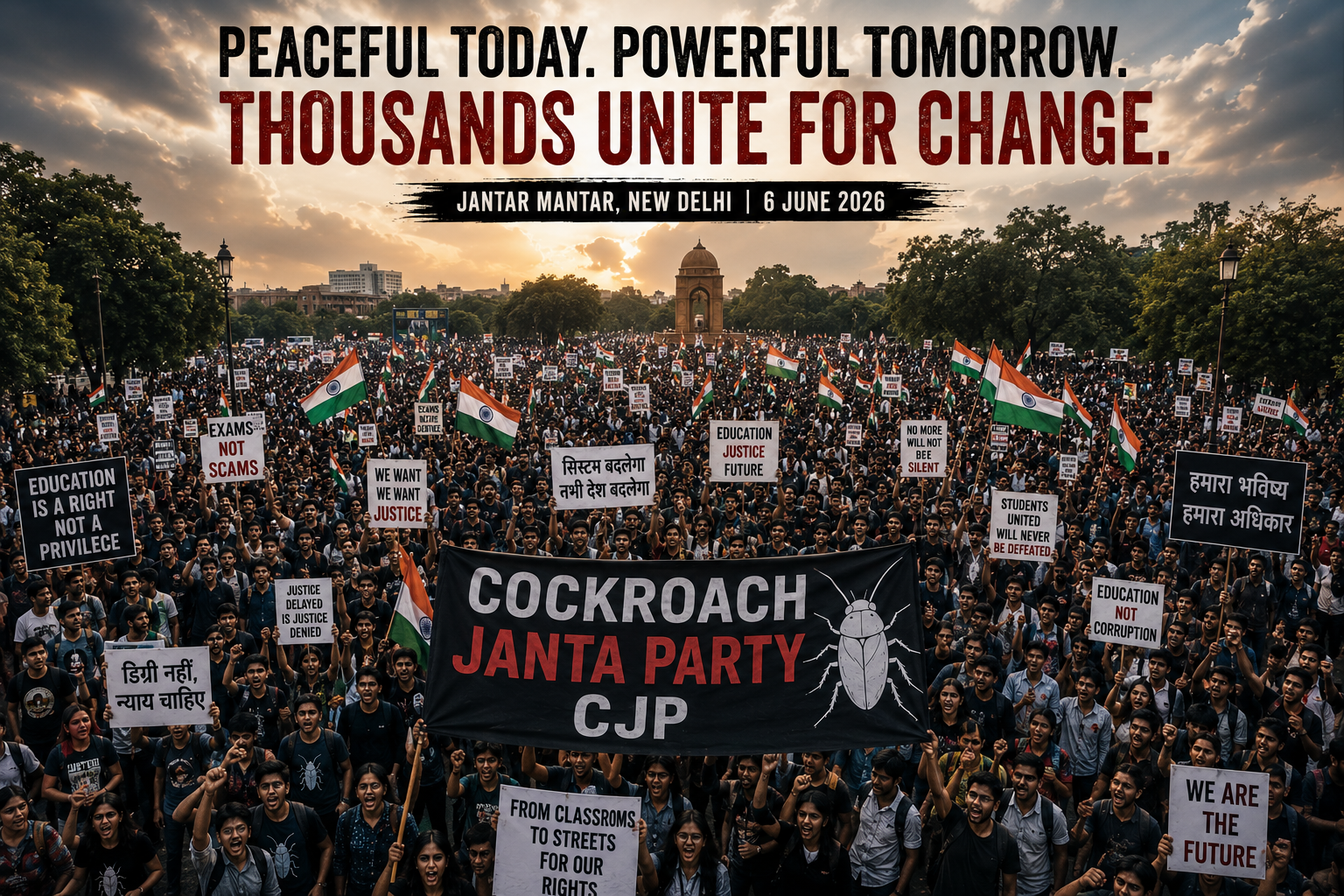
This is Dipke’s stated goal — and the constitutionally correct outcome. He lands. He goes to Parliament Street police station to formally request permission for a peaceful protest at Jantar Mantar. Permission is granted. Thousands gather. Speeches are made. Demands are presented. The protest concludes peacefully.
This scenario is actually the hardest for the government to manage — not because the protest itself is dangerous, but because a peaceful, well-organised, massive protest at Jantar Mantar is undeniable proof of democratic energy that cannot be dismissed as fringe or extremist.
If tens of thousands of young Indians gather peacefully at Jantar Mantar demanding the Education Minister’s resignation — with no violence, no property damage, no inflammatory speeches — the government faces a pure political problem. It cannot call them anti-national. It cannot frame them as troublemakers. It has to respond to the substance of their demands.
What this means for the movement: A peaceful, massive protest is the best-case scenario for democracy — and would significantly increase pressure on Dharmendra Pradhan’s position. If lakhs gather and the images go global, the political cost of keeping Pradhan in office rises sharply.
⚡ Scenario 4 — The Movement Splits or Fizzles
Probability: Low but real
Social media movements do not always translate into street movements. The CJP has 22 million Instagram followers. But followers are not protesters. Following an Instagram page requires one tap. Walking to Jantar Mantar in June heat requires commitment, time, and the willingness to face potential police action.
There are also questions about the movement’s internal coherence. Viral social media claims that Dipke was deported from the United States — not returning voluntarily — have created confusion about his status and credibility. The CJP has denied these claims, but confusion spread by influencers can suppress turnout.
Additionally, Congress and AAP have both attempted to associate themselves with the CJP’s sentiment — which cuts both ways. Political party association gives the movement more reach but also exposes it to the accusation that it is politically motivated rather than genuinely student-led.
What this means: If the turnout at Jantar Mantar is small — a few hundred rather than tens of thousands — mainstream media will use it to declare the movement “just a social media bubble.” That narrative, whether fair or not, would be a significant setback. This is why the physical turnout today is arguably more important than the 22 million Instagram followers.
🧠 The Deeper Question — What Is the Government’s Calculation?

Every decision the government makes today is a political calculation — not a legal one.
The legal question is simple: Dipke has the constitutional right to peaceful protest. The CJP’s demands are lawful. There is no legal basis to prevent a peaceful assembly at Jantar Mantar.
The political question is more complex. The BJP is heading into state assembly elections in several states. Youth unemployment, examination failures, and institutional distrust are live issues with real electoral consequences. Being seen as the government that arrested a peaceful student protester demanding accountability for NEET failures is not a comfortable position — especially when student suicides following the exam cancellation have already generated enormous public sympathy.
On the other hand, allowing a massive protest demanding the Education Minister’s resignation — and then not removing him — makes the government look weak. And removing him under protest pressure sets a precedent that the government has historically been reluctant to establish.
There is no clean option for the government today. Every path involves a political cost. The question is which cost they have decided is more manageable.
📱 How to Follow Today’s Events in Real Time
Since 90% of Indian mainstream media is not covering this story adequately, here is where to follow today’s developments as they happen:
- Instagram: Follow @cockroachjantaparty for official CJP updates
- X (Twitter): Search #CJPProtest #JantarMantar #AbhijeetDipke for live updates
- YouTube: Independent journalists and citizen reporters will stream live from Jantar Mantar
- The Federal, The Wire, Newslaundry: Independent media outlets covering this story seriously
- International: Al Jazeera, BBC India, and Reuters for international perspective
Whatever happens today — arrest, blocked protest, peaceful assembly, or disappointing turnout — update this page and share the result. The story of June 6, 2026 is still being written. And every Indian who is paying attention is part of writing it.
🎯 The Bottom Line
Four scenarios. Four very different outcomes. But one consistent truth underneath all of them:
The fact that a 30-year-old man feels he must fly home from America and risk arrest to demand that someone be held accountable for examination failures that killed students — that fact alone tells you something important about where India’s institutions stand in 2026.
In a functioning democracy, the accountability mechanism works before someone has to sacrifice their safety to demand it. Ministers resign when systems fail. Institutions investigate themselves honestly. Students do not have to march to Jantar Mantar to be heard.
Today at Jantar Mantar, India’s young people are not just protesting NEET. They are asking whether the democracy their textbooks describe — the one with fundamental rights and accountable governance — is the democracy they actually live in.
By tonight, we will have part of an answer.
Watch this space. 🪳
❓ FAQs
What time is the CJP protest at Jantar Mantar today?
The protest is scheduled for June 6, 2026 at Jantar Mantar, New Delhi. Dipke planned to first go to Parliament Street police station to formally request permission before proceeding to Jantar Mantar.
Can Dipke legally be arrested today?
Peaceful protest is a fundamental right under Article 19(1)(b) of the Indian Constitution. However, police can use preventive detention provisions to detain someone if they believe a cognizable offence is about to be committed. Whether they exercise that power today is a political decision, not a purely legal one.
Is the Cockroach Janta Party a registered political party?
No. The CJP is not registered with the Election Commission of India. It is a satirical political movement founded May 16, 2026. It has over 22 million Instagram followers but is not a formal political party.
What are the CJP’s main demands?
Resignation of Education Minister Dharmendra Pradhan, fundamental reform of the NTA, accountability for student suicides following NEET 2026 cancellation, and transparent merit-based government recruitment examinations.
Was Dipke really deported from the US?
No. The CJP has clearly stated that Dipke is returning voluntarily to lead the protest. Claims of deportation circulated by some social media influencers have been characterised by CJP supporters as deliberate disinformation designed to discredit the movement ahead of the protest.