
📍 Chapter 2: Reshaping India’s Political Map
CBSE Class 8 Social Science — Exploring Society: India and Beyond | Part 1
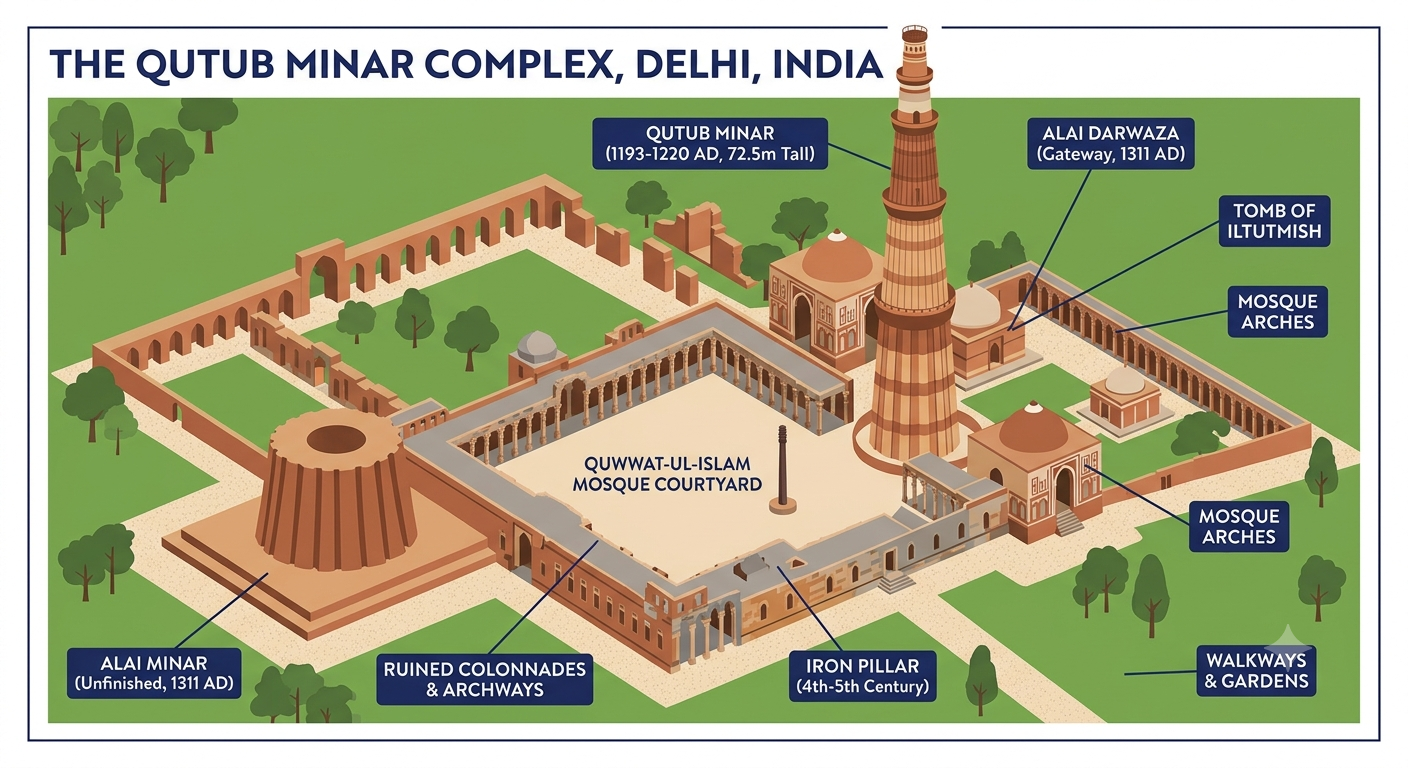
Fig. 2.1: An aerial view of the Qutub Minar complex, Delhi
🎯 The Big Questions
- How did foreign invasions and the rise of new dynasties reshape India’s political boundaries during this period?
- How did Indian society respond to invasions? How did India’s economy adapt during times of political instability?
- What impact did this period have on the lives of the people?
📖 Chapter Index
⚔️ Rise and Fall of the Delhi Sultanate
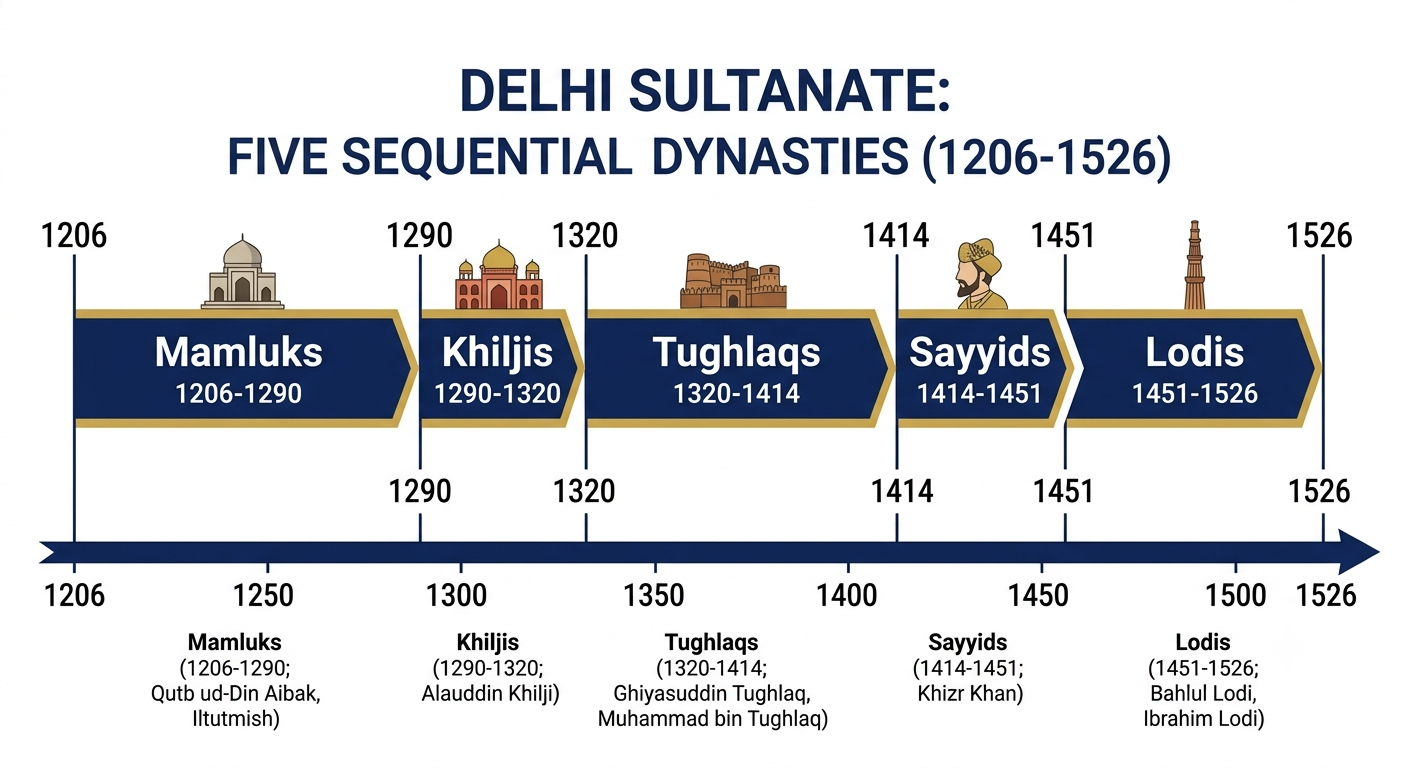
The five dynasties of the Delhi Sultanate (1206–1526)
- Delhi Sultanate formed in 1206 after the defeat of King Prithviraj Chauhan in 1192 by Turkic-Afghan invaders.
- Five successive foreign dynasties of Turkic-Afghan origin ruled the Sultanate: Mamluks (Slave dynasty), Khiljis (Khaljis), Tughlaqs, Sayyids, and Lodis (Lodhis).
- The term Sultanate means a territory ruled by a Sultan — a title adopted by some Muslim rulers.
- Neighbouring kingdoms like the Eastern Gangas in the east and the Hoysalas in the south resisted the Sultanate and emerged as thriving centres of art, culture and administration.
- The Sultanate period was marked by political instability combined with efforts at territorial expansion — resulting in military campaigns that raided, plundered, and destroyed temples and seats of learning.
- Successions were often violent — almost two sultans out of three seized power by eliminating their predecessor, so the average reign was hardly more than nine years!
- Ala-ud-din Khilji conducted military campaigns over large areas of north and central India, repelled Mongol invasions, and his slave-general Malik Kafur expanded the Sultanate southward, attacking Hindu centres like Srirangam, Madurai, Chidambaram and Rameswaram.
- Muhammad bin Tughlaq expanded territories further — for the first time since the Mauryan Empire, most of the Subcontinent came under one ruler. However, his ambitious schemes often misfired: he shifted the capital from Delhi to Daulatabad (Devagiri) causing great loss of life, and introduced token copper currency which caused economic confusion and decline.
- Sultans levied the jizya — a discriminatory tax on non-Muslim subjects — creating economic burden and social incentive for conversions.
- In 1398, Timur, a brutal Turkic-Mongol conqueror, invaded and devastated Delhi, killing and enslaving thousands. He withdrew with huge plunder leaving chaos behind.
- The Lodis emerged as the last dynasty of the Delhi Sultanate, but by then its territory had shrunk considerably.
- Iconoclasm (destruction of religious images) motivated many attacks on Buddhist, Jain and Hindu temples — not just for plunder but for religious reasons.
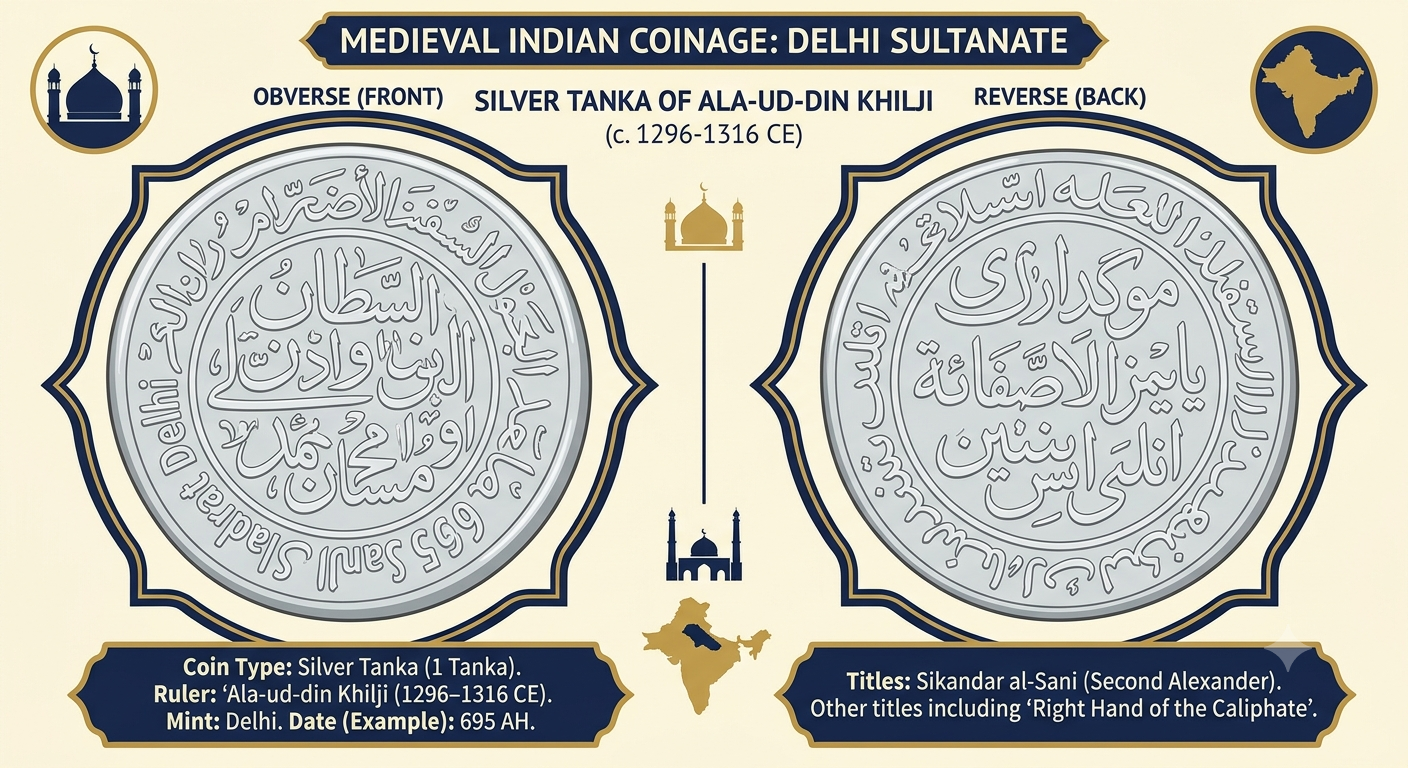
Fig. 2.6: Coin minted by Ala-ud-din Khilji
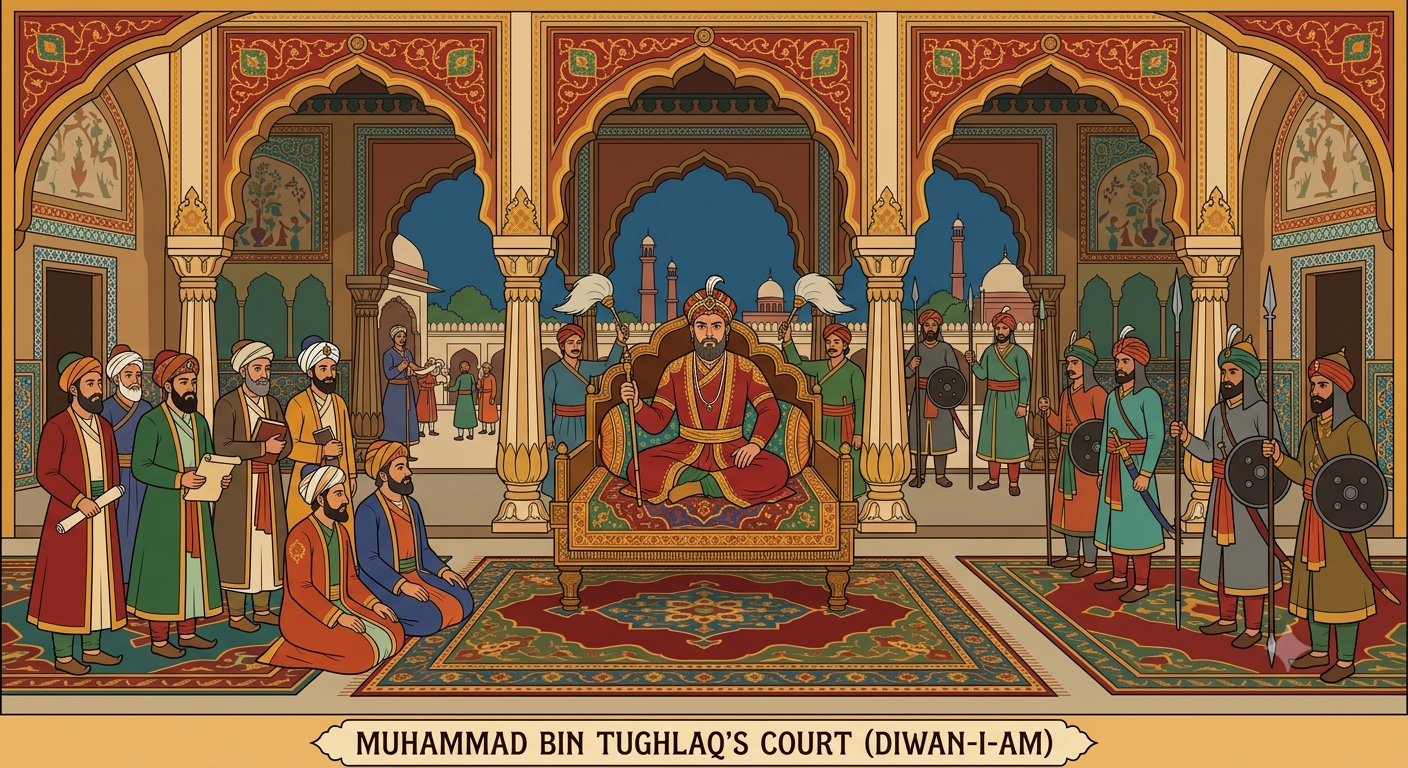
Fig. 2.7: A painting depicting Muhammad bin Tughlaq in his court
💡 Think About It
Ala-ud-din Khilji called himself ‘Sikander Sani’ meaning ‘the second Alexander’. Why do you think he chose this title? What does it tell us about his ambitions?
💡 Think About It
Why do we use the term ‘image’ rather than ‘idol’ or ‘icon’? The latter two terms are considered pejorative in Judaism, Christianity and Islam. India’s classical texts used words like mūrti, vigraha, pratimā, rūpa — neutral words in English translated as ‘image’.
📝 Practice Questions — Delhi Sultanate
LOTS When was the Delhi Sultanate formed, and name its five dynasties in order.
Show Answer
The Delhi Sultanate was formed in 1206, after the defeat of Prithviraj Chauhan in 1192. Its five dynasties in order: Mamluks (Slave dynasty), Khiljis, Tughlaqs, Sayyids, and Lodis.
Medium What was the jizya tax and what were its effects?
Show Answer
The jizya was a discriminatory tax levied by the Sultans on non-Muslim subjects. It created an economic burden on them and acted as a social incentive for conversion to Islam, apart from being a mark of unequal treatment of subjects based on religion.
HOTS Why did Muhammad bin Tughlaq’s shifting of the capital and token currency scheme fail despite being ambitious ideas?
Show Answer
Shifting the capital from Delhi to Daulatabad forced an entire population to march hundreds of kilometres, causing great suffering and loss of life, and Delhi’s strategic importance was lost — so it had to be reversed. The token copper currency failed because copper coins could be easily forged; people minted fake coins at home, trade was disrupted, the treasury lost value, and the economy fell into confusion and decline. Both schemes ignored practical realities of implementation.
HOTS “Political instability was built into the very structure of the Delhi Sultanate.” Justify this statement with evidence.
Show Answer
Nearly two out of three sultans seized power by eliminating their predecessor, making the average reign barely nine years. There was no stable rule of succession, so every transfer of power invited violence and conspiracies. Constant military campaigns, rebellions in distant provinces, and invasions like Timur’s (1398) further weakened the state — showing that instability was structural, not accidental.
🛡️ Resistance to the Delhi Sultanate
- Throughout its rule, the Delhi Sultanate faced resistance from many quarters.
- The Eastern Ganga kingdom of Kalinga (present-day Odisha, parts of Bengal and Andhra Pradesh) successfully resisted the Sultanate.
- Narasimhadeva I (mid-13th century ruler of Eastern Ganga) was noted for military strength and cultural brilliance. He repelled multiple inroads of the Sultanate, defeated the Sultanate’s governor of Bengal, and partly to commemorate these victories, built the famed Sūrya temple at Konark.
- The Musunuri Nayakas, Telugu chieftains, rallied over 75 chieftains of the region and formed a confederacy that expelled Muhammad bin Tughlaq’s army from Warangal (present-day Telangana) around 1330–1336.
- The Hoysalas ruled parts of southern India (mostly present-day Karnataka) and fended off several attacks from the Delhi Sultanate — remaining the only independent kingdom in the south for a time. However, weakened by these attacks and internal conflicts, the Hoysala kingdom eventually declined and was absorbed into the Vijayanagara Empire.
- The Bahmani Sultanate rose in the mid-14th century as an independent power controlling much of the Deccan.
- Powerful Sultanates also emerged in Gujarat, Bengal and other regions, leading to complex alliances and frequent wars.
- Parts of Rajasthan remained beyond the reach of the Delhi Sultanate. In the 15th century, Rana Kumbha of the Mewar kingdom stiffly resisted invasions from the Sultanates.
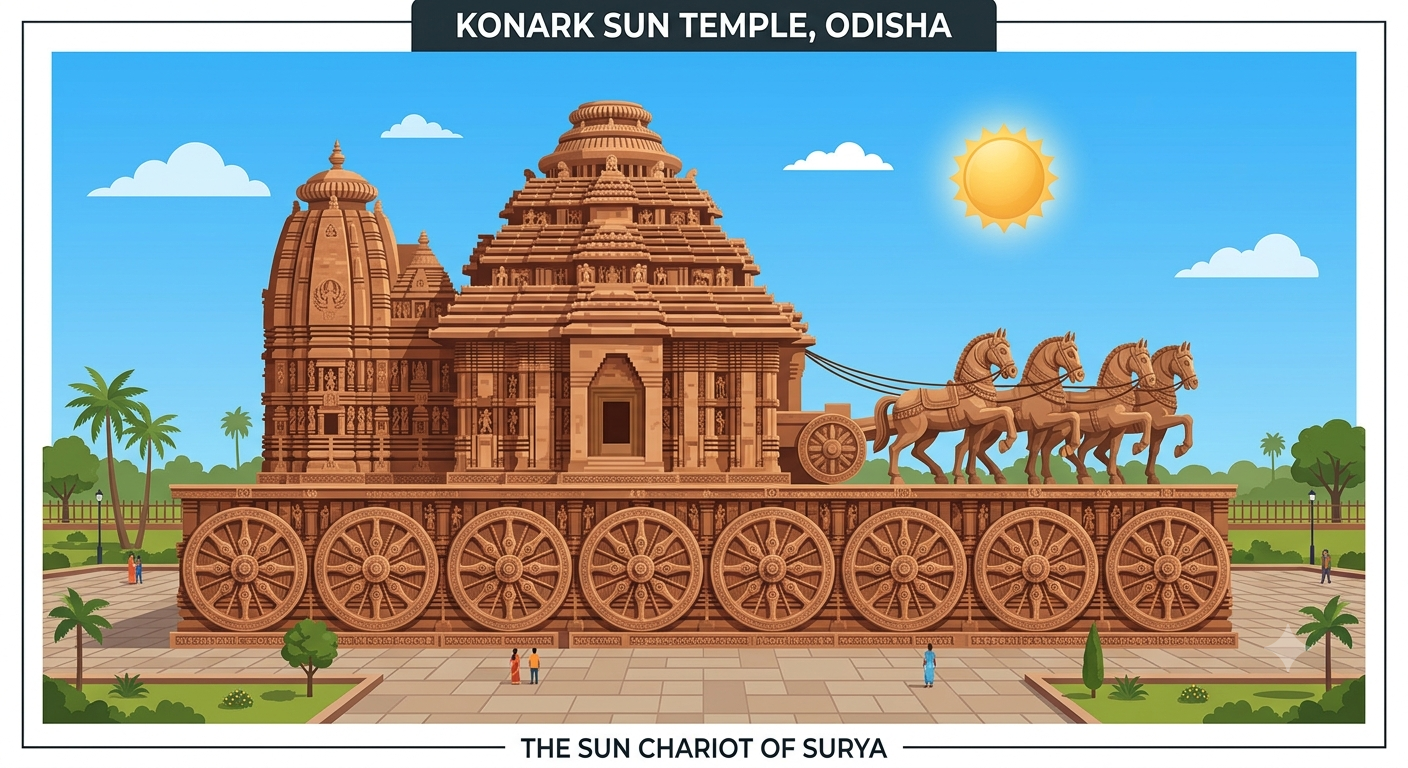
The Sūrya temple at Konark — built partly to commemorate victories over the Sultanate
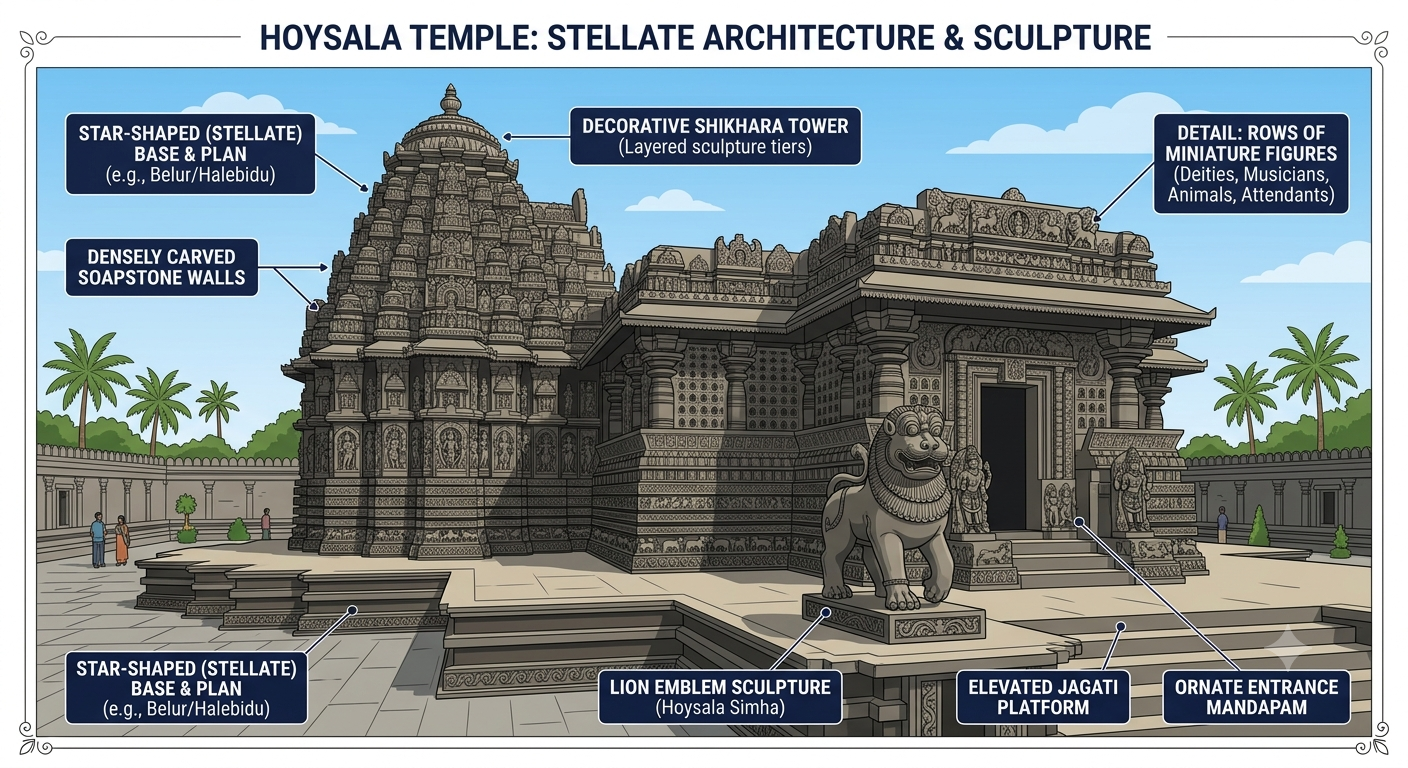
The Hoysalas built magnificent temples with intricate carvings
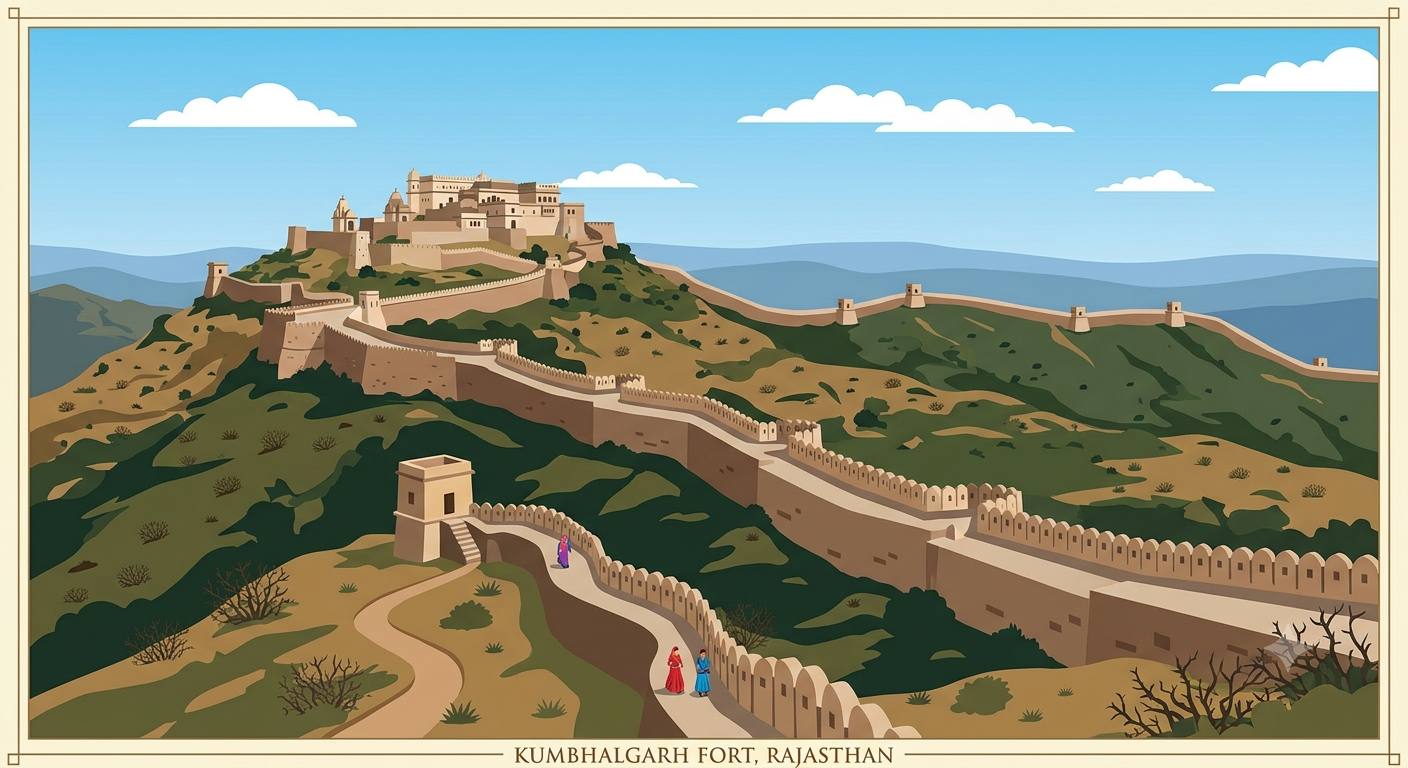
Kumbhalgarh Fort with its 36-kilometre-long wall
⚠️ Don’t Miss Out
The sculpture at Belur narrates the story behind the Hoysala emblem. Kannada folklore recounts the story of Sala, a young man who fought a lion to save his guru, giving the dynasty its name — ‘Hoy (strike)! Sala’.
⚠️ Don’t Miss Out
Kumbhalgarh Fort was built by Rana Kumbha in the 15th century in the Aravalli hills, serving as a stronghold for Mewar rulers. It is famous for its massive 36-kilometre-long wall — one of the longest continuous walls in the world.
🔍 Let’s Explore
Why do you think such hilltop locations were chosen for many medieval forts? Discuss the pros and cons — think about strategy, security, vulnerability, and supply lines.
📝 Practice Questions — Resistance to the Sultanate
LOTS Who built the Sūrya temple at Konark and why?
Show Answer
Narasimhadeva I, the Eastern Ganga ruler of Kalinga in the mid-13th century, built the Sūrya temple at Konark — partly to commemorate his victories over the Delhi Sultanate, including the defeat of the Sultanate’s governor of Bengal.
Medium Who were the Musunuri Nayakas and what did they achieve?
Show Answer
The Musunuri Nayakas were Telugu chieftains who rallied over 75 chieftains of the region into a confederacy. Around 1330–1336, this confederacy expelled Muhammad bin Tughlaq’s army from Warangal (in present-day Telangana) — a remarkable example of united regional resistance.
HOTS The Hoysalas successfully resisted the Sultanate yet still declined. What does this teach us about the survival of kingdoms?
Show Answer
The Hoysalas fended off several Sultanate attacks, but each victory came at a heavy cost of men and resources. Combined with internal conflicts, this gradual exhaustion weakened the kingdom until it was absorbed into the rising Vijayanagara Empire. It teaches that military resistance alone cannot ensure survival — internal unity and economic strength matter equally.
HOTS Compare the different forms of resistance to the Delhi Sultanate — what common factors made resistance successful?
Show Answer
The Eastern Gangas used military strength under a capable king (Narasimhadeva I); the Musunuri Nayakas used unity — a confederacy of 75+ chieftains; the Hoysalas used geography and persistence in the far south; Mewar under Rana Kumbha used fortifications like Kumbhalgarh. The common success factors were strong leadership, unity among local powers, distance from Delhi, and defensible geography.
🏛️ The Vijayanagara Empire
- While the Delhi Sultanate grew politically unstable, a new centre of power emerged in the south in the 14th century.
- Two brothers, Harihara and Bukka, who had served as governors under Muhammad bin Tughlaq, eventually rejected Delhi’s authority and established the Vijayanagara Empire.
- According to popular folklore, they witnessed a remarkable sight at Hampi (present-day Karnataka) — a hare turning around and chasing a pack of hounds. Their guru Vidyaranya interpreted this as a symbol of resilience and bravery, and advised them to establish their capital there.
- The empire’s capital Vijayanagara (Hampi) became one of the greatest cities of the medieval world — described by Portuguese traveller Domingo Paes as being ‘as large as Rome’ and the ‘best provided city in the world’.
- To the north, the Bahmani Sultanate was a major rival — it eventually fragmented into five independent states called the ‘Deccan Sultanates’: Bijapur, Golconda, Berar, Ahmednagar, and Bidar.
- The Vijayanagara rulers also battled the Gajapati rulers of Odisha in the east.
- The term pati meaning ‘lord’ or ‘master’ was used by many dynasties: Vijayanagara kings were called ‘Narapati‘ (lord of men), Bahmani rulers ‘Ashwapati‘ (lord of horses), Gajapatis ‘lord of elephants’, and later Maratha rulers ‘Chhatrapati‘.
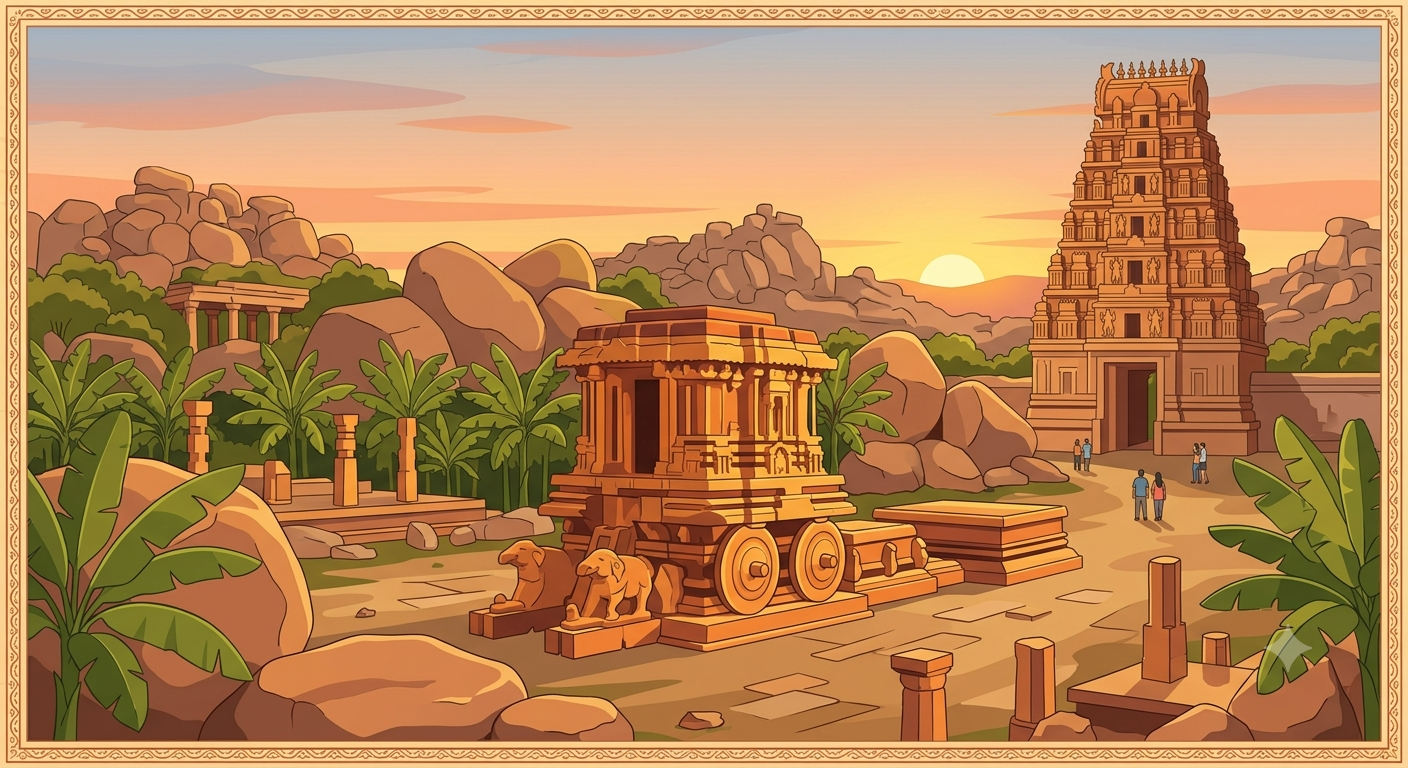
Ruins of Vijayanagara city, present-day Hampi
📝 Practice Questions — Vijayanagara Empire
LOTS Who founded the Vijayanagara Empire and where was its capital?
Show Answer
Two brothers, Harihara and Bukka, who had earlier served as governors under Muhammad bin Tughlaq, founded the Vijayanagara Empire in the 14th century. Its capital was Vijayanagara, at present-day Hampi in Karnataka.
Medium Name the five Deccan Sultanates that emerged from the Bahmani Sultanate.
Show Answer
The Bahmani Sultanate fragmented into five independent states: Bijapur, Golconda, Berar, Ahmednagar, and Bidar — together known as the Deccan Sultanates.
HOTS What does the hare-and-hounds folklore about Hampi symbolise, and why would rulers choose such a site?
Show Answer
The hare chasing hounds symbolised that even the seemingly weak could turn and defeat the strong on that land — resilience and courage. Guru Vidyaranya read it as a sign of the site’s auspicious power. Practically, Hampi was also protected by the Tungabhadra river and rocky hills, making it naturally defensible — folklore and strategy both supported the choice.
HOTS Titles like Narapati, Ashwapati and Gajapati reveal something about medieval military power. Explain.
Show Answer
Each title advertised the military strength a dynasty was proudest of: Narapati (lord of men) — vast infantry of Vijayanagara; Ashwapati (lord of horses) — the Bahmani cavalry; Gajapati (lord of elephants) — Odisha’s war elephants. The titles show that medieval power was measured by armed strength, and each kingdom projected its distinctive military advantage in its very name.
👑 Krishnadevaraya
- The Vijayanagara Empire reached its peak under Krishnadevaraya (ruled 1509–1529) of the Tuluva dynasty.
- A brilliant military commander, he defeated the Deccan Sultanates, the Gajapatis of Odisha, and expanded the empire on all sides.
- He was also a great patron of art, literature and architecture — his court was adorned by the Ashtadiggajas, eight great Telugu poets.
- Krishnadevaraya himself was a scholar — he wrote Amuktamalyada, a celebrated Telugu work on governance and devotion, which sets out his ideas on how a king should rule for the welfare of the people.
- In Amuktamalyada, he wrote that a king should always rule with dharma, care for the welfare of the people, and ensure the prosperity of agriculture and trade.
- He improved irrigation with tanks and canals, boosted agriculture, and encouraged trade — including with the Portuguese, from whom the empire acquired horses.
- Foreign travellers like Domingo Paes left glowing accounts of the wealth, order and grandeur of his empire and capital.
- After his death, the empire weakened; in 1565, at the Battle of Talikota, the combined Deccan Sultanates defeated Vijayanagara and the magnificent capital was sacked, plundered and left in ruins.
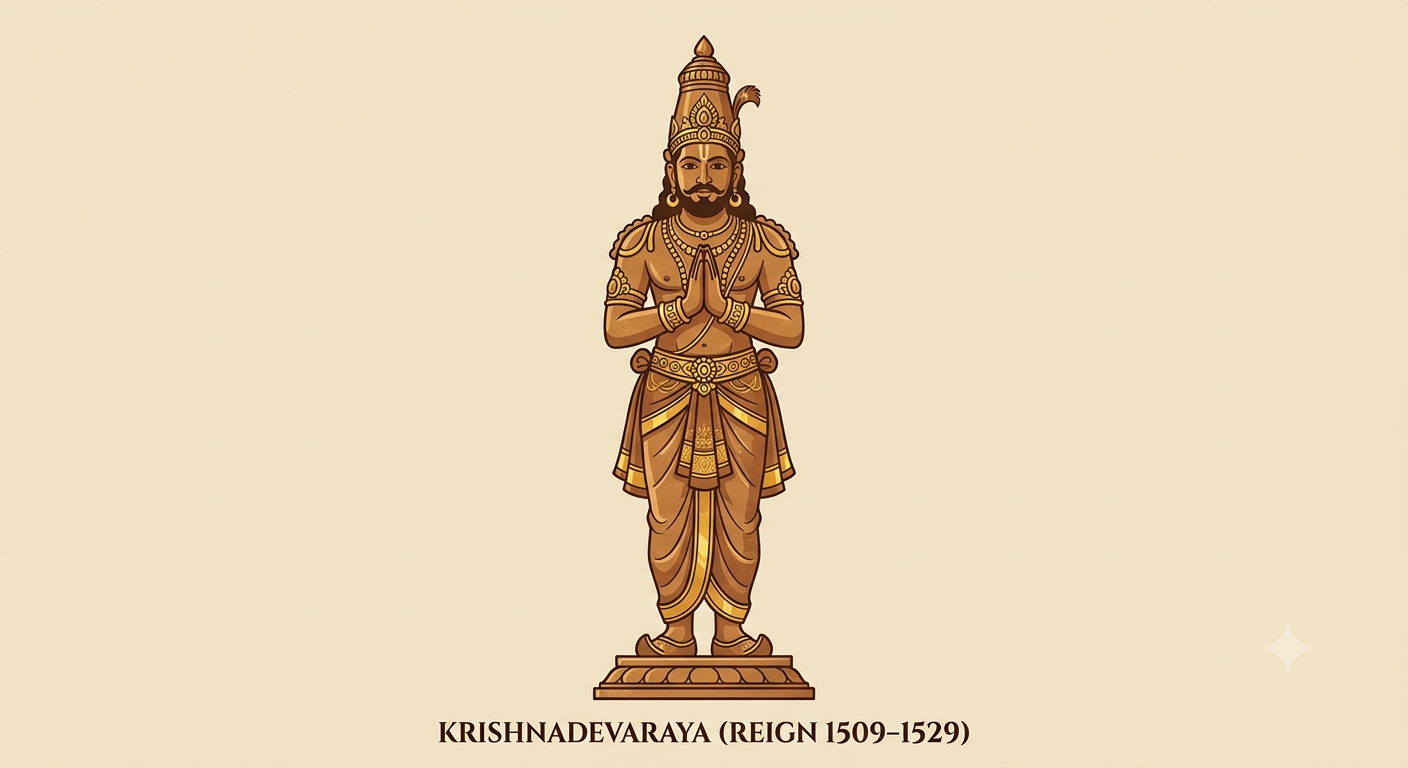
Krishnadevaraya — the greatest ruler of Vijayanagara
📝 Practice Questions — Krishnadevaraya
LOTS Which dynasty did Krishnadevaraya belong to, and which famous Telugu work did he write?
Show Answer
Krishnadevaraya belonged to the Tuluva dynasty of the Vijayanagara Empire (ruled 1509–1529). He wrote the celebrated Telugu work Amuktamalyada, which contains his ideas on governance and devotion.
Medium What happened at the Battle of Talikota in 1565?
Show Answer
The combined forces of the Deccan Sultanates defeated the Vijayanagara army at the Battle of Talikota in 1565. The magnificent capital city of Vijayanagara (Hampi) was then sacked, plundered and destroyed, and the empire never recovered its former glory.
HOTS Krishnadevaraya was both a conqueror and a scholar-administrator. Which role contributed more to his greatness? Give reasons.
Show Answer
Both roles reinforced each other. Conquest secured the empire’s borders and wealth, but his administration — irrigation tanks, canals, flourishing agriculture and trade, patronage of the Ashtadiggajas — created lasting prosperity and cultural brilliance. His own words in Amuktamalyada show he valued the welfare of the people above conquest. Arguably, his statesmanship is why he is remembered as one of India’s greatest kings rather than merely a successful general.
HOTS Why did the Deccan Sultanates, who often fought each other, unite against Vijayanagara in 1565?
Show Answer
Vijayanagara under and after Krishnadevaraya had grown so powerful that it threatened all the Sultanates individually — it had defeated them separately many times. Realising that none could win alone, they set aside mutual rivalries and formed a temporary alliance. It shows how a common threat can unite even bitter rivals — and how dangerous over-dominance can be for a single power.
🏰 The Mughals
- In 1526, Babur, a Turkic-Mongol ruler from Fergana (in present-day Uzbekistan) and a descendant of both Timur and Genghis Khan, defeated the last Lodi sultan, Ibrahim Lodi, at the First Battle of Panipat.
- Babur’s smaller army won because of superior tactics and the effective use of gunpowder — cannons and matchlock guns — among the first major uses of field artillery in India.
- This victory ended the Delhi Sultanate and founded the Mughal Empire, which would dominate India for about two centuries.
- Babur wrote his memoirs, the Baburnama — he admired India’s wealth, fruits and monsoon, but also recorded his brutal campaigns, massacres of civilians and the erection of ‘towers of skulls’ after battles.
- His son Humayun lost the empire to the Afghan ruler Sher Shah Suri, who governed ably for a short period, and Humayun recovered the throne only shortly before his death.
- The Mughal Empire’s real consolidation began under Humayun’s son — Akbar.
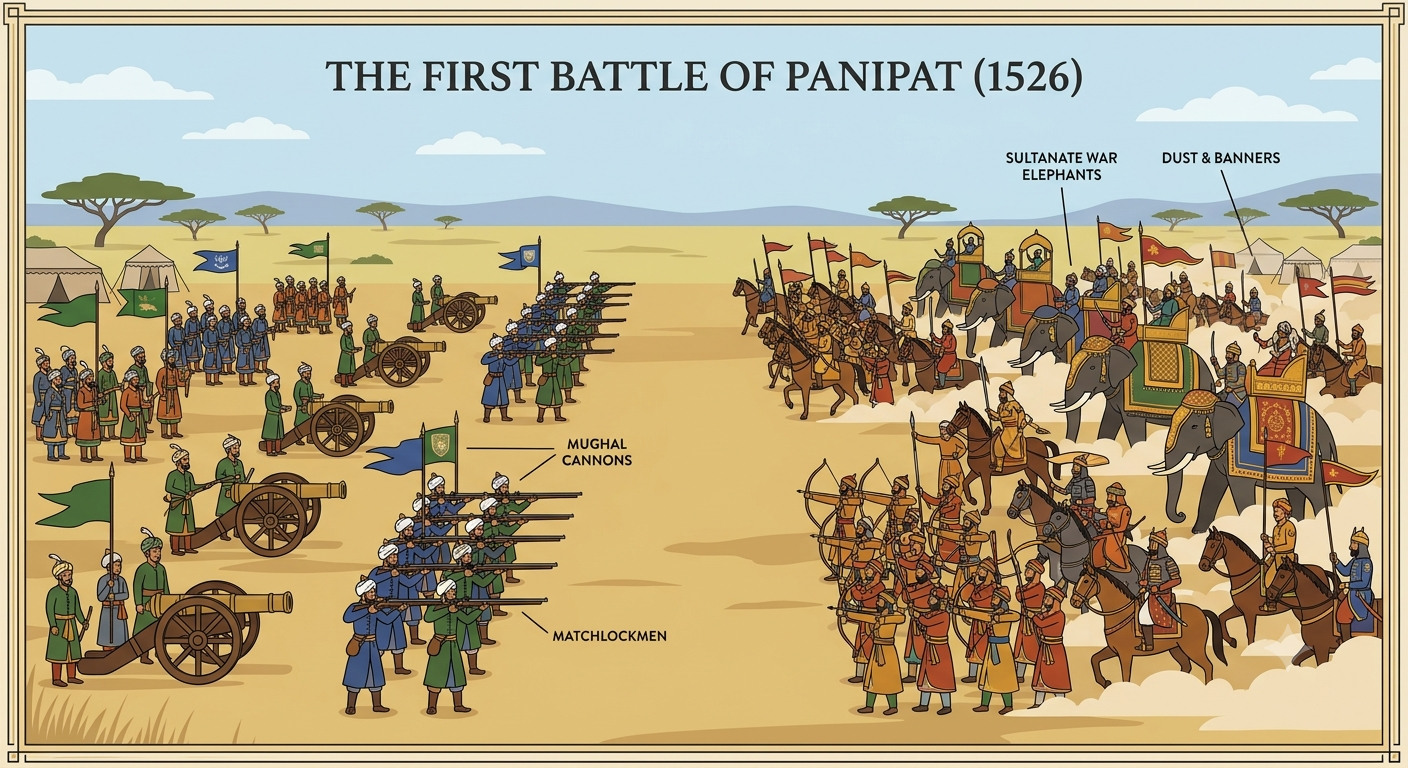
The First Battle of Panipat (1526) — gunpowder defeats numbers
📝 Practice Questions — The Mughals
LOTS Who founded the Mughal Empire and after which battle?
Show Answer
Babur, a Turkic-Mongol ruler descended from Timur and Genghis Khan, founded the Mughal Empire after defeating Ibrahim Lodi, the last Delhi Sultan, at the First Battle of Panipat in 1526.
Medium What is the Baburnama and why is it a valuable historical source?
Show Answer
The Baburnama is Babur’s own memoirs. It is valuable because it gives a first-hand account of his life, his battles, and his impressions of India — its wealth, fruits, seasons and people — as well as honest records of his brutal military campaigns. Autobiographies of rulers from this era are rare, making it a key primary source.
HOTS Babur’s army was much smaller than Ibrahim Lodi’s at Panipat, yet he won. Analyse the reasons.
Show Answer
Babur used gunpowder weapons — field cannons and matchlock guns — which Lodi’s forces had not faced on this scale. The noise and destruction panicked Lodi’s war elephants, which trampled their own troops. Babur also used clever defensive formations (carts tied together shielding his gunners). Superior technology and tactics defeated superior numbers — a turning point in Indian military history.
HOTS The Baburnama shows Babur as both a cultured writer and a brutal conqueror. How should historians handle such contradictory evidence?
Show Answer
Historians must consider the full record rather than choosing one side. The same source shows love of gardens, poetry and nature alongside massacres and towers of skulls — proving that historical figures are complex. Evaluating them requires weighing all their actions in the context of their time, while not hiding or justifying acts of cruelty.
☀️ Akbar
- Akbar (ruled 1556–1605) became emperor at age 13 and built the Mughal Empire into one of the world’s most powerful states.
- His early reign saw great brutality — after the siege of Chittorgarh (1568), he ordered the massacre of some 30,000 civilians, and the women of the fort committed jauhar.
- Over time, Akbar’s outlook transformed — he adopted a policy of sulh-i-kul (‘peace with all’), promoting harmony among his subjects of different faiths.
- He abolished the jizya tax on non-Muslims and removed the pilgrimage tax on Hindus.
- He built the Ibadat Khana (House of Worship) at his capital Fatehpur Sikri, where scholars of different religions — Hindus, Muslims, Jains, Christians, Parsis — held discussions in his presence.
- He included Rajputs and other Hindus in high administrative and military positions, and married Rajput princesses without requiring conversion.
- Akbar had Sanskrit classics like the Mahabharata translated into Persian (as the Razmnama), promoting cultural exchange.
- Trade, agriculture, art and architecture flourished — the empire’s revenues were the envy of the world.
Akbar’s Ibadat Khana — scholars of many faiths in discussion
💡 Think About It
Akbar began his rule with the terrible massacre at Chittorgarh, yet later became a symbol of tolerance with sulh-i-kul. What might have caused this transformation in his thinking?
📝 Practice Questions — Akbar
LOTS What was the Ibadat Khana and where was it located?
Show Answer
The Ibadat Khana (‘House of Worship’) was a hall built by Akbar at his capital Fatehpur Sikri, where scholars of different religions — Hindus, Muslims, Jains, Christians and Parsis — gathered to hold religious discussions in the emperor’s presence.
Medium What does sulh-i-kul mean? Give two measures Akbar took in its spirit.
Show Answer
Sulh-i-kul means ‘peace with all’ — a policy of universal harmony among subjects of all faiths. Measures in its spirit: (1) abolition of the discriminatory jizya tax on non-Muslims; (2) inclusion of Rajputs and other Hindus in the highest administrative and military posts; also the removal of the pilgrimage tax and translation of Sanskrit classics into Persian.
HOTS How did Akbar’s religious policy strengthen the Mughal Empire politically?
Show Answer
By abolishing the jizya, allying with Rajput kingdoms through marriage and high offices, and honouring all faiths, Akbar converted potential enemies into loyal partners. Rajput generals like Man Singh led Mughal armies. This broadened the empire’s talent pool, reduced rebellions, secured the loyalty of the majority population, and gave the empire stability that pure military force could never achieve.
HOTS Contrast Akbar’s Chittorgarh massacre with his later policies. What does this contrast teach about judging historical rulers?
Show Answer
The same ruler ordered the massacre of 30,000 civilians at Chittorgarh in 1568 and later abolished discriminatory taxes and championed sulh-i-kul. This teaches that rulers can change over a lifetime, and that history must record both the crimes and the reforms honestly. A balanced judgement acknowledges the massacre as a terrible act while recognising the later transformation — neither erases the other.
🌑 Aurangzeb
- Aurangzeb (ruled 1658–1707) seized the throne after a bitter war of succession — he imprisoned his father Shah Jahan and executed his brother Dara Shikoh, a scholar who had translated the Upanishads into Persian.
- Under Aurangzeb, the Mughal Empire reached its greatest territorial extent, covering almost the entire Subcontinent.
- He reversed Akbar’s policies — reimposed the jizya on non-Muslims (1679), imposed restrictions based on his strict religious interpretations, and ordered the destruction of several major temples, including the Kashi Vishvanath temple at Varanasi and the Kesava Deva temple at Mathura.
- He executed the ninth Sikh Guru, Guru Tegh Bahadur, and later the Maratha king Sambhaji — acts that ignited fierce and lasting resistance.
- His decades-long wars in the Deccan against the Marathas drained the empire’s treasury and manpower.
- After his death in 1707, the over-stretched empire rapidly declined, with regional powers rising everywhere.
⚠️ Don’t Miss Out
Dara Shikoh, Aurangzeb’s elder brother, translated fifty Upanishads into Persian (the Sirr-i-Akbar, ‘The Great Secret’) and believed in the meeting of Hindu and Muslim wisdom. His defeat and execution in the war of succession changed the direction of the empire’s history.
📝 Practice Questions — Aurangzeb
LOTS Name two ways Aurangzeb reversed Akbar’s policies.
Show Answer
Aurangzeb reimposed the jizya tax on non-Muslims (1679), which Akbar had abolished, and ordered the destruction of major temples such as Kashi Vishvanath (Varanasi) and Kesava Deva (Mathura) — the opposite of Akbar’s policy of sulh-i-kul and religious harmony.
Medium How did Aurangzeb come to power?
Show Answer
Aurangzeb won a bitter war of succession: he imprisoned his own father, Emperor Shah Jahan, in Agra Fort, and defeated and executed his elder brother Dara Shikoh, the heir apparent and a noted scholar of comparative religion.
HOTS “The empire was largest under Aurangzeb, yet weakest at his death.” Explain this paradox.
Show Answer
Territorial size is not the same as strength. Aurangzeb’s endless Deccan wars against the Marathas drained the treasury and exhausted the army; his religious policies (jizya, temple destruction, executions of Guru Tegh Bahadur and Sambhaji) turned Sikhs, Marathas, Rajputs and Jats into determined enemies; and governing so vast a territory stretched administration beyond its limits. The empire’s foundations were crumbling even as its borders peaked — so it collapsed rapidly after 1707.
HOTS Compare the long-term consequences of Akbar’s and Aurangzeb’s religious policies for the Mughal Empire.
Show Answer
Akbar’s inclusive policies built alliances (especially with Rajputs), broadened loyalty and stabilised the empire for a century. Aurangzeb’s discriminatory policies alienated Sikhs, Marathas, Rajputs and others, converting subjects into rebels. Akbar’s approach multiplied the empire’s supporters; Aurangzeb’s multiplied its enemies — a major reason the empire flourished after Akbar and disintegrated after Aurangzeb.
🚩 Resistance to the Mughals: The Marathas
- The most formidable challenge to Mughal power rose in the western Deccan — the Marathas, led by Shivaji (1630–1680).
- Shivaji built a kingdom from hill forts of the Sahyadris, perfecting guerrilla warfare (ganimi kava) — swift raids, surprise attacks, and retreat into mountain strongholds that neutralised larger Mughal armies.
- He famously escaped from Aurangzeb’s custody at Agra — concealed, according to popular accounts, in baskets of sweets.
- In 1674, Shivaji was crowned Chhatrapati at Raigad, proclaiming Hindavi Swarajya — self-rule.
- Shivaji was known for disciplined administration, a council of ministers (Ashtapradhan), a strong navy, and respect for all faiths — his armies were instructed not to harm women, mosques or the Quran.
- His son Sambhaji continued the resistance and was captured and brutally executed by Aurangzeb in 1689 — which only intensified Maratha resolve.
- The Marathas fought on relentlessly; by the early 18th century they had become the dominant power across much of India.
Shivaji and the Maratha resistance — masters of the hill forts
🔍 Let’s Explore
Guerrilla warfare helped a smaller force resist a giant empire. Can you think of the geographical features of the Western Ghats (Sahyadris) that made this style of warfare possible?
📝 Practice Questions — The Marathas
LOTS When and where was Shivaji crowned Chhatrapati? What did he proclaim?
Show Answer
Shivaji was crowned Chhatrapati in 1674 at Raigad fort. He proclaimed Hindavi Swarajya — self-rule of the people of the land.
Medium What was ganimi kava and why was it effective against the Mughals?
Show Answer
Ganimi kava was the Maratha method of guerrilla warfare — swift surprise raids, cutting supply lines, and rapid retreat into the hill forts of the Sahyadris. It was effective because the huge, slow Mughal armies could not chase light cavalry through mountain terrain, and every campaign drained Mughal resources while the Marathas lost little.
HOTS Shivaji instructed his soldiers never to harm women, mosques or the Quran, even while fighting Muslim rulers. What does this reveal about his concept of Swarajya?
Show Answer
It shows that Shivaji’s fight was political — against oppressive rule — not against any religion or community. His Swarajya aimed at just governance where all faiths were respected; Muslims served in his army and navy. This ethical code of warfare gave his rule moral legitimacy and won him respect even from adversaries.
HOTS Sambhaji’s execution was meant to crush the Marathas but achieved the opposite. Why do harsh punishments sometimes strengthen resistance movements?
Show Answer
Sambhaji’s brutal execution turned him into a martyr, uniting the Marathas emotionally and making compromise impossible. Instead of fearing the empire, ordinary people joined the resistance in anger. Harsh punishment can destroy a leader but sanctify a cause — the Maratha war effort became a people’s war that Aurangzeb could never win.
🏜️ Surge of the Rajputs
- The Rajput kingdoms of Rajasthan — proud, martial and fiercely independent — played a complex role in this era.
- Many Rajput rulers, like Raja Man Singh of Amber, allied with Akbar and became pillars of the Mughal state, commanding its greatest armies.
- But Mewar refused to submit. Its ruler Maharana Pratap chose hardship over surrender.
- At the Battle of Haldighati (1576), Maharana Pratap’s forces — including his Bhil allies — fought the Mughal army led by Man Singh. Though forced to retreat, Pratap was never captured.
- From the hills and forests of Mewar, he waged relentless guerrilla resistance, gradually recovering most of his kingdom before his death.
- The loyalty of his legendary horse Chetak, who carried the wounded Rana to safety at Haldighati before dying, lives on in folklore and ballads.
- Later, under Aurangzeb’s policies, even long-allied Rajput states like Marwar and Mewar rose in rebellion against the Mughals.
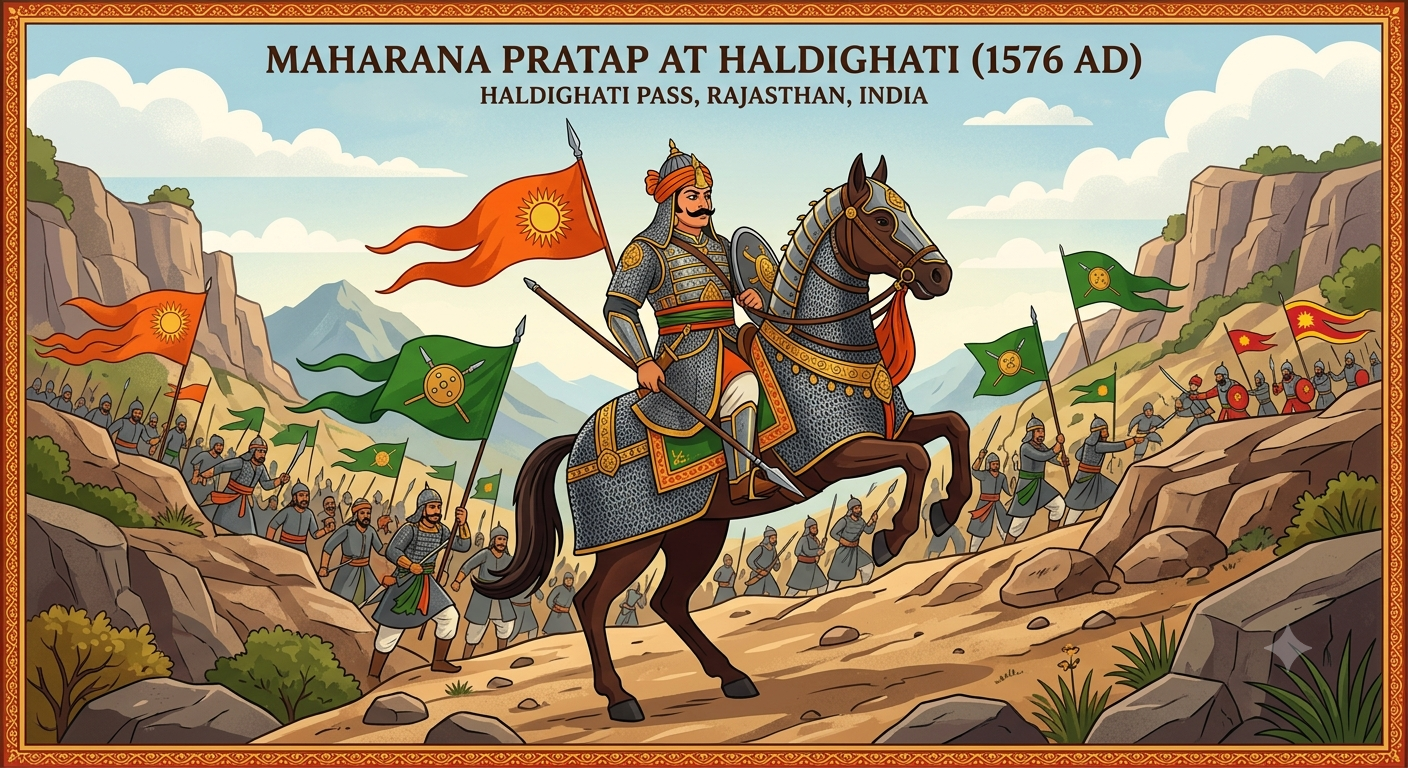
Maharana Pratap at Haldighati — resistance that became legend
⚠️ Don’t Miss Out
The Bhils, a tribal community of the Aravallis, fought shoulder-to-shoulder with Maharana Pratap. The royal emblem of Mewar shows a Rajput and a Bhil flanking the shield together — a tribute to this brotherhood.
📝 Practice Questions — The Rajputs
LOTS Who fought the Battle of Haldighati and in which year?
Show Answer
The Battle of Haldighati was fought in 1576 between Maharana Pratap of Mewar (with his Rajput and Bhil forces) and the Mughal army commanded by Raja Man Singh of Amber.
Medium How did Maharana Pratap continue his fight after Haldighati?
Show Answer
Though forced to retreat, Pratap was never captured. He shifted to the hills and forests of Mewar and waged guerrilla warfare against Mughal outposts and supply lines, enduring great personal hardship. Over the years he recovered most of his kingdom except a few forts, before his death.
HOTS Rajputs fought both for and against the Mughals — Man Singh led Akbar’s army while Pratap resisted it. What does this tell us about political choices in medieval India?
Show Answer
It shows that medieval politics was driven by each kingdom’s judgement of honour, survival and advantage — not by any single united identity. Amber chose alliance, gaining power and protecting its people; Mewar chose independence at the price of hardship. Both were rational responses to Mughal power, and both preserved Rajput influence in different ways. History rarely divides neatly into one ‘side’.
HOTS Why is Maharana Pratap remembered as a hero even though he did not win a decisive victory at Haldighati?
Show Answer
Because his greatness lay in unbending resolve, not in one battle’s result. He refused submission to the mightiest empire of his time, sacrificed comfort and wealth, kept fighting for decades, and recovered most of Mewar. Heroes are remembered for the values they embody — freedom, honour, perseverance — and Pratap embodied them completely.
🛶 The Ahoms
- In the far east, the Ahom kingdom of Assam (founded in the 13th century by Sukaphaa, who came from present-day Myanmar) resisted Mughal expansion for decades.
- The Ahoms had a unique system — the paik system — in which every adult male gave service to the state (as soldier, builder or worker) in rotation, making the whole society the army.
- The Mughals launched repeated invasions of Assam through the 17th century, but the Ahoms used the terrain — rivers, rain, floods and forests — brilliantly against them.
- The decisive moment came at the Battle of Saraighat (1671) on the Brahmaputra, where the Ahom general Lachit Borphukan destroyed a much larger Mughal fleet through superior naval tactics on the narrow river.
- Lachit is celebrated for his fierce dedication — he is said to have executed his own uncle for negligence in building defences, declaring that his uncle was not greater than his country.
- Assam remained unconquered — the Mughal Empire never absorbed the Ahom kingdom.
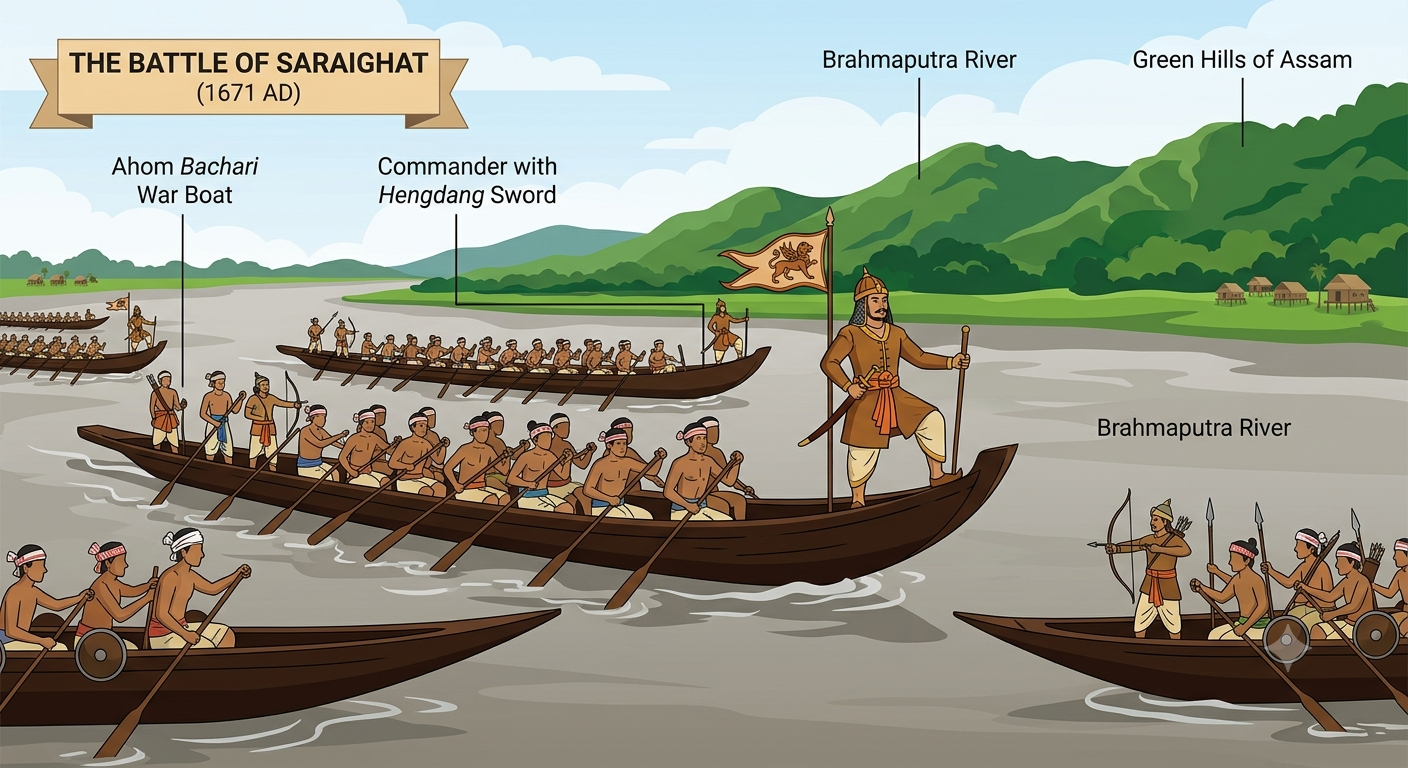
The Battle of Saraighat (1671) — Ahom war boats on the Brahmaputra
⚠️ Don’t Miss Out
Lachit Borphukan’s words before Saraighat are legendary: he refused to abandon the battle even while seriously ill, saying the king had entrusted Assam to him and he could not think of saving himself while the country suffered. The National Defence Academy’s best cadet medal is named after him.
📝 Practice Questions — The Ahoms
LOTS Who led the Ahoms at the Battle of Saraighat, and in which year was it fought?
Show Answer
The Ahom general Lachit Borphukan led the Ahom forces at the Battle of Saraighat in 1671, defeating a much larger Mughal fleet on the Brahmaputra river.
Medium What was the paik system of the Ahoms?
Show Answer
The paik system required every adult male to serve the state in rotation — as a soldier in war, or as a builder/worker in peace. This meant the Ahom state could mobilise its entire society for defence or public works without maintaining a costly standing army.
HOTS How did geography help the Ahoms defeat repeated Mughal invasions?
Show Answer
Assam’s terrain was a fortress: the mighty Brahmaputra forced the Mughals into naval warfare where nimble Ahom boats excelled; monsoon rains and floods bogged down Mughal cavalry and supply lines; dense forests enabled ambushes. At Saraighat, Lachit deliberately chose the narrowest stretch of the river, cancelling the Mughal fleet’s size advantage. The Ahoms turned their homeland’s nature into their strongest weapon.
HOTS Lachit Borphukan punished his own uncle for negligence. What does this incident teach about leadership and duty?
Show Answer
It shows that for Lachit, duty to the country stood above every personal relationship — no one, however close, could be excused for endangering the nation. Such impartial discipline won him absolute trust of his soldiers: they knew rules applied equally to all. True leadership demands that the leader hold their own side, even family, to the highest standard.
🌼 The Rise of the Sikhs
- The Sikh faith was founded in Punjab by Guru Nanak (1469–1539), who taught devotion to one God, equality of all people, honest work and sharing with others.
- Nine Gurus followed him. The community grew peacefully — building the Harmandir Sahib (Golden Temple) at Amritsar and compiling the sacred Guru Granth Sahib.
- Mughal persecution changed the community’s path: the fifth Guru, Guru Arjan Dev, was executed by Jahangir (1606), and the ninth Guru, Guru Tegh Bahadur, was executed by Aurangzeb (1675) for defending the freedom of faith — he had stood up for the Kashmiri Pandits’ right to practise their religion.
- The tenth Guru, Guru Gobind Singh, transformed the community — in 1699 he founded the Khalsa, a brotherhood of saint-soldiers sworn to justice and defence of the faith.
- After his passing, he declared the Guru Granth Sahib to be the eternal Guru of the Sikhs.
- Under leaders like Banda Singh Bahadur, the Sikhs rose against Mughal authority in Punjab; despite terrible persecution, their power kept growing, culminating much later in the great Sikh Empire of Maharaja Ranjit Singh.
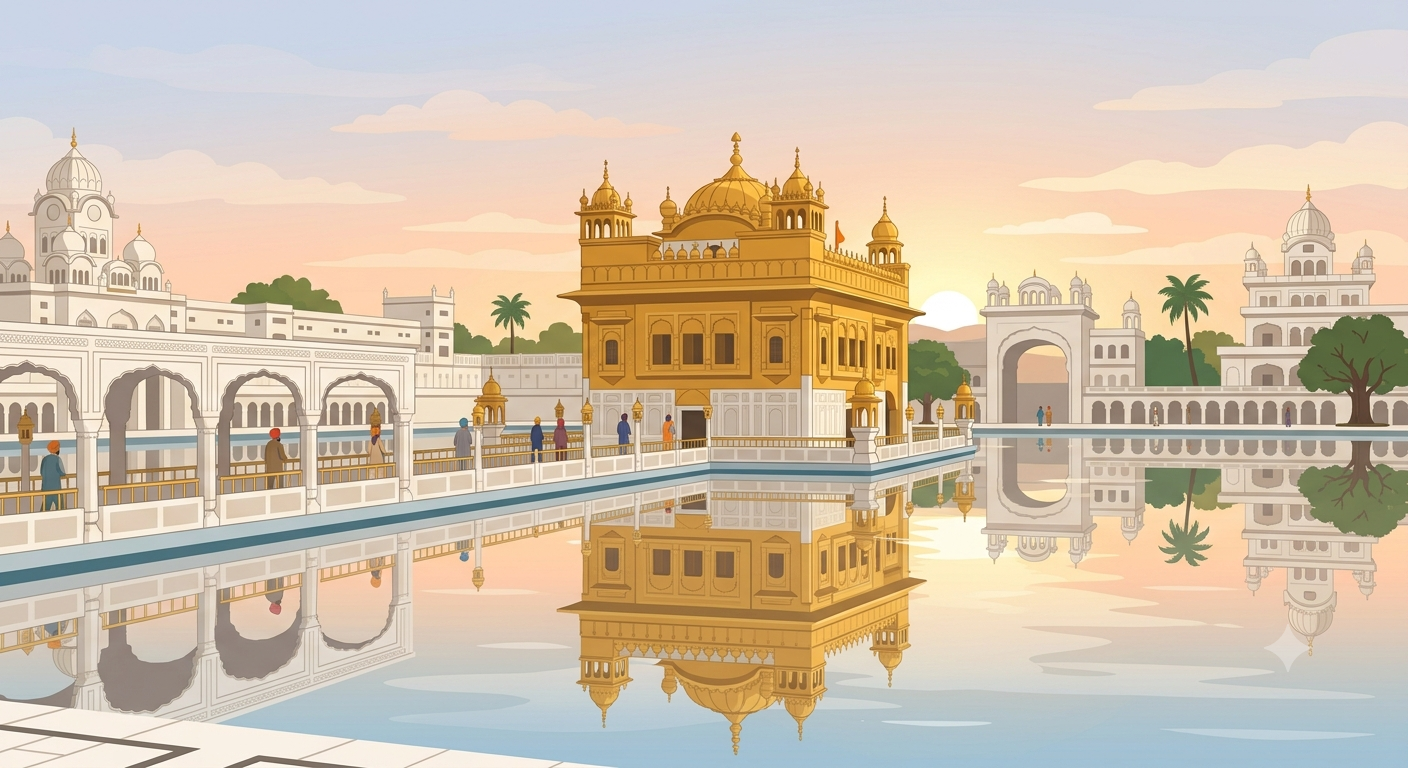
Harmandir Sahib (Golden Temple), Amritsar — the spiritual heart of Sikhism
💡 Think About It
Guru Tegh Bahadur gave his life defending the right of another community — the Kashmiri Pandits — to practise their faith. What does this supreme sacrifice teach us about true religious freedom?
📝 Practice Questions — The Rise of the Sikhs
LOTS Who founded the Sikh faith and what were his core teachings?
Show Answer
Guru Nanak (1469–1539) founded the Sikh faith in Punjab. His core teachings: devotion to one God, equality of all human beings regardless of caste or creed, earning an honest living, and sharing with the needy.
Medium What was the Khalsa and who founded it?
Show Answer
The Khalsa was founded by the tenth Guru, Guru Gobind Singh, in 1699. It is a brotherhood of initiated saint-soldiers committed to justice, courage, discipline and the defence of faith and the oppressed.
HOTS How did Mughal persecution transform the Sikh community from a purely spiritual movement into a martial brotherhood?
Show Answer
The executions of Guru Arjan Dev (1606) and Guru Tegh Bahadur (1675) proved that peaceful faith alone could not survive state persecution. Guru Gobind Singh concluded that the community must be able to defend itself and the oppressed — so he created the Khalsa in 1699, combining sainthood with soldierly duty. Persecution thus produced the very strength that eventually challenged Mughal power in Punjab.
HOTS Why is Guru Tegh Bahadur’s martyrdom considered unique in the history of religious freedom?
Show Answer
He sacrificed his life not for his own community’s rights but for another’s — defending the Kashmiri Pandits’ freedom to practise their religion. Laying down one’s life for someone else’s faith is the highest possible affirmation that freedom of conscience belongs to all. He is remembered as ‘Hind di Chadar’ — the shield of India.
📜 Administering India
- Despite constant wars, the rulers of this period built administrative systems, many elements of which lasted centuries.
- The Delhi Sultanate introduced the iqta system — military commanders (iqtadars) were assigned territories to collect revenue from, in return for maintaining troops for the Sultan.
- Sher Shah Suri, in his short reign, built the Grand Trunk Road, introduced a standardised silver coin — the rupiya (ancestor of our rupee!) — and set up sarais (rest houses) and an efficient postal system.
- Akbar’s minister Todar Mal perfected the land revenue system — land was measured, classified by fertility, and taxed at fixed rates based on average produce, giving peasants predictability.
- The Mughals ran the mansabdari system — every officer (mansabdar) held a rank (mansab) determining his salary and the number of cavalry he maintained; ranks were granted, raised or removed by the emperor alone.
- Vijayanagara administered through the nayaka system — military chiefs (nayakas) governed territories, collected revenue and maintained troops for the king.
- Shivaji’s Ashtapradhan — a council of eight ministers — handled finance, foreign affairs, defence, religious matters and justice, an early model of cabinet government.
- Provinces, districts and villages each had officials for revenue and order — while the village community with its headman and panchayat remained the enduring foundation of Indian administration throughout.
🔍 Let’s Explore
The rupee in your pocket descends from Sher Shah Suri’s silver rupiya! Find out what today’s ₹ symbol represents and when it was adopted.
📝 Practice Questions — Administering India
LOTS Name two contributions of Sher Shah Suri to administration.
Show Answer
Sher Shah Suri built the Grand Trunk Road connecting east and west, and introduced the standardised silver rupiya — the ancestor of the modern rupee. He also established sarais (rest houses) and an efficient postal system.
Medium Explain the mansabdari system of the Mughals.
Show Answer
Under the mansabdari system, every Mughal officer held a rank called a mansab, which fixed his salary and the number of cavalry soldiers he had to maintain for the empire. The emperor alone granted, promoted or cancelled mansabs — keeping all officers directly dependent on and loyal to the throne.
HOTS How did Todar Mal’s revenue system benefit both the state and the peasants?
Show Answer
By measuring land, classifying it by fertility, and fixing tax rates based on average produce over several years, the system gave the state a reliable, predictable income and reduced corruption by officials. Peasants benefited because they knew their dues in advance, were protected from arbitrary demands, and could plan their farming — stability that encouraged agriculture to expand.
HOTS Compare the iqta, nayaka and mansabdari systems. What common problem were all three trying to solve?
Show Answer
All three were solutions to the same problem: how to maintain a large army and administer vast territory without modern banking or salaries. Each assigned revenue rights (iqta territories, nayaka provinces) or graded ranks (mansabs) in exchange for maintaining troops. The common risk was also shared — powerful assignees could turn into independent rulers, which is exactly how several regional powers eventually arose.
🌾 People’s Lives
- For all the wars of kings, the vast majority of Indians were farmers whose daily life revolved around fields, cattle, monsoon and the village.
- Agriculture remained productive — rice, wheat, millets, cotton, sugarcane, spices — and new crops arrived through trade, including maize, chillies, potatoes, tomatoes and tobacco from the Americas.
- India was a manufacturing giant — its cotton and silk textiles, steel (wootz), shipbuilding, and handicrafts were prized across Asia, Africa and Europe. India held a major share of the world economy through this period.
- Bustling ports — Surat, Masulipatnam, Calicut — connected India to global trade; foreign merchants paid in gold and silver, which flowed steadily into India.
- Villages were largely self-sufficient: farmers, weavers, potters, smiths, carpenters and others exchanged goods and services, with disputes settled by village panchayats.
- Yet life had heavy burdens — land revenue demands, wars trampling fields, famines, and rigid social hierarchies including caste discrimination.
- This era also blossomed with the Bhakti and Sufi movements — saints like Kabir, Ravidas, Mirabai, Tulsidas, Chaitanya, and Sufi masters preached devotion, equality and love beyond ritual and caste, in the languages of the common people.
- Their songs and verses — from Kabir’s dohas to Mirabai’s bhajans — remain alive in Indian homes to this day.
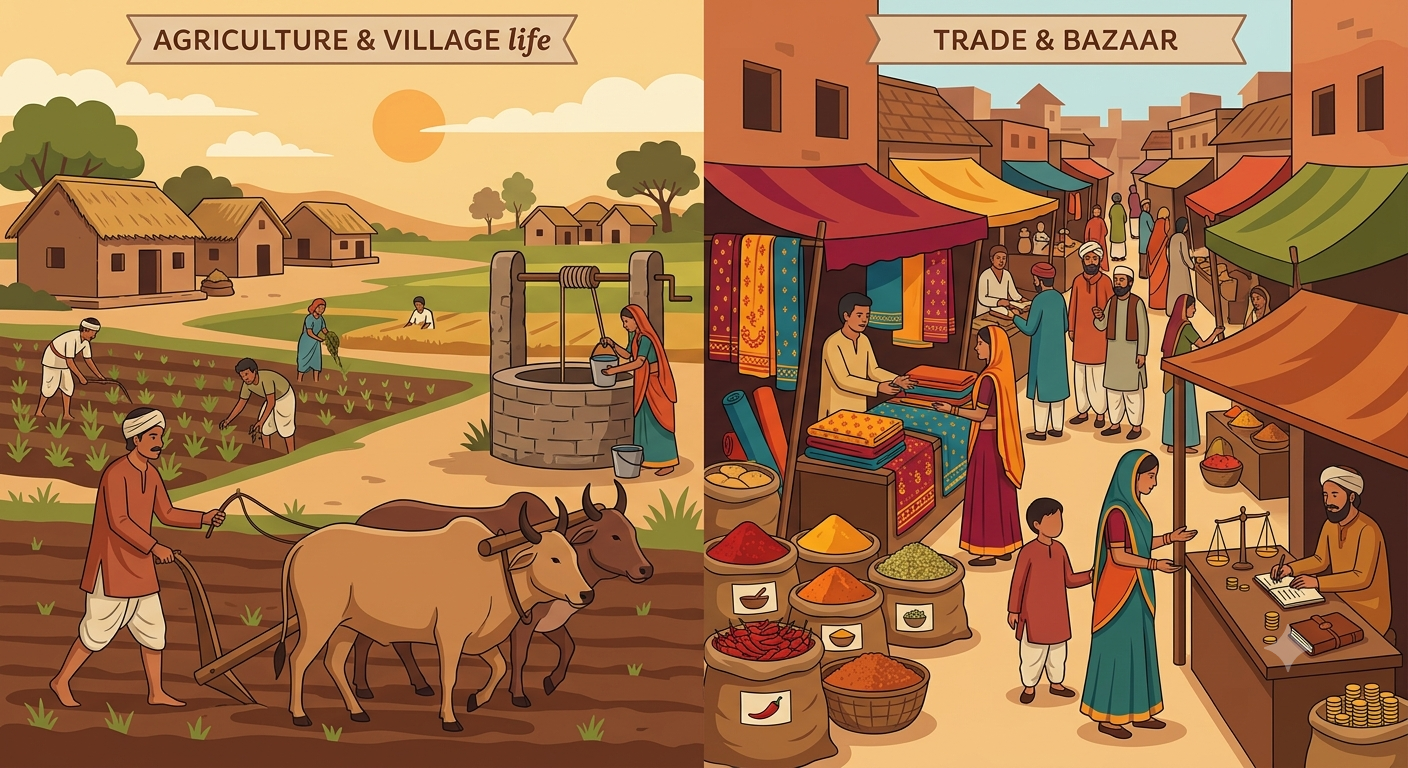
Fields and bazaars — the twin engines of medieval India’s prosperity
💡 Think About It
Chillies, potatoes and tomatoes — foods we think of as essentially Indian — only arrived in this period from the Americas! How does food history change our idea of what is ‘traditional’?
📝 Practice Questions — People’s Lives
LOTS Name four new crops that came to India from the Americas in this period.
Show Answer
Maize, chillies, potatoes and tomatoes (also tobacco) came to India from the Americas through global trade during this period.
Medium Why did gold and silver keep flowing into India during this era?
Show Answer
India exported goods the world craved — fine cotton and silk textiles, spices, wootz steel and handicrafts — but needed little from abroad. Foreign merchants therefore had to pay in gold and silver at ports like Surat, Masulipatnam and Calicut, making India a great sink of the world’s precious metals.
HOTS How did the Bhakti and Sufi movements respond to the social conditions of this period?
Show Answer
In an age of war, hierarchy and caste discrimination, Bhakti and Sufi saints preached that God is reached through love and devotion, not birth, ritual or priesthood. Saints like Kabir, Ravidas and Mirabai sang in the people’s own languages, welcoming all castes and communities. They gave dignity to the common person and created shared devotional culture across religious lines — a quiet social revolution beneath the noise of empires.
HOTS “Kings changed, but the village endured.” Evaluate this statement for the medieval period.
Show Answer
Dynasties rose and fell — Sultanate, Vijayanagara, Mughals, Marathas — yet the self-sufficient village with its farmers, artisans, headman and panchayat continued as the basic unit of Indian life, paying revenue to whoever ruled. Wars and famines did strike villages hard, so they were not untouched; but their social and economic structure outlasted every empire, making the village the true continuity of Indian history.
📌 Before We Move On
- The Delhi Sultanate (1206–1526) — five Turkic-Afghan dynasties — brought political instability, expansion and destruction, and faced resistance from the Eastern Gangas, Musunuri Nayakas, Hoysalas and Mewar.
- The Vijayanagara Empire rose in the south, peaking under Krishnadevaraya, before falling at Talikota (1565).
- Babur founded the Mughal Empire at Panipat (1526); Akbar consolidated it with sulh-i-kul; Aurangzeb expanded it to its largest size while sowing the seeds of its decline.
- Shivaji’s Marathas, Maharana Pratap’s Mewar, Lachit Borphukan’s Ahoms and the Sikh Gurus’ community resisted imperial power in their own ways.
- Administrative innovations — the rupiya, Todar Mal’s revenue settlement, mansabdari, Ashtapradhan — shaped Indian governance for centuries.
- Beneath the politics, farmers, artisans and traders kept India among the world’s richest economies, while Bhakti and Sufi saints transformed its spiritual and social life.