
Tapestry of the Past
Chapter 3 — Class 8 Social Science🚩 The Rise of the Marathas
🎯 Learning Objectives — After this chapter you will be able to:
- Understand who the Marathas were and their cultural roots in the Deccan plateau
- Describe the rise of Chhatrapati Shivaji and his vision of Swarājya
- Explain key military strategies like guerrilla warfare and the role of forts and navy
- Understand Maratha administration — civilian, military, maritime, judicial and trade
- Know the contributions of Maratha women like Tarabai and Ahilyabai Holkar
- Appreciate the cultural contributions of the Marathas including the Thanjavur legacy
- Analyse the Maratha legacy and their role in India’s freedom movement
📚 Chapter Index
🏔️ 1. Who are the Marathas?
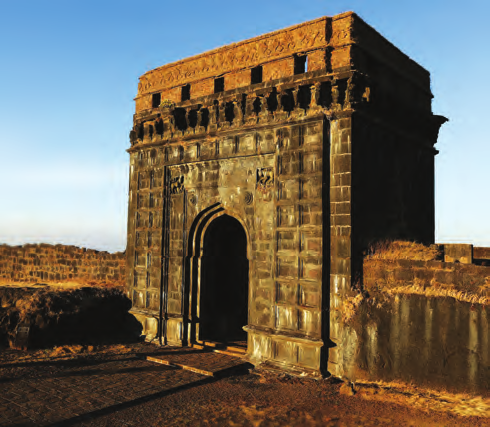
Fig 3.1 — Raigad Fort, Maharashtra, where Chhatrapati Shivaji Maharaj was crowned in 1674
- The Marathas are a group of people native to the Deccan plateau, more specifically present-day Maharashtra.
- They are identified with the language they speak — Marathi — which has had a rich and continuous literary history since the 12th century.
- During the 13th century, most of Maharashtra was ruled by the Yadava dynasty with Devagiri (present-day Daulatabad) as its capital.
- In the early 14th century, the Yadava dynasty was overcome by the Khilji Sultanate from Delhi.
- Amidst political changes, cultural traditions continued — particularly those related to bhakti (devotion to the divine or a particular deity).
- Between the 7th and the 17th centuries, saints and seekers from several parts of India preferred the path of bhakti — composing devotional songs and poetry in the languages of the masses.
- In Maharashtra, many saints like Dnyaneshwar, Namdev, Tukaram, Ramdas etc. gained popularity — they helped translate important texts like the Upanishads and the Bhagavad Gītā into Marathi.
- Some saints also focused on social organisation and political awareness — similar to the Sikh gurus.
- As a result, the society acquired a solid cultural foundation, which later helped the Marathas organise themselves into a political power.
📝 Questions — Who are the Marathas?
LOTS Who are the Marathas? Where are they native to and what language do they speak?
Show Answer
The Marathas are a group of people native to the Deccan plateau, more specifically present-day Maharashtra. They speak Marathi, which has had a rich and continuous literary history since the 12th century.
Medium Name four Maratha saints and explain how they helped society acquire a solid cultural foundation.
Show Answer
Four Maratha saints: Dnyaneshwar, Namdev, Tukaram and Ramdas. They helped translate important texts like the Upanishads and Bhagavad Gita into Marathi, making philosophy accessible to the masses. Some also focused on social organisation and political awareness. As a result, society acquired a solid cultural foundation that later helped the Marathas organise themselves into a political power.
HOTS How did the bhakti movement contribute to the political rise of the Marathas? Explain the connection.
Show Answer
The bhakti movement created a sense of shared cultural identity among the people of Maharashtra. Saints like Tukaram and Ramdas composed devotional songs and poetry in Marathi, reaching the masses. They also focused on social organisation and political awareness. This gave Maratha society a solid cultural foundation — a shared language, values and identity — which became the base for political organisation. Without this cultural unity, the Marathas might not have been able to come together as a powerful political entity under Shivaji.
HOTS Why was the Yadava dynasty’s fall to the Khilji Sultanate significant for Maharashtra’s history?
Show Answer
The fall of the Yadava dynasty brought Maharashtra under the control of the Delhi Sultanate, creating a power vacuum and political instability in the Deccan region. This disruption made the Maratha chiefs eventually seek to establish their own sovereignty. The political uncertainty also pushed the bhakti saints to focus more on social cohesion and cultural identity, which indirectly laid the foundation for the Maratha political movement that followed.
⚔️ 2. Foundation of Maratha Power and the Rise of Chhatrapati Shivaji
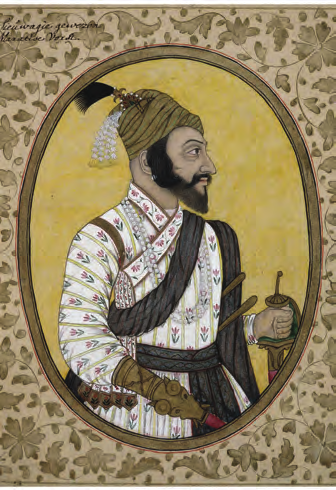
Fig 3.5 — A painting of Shivaji made in the 1680s (British Museum)
- In 1630, Shivaji was born in the Bhonsle clan to Shahji and Jijabai.
- Shahji served the Deccan sultanates and was often away from his family — Shivaji grew up in his jāgīr at Pune under the watchful eyes of Jijabai and some trusted officials.
- At just 16 years, Chhatrapati Shivaji launched military campaigns — first consolidating his hold over the Pune region by capturing neglected forts and strengthening their defences.
- His vision of a sovereign kingdom or ‘Swarājya’ grew over the years, extending to political, economic and cultural aspects.
- He established a navy to secure access to the resources of coastal regions — a truly revolutionary step, as neither the Bijapur Sultanate nor the Mughal Empire had a full-time naval force.
- Chhatrapati Shivaji used guerrilla warfare — using small groups of people with speed, surprise and knowledge of the terrain to defeat bigger armies.
- He killed the veteran Bijapur general Afzal Khan at the foot of Pratapgad fort using the wāgh nakh (tiger’s claw weapon).
- He raided Shaista Khan’s camp at night with only a few soldiers — the Khan barely escaped, losing a few fingers. This daring raid resembles the modern-day surgical strike.
- As retaliation for three years of attacks, Chhatrapati Shivaji sacked Surat — a wealthy Mughal port in Gujarat — obtaining enormous treasure worth almost one crore rupees. These events appeared in the London Gazette.
- Aurangzeb sent Rajput general Jai Singh to defeat Shivaji — he had to concede defeat at Purandar Fort and give up part of his kingdom.
- At Agra, Aurangzeb put Shivaji under house arrest — but Shivaji escaped by hiding in baskets of fruits and sweets along with his son Sambhaji. Aurangzeb could never capture him again.
- In 1674, Chhatrapati Shivaji was coronated with full Vedic rites at Raigad fort — his formal title was ‘Shri Raja Shiva Chhatrapati’; he started his own era, the Rājyābhisheka shaka.
- After coronation, he embarked on the dakshina-digvijaya (conquest of the South) — including present-day northern Tamil Nadu and parts of Karnataka.
- While in the South, he forbade the Dutch from trading slaves — showing his deep concern for his subjects.
- A fever claimed Chhatrapati Shivaji’s life when he was fifty — the Europeans compared him with ancient generals like Alexander.
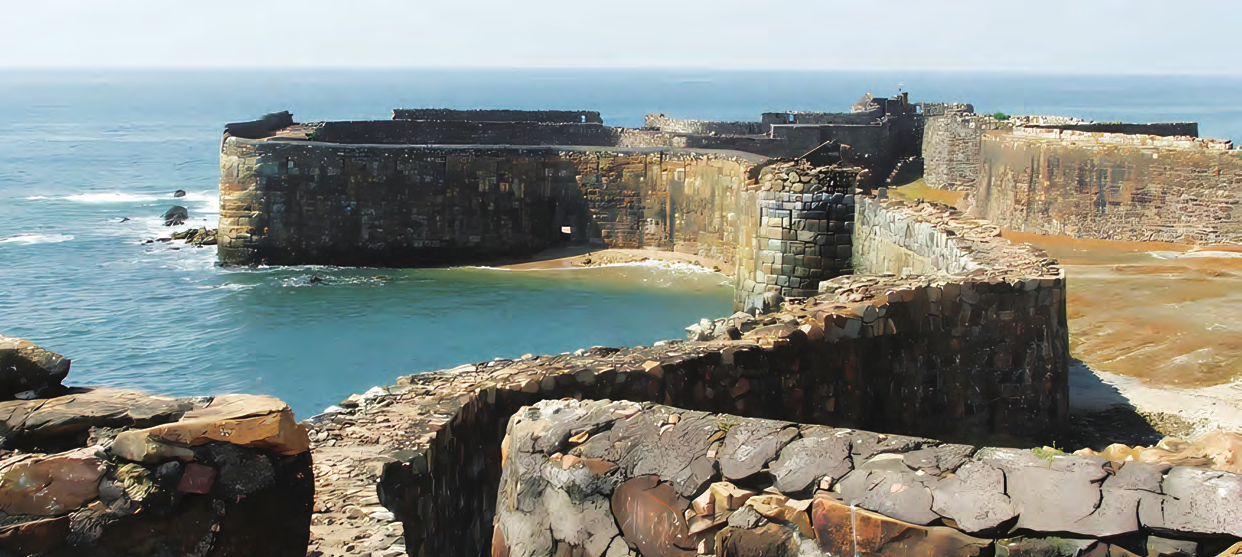
Fig 3.6 — The Sindhudurg Fort near the Maharashtra-Goa border, one of the naval fortifications built by the Marathas
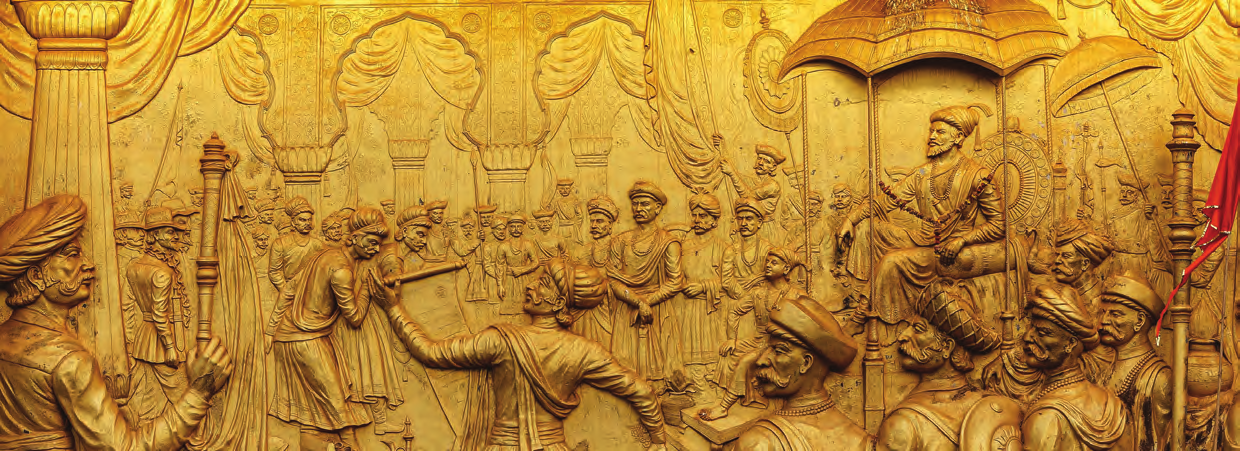
Fig 3.8 — A court scene with Chhatrapati Shivaji on his throne receiving visitors (panel in Chhatrapati Shivaji Maharaj Park, Mumbai)
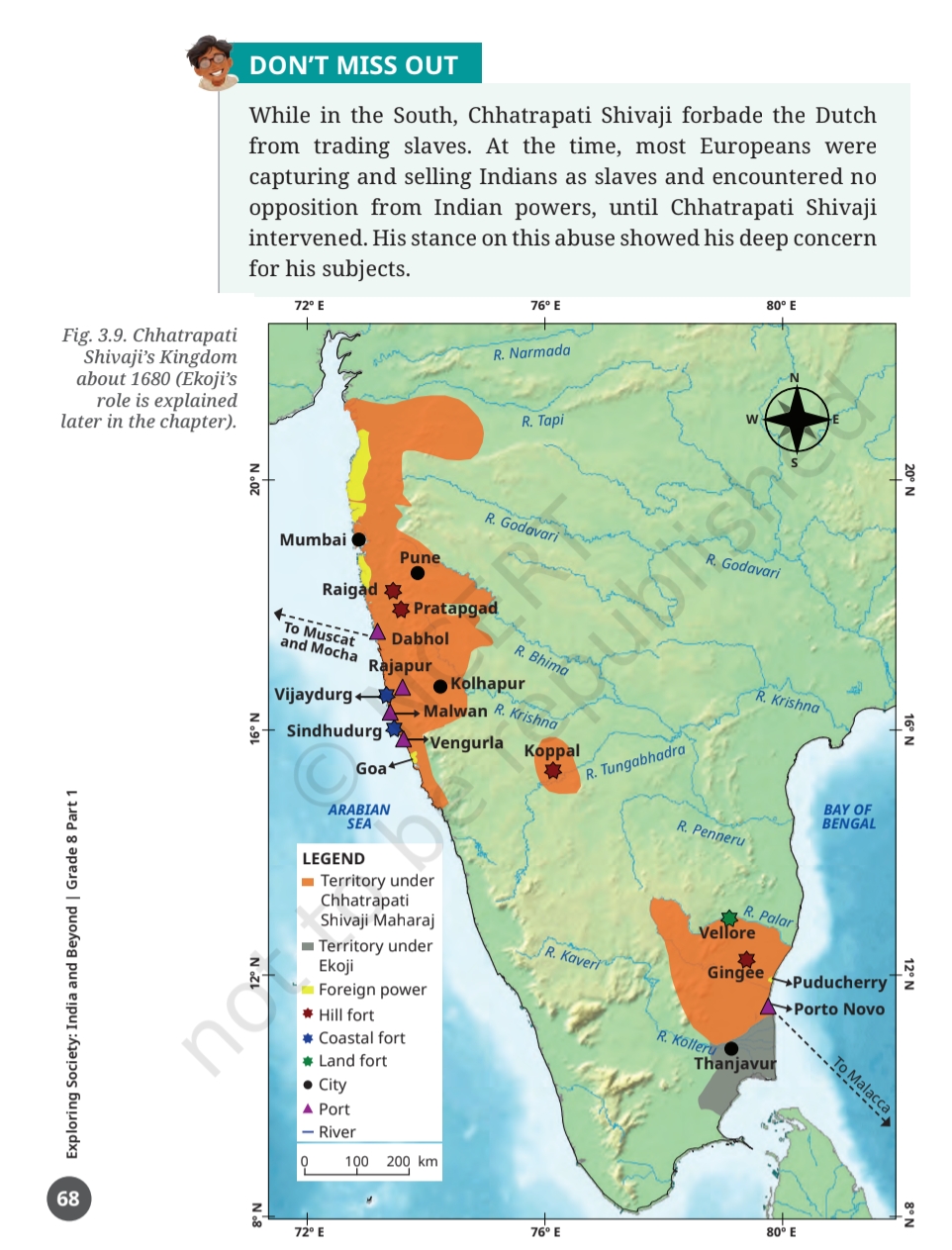
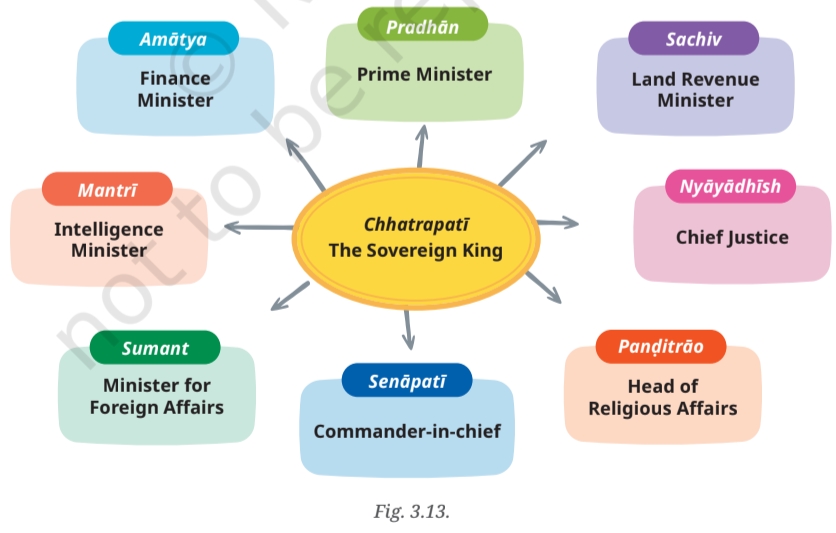
Fig 3.9 — Chhatrapati Shivaji’s Kingdom about 1680
📝 Questions — Rise of Chhatrapati Shivaji
LOTS When and where was Chhatrapati Shivaji born? Who was his mother?
Show Answer
Chhatrapati Shivaji was born in 1630 in the Bhonsle clan. His father was Shahji and his mother was Jijabai. He grew up in his father’s jagir at Pune under the care of Jijabai and trusted officials.
Medium What is guerrilla warfare? How did Chhatrapati Shivaji use it effectively against bigger armies?
Show Answer
Guerrilla warfare uses small groups of people in a focused way, with speed, surprise and knowledge of the terrain to defeat bigger armies. Chhatrapati Shivaji used the hilly terrain of the Deccan and his knowledge of local geography to his advantage. He launched surprise attacks, used forts as bases, and avoided direct confrontation with larger armies. His killing of Afzal Khan at Pratapgad and the night raid on Shaista Khan’s camp are examples of effective guerrilla tactics.
HOTS Why was Shivaji’s establishment of a navy considered a revolutionary step? Compare it with the Mughals and the Bijapur Sultanate.
Show Answer
Shivaji’s establishment of a navy was revolutionary because no other Indian power of the time had a full-time naval force. The Bijapur Sultanate (Adil Shahi dynasty) only maintained merchant ships and had no force to protect the coast. Even the mighty Mughal Empire’s use of a navy was very limited. By building a dedicated navy, Shivaji could secure the western coast, protect trade, and challenge European naval dominance. This gave the Marathas a strategic advantage that no other Indian power had at the time.
HOTS What does Shivaji’s escape from Agra in baskets tell us about his character and intelligence?
Show Answer
Shivaji’s escape from Agra demonstrates his exceptional intelligence, patience and strategic thinking. Rather than attempting a violent escape, he devised a clever plan — distributing gifts in large baskets to holy men and Mughal generals until the guards stopped checking them. He then hid himself and his son Sambhaji inside the baskets to escape. This shows his ability to think creatively under pressure, exploit human psychology, and turn an extremely dangerous situation to his advantage. Aurangzeb, despite all his power, could never capture Shivaji again.
👑 3. The Marathas after Chhatrapati Shivaji
- Chhatrapati Shivaji had two sons — Sambhaji and Rajaram. After Shivaji’s death, Sambhaji became the Chhatrapati.
- Aurangzeb invaded the Deccan and conquered the Bijapur (Adil Shahi) and Golconda (Qutb Shahi) Sultanates. He then captured Sambhaji, tortured him brutally and executed him. He also captured Raigad, the Maratha capital.
- After Sambhaji, Rajaram became the Chhatrapati and fled to Gingee (present-day Tamil Nadu) — spreading the Mughal-Maratha conflict to south India.
- The Marathas staunchly defended their fortresses and often had the upper hand over the Mughals. Aurangzeb was unable to leave the Deccan and died without having succeeded in subduing the Marathas.
- The Marathas, led by Tarabai (Rajaram’s queen), made large-scale inroads into Mughal territories, eventually conquering large parts of India.
- The centralised state from Shivaji’s time gave way to a more decentralised structure — the Peshwa (a Persian term for ‘prime minister’) wielded great influence, even over the Chhatrapati himself.
- Peshwa Bajirao I and his son Nanasaheb Peshwa were instrumental in the pan-Indian expansion of the Marathas.
- In their northward expansion, the Marathas briefly controlled Lahore, Attock and even Peshawar (modern-day Pakistan).
- Despite suffering a disastrous defeat at the Battle of Panipat in 1761, they quickly recovered during the time of Peshwa Madhavrao I.
- Under Mahadji Shinde (Mahadji Scindia), they recaptured Delhi in 1771, which remained under their control till the British captured it three decades later.
- Three Anglo-Maratha wars were fought between 1775 and 1818. Owing to Maratha internal disunity and superior British organisational and technological abilities, the British succeeded in ending Maratha power.
- “The British took India from the Marathas more than from the Mughals or any other power.”
- Nana Phadnavis, a powerful official under the Peshwas, is credited with organising the first pan-Indian anti-British alliance — uniting even old adversaries like Hyder Ali of Mysore and the Nizam of Hyderabad.
📝 Questions — The Marathas after Shivaji
LOTS Who was the Peshwa? Name two important Peshwas who helped expand the Maratha Empire.
Show Answer
The Peshwa (a Persian term for ‘prime minister’) was a powerful official who wielded great influence in the Maratha state, even over the Chhatrapati himself. Peshwa Bajirao I and his son Nanasaheb Peshwa were instrumental in the pan-Indian expansion of the Marathas.
Medium What happened at the Battle of Panipat in 1761? How did the Marathas recover from this defeat?
Show Answer
At the Battle of Panipat in 1761, the Marathas suffered a disastrous defeat against the Afghans. However, they quickly recovered during the time of Peshwa Madhavrao I. Under the leadership of Mahadji Shinde (Mahadji Scindia), they went on to recapture Delhi in 1771, which remained under their control till the British captured it three decades later.
HOTS Why does the chapter say “The British took India from the Marathas more than from the Mughals or any other power”? What evidence supports this?
Show Answer
By the latter half of the 18th century, the Marathas were the chief rivals of the British in India — not the Mughals. The Marathas controlled large parts of India including Delhi itself. Three Anglo-Maratha wars (1775–1818) were needed before the British could end Maratha power. The Mughals by this time were weak and largely powerless. It was the Maratha power that the British had to defeat militarily and politically to gain control of the subcontinent, making the statement historically accurate.
HOTS How did Aurangzeb’s prolonged campaign against the Marathas weaken the Mughal Empire?
Show Answer
Aurangzeb became so absorbed in fighting the Marathas in the Deccan that he could not leave the region for decades. The Marathas staunchly defended their fortresses and often had the upper hand in battles and skirmishes. This prolonged and expensive military campaign drained the Mughal treasury and military resources enormously. Aurangzeb died without succeeding in subduing the Marathas. Meanwhile, the Mughal territories in the north were left unguarded, which the Marathas exploited under Tarabai’s leadership. The Deccan campaign is considered one of the major causes of the eventual decline of the Mughal Empire.
📜 4. Maratha Administration
Civilian Administration
- Chhatrapati Shivaji established the Ashtapradhan — a council of eight ministers, each in charge of a department: finance, foreign affairs, defence, religious matters, justice, records, and correspondence.
- The administration paid careful attention to agriculture and the welfare of farmers — revenue demands were reasonable and collected with consideration during difficult seasons.
- The Marathas levied chauth (one-fourth of revenue) and sardeshmukhi (an additional one-tenth) from territories under their influence.
- Shivaji’s instructions to his officials show remarkable care for the common people and even for nature.
Military Administration
- The backbone of Maratha power was its network of hill forts — Shivaji controlled around 300 forts, each stocked and garrisoned to withstand sieges.
- Soldiers were paid in cash, and strict discipline was maintained — plundering of civilians, harming women and destroying places of worship were forbidden.
- The army consisted of light, fast cavalry and infantry suited to guerrilla warfare in the Sahyadri terrain.
- Maratha weapons included swords like the patta and firangi, the dhop, daggers, and the famous wāgh nakh (tiger claws).
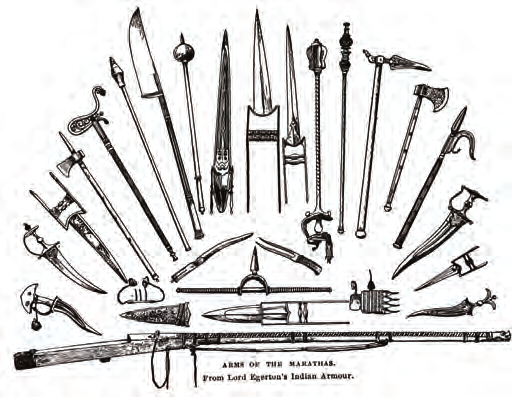
Fig 3.11 — Maratha weapons: swords, daggers and the wāgh nakh
Maritime Supremacy
- Shivaji is rightly called the ‘Father of the Indian Navy’ — he built naval forts like Sindhudurg and Vijaydurg and a fleet of fighting ships.
- Maratha ships included gurabs, galbats and pals, manned by skilled sailors of the Konkan coast.
- Under the legendary admiral Kanhoji Angre, the Maratha navy dominated the western coastline in the early 18th century — even the English, Dutch and Portuguese fleets could not defeat him, and their ships paid for passes (dastaks) to sail safely.
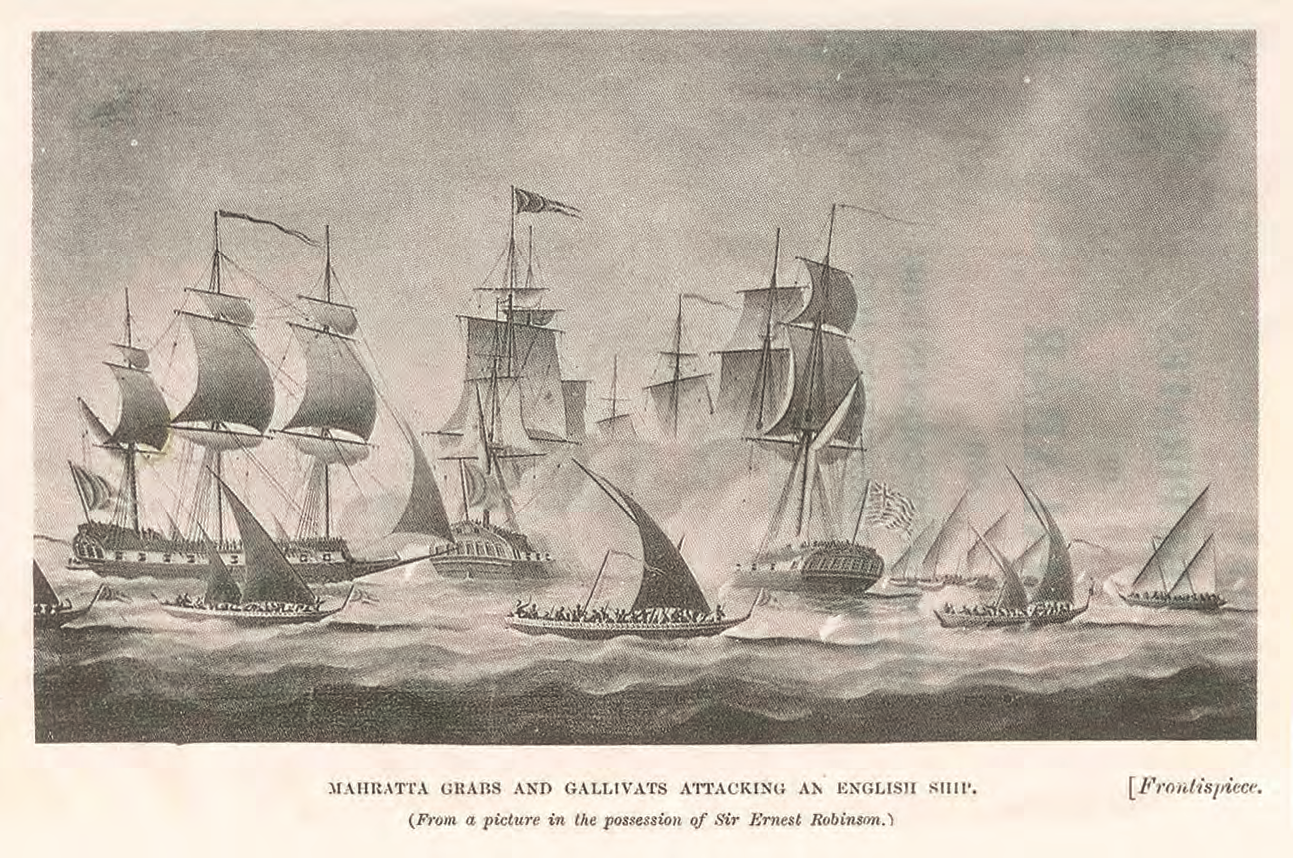
Fig 3.12 — Maratha fighting ships that ruled the Konkan coast
Judicial System
- Justice at the village level continued through the traditional panchayat system — village elders settled most disputes locally.
- Above them stood officials and courts, with the Hazir Majalis at the apex for the most serious matters.
- Written records of decisions (mahzars) were maintained — many survive today, showing a working and documented judicial process.
Trade Networks
- The Marathas protected and promoted trade routes, markets and ports — customs duties from trade were an important source of revenue.
- The Ādnyāpatra, a famous Maratha state document on governance, devotes attention to the treatment of merchants.
📝 Questions — Maratha Administration
LOTS What was the Ashtapradhan? Who established it?
Show Answer
The Ashtapradhan was a council of eight ministers established by Chhatrapati Shivaji, each in charge of a department such as finance, foreign affairs, defence, religious matters and justice — an early model of cabinet government.
Medium Who was Kanhoji Angre and why is he remembered?
Show Answer
Kanhoji Angre was the legendary admiral of the Maratha navy in the early 18th century. Under him, the navy dominated the western coastline so completely that even the English, Dutch and Portuguese could not defeat him — their ships had to buy passes (dastaks) from the Marathas to sail safely along the coast.
HOTS What does Shivaji’s letter about fruit trees reveal about his ideas of governance?
Show Answer
The letter shows that Shivaji saw the state as the protector — not exploiter — of the people. Even for military needs like ship timber, officials could take only old, non-fruit-bearing trees, and had to pay for anything taken from farmers. He recognised that mango and jackfruit trees represent years of a family’s love and labour. This combination of compassion, environmental sense and strict official discipline explains why his Swarajya won people’s loyalty.
HOTS “The merchants are the ornaments of the kingdom.” How did this Ādnyāpatra principle strengthen the Maratha state?
Show Answer
By respecting and protecting merchants — local and foreign — the Marathas ensured flourishing trade, which brought scarce goods into the kingdom, enriched markets and ports, and provided steady customs revenue to fund the army and administration. Protecting traders also built the state’s reputation, attracting more commerce. It shows the Marathas understood that military power ultimately rests on economic prosperity.
🎭 5. Cultural Revival
- The Marathas repaired and rebuilt temples destroyed in earlier invasions — including at Kashi (Varanasi) — and patronised ghats, dharamshalas and pilgrimage centres across India.
- Marathi language and literature flourished — powadas (heroic ballads) and lavanis carried history and values to the common people.
- Festivals, music, and learning received royal patronage in Maratha courts from Pune to distant Thanjavur.
The Mighty Maratha Women
- Tarabai, queen of Rajaram, took charge of the Maratha struggle after his death — commanding armies, planning campaigns and leading the fight against Aurangzeb himself. Under her leadership, the Marathas began their large-scale inroads into Mughal territories.
- Ahilyabai Holkar of Indore (ruled 1767–1795) is remembered as one of India’s greatest rulers — a wise administrator who personally heard her people’s grievances.
- Ahilyabai rebuilt and endowed temples, ghats, wells and dharamshalas across India — from Kashi Vishwanath at Varanasi and Somnath in Gujarat to Rameswaram in the far south.
- Her capital Maheshwar became a centre of textile weaving (the famous Maheshwari sarees), arts and literature.
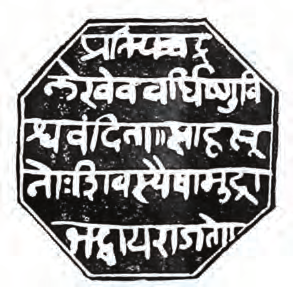
Fig 3.13 — Tarabai, who led the Maratha resistance against Aurangzeb
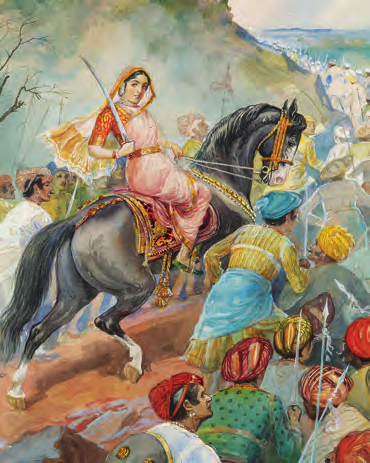
Fig 3.14 — A postage stamp honouring Ahilyabai Holkar
In Focus: Thanjavur
- A branch of the Bhonsle family ruled Thanjavur (Tamil Nadu) for nearly two centuries — a shining example of Maratha cultural patronage far from Maharashtra.
- King Serfoji II (ruled 1798–1832) was a remarkable scholar-king — he enriched the Saraswati Mahal Library, one of Asia’s oldest libraries, with tens of thousands of manuscripts in many languages.
- Thanjavur under the Marathas nurtured Carnatic music, dance, medicine, and the famous Thanjavur style of painting with its rich colours and gold leaf.
- An inscription in the Brihadīshwara temple records the history of the Maratha rulers of Thanjavur — one of the longest inscriptions in the world.
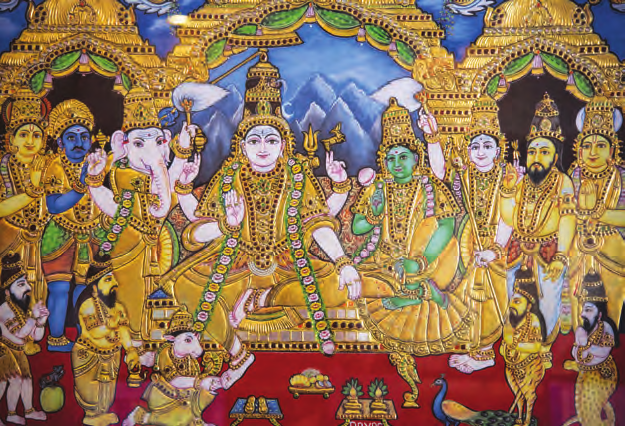
Fig 3.17 — A Thanjavur painting, famous for rich colours and gold leaf
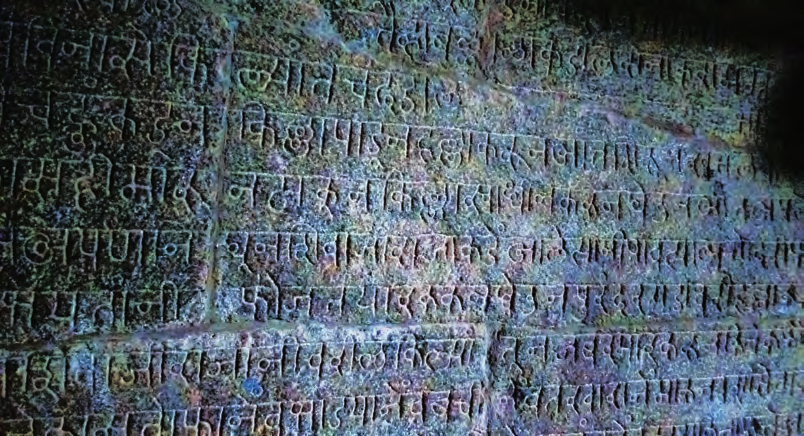
Fig 3.18 — The Maratha inscription at the Brihadīshwara temple, Thanjavur
📝 Questions — Cultural Revival & Maratha Women
LOTS Name the two great Maratha women discussed in this chapter and one achievement of each.
Show Answer
Tarabai — queen of Rajaram, who led the Maratha struggle against Aurangzeb after Rajaram’s death and began the Maratha expansion into Mughal territories. Ahilyabai Holkar — ruler of Indore (1767–1795), who rebuilt temples, ghats and dharamshalas across India and made Maheshwar a centre of weaving and arts.
Medium What was Serfoji II’s contribution to learning?
Show Answer
Serfoji II, the Maratha ruler of Thanjavur (1798–1832), was a scholar-king who enriched the Saraswati Mahal Library — one of the oldest libraries in Asia — with tens of thousands of manuscripts in many languages. His court also nurtured Carnatic music, dance, medicine and the Thanjavur style of painting.
HOTS Ahilyabai Holkar built temples and ghats far beyond her own kingdom — from Kashi to Rameswaram. What vision of India does this suggest?
Show Answer
Her patronage across the whole subcontinent shows she saw India as one sacred cultural space, not just a collection of kingdoms. By restoring pilgrimage sites in every direction, she strengthened the threads that tied Indians together — shared holy places, shared journeys, shared traditions. It reflects a vision of cultural unity that transcended political boundaries — with a ruler’s duty extending to civilisational care.
HOTS How does Thanjavur prove that Maratha rule was not merely military conquest?
Show Answer
In Thanjavur, deep in Tamil country, the Maratha Bhonsles ruled for nearly two centuries not by force but by patronage — funding a great library, Carnatic music, dance, medicine, painting, and maintaining the Brihadīshwara temple. They adopted and enriched local Tamil culture rather than imposing their own. This shows the Maratha state could be a builder of civilisation, blending Marathi and Tamil traditions into a lasting cultural legacy.
🌟 6. The Maratha Legacy
- The Marathas built a truly pan-Indian power — from Attock in the north-west to Thanjavur in the south — and were the chief power the British had to defeat to win India.
- Shivaji’s ideal of Swarājya — self-rule with justice for all communities — inspired later generations, including leaders of India’s freedom movement; Lokmanya Tilak invoked Shivaji as a national symbol.
- Their contributions endure: the navy tradition (the Indian Navy honours Shivaji as its inspiration), restored temples and ghats across India, the Marathi literary heritage, and models of disciplined, welfare-minded administration.
- The seal of Shivaji expressed the mission that outlived him:
📝 Questions — The Maratha Legacy
LOTS What did Chhatrapati Shivaji’s royal seal (Rājmudrā) proclaim?
Show Answer
The Rājmudrā proclaimed that the kingdom of Shivaji, son of Shahji, would grow ever like the crescent moon and would always seek the welfare of the people — placing people’s welfare at the heart of the state’s mission.
Medium How did the Maratha legacy inspire India’s freedom movement?
Show Answer
Shivaji’s ideal of Swarājya — self-rule — became a powerful symbol for India’s freedom fighters. Leaders like Lokmanya Tilak invoked Shivaji’s memory to awaken national pride, and ‘Swaraj’ itself became the rallying cry of the independence movement. The Maratha example proved Indians had successfully built and defended their own sovereign state against the greatest empires.
HOTS Evaluate: “The Maratha legacy is as much about governance and culture as about war.”
Show Answer
True. Beyond military glory, the Marathas left enduring models of administration (Ashtapradhan, cash-paid disciplined army, documented justice, protection of merchants), a naval tradition the Indian Navy still honours, ethical codes of warfare, cultural patronage from Kashi’s ghats to Thanjavur’s library, and the political ideal of Swarājya that fuelled the freedom movement. Their wars ended in 1818, but these institutions and ideals continue to shape India.
HOTS The Marathas were defeated by the British partly due to internal disunity. What lesson does this hold?
Show Answer
Despite superior numbers and vast territory, Maratha chiefs — Peshwas, Scindias, Holkars, Gaekwads, Bhonsles — often acted separately and even against each other, letting the British defeat them one by one across three wars (1775–1818). Nana Phadnavis understood this and built the first pan-Indian anti-British alliance, but it did not last. The lesson: unity is the foundation of strength — division within is more dangerous than any enemy outside.
📌 Before We Move On
- The Marathas of the Deccan, united by the Marathi language and the bhakti tradition of saints like Dnyaneshwar and Tukaram, rose from cultural strength to political power.
- Chhatrapati Shivaji (1630–1680) built Swarājya through forts, guerrilla warfare, a revolutionary navy, and just administration — crowned at Raigad in 1674.
- After Sambhaji’s execution, Rajaram, Tarabai and later the Peshwas carried the struggle forward; Aurangzeb died in the Deccan without subduing the Marathas.
- Under the Peshwas and Mahadji Shinde, Maratha power spread across India — from Attock to Thanjavur — recapturing Delhi in 1771; three Anglo-Maratha wars (1775–1818) ended their power.
- Maratha administration cared for farmers, merchants and even fruit trees; Kanhoji Angre’s navy ruled the coast; Tarabai and Ahilyabai Holkar showed the strength of Maratha women.
- The legacy of Swarājya inspired India’s freedom movement — and the welfare mission of Shivaji’s Rājmudrā still speaks today.