
Class 8 Social Science — Tapestry of the Past
Chapter 4🏴 The Colonial Era in India
🎯 Learning Objectives — After this chapter you will be able to:
- Define colonialism and understand how European powers colonised Asia and Africa
- Trace the arrival and activities of Portuguese, Dutch, French and British trading companies in India
- Explain how the British conquered India through battles, treaties and policies like the Doctrine of Lapse
- Analyse the economic impact of British rule — drain of wealth, de-industrialisation, famines and land revenue policies
- Understand the role of railways as a dual legacy of British rule
- Describe the various revolts against British rule including the Revolt of 1857 — its causes, course and aftermath
- Appreciate the bravery of leaders like Rani Lakshmibai, Begum Hazrat Mahal and Mangal Pandey
📚 Chapter Index
🌍 1. Colonialism
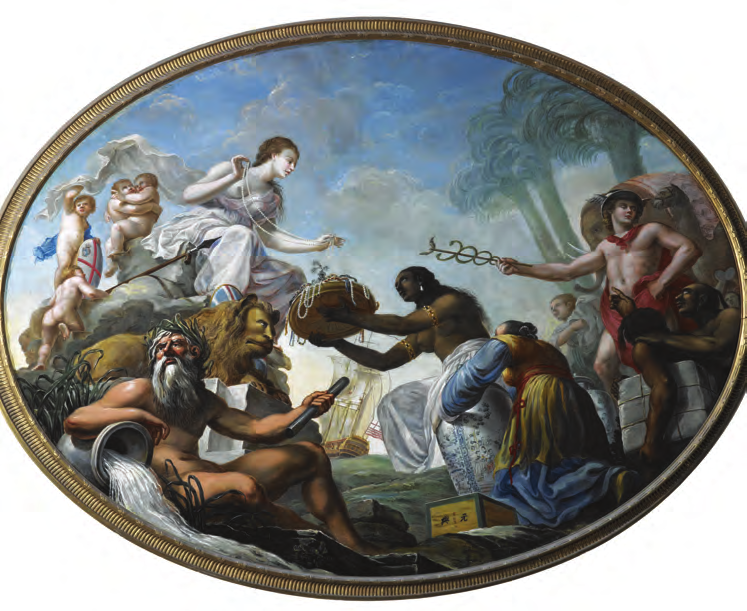
Fig 4.1 — ‘The East offering its riches to Britannia’ — a painting from 1778 reflecting Britain’s imperial ambitions
- Colonialism is the practice by which a powerful country takes control of a weaker one — ruling it politically, exploiting it economically and often imposing its culture on the local population.
- Between the 15th and 20th centuries, European powers like Portugal, Spain, Britain, France, the Netherlands and Belgium colonised large parts of Asia, Africa and the Americas.
- The main motivations for colonialism were:
- Economic — access to raw materials, new markets and cheap labour
- Political — expanding territory and national prestige
- Ideological — a misguided belief in the superiority of European civilisation (the so-called ‘civilising mission’)
- By the late 19th century, European powers had divided almost the entire African continent among themselves — a process known as the ‘Scramble for Africa’.
- India became one of the most prized colonial possessions — called the ‘Jewel in the Crown’ of the British Empire.
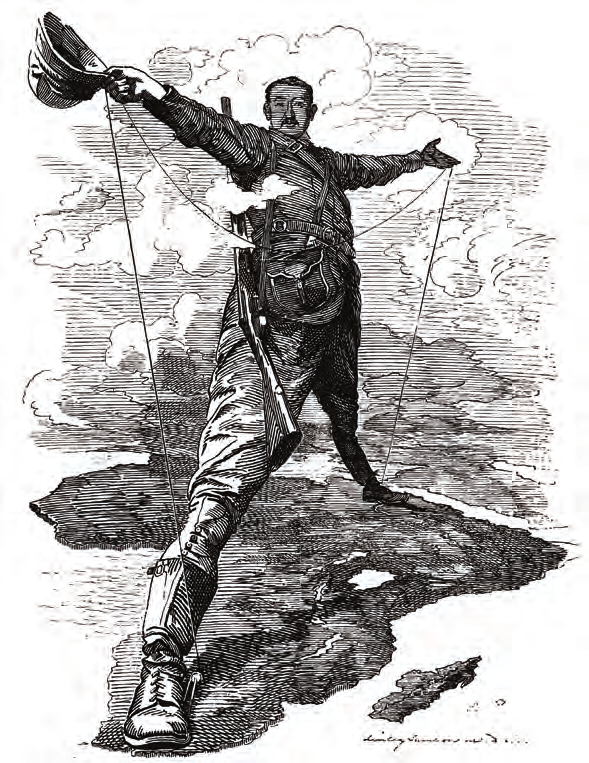
Fig 4.3 — A cartoon from 1892 showing a British magnate straddling Africa — symbolising European imperial ambition over the continent
📝 Questions — Colonialism
LOTS What is colonialism? Name any three European countries that colonised parts of Asia and Africa.
Show Answer
Colonialism is the practice by which a powerful country takes control of a weaker one — ruling it politically, exploiting it economically and often imposing its culture on the local population. Three European colonising countries: Portugal, Britain and France.
Medium What were the three main motivations for European colonialism? Explain each briefly.
Show Answer
Economic — access to raw materials, new markets and cheap labour from colonies. Political — expanding territory and increasing national prestige and power. Ideological — a misguided belief in the superiority of European civilisation, called the ‘civilising mission’, which was used to justify colonial rule.
HOTS Why was India called the ‘Jewel in the Crown’ of the British Empire? What made it so valuable?
Show Answer
India was called the ‘Jewel in the Crown’ because it was Britain’s most prized and profitable colonial possession. India offered enormous economic benefits — vast agricultural resources, rich raw materials like cotton and jute, a huge captive market for British manufactured goods, and a large pool of soldiers for the British Indian Army. India’s strategic location also allowed Britain to dominate trade routes across Asia. The wealth extracted from India helped finance Britain’s industrial revolution and its global empire.
HOTS How does the 1778 painting ‘The East offering its riches to Britannia’ reflect the colonial mindset of Europeans?
Show Answer
The painting shows ‘the East’ (represented by non-European figures) offering treasure and riches to Britannia (representing Britain), implying that it was natural and right for Asian people to give their wealth to Britain. This reflects the colonial mindset that saw non-European peoples and their resources as existing for European benefit. It also portrays the relationship as voluntary and peaceful, hiding the reality that colonialism was built on force, exploitation and the suppression of local peoples’ rights and sovereignty.
⚓ 2. European Trading Companies in India
The Portuguese
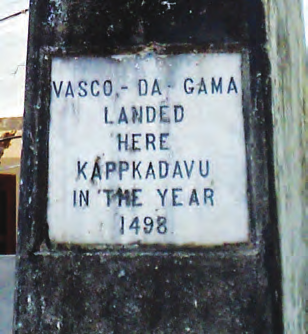
Fig 4.4 — A plaque marking the arrival of Vasco da Gama at Calicut in 1498
- Vasco da Gama arrived at Calicut (Kozhikode) in 1498 — the first European to reach India by sea, opening a direct sea route from Europe to Asia.
- The Portuguese established trading posts at Goa, Daman, Diu and Calicut — Goa became their main base in India.
- They controlled the spice trade for nearly a century, using armed force to dominate the Indian Ocean trade routes.
- They introduced new crops like potato, tomato, cashew, groundnut and tobacco to India.
- The Portuguese also promoted Christian missionary activity and converted many local people, sometimes forcibly.
- Rani Abbakka Chowta of Ullal (near Mangaluru) bravely resisted Portuguese aggression in the 16th century — she is celebrated as one of the first Indian women to fight European colonisers.
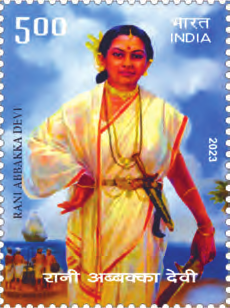
Fig 4.5 — Rani Abbakka Chowta, who bravely resisted Portuguese aggression
The Dutch
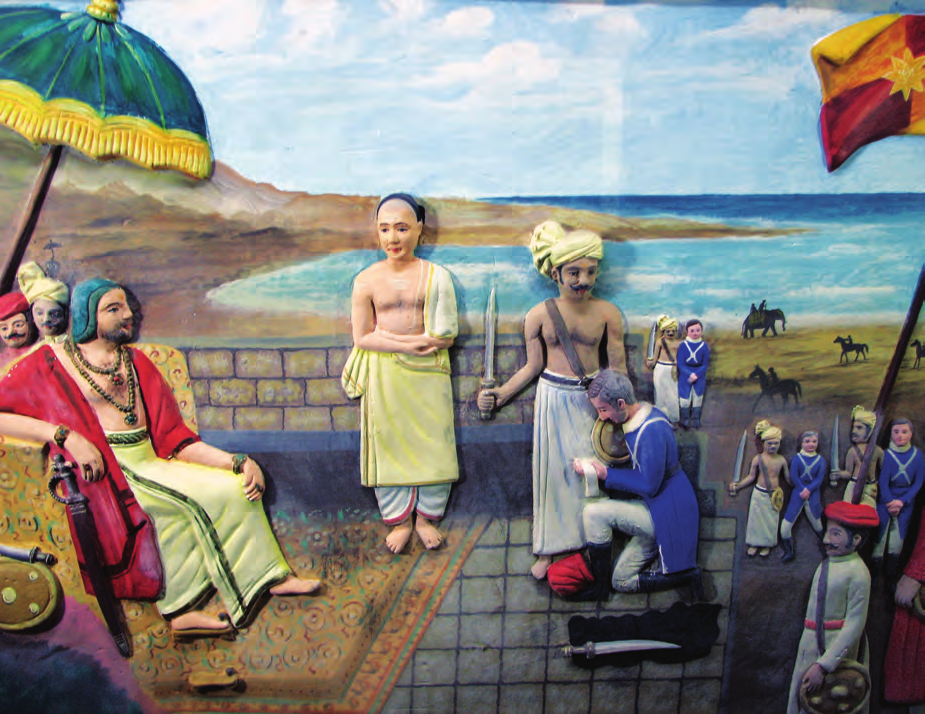
Fig 4.6 — Relief at Padmanabhapuram Palace depicting the Dutch surrendering after the Battle of Colachel, 1741
- The Dutch East India Company (VOC) was established in 1602 — the Dutch (from the Netherlands) were major rivals of the Portuguese in Asia.
- They established trading posts in Masulipatnam, Pulicat, Surat, Cochin and Bengal.
- The Dutch were primarily interested in the spice trade of Southeast Asia — their activities in India were limited compared to the British and Portuguese.
- In 1741, the Dutch suffered a decisive defeat against the forces of Marthanda Varma of Travancore at the Battle of Colachel — ending Dutch power in India.
- This battle is historically significant as one of the first times an Asian power defeated a European naval force.
The French
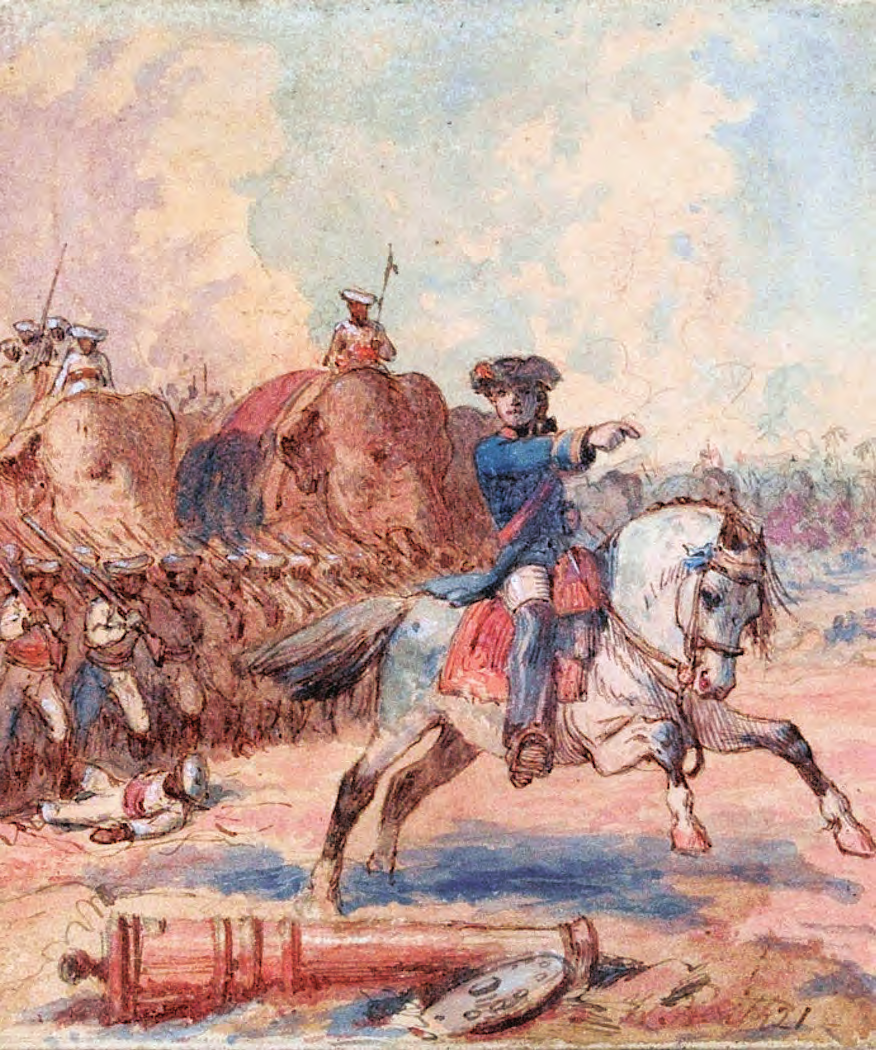
Fig 4.7 — A 1764 plan of Pondicherry, the main French settlement in India
- The French East India Company was established in 1664 — the French established their main settlement at Pondicherry (Puducherry).
- Other French settlements included Chandannagar (Bengal), Mahe (Kerala), Yanam and Karikal.
- The French were the main rivals of the British in India — they competed through the Carnatic Wars (three wars fought between 1746 and 1763).
- The French supported local rulers like the Nawab of Hyderabad against the British — and the British supported opposing rulers.
- The French were ultimately defeated in the Third Carnatic War (1756–1763) — ending French ambitions in India; Pondicherry was captured by the British.
The British
- The British East India Company was established on 31 December 1600 by a Royal Charter granted by Queen Elizabeth I.
- The Company initially set up trading posts at Surat (1608), Madras/Fort St. George (1639), Bombay (1668) and Calcutta/Fort William (1690).
- The British defeated the Portuguese in naval battles and gradually pushed out the Dutch and French — emerging as the dominant European power in India.
- The Company used a combination of trade, diplomacy and military force to expand its influence across India.
- It raised its own army — the Sepoy Army — consisting of Indian soldiers (sepoys) trained in European military methods.
📝 Questions — European Trading Companies
LOTS Who was Vasco da Gama? When and where did he arrive in India?
Show Answer
Vasco da Gama was a Portuguese explorer who was the first European to reach India by sea. He arrived at Calicut (Kozhikode) in 1498, opening a direct sea route from Europe to Asia.
Medium What was the significance of the Battle of Colachel (1741)?
Show Answer
The Battle of Colachel in 1741 was fought between the Dutch East India Company and the forces of Marthanda Varma of Travancore. The Dutch suffered a decisive defeat, ending Dutch power in India. This battle is historically significant as one of the first times an Asian power defeated a European naval force in battle.
HOTS Why was Rani Abbakka Chowta historically significant? What does her story tell us about Indian resistance to European colonialism?
Show Answer
Rani Abbakka Chowta of Ullal was one of the first Indian rulers to actively resist Portuguese colonial aggression in the 16th century. As a woman ruler, she led her forces against the Portuguese multiple times, repeatedly defeating their attempts to capture her territory. Her story tells us that resistance to European colonialism began from the very earliest days of their arrival in India, and that this resistance came from all sections of society — including women rulers. She is a symbol of Indian courage and sovereignty.
HOTS How did the British East India Company transform from a trading company into a ruling power?
Show Answer
The British East India Company began as a purely commercial enterprise focused on trade. Over time it used a combination of trade, diplomacy and military force to expand its influence. It raised its own Sepoy Army of Indian soldiers trained in European methods. It exploited rivalries among Indian rulers, signing unequal treaties. After the Battle of Plassey (1757), it gained political control of Bengal. Gradually through wars, treaties and policies like the Doctrine of Lapse, it extended control across India, transforming from a trading company into the ruler of the subcontinent.
⚔️ 3. British Conquest of India
Battle of Plassey (1757)
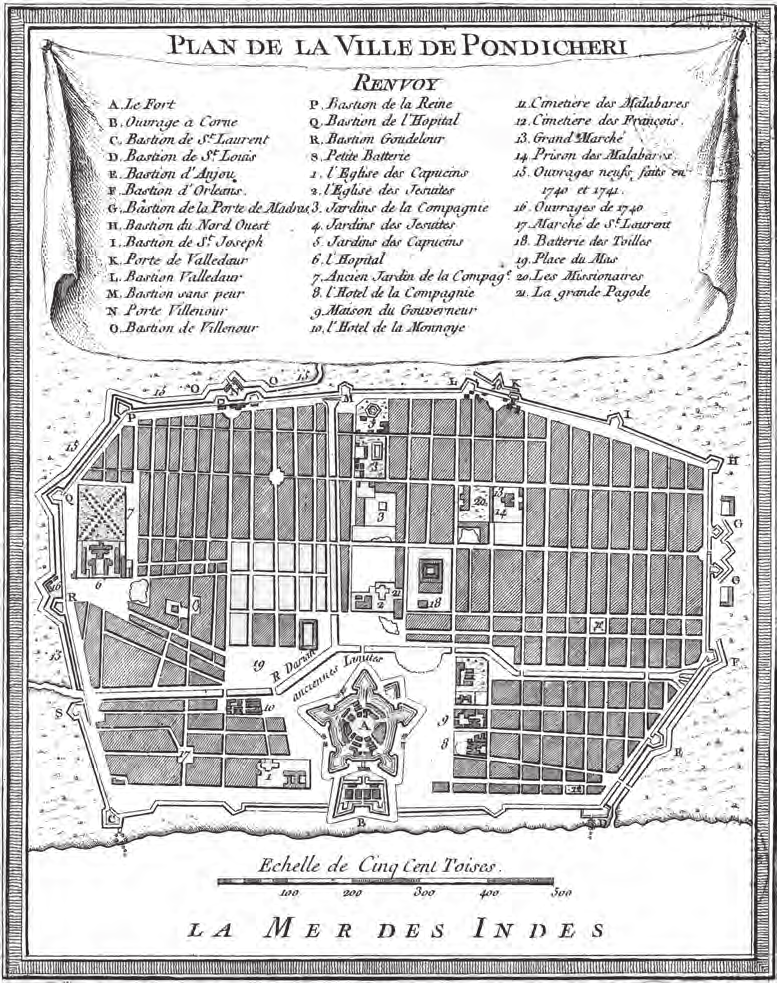
Fig 4.8 — Robert Clive leading British troops at the Battle of Plassey, 1757
- The Battle of Plassey (1757) was a turning point in Indian history — the British East India Company defeated the Nawab of Bengal, Siraj ud-Daulah.
- The Company’s commander Robert Clive bribed the Nawab’s general Mir Jafar to betray Siraj ud-Daulah during the battle — the Nawab’s army collapsed without fighting.
- After the victory, the Company appointed Mir Jafar as the new Nawab — effectively making Bengal a puppet state under British control.
- The Battle of Plassey gave the British control over the richest province in India — the revenue from Bengal financed further British expansion across India.
- The Battle of Buxar (1764) further consolidated British power — defeating the combined forces of the Nawab of Bengal, the Nawab of Awadh and the Mughal Emperor Shah Alam II.
- The Treaty of Allahabad (1765) gave the British the Diwani rights (right to collect revenue) of Bengal, Bihar and Orissa — making the Company the de facto ruler of these regions.
Doctrine of Lapse
- The Doctrine of Lapse was a policy introduced by Governor-General Lord Dalhousie (1848–1856).
- According to this doctrine, if an Indian ruler died without a natural heir, his kingdom would ‘lapse’ (be annexed) to the British East India Company.
- The doctrine did not recognise the Indian tradition of adopting a son as an heir — this was used to annex kingdoms.
- Kingdoms annexed under this doctrine included: Satara (1848), Jaitpur, Sambalpur (1849), Baghat (1850), Udaipur (1852), Jhansi (1853) and Nagpur (1854).
- The annexation of Jhansi particularly angered Rani Lakshmibai — whose adopted son was not recognised as heir — making her one of the most passionate leaders of the 1857 Revolt.
- The doctrine was widely resented and contributed to the growing anger that led to the Revolt of 1857.
The British Empire in India
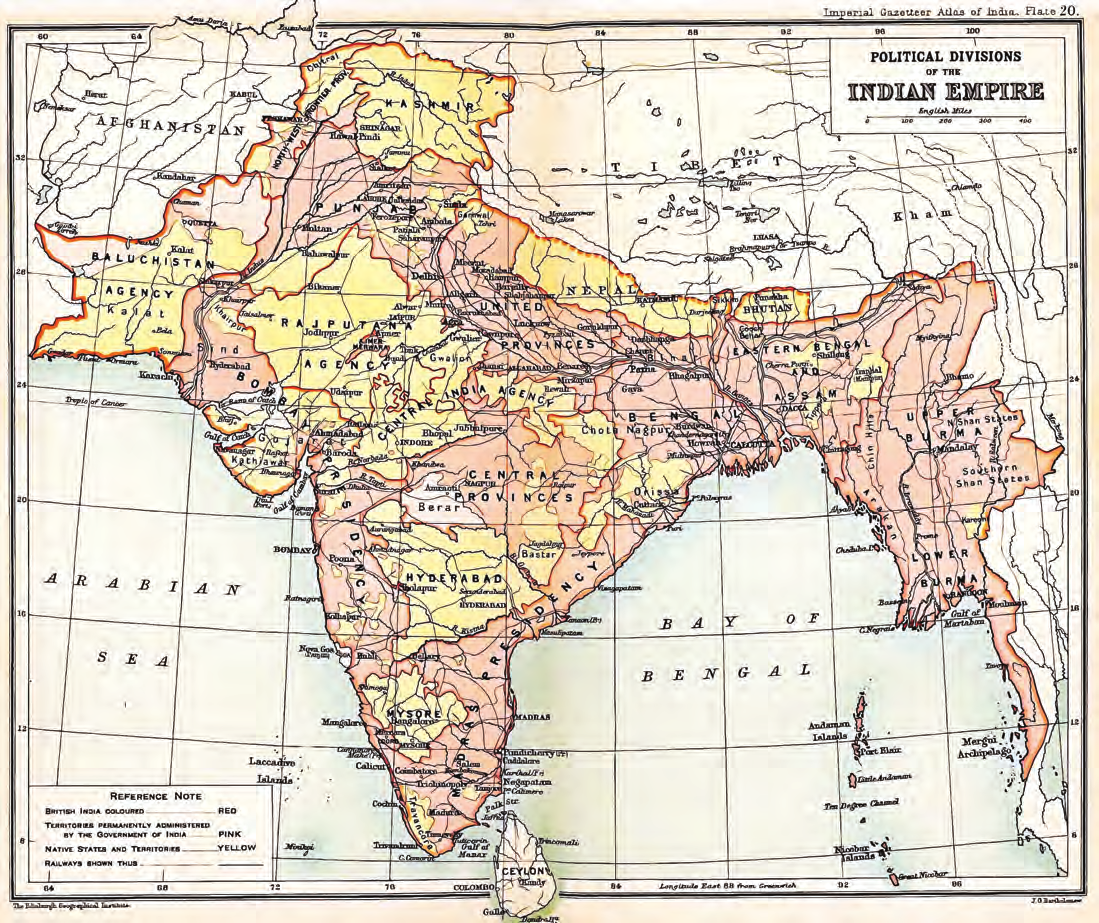
Fig 4.9 — Map of the British Indian Empire, 1909
- After the Revolt of 1857, the British Crown took direct control of India from the East India Company — the Government of India Act 1858 was passed.
- Queen Victoria was proclaimed Empress of India in 1877 — India became a formal part of the British Empire.
- The British divided India into two types of territories:
- British India — directly governed by the British Crown through the Viceroy
- Princely States — ruled by local Indian rulers under British suzerainty (about 565 states)
- By the early 20th century, the British Empire in India covered nearly the entire subcontinent — one of the largest empires in history.
📝 Questions — British Conquest
LOTS What was the Doctrine of Lapse? Name any three kingdoms annexed under it.
Show Answer
The Doctrine of Lapse was a policy introduced by Lord Dalhousie that stated if an Indian ruler died without a natural heir, his kingdom would be annexed by the British East India Company. It did not recognise adopted sons as heirs. Three kingdoms annexed: Satara (1848), Jhansi (1853) and Nagpur (1854).
Medium How did treachery play a role in the Battle of Plassey? What were its consequences for India?
Show Answer
Robert Clive bribed the Nawab of Bengal’s general Mir Jafar to betray Siraj ud-Daulah during the Battle of Plassey. As a result, the Nawab’s much larger army collapsed without fighting. The consequences were far-reaching — the British gained control over Bengal, India’s richest province. The revenue from Bengal financed further British expansion. The Battle of Plassey is considered the beginning of British political control over India.
HOTS Why did the Doctrine of Lapse cause widespread resentment among Indian rulers? How did it contribute to the Revolt of 1857?
Show Answer
The Doctrine of Lapse was deeply resented because it ignored the centuries-old Indian tradition of adopting a son as a legitimate heir. Indian rulers who had adopted sons saw their kingdoms taken away unfairly. It created fear and insecurity among all Indian rulers — anyone who died without a biological son would lose their kingdom. The rulers who lost their kingdoms (like Rani Lakshmibai of Jhansi) became passionate opponents of British rule. The dispossessed nobles and their soldiers joined the Revolt of 1857, making it a widespread uprising against British authority.
HOTS Compare British India and the Princely States. Why do you think the British maintained the Princely States instead of annexing them all?
Show Answer
British India was directly governed by the British Crown through the Viceroy, with British laws and administration. The approximately 565 Princely States were ruled by local Indian rulers under British suzerainty — meaning the rulers had internal autonomy but had to accept British control over defence and foreign policy. The British maintained the Princely States as a buffer — the local rulers acted as loyal allies who helped maintain order. Direct administration of all of India would have required enormous resources and manpower. The Princely States also demonstrated British claims of respecting Indian traditions and sovereignty, while still ensuring complete control.
💰 4. Economic Impact of British Rule
Drain of Wealth
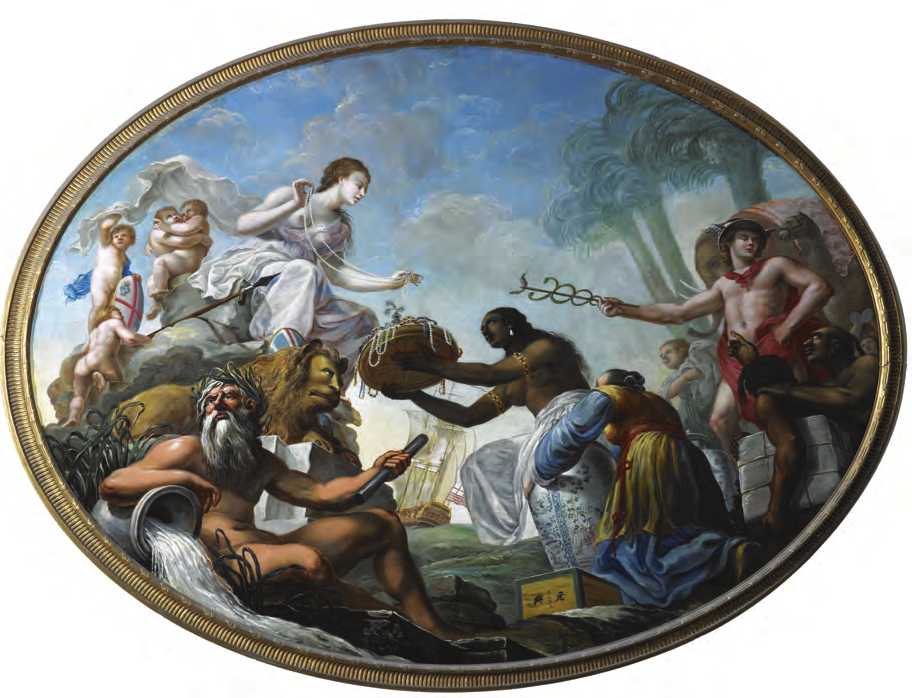
Fig 4.10 — The same painting as Fig 4.1, annotated to show the symbols of colonial wealth extraction from India
- The Drain of Wealth (or Drain Theory) refers to the transfer of India’s economic resources to Britain without any adequate compensation in return.
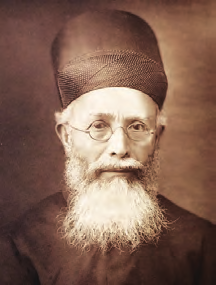
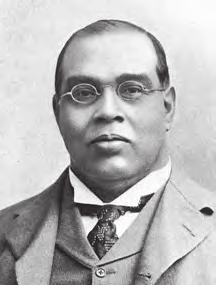
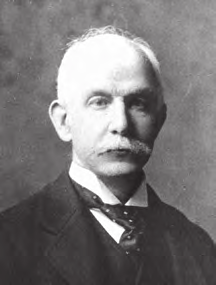
- Indian economists and nationalists like Dadabhai Naoroji, R.C. Dutt, Brooks Adams and William Digby documented this drain extensively.
- Dadabhai Naoroji in his book ‘Poverty and Un-British Rule in India’ (1901) calculated that Britain was draining enormous sums from India every year.
- The drain occurred through:
- Home charges — salaries, pensions and administrative costs paid by India to British officials
- Profits of the East India Company and British merchants sent back to Britain
- Interest payments on loans taken by the Indian government from Britain
- Military costs of wars fought by India for British imperial purposes
De-industrialisation
- Before British rule, India had world-famous textile industries — particularly Dacca muslin, Bengal silk and Calicut cotton (calico) — exported across the world.
- The British deliberately destroyed Indian industries through:
- Imposing high import duties on Indian textiles entering Britain
- Allowing British manufactured goods into India at very low or zero duties
- Forcing Indian weavers to sell raw cotton cheaply to British mills
- As a result, Indian weavers and craftsmen lost their livelihoods — the famous Dacca muslin industry was virtually destroyed.
- India was transformed from a manufacturer and exporter of finished goods into a supplier of raw materials and an importer of British manufactured goods.
- This process is called de-industrialisation — the deliberate destruction of Indian industry to benefit British manufacturers.
Land Revenue Policies
- The British introduced new land revenue systems that fundamentally changed the relationship between peasants and land in India.
- Permanent Settlement (Zamindari System) — 1793: Introduced by Lord Cornwallis in Bengal, Bihar and Orissa. Zamindars (landlords) were made permanent owners of land and were required to pay a fixed revenue to the British. Zamindars who could not pay lost their land.
- Ryotwari System: Introduced in Madras and Bombay. The government dealt directly with individual peasants (ryots) — demanding high revenue that peasants often could not pay, leading to indebtedness.
- Mahalwari System: Introduced in North India and Punjab. Revenue was fixed for the entire village (mahal) — the village community was jointly responsible for payment.
- All these systems resulted in extremely high revenue demands that impoverished Indian peasants and drove millions into debt and poverty.
Famines
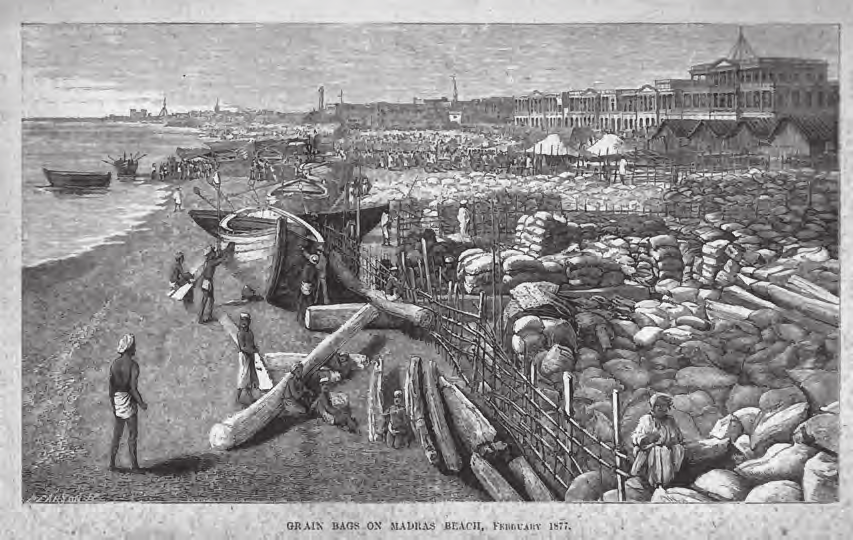
Fig 4.15 — Grain bags on Madras beach, February 1877, during the Great Famine of 1876–79
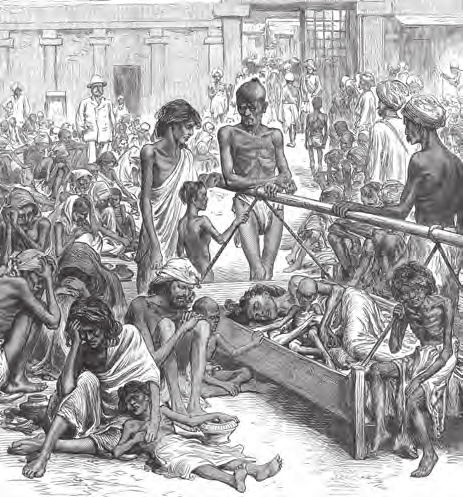
Fig 4.16 — People waiting for famine relief in Bangalore, 1877
- British economic policies caused devastating famines across India — between 1765 and 1947, India experienced over 30 major famines resulting in tens of millions of deaths.
- The Bengal Famine of 1770 killed an estimated one-third of Bengal’s population — while the Company continued to collect land revenue from the starving peasants.
- The Great Famine of 1876–79 killed between 5.5 and 12 million people across South and Central India — grain was being exported from India even during the famine.
- British Viceroy Lord Lytton held a grand banquet (the Delhi Durbar of 1877) to celebrate Queen Victoria’s proclamation as Empress of India — while millions starved nearby.
- The famines were largely man-made — caused by the destruction of India’s food security through high land revenue demands, export of food grains and the destruction of traditional irrigation systems.
Railways — A Dual Legacy
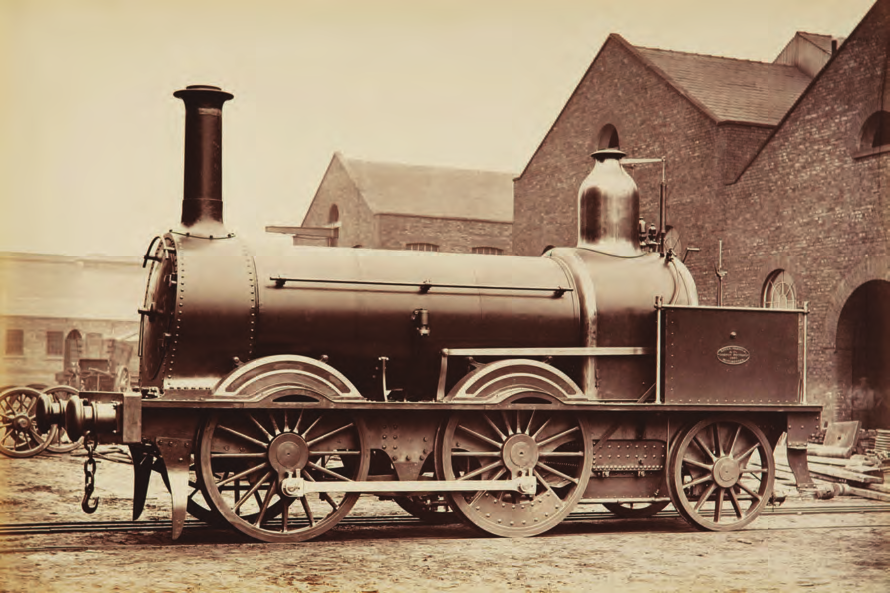
Fig 4.17 — A steam locomotive of the Madras Railway, 1860 — railways connected India but primarily served British economic interests
- The British built an extensive railway network in India — the first railway line ran from Bombay to Thane in 1853.
- The railways had a dual legacy:
- British perspective — railways were built to extract raw materials from the Indian interior to ports for export, and to transport British manufactured goods deep into India; railway construction was financed by Indian taxpayers who paid guaranteed returns to British investors.
- Indian perspective — railways helped unify India, enabled people to travel long distances, facilitated the spread of nationalist ideas and made communication across the subcontinent easier.
- All railway equipment was imported from Britain — giving no benefit to Indian industry.
- Key positions in the railways were held exclusively by Britons — denying Indians technical skills and employment opportunities.
- Nationalists like Dadabhai Naoroji argued that railways primarily served British economic and military interests, not the welfare of Indians.
📝 Questions — Economic Impact
LOTS What is the Drain of Wealth? Name two economists who documented it.
Show Answer
The Drain of Wealth refers to the transfer of India’s economic resources to Britain without adequate compensation. It occurred through home charges, profits sent to Britain, interest on loans and military costs. Two economists who documented it: Dadabhai Naoroji (in his book ‘Poverty and Un-British Rule in India’) and R.C. Dutt.
Medium What is de-industrialisation? How did British policies destroy India’s traditional industries?
Show Answer
De-industrialisation is the deliberate destruction of Indian industry to benefit British manufacturers. The British imposed high import duties on Indian textiles entering Britain while allowing British goods into India at low duties. They forced Indian weavers to sell raw cotton cheaply to British mills. As a result, Indian industries like Dacca muslin were destroyed, Indian weavers lost their livelihoods, and India was transformed from a manufacturer into a supplier of raw materials and importer of British goods.
HOTS How were the famines under British rule ‘man-made’ rather than purely natural disasters?
Show Answer
The famines under British rule were largely man-made because British economic policies destroyed India’s food security. High land revenue demands left peasants with no surplus grain to survive droughts. Traditional irrigation systems that Indian communities had maintained for centuries were neglected or destroyed. Food grain was exported from India even during famines — during the Great Famine of 1876–79, grain was still being shipped out while millions starved. The Bengal Famine of 1770 occurred while the Company continued collecting revenue from starving peasants. Natural drought triggered the famines, but British policies turned them into mass catastrophes.
HOTS Explain the ‘dual legacy’ of railways in India. Do you think railways were ultimately more helpful or harmful to India?
Show Answer
The dual legacy of railways: From the British perspective, railways were built to extract raw materials to ports for export and transport British goods into India — financed by Indian taxpayers who paid guaranteed returns to British investors. From the Indian perspective, railways helped unify India, enabled long-distance travel, spread nationalist ideas and improved communication. They were harmful because all equipment was imported from Britain, key positions were held by Britons, and they primarily served British economic and military interests. However, the infrastructure left behind ultimately benefited post-independence India significantly. On balance, railways were built for British interests but left a useful legacy for India.
✊ 5. Resistance to British Rule
Early Tribal and Peasant Revolts
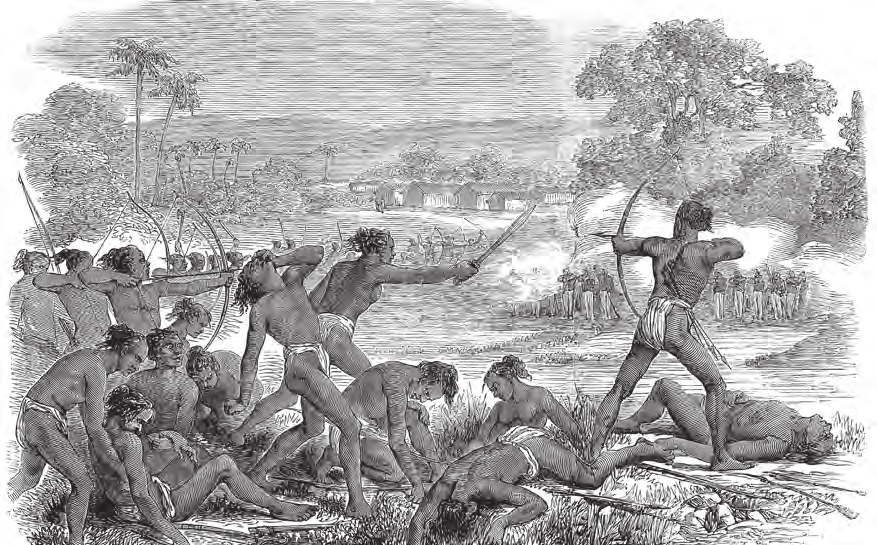
Fig 4.18 — A sketch of Santhal rebels, 1856
- Resistance to British rule began from the very beginning — peasants, tribal communities and dispossessed rulers all revolted against British exploitation.
- Sanyasi Revolt (1763–1800) — Bengal; wandering sanyasis and fakirs revolted against British restrictions on their movement and disruption of their livelihood.
- Paika Rebellion (1817) — Odisha; the Paikas (traditional warrior-peasants) revolted against British annexation of Odisha and oppressive land revenue policies.
- Santhal Rebellion (1855–56) — Bengal and Bihar; the Santhals revolted against exploitation by moneylenders, zamindars and British authorities. Led by Sidhu and Kanhu Murmu — about 60,000 Santhals rose in revolt.
- Munda Rebellion / Ulgulan (1899–1900) — Jharkhand; led by Birsa Munda, who was also a religious reformer. The Mundas revolted against British land policies that disrupted their traditional rights over forest land.
- All these revolts were eventually suppressed by British military force — but they demonstrated that ordinary Indians refused to passively accept colonial exploitation.
The Revolt of 1857
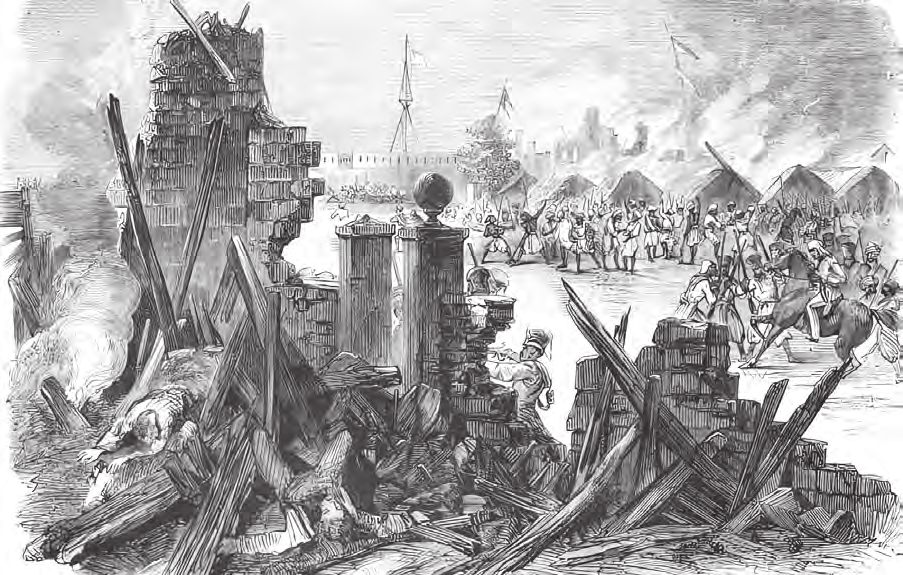
Fig 4.19 — The sepoys’ revolt at Meerut, 1857 — the spark that ignited a nationwide uprising
- The Revolt of 1857 was the most significant uprising against British rule before the Indian independence movement — also called the First War of Indian Independence by nationalists.
- The British called it the ‘Sepoy Mutiny’ — but it was far more than a soldiers’ revolt; it involved civilians, peasants, rulers and religious leaders across north and central India.
⚡ Causes of the Revolt
- Political causes: The Doctrine of Lapse had annexed many kingdoms, angering dispossessed rulers and their loyal soldiers and nobles.
- Economic causes: British economic policies had destroyed Indian industries and impoverished farmers — high land revenue and debt were widespread.
- Social and religious causes: Indians feared that the British were trying to destroy their religion and culture — Christian missionaries were actively converting people; practices like sati and child marriage were being reformed by British law, which many saw as interference.
- Military cause (immediate trigger): The introduction of the Enfield rifle and its cartridges — soldiers had to bite off the greased cartridges before loading; rumours spread that the grease was made from cow fat and pig fat, which was deeply offensive to both Hindu and Muslim soldiers.
- Mangal Pandey, a sepoy at Barrackpore, attacked British officers on 29 March 1857 — he was arrested and hanged; this became the catalyst for the wider revolt.
Course of the Revolt
- On 10 May 1857, sepoys at Meerut broke free from prison and marched to Delhi, proclaiming the aged Mughal Emperor Bahadur Shah Zafar as their leader.
- The revolt spread rapidly — Delhi, Lucknow, Kanpur, Jhansi, Arrah (Bihar) and other centres rose in rebellion.
- At Kanpur, Nana Sahib (the adopted son of the last Peshwa) led the revolt.
- At Lucknow, Begum Hazrat Mahal led the resistance after her husband Nawab Wajid Ali Shah was exiled by the British.
- At Jhansi, Rani Lakshmibai fought heroically against the British forces.
- In Bihar, Kunwar Singh — an elderly zamindar in his 70s — led a brilliant guerrilla campaign against the British.
- The revolt was eventually suppressed by the British by mid-1858 — with Delhi recaptured in September 1857 and Jhansi in April 1858.
Leaders of the Revolt
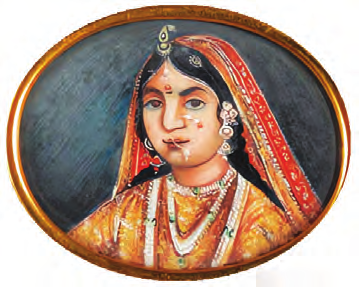
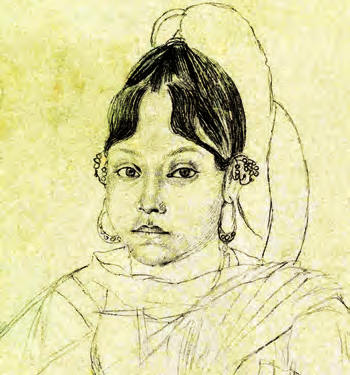
- Rani Lakshmibai of Jhansi — fought bravely after the British annexed Jhansi under the Doctrine of Lapse. She died fighting on 17 June 1858 near Gwalior, dressed in soldier’s attire, sword in hand. The British General Hugh Rose described her as “the most dangerous of all Indian leaders.”
- Begum Hazrat Mahal of Lucknow — organised resistance in Awadh after her husband was exiled; continued fighting even after the fall of Lucknow, eventually seeking asylum in Nepal.
- Nana Sahib — led the revolt at Kanpur; disappeared after the revolt’s failure and was never captured.
- Kunwar Singh — elderly but brilliant military commander from Bihar; fought until his death in April 1858.
- Bahadur Shah Zafar — the last Mughal Emperor became the symbolic leader of the revolt; captured by the British and exiled to Rangoon (Yangon, Myanmar), where he died in 1862.
Aftermath of the Revolt
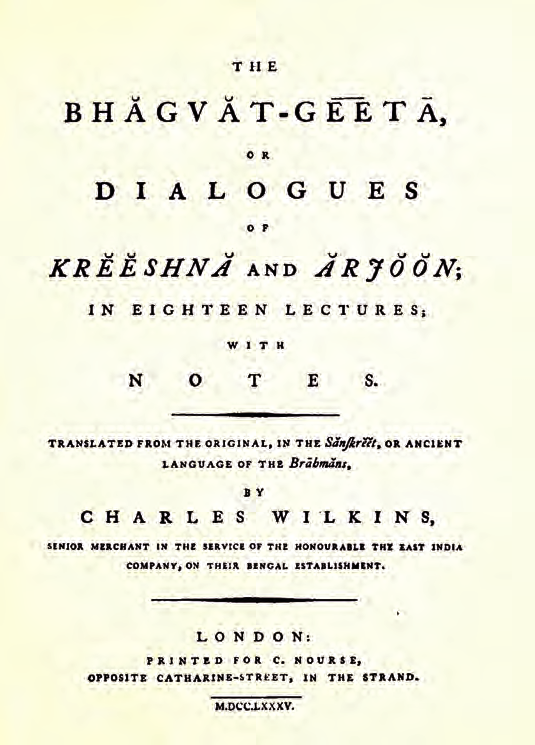
Fig 4.22 — The first English translation of the Bhagavad Gita (1785) by Charles Wilkins — part of British efforts to understand and manage Indian society
- After suppressing the revolt, the British took several major steps:
- The East India Company was abolished — the British Crown took direct control of India (Government of India Act 1858).
- Queen Victoria issued a proclamation promising to respect Indian customs, traditions and rights — but many promises were not kept.
- The Indian Army was reorganised — the proportion of British soldiers was increased; Indians were kept away from artillery; regiments were divided along caste and religious lines to prevent unity.
- The Doctrine of Lapse was abolished — no more kingdoms would be annexed on this basis.
- The revolt had a profound impact on both sides — it deepened British suspicion of Indians, but also showed Indians that unified resistance was possible.
- It is considered a watershed moment in Indian history — sowing the seeds for the organised Indian independence movement that followed.
📝 Questions — Resistance to British Rule
LOTS What was the immediate cause of the Revolt of 1857? Who was Mangal Pandey?
Show Answer
The immediate cause was the introduction of the Enfield rifle and its cartridges — soldiers had to bite off greased cartridges, and rumours spread that the grease was made from cow fat and pig fat, which was offensive to both Hindu and Muslim soldiers. Mangal Pandey was a sepoy at Barrackpore who attacked British officers on 29 March 1857, was arrested and hanged — becoming a catalyst for the wider revolt.
Medium Name four leaders of the Revolt of 1857 and the regions they led.
Show Answer
Rani Lakshmibai — Jhansi; Begum Hazrat Mahal — Lucknow (Awadh); Nana Sahib — Kanpur; Kunwar Singh — Bihar; Bahadur Shah Zafar — Delhi (symbolic leader of the revolt).
HOTS Why did the Revolt of 1857 fail despite widespread participation? Analyse the reasons.
Show Answer
The Revolt of 1857 failed due to several reasons: Lack of unified leadership — different leaders in different regions did not coordinate effectively. Limited geographic spread — the revolt was largely confined to north and central India; south India, Punjab and Bengal remained largely quiet. Superiority of British military technology and training. Betrayal by some Indian rulers who remained loyal to the British. The revolt lacked a common ideology beyond opposition to British rule. Communication was poor compared to the British who had telegraphs. Some Indian soldiers in the British Army fought against the rebels. Despite these weaknesses, the revolt demonstrated the possibility of pan-Indian resistance and laid the foundation for the independence movement.
HOTS How did Rani Lakshmibai and Begum Hazrat Mahal challenge both British rule and gender norms of their time?
Show Answer
Both women challenged British rule by taking up arms and leading military resistance at a time when women were expected to remain in the background. Rani Lakshmibai fought in battle dressed in soldier’s attire with a sword, dying fighting rather than surrendering — so impressive that even the British General who defeated her called her the most dangerous Indian leader. Begum Hazrat Mahal organised the entire resistance of Awadh and continued fighting even after the fall of Lucknow. Both women showed that leadership, courage and patriotism were not restricted by gender, and their examples inspired future generations of Indian women to participate in the freedom movement.
🏛️ 6. The Colonial Legacy
- British colonial rule lasted nearly 200 years in India — leaving behind a complex and contested legacy.
❌ Negative Legacy
- Deliberate destruction of Indian industries and impoverishment of millions
- Dozens of devastating famines causing tens of millions of deaths
- Drain of enormous wealth from India to Britain
- Division of society along caste and religious lines for administrative convenience
- Systematic racism and denial of political rights to Indians
✅ Positive Legacy (contested)
- Introduction of modern legal and administrative systems
- Railways and telegraph networks that connected India
- English education creating a common language for the educated class
- Social reforms — abolition of sati, widow remarriage, education of women
- Press and print media that allowed ideas to spread
- The colonial experience also created a pan-Indian identity — people who had never thought of themselves as Indians began to unite against a common oppressor, laying the foundation for the Indian freedom movement.
- India gained independence on 15 August 1947 — ending nearly two centuries of British colonial rule.
📝 Questions — Colonial Legacy
LOTS Name any three negative impacts of British colonial rule on India.
Show Answer
Three negative impacts: (1) Deliberate destruction of Indian industries through unfair trade policies, causing de-industrialisation and unemployment. (2) Dozens of devastating famines causing tens of millions of deaths, worsened by British economic policies. (3) Drain of enormous wealth from India to Britain through home charges, profits and interest payments.
Medium How did British colonial rule, despite its exploitation, help create a sense of Indian national identity?
Show Answer
British colonial rule ironically helped create Indian national identity by providing a common enemy and common experience. People from different regions, castes and religions who had never considered themselves as ‘Indians’ began to unite against a common colonial oppressor. English education created a common language for educated Indians across regions. Railways allowed people and ideas to travel across India. The press spread nationalist ideas. The shared experience of exploitation, racial discrimination and political exclusion created a bond among Indians, laying the foundation for the organised independence movement.
HOTS Some historians argue that British rule brought ‘development’ to India. Do you agree or disagree? Give reasons.
Show Answer
This is debatable. While British rule introduced railways, modern legal systems, English education and some social reforms, these were primarily introduced to serve British interests — not Indian welfare. Railways were built to extract resources and serve military needs. English education created a class that could serve British administration. Social reforms were often used to justify colonial rule as a ‘civilising mission’. The destruction of Indian industries, the drain of wealth, the devastating famines and the systematic exploitation of Indian resources far outweighed any development brought. India in 1947 was far poorer than in 1757, despite 190 years of supposed ‘development’. True development serves the people — colonial ‘development’ served the coloniser.
HOTS How did the experience of colonialism prepare India for the freedom movement?
Show Answer
Colonialism prepared India for the freedom movement in several ways: The shared experience of exploitation united people across regional, caste and religious lines. The English-educated Indian middle class, trained in European ideas of liberty and democracy, used these very ideas to demand independence. The press and railways allowed nationalist ideas to spread rapidly across India. The Revolt of 1857 showed that pan-Indian resistance was possible. The drain of wealth theory provided an intellectual framework for understanding and opposing colonial exploitation. The repression of revolts and the denial of political rights convinced Indians that freedom could only come through organised mass resistance — leading eventually to Gandhi’s mass movements and India’s independence in 1947.
📌 Before We Move On…
- Colonialism saw European powers control weaker nations for economic, political and ideological gain — India was the ‘Jewel in the Crown’ of the British Empire.
- Portuguese, Dutch, French and British trading companies competed in India — the British emerged dominant after Plassey (1757) and Buxar (1764).
- The Doctrine of Lapse and unequal treaties expanded British control; after 1857 the Crown ruled directly.
- British rule drained India’s wealth, de-industrialised the economy, imposed harsh land revenue, and caused man-made famines; railways left a dual legacy.
- From tribal revolts to the Revolt of 1857 — led by Rani Lakshmibai, Begum Hazrat Mahal, Nana Sahib and others — Indians resisted throughout.
- The colonial experience forged a pan-Indian identity that led to the freedom movement and independence on 15 August 1947.