
Class 9 Science — Exploration
Chapter 5🧪 Exploring Mixtures and their Separation
🎯 Learning Objectives
- Classify mixtures as homogeneous or heterogeneous, and as solutions, suspensions or colloids.
- Express concentration using mass by mass, mass by volume and volume by volume percentage.
- Understand solubility and how it changes with temperature.
- Separate homogeneous mixtures using crystallization, distillation and paper chromatography.
- Separate heterogeneous mixtures using separating funnel, sublimation, centrifugation and coagulation.
- Explain the Tyndall effect and distinguish between solutions, suspensions and colloids.
📖 Chapter Index
🥤 5.1 How Can We Classify Mixtures?
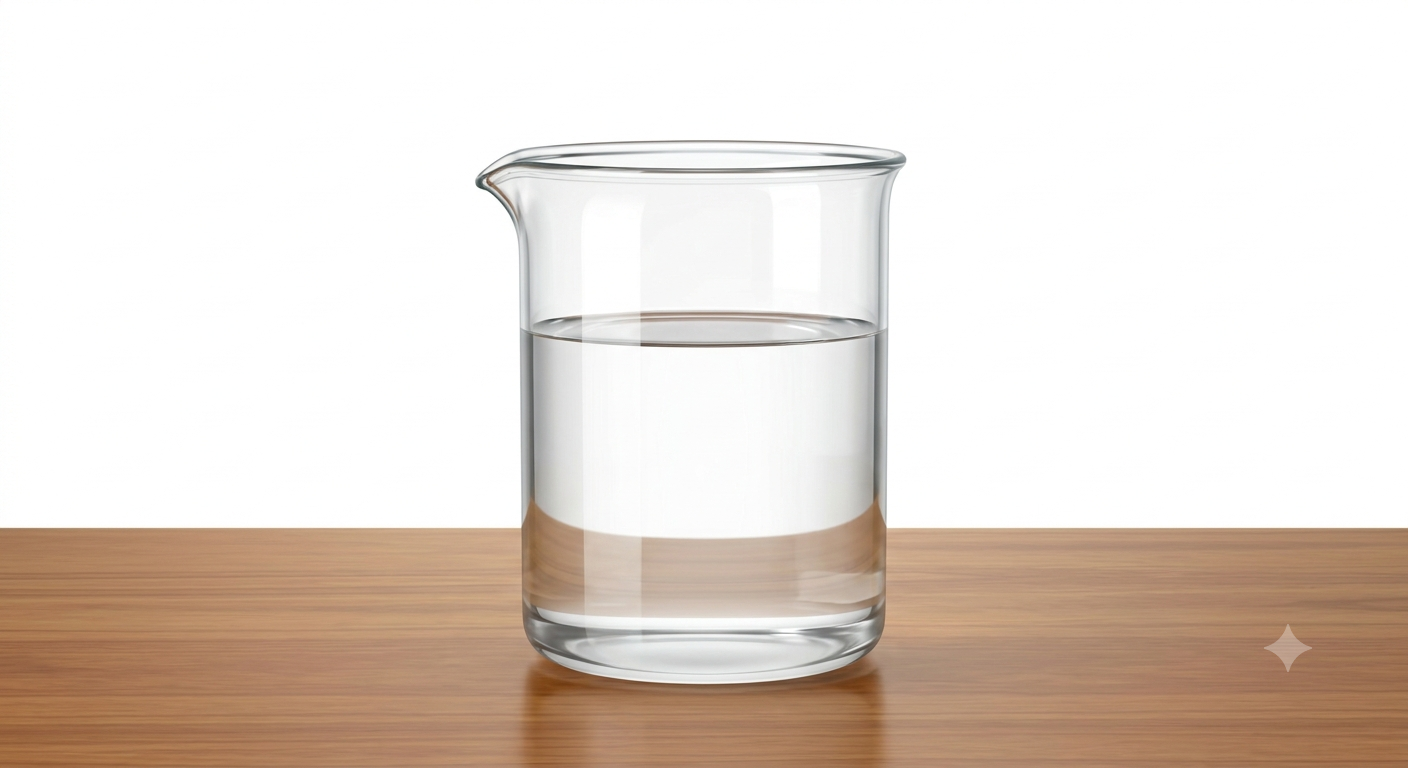
Fig 5.1: Homogeneous mixture
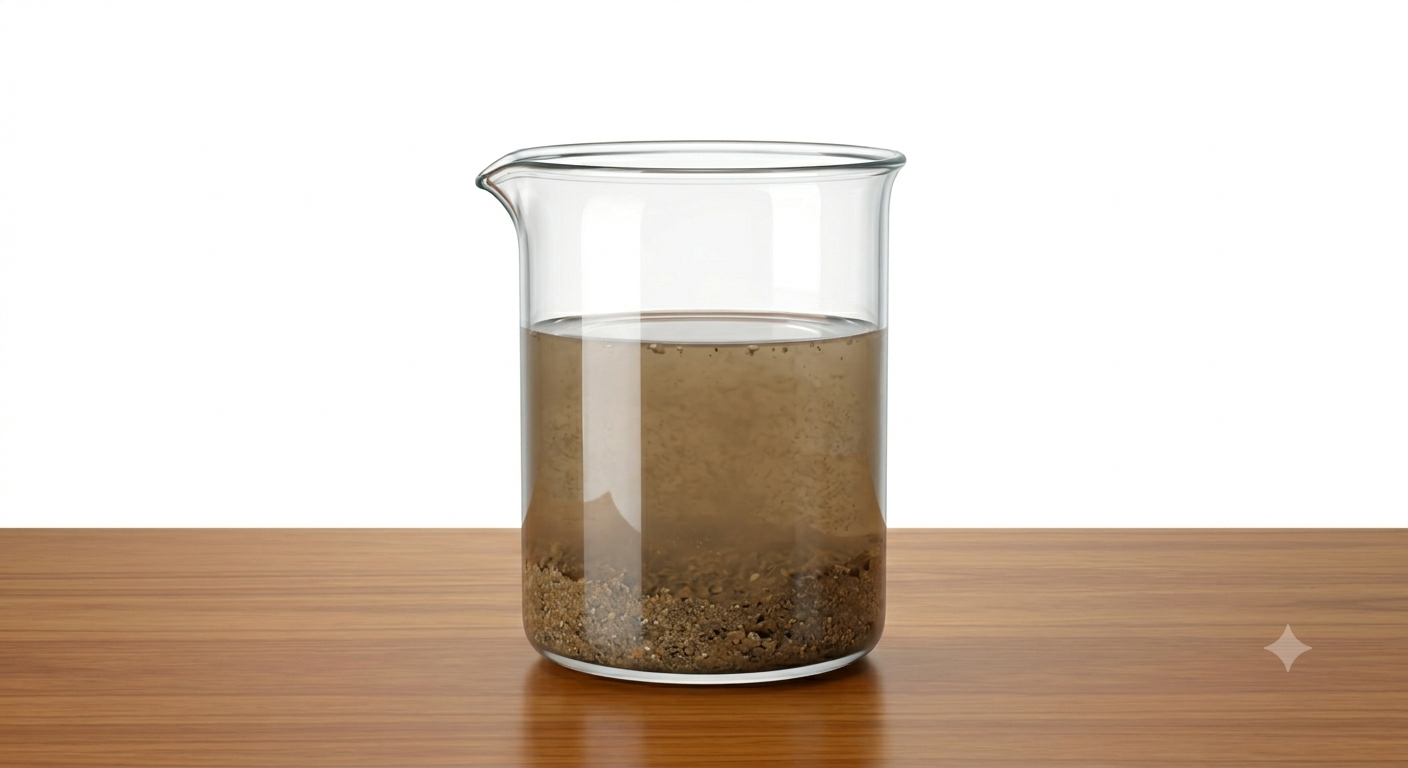
Fig 5.2: Heterogeneous mixture
- A mixture of sugar and water has a uniform composition throughout — equally sweet in the first and the last sip. Such a mixture is called a homogeneous mixture or a solution. Examples: vinegar (acetic acid in water), aerated drinks (carbon dioxide in water). A solution always remains homogeneous.
- A stirred mixture of sand and water is not uniform — sand particles are easily visible and settle with time. Such a mixture is called a heterogeneous mixture.
🔬 Activity 5.1: Let us experiment — Group Activity
- Group A: Add one spatula of common salt to 50 mL of water. Stir well. Label it A.
- Group B: Add one spatula of chalk powder to 50 mL of water. Stir well. Label it B.
- Group C: Add a few drops of milk to 50 mL of water. Stir well. Label it C.
- Are the particles visible in each mixture? Record your observations.
- Direct the light from a laser pointer through each beaker and observe from the side. Record observations.
- Predict what you would observe in each beaker if left undisturbed for a few minutes.
- Set up a filtration apparatus and filter each mixture. Is there any residue on the filter paper?
- Based on your observations, are these the same types of mixtures or different?
⚠️ Safety first
Do not look directly into the laser beam. It can cause irreversible eye damage.
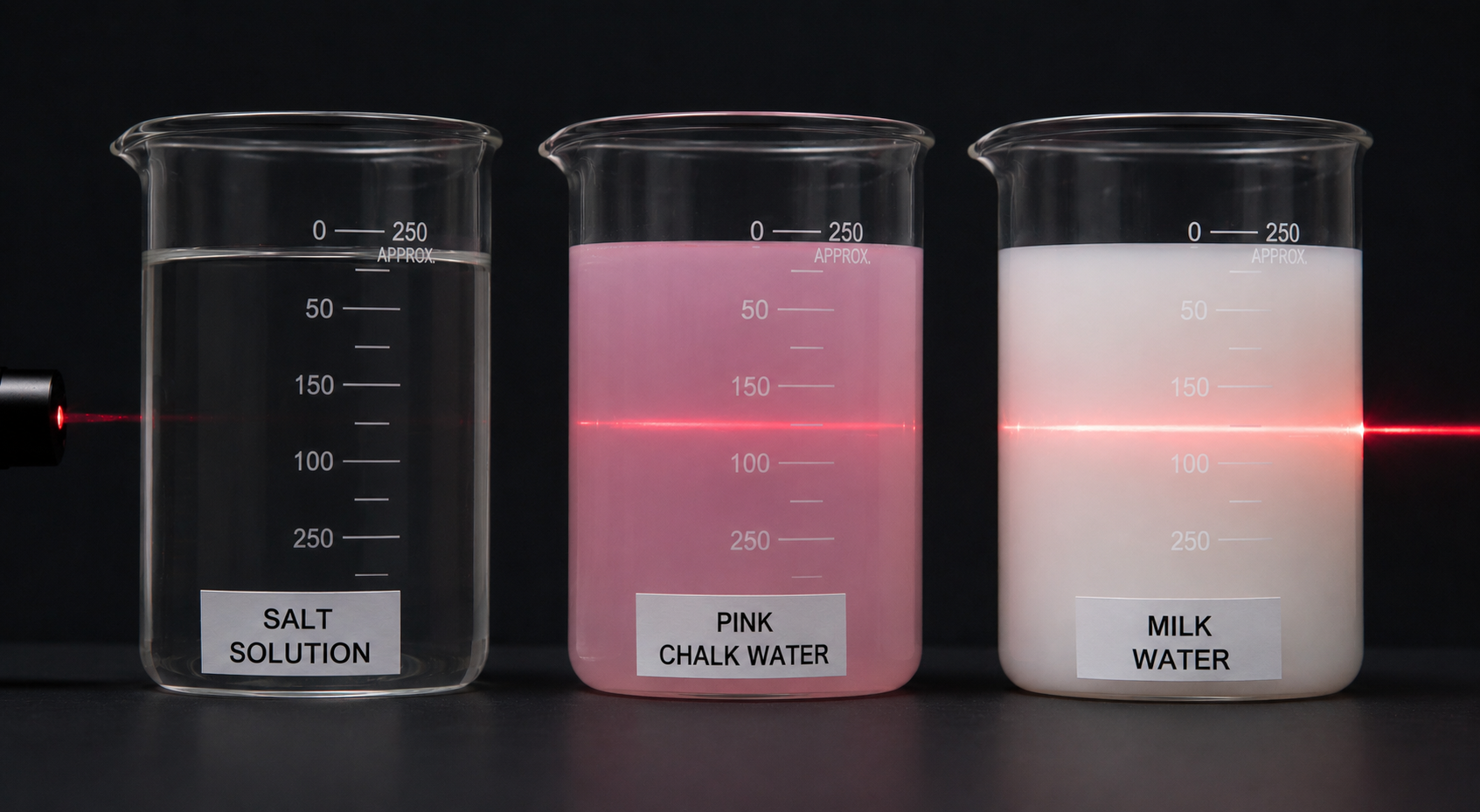
Fig 5.3: Passing laser light through (a) salt and water, (b) chalk powder and water, (c) milk and water
📝 Questions — 5.1 Classifying Mixtures
LOTS What is a homogeneous mixture? Give two examples.
Show Answer
A homogeneous mixture has uniform composition throughout — all parts are identical. Examples: sugar solution (equally sweet throughout), vinegar (acetic acid in water).
Medium What is the difference between a homogeneous and heterogeneous mixture? Give one example of each.
Show Answer
Homogeneous mixture has uniform composition — components cannot be seen separately (e.g., sugar solution). Heterogeneous mixture does not have uniform composition — components are visible and may settle with time (e.g., sand and water).
HOTS In Activity 5.1, why does the laser beam become visible in beakers B and C but not in beaker A?
Show Answer
Salt water (A) is a true solution — salt particles are less than 1 nm and cannot scatter light. Chalk water (B) is a suspension with large particles that scatter the laser beam. Milk water (C) is a colloid with medium-sized particles (1–1000 nm) that also scatter light — this is the Tyndall effect. Solutions do not show it; colloids and suspensions do.
HOTS Is the mixture of oil and water homogeneous or heterogeneous? Justify.
Show Answer
Oil and water is heterogeneous — they are immiscible, do not mix and form two distinct visible layers. Composition is not uniform throughout, so it is a heterogeneous mixture.
💧 5.2 Solutions
- Solutions are homogeneous mixtures prepared when a solute (the substance that gets dissolved) is mixed with a solvent (the substance that dissolves the solute).
- In sugar and water: sugar is the solute, water is the solvent.
5.2.1 Concentration of a Solution
- The amount of solute dissolved in a given amount of solvent or solution is termed as the concentration of the solution.
- The right proportion is always essential — e.g., ORS requires specific amounts of salt and sugar; pesticide spray needs correct concentration to protect crops without damage.
- Understanding concentration is essential in medicine, agriculture, food, cosmetics and everyday life.
5.2.2 How do we express concentration?
- A. Mass by Mass Percentage (% m/m or % w/w) — tells us how many grams of solute are present in 100 grams of the total solution. Used for milk powder, spice mixtures, packaged foods.
📘 Example 5.1
Q: 10 g of salt dissolved in 90 g of water — calculate % m/m.
Show Answer
Total mass = 10 + 90 = 100 g
% m/m = (10 ÷ 100) × 100 = 10% m/m
- B. Mass by Volume Percentage (% m/v or % w/v) — tells us how many grams of solute are present in 100 mL of the solution. Used in medicines and laboratories — e.g., glucose IV drip, saline.
📘 Example 5.2
Q: 5 g of glucose dissolved in water to make 100 mL solution — calculate % m/v.
Show Answer
% m/v = (5 ÷ 100) × 100 = 5% m/v
- C. Volume by Volume Percentage (% v/v) — tells us how many mL of solute are present in 100 mL of the solution. Used when two miscible liquids are mixed — perfumes, cosmetics, vinegar.
📘 Example 5.3
Q: 1 mL of liquid pesticide mixed with water to form 100 mL spray — calculate % v/v.
Show Answer
% v/v = (1 ÷ 100) × 100 = 1% v/v
🔢 Numerical Questions — Pause and Ponder
- A common talcum powder contains 4% m/m zinc oxide. How much zinc oxide is present in 300 g of the talcum powder?
- Two tablespoons (15 mL each) of orange juice concentrate are mixed with water to make 150 mL of juice. What is the % v/v of concentrate in the mixture?
- Vinegar contains 5% v/v acetic acid. If you want to make vinegar from glacial acetic acid (100% acetic acid), how would you proceed?
5.2.3 Solubility of Substances
- The maximum amount of solute that dissolves in a fixed quantity of solvent (100 mL or 100 g) at a given temperature is called its solubility.
- A solution that cannot dissolve any more solute at that temperature is called a saturated solution.
- Solubility of a solid solute in liquid generally increases with temperature.
- Solubility of gases in liquids generally decreases with increase in temperature.
- A graph of solubility versus temperature is called a solubility curve.
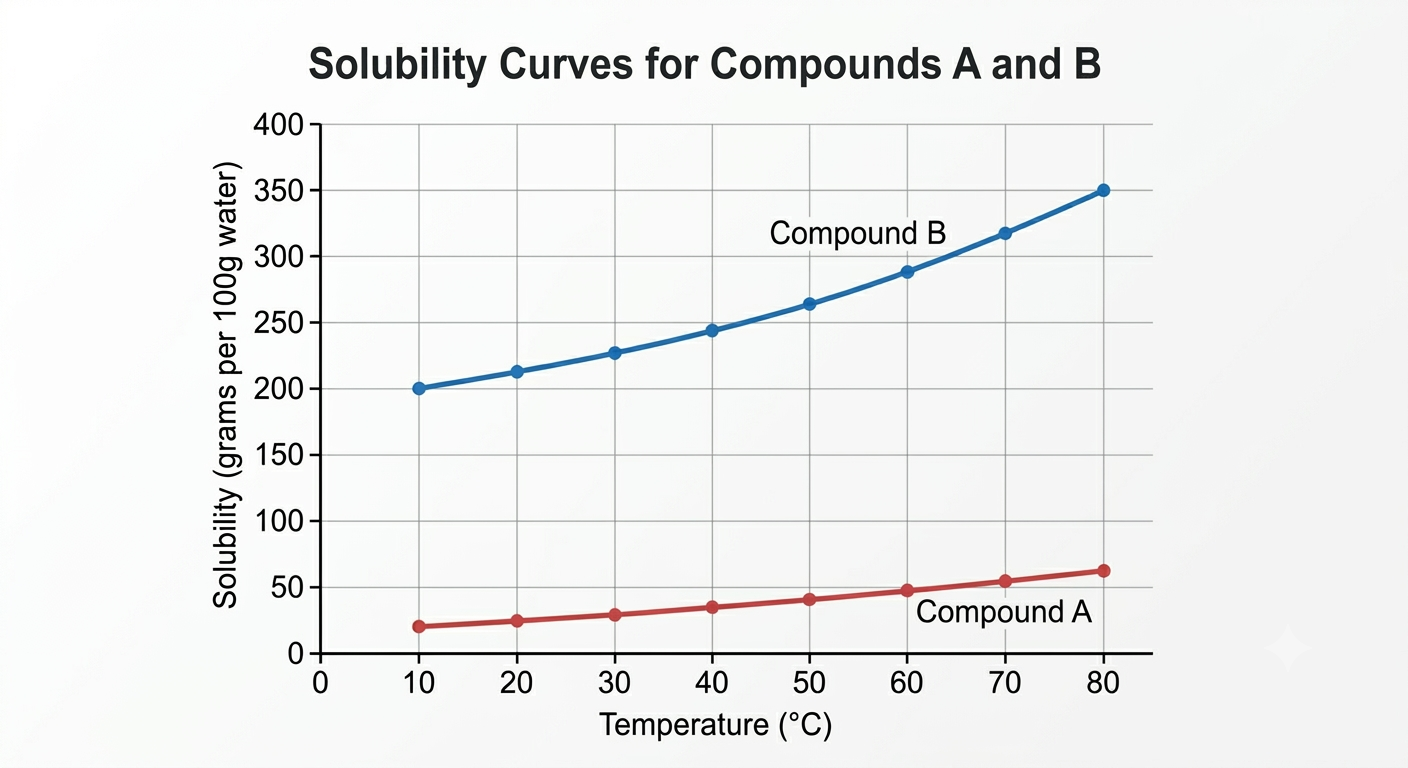
Fig 5.6: Solubility curves of compounds A and B in water
🔬 Activity 5.2: Represent solubility graphically
Observe the solubility curves of compounds A and B and fill in the blanks:
- Solubility of compound A at 20°C is ________ (less than/more than/similar to) its solubility at 60°C.
- Solubility of compound B at 20°C is ________ (less than/more than/similar to) its solubility at 60°C.
- Solubility of ________ increases more than ________ with rise in temperature.
- What will happen if you make a saturated solution at high temperature and cool it slowly?
📝 Questions — 5.2 Solutions
LOTS What is concentration of a solution? Name the three ways to express it as percentage.
Show Answer
Concentration is the amount of solute dissolved in a given amount of solvent or solution. Three ways: (1) % m/m — grams of solute per 100 g of solution; (2) % m/v — grams of solute per 100 mL of solution; (3) % v/v — mL of solute per 100 mL of solution.
Medium What is a saturated solution? How does temperature affect solubility of solid and gaseous solutes?
Show Answer
A saturated solution cannot dissolve any more solute at a given temperature. For solid solutes: solubility increases with temperature. For gases: solubility decreases with increase in temperature. This is why cold drinks lose their fizz when heated.
HOTS Why is it important to use the correct concentration in medicines like ORS or saline drip?
Show Answer
The human body is sensitive to amounts of substances it receives. ORS needs a specific ratio — too little won’t replenish electrolytes, too much can cause harm. Saline must be 0.9% NaCl — if too concentrated, blood cells shrink; if too dilute, cells burst. Wrong concentration can be life-threatening.
HOTS Cold drinks taste less fizzy when warm. Explain using the concept of solubility.
Show Answer
Aerated drinks contain CO₂ dissolved in water under pressure. Solubility of gases decreases with increase in temperature. When the drink is warm, solubility of CO₂ decreases so dissolved CO₂ escapes as bubbles, making the drink less fizzy. Refrigerating maintains higher CO₂ solubility and preserves the fizz.
⚗️ 5.3 Methods of Separation of Homogeneous Mixtures
5.3.1 Crystallization
- A crystal is a solid made up of particles arranged in a regular geometric pattern.
- Crystallization is the process of forming crystals from a saturated solution — used for separating and purifying solids.
- Principle: Based on differences in solubility at different temperatures — a saturated solution at high temperature is cooled slowly; excess solute crystallises out as pure crystals.
- Examples of natural crystals: rock salt, candy sugar (mishri), snowflakes, frost on windows.
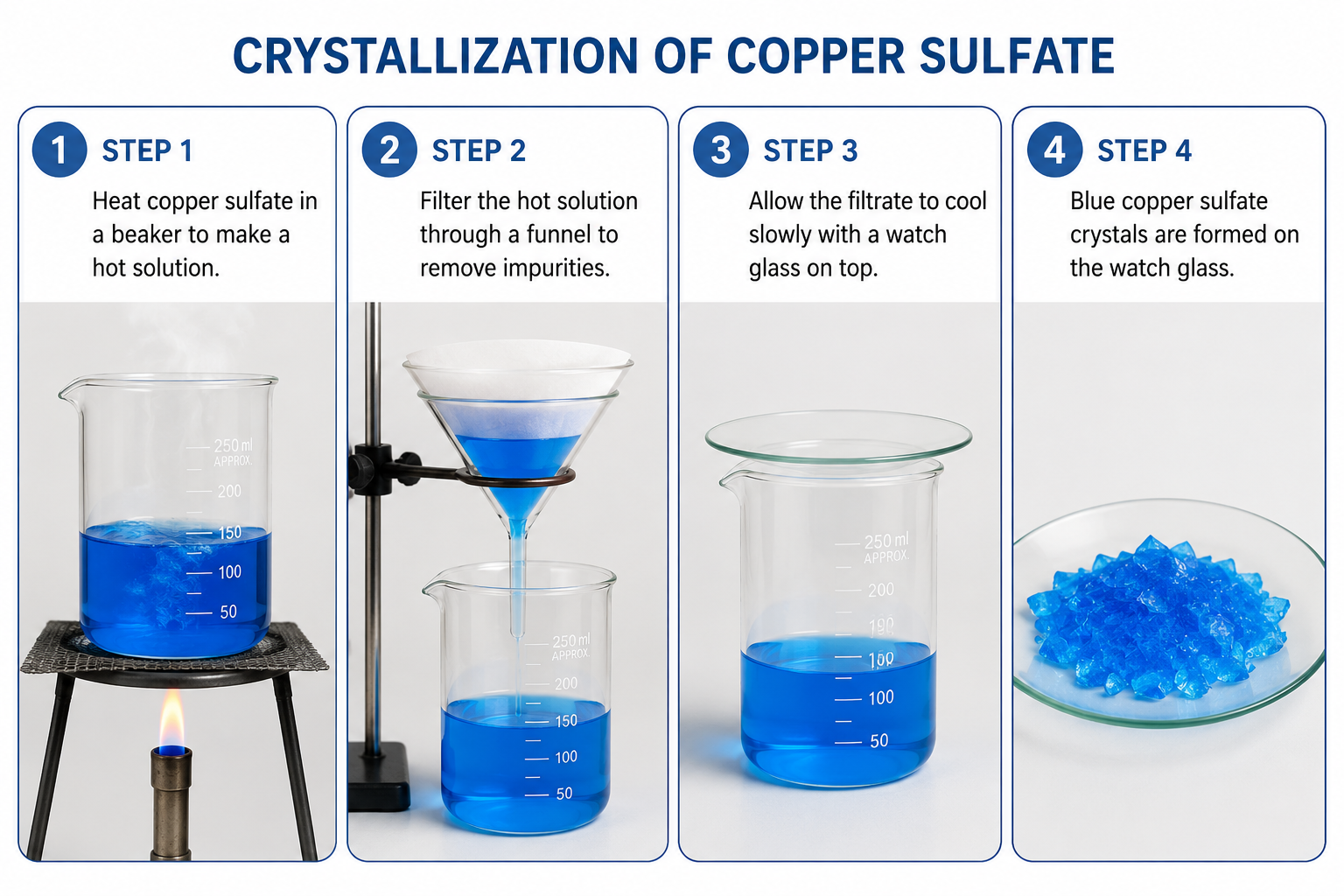
Fig 5.8: Steps involved in the process of crystallization
🔬 Activity 5.3: Crystallization of Copper Sulfate
⚠️ Safety first
Copper sulfate is toxic. Perform under adult supervision. Do not touch with bare hands. Teacher should add the sulfuric acid — handle it very carefully!
- Take 1 g copper sulfate in a 100 mL beaker. Add 25 mL water and a drop of dilute sulfuric acid. Heat gently in a water bath while stirring.
- Gradually add more copper sulfate until the solution becomes saturated.
- Filter the hot solution to remove insoluble impurities. Collect filtrate in a clean beaker and cover with a watch glass.
- Allow to cool slowly without disturbing — large, shiny blue crystals will form.
- Filter the crystals, rinse with cold water and allow to dry on a watch glass.
🇮🇳 India’s Scientific Contributions
- Crystallization of salt was an ancient process used by coastal communities of India.
- The panga salt was obtained by boiling concentrated sea brines, while evaporation produced the karkatch salt. Different crystal sizes were produced by these methods.
🔢 Numerical Questions — Pause and Ponder
- If equal masses of hot, saturated solutions of compounds A and B are cooled from 80°C to 60°C, which solution will deposit more solid? (Refer to solubility curves in Activity 5.2)
- Will there be any change in the size of common salt crystals if the rate of evaporation is increased or decreased? Explain.
5.3.2 Distillation
- Distillation separates a homogeneous mixture of two miscible liquids by heating until the liquid with the lower boiling point vaporises, then cooling the vapour back to liquid (distillate).
- Requires a minimum boiling point difference of 25°C. Also used to separate a liquid from dissolved solids.
- Acetone (56°C) and water (100°C) — difference of 44°C — easily separated by distillation.
- Fractional distillation — for boiling point differences less than 25°C. Used in petroleum refineries to separate crude oil into petroleum gas, petrol, kerosene, diesel, lubricating oil and bitumen.
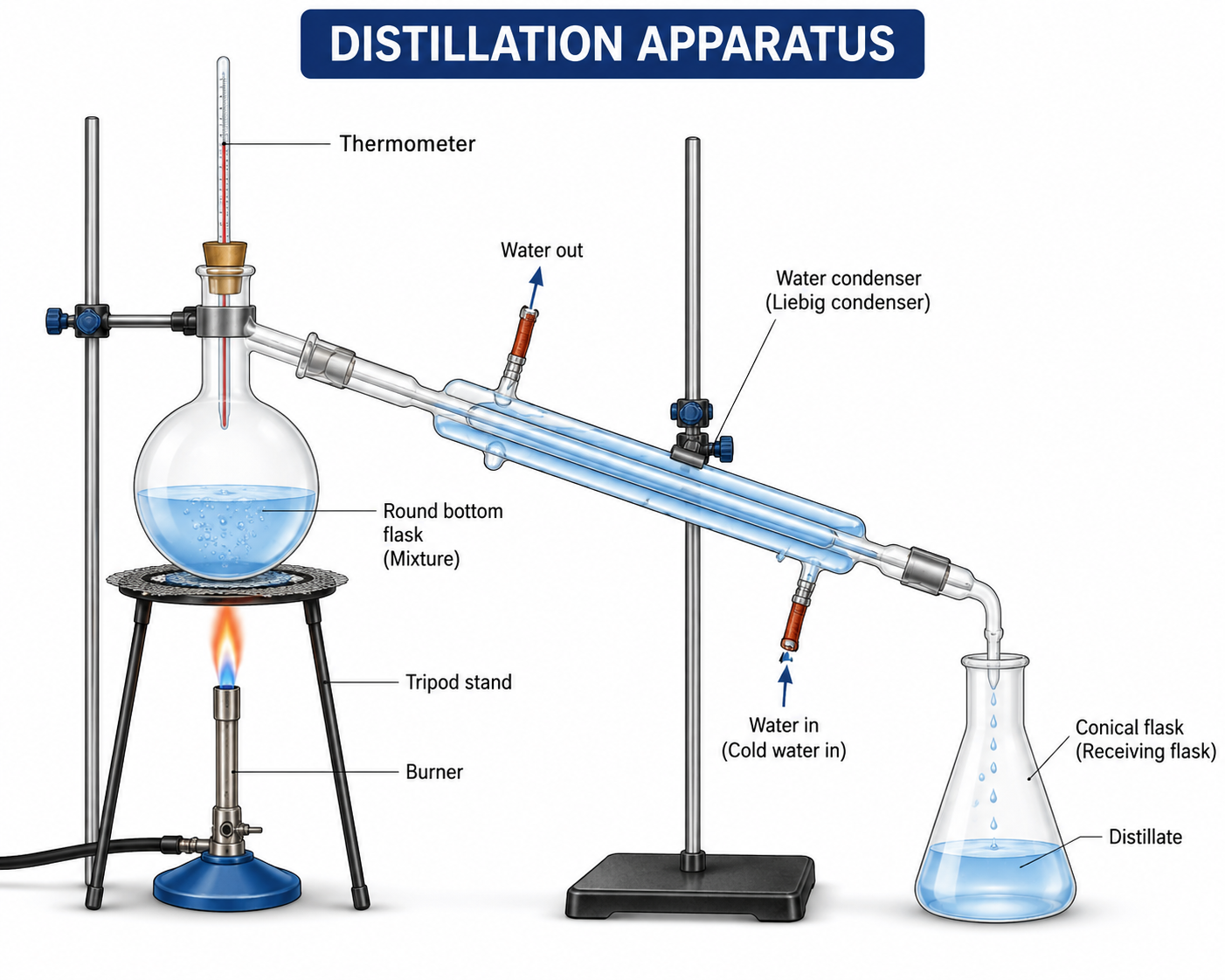
Fig 5.12: Distillation set-up
🇮🇳 India’s Scientific Contributions — Deg-Bhapka Method
- In Kannauj (Uttar Pradesh), known as the perfume capital of India, the earthy fragrance after the first rain is captured as natural perfume called Mitti ka Ittar using the traditional Deg-Bhapka method — passed down through generations.
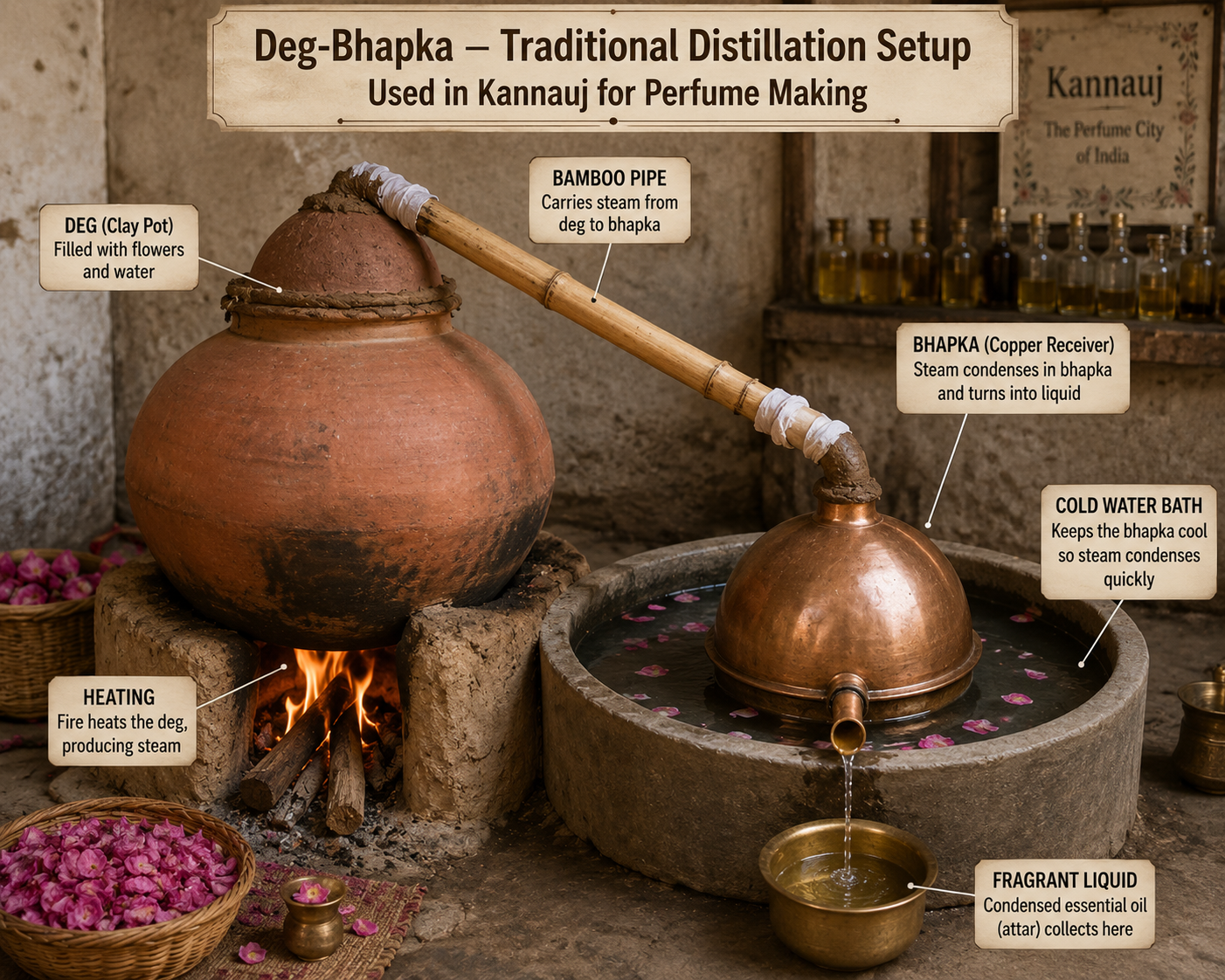
Fig 5.13: Deg-Bhapka method — traditional perfume distillation in Kannauj
5.3.3 Paper Chromatography
- Paper chromatography separates components of a mixture using differences in their interactions with the solvent and the paper.
- The liquid carries components up the paper — they separate based on how fast they move. Components more soluble in the solvent move faster and travel further up.
- Used to separate: colours in black ink, pigments from leaves, pigments from flower petals, food colour components.
- The word comes from Greek — chroma (colour) and graphein (to write).
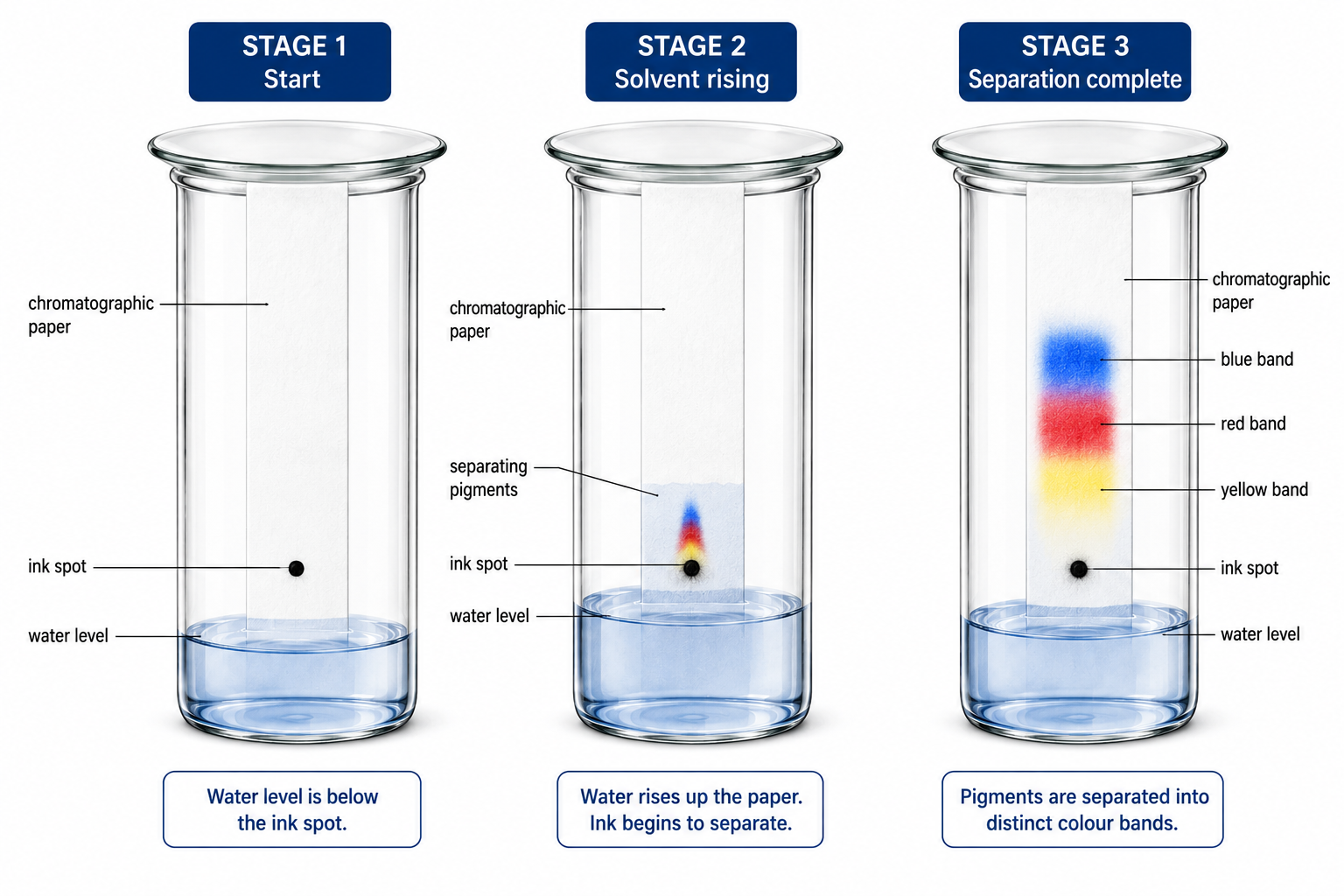
Fig 5.15: Paper chromatography — setup, process and result
🔬 Activity 5.5: Paper Chromatography
- Take a 3 cm wide strip of chromatographic paper. Draw a straight horizontal line 2 cm from the bottom with a pencil.
- Mark a spot with a black sketch pen at the centre of the line.
- Take enough water to make a thin layer at the bottom of a gas jar or beaker.
- Place the paper strip vertically in the container — lower end dips into water, water level must be below the ink spot.
- Observe the paper as water rises through it. What do you notice?
- As water rises, the ink separates into different colour spots. What can you infer?
🔢 Questions — Pause and Ponder (State True or False — correct the false ones)
- Salt can be separated from a salt solution by evaporation or distillation.
- Distillation can be used for separation of two liquids even when these have the same boiling point.
- In paper chromatography, the solvent level should be above the sample spot at the beginning.
- Evaporation and crystallization are the same processes.
📝 Questions — 5.3 Homogeneous Separation
LOTS What is distillation? What minimum boiling point difference is needed?
Show Answer
Distillation separates two miscible liquids by heating until the lower boiling point liquid vaporises, then cooling the vapour to collect it as pure liquid (distillate). Minimum boiling point difference required is about 25°C. For smaller differences, fractional distillation is used.
Medium How does paper chromatography separate components? What property does it use?
Show Answer
Paper chromatography uses differences in how strongly each component interacts with the paper vs. how soluble it is in the solvent. As solvent rises through the paper, components move at different rates — more soluble ones move faster and travel further; less soluble ones remain closer to the starting spot.
HOTS Why is fractional distillation used in petroleum refineries instead of simple distillation?
Show Answer
Crude petroleum contains many components with boiling point differences often less than 25°C. Simple distillation requires at least 25°C difference. A fractionating column separates multiple components at different heights based on their boiling points, giving each petroleum product as a separate fraction.
HOTS Why is crystallization preferred over simple evaporation for obtaining a pure solid?
Show Answer
Simple evaporation is rapid — impurities get trapped in the solid residue. In crystallization, slow cooling allows solute particles to arrange in a regular geometric pattern, forming pure well-shaped crystals while impurities remain dissolved in the mother liquor. Crystallization gives a purer product.
🧫 5.4 How Can We Separate the Components of Heterogeneous Mixtures?
5.4.1 Separation of Two Immiscible Liquids
- Immiscible liquids do not mix with each other and form separate layers — e.g., oil and water.
- Separated using a separating funnel — the denser liquid settles at the bottom and is drained off first through the stopcock.
Fig 5.16: Separation of immiscible liquids using separating funnel
🔬 Activity 5.6: Separate Mustard Oil from Water
- Pour 5 mL mustard oil and 20 mL water into a 50 mL separating funnel.
- Let it stand undisturbed. What do you observe?
- Two layers form — yellow mustard oil on top, water below. Can you explain why?
- Open the stopcock slowly to collect the lower water layer into a container.
- Close the stopcock when water is almost fully drained.
- Collect the small mixed portion and discard it.
- Collect the oil layer separately by opening the stopcock again.
5.4.2 Sublimation
- Sublimation — a solid on heating (below its melting point) changes directly from solid to vapour state without passing through the liquid state.
- Deposition — vapour cools back to solid without becoming liquid.
- Examples of sublimable substances: camphor, naphthalene, dry ice (solid CO₂).
- Used to separate a sublimable substance from a non-sublimable one (e.g., camphor from sand).
Fig 5.17: Sublimation of camphor
🔬 Activity 5.7: Sublimation of Camphor
- Take crushed camphor and sand mixture in a clean china dish on a tripod stand with wire gauze.
- Take a clean dry glass funnel. Plug its nozzle with cotton.
- Keep the funnel inverted on the china dish.
- Light the burner and heat the china dish gently.
- Observe the inner wall of the funnel carefully.
- White solid camphor deposits on the funnel walls while sand remains in the china dish.
5.4.3 Suspensions
- Suspensions — heterogeneous mixtures in which solid particles do not dissolve but remain suspended throughout the medium. Particles are visible to the naked eye (more than 1000 nm) and settle when left undisturbed.
- Examples: muddy water, sawdust in water, tea leaves in water.
- A. Centrifugation — spinning a mixture at high speed. Centrifugal force causes heavier particles to settle at the bottom of the tube while lighter liquid remains on top.
- Used to separate blood components (red blood cells, plasma, platelets) and in chemical industries.
- The paperfuge — a hand-powered spinning device — performs centrifugation without electricity, helping detect malaria and anaemia in remote areas.
Fig 5.19: Centrifugation machine
🔬 Activity 5.8: Make a Model Centrifuge
- Make your own centrifuge with a cardboard disc and thick thread. Spin it to see how heavier particles move outwards. Which mixture would you like to separate using this mini centrifuge?
- B. Coagulation — adding a coagulant (like alum/fitkari) causes fine suspended particles to clump together. The larger clumps settle by gravity (sedimentation) and are removed by decantation or filtration.
- Alum added to muddy water — fine clay particles clump and settle — used in water purification.
- Formation of paneer from milk — acid (lemon juice or vinegar) causes milk proteins to clump together.
Fig 5.21: Process of coagulation — alum purifying muddy water
5.4.4 Colloids
- Colloids — mixtures that are neither true solutions nor suspensions. Particle size: 1–1000 nm.
- Particles in a colloid do not settle over time — uniformly dispersed like a solution but particles are larger.
- Examples: blood, milk, tomato sauce, ice cream, fog, smoke.
- Emulsions — colloids where both dispersed phase and dispersion medium are liquids. Oil-in-water: milk, vanishing cream. Water-in-oil: butter, body lotion, cold cream.
- Emulsifying agents stabilise emulsions — proteins in milk and butter act as emulsifying agents.
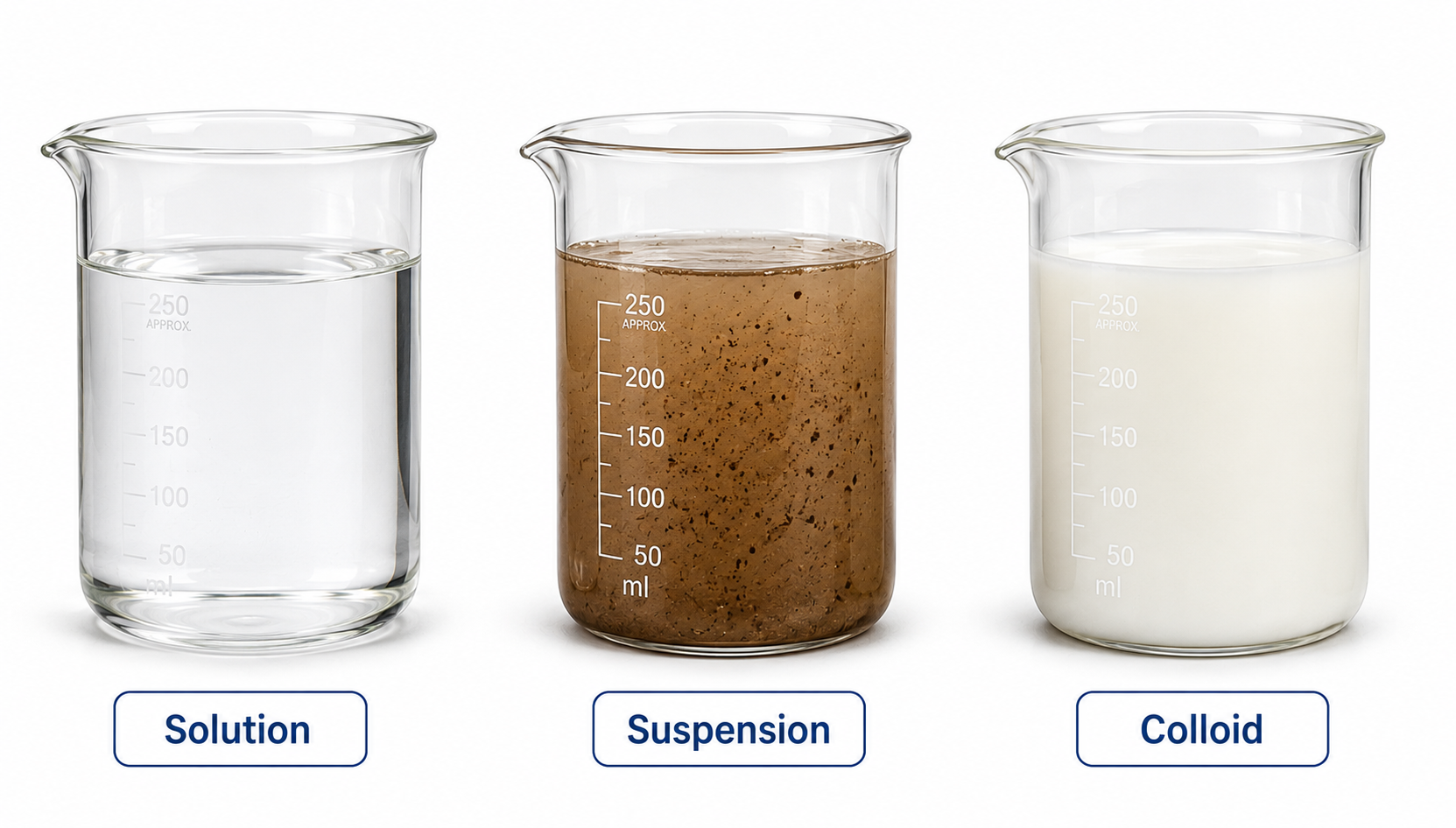
Fig 5.23: (a) Solution, (b) Suspension, (c) Colloid
🔢 Questions — Pause and Ponder
- Why do immiscible liquids form two separate layers in a separating funnel?
- Is sublimation different from evaporation? Justify.
- Clouds are made up of tiny water droplets or ice crystals floating in the air. What type of mixture are clouds and why?
- Why do cities with a lot of smoke and dust often look hazy?
📝 Questions — 5.4 Heterogeneous Mixtures
LOTS What is sublimation? Name two substances that undergo sublimation.
Show Answer
Sublimation is when a solid changes directly from solid to vapour state on heating (below its melting point) without passing through liquid state. Deposition is the reverse. Two substances: camphor and naphthalene.
Medium How does centrifugation work? Where is it used?
Show Answer
Centrifugation spins a mixture at high speed. The centrifugal force causes heavier particles to settle at the bottom of the tube, while lighter liquid remains on top. Used in laboratories to separate blood components (red blood cells, plasma, platelets) and in chemical industries.
HOTS How is blood different from a solution and a suspension? What type of mixture is it?
Show Answer
Blood is a colloid. Unlike a solution — blood cells are not dissolved and can be separated by centrifugation. Unlike a suspension — blood cells are not visible to the naked eye and do not settle immediately. Particle size is in colloid range (1–1000 nm). Blood shows the Tyndall effect confirming it is a colloid, with blood cells as dispersed phase and plasma as dispersion medium.
HOTS Why is alum (fitkari) used to purify muddy water? Explain step by step.
Show Answer
Muddy water contains very fine clay particles too small for filtration. Alum is a coagulant — when added, it causes fine particles to clump together (coagulation). These larger clumps are heavy enough to sink by gravity (sedimentation). The clear water on top is then decanted or filtered. Alum has been used for centuries in India for water purification.
🔦 5.5 Tyndall Effect
- The Tyndall effect is the scattering of light by particles in a colloid or suspension, making the path of the light beam visible.
- Named after scientist John Tyndall who first explained it.
- Light scatters in a colloid or suspension — but NOT in a transparent true solution.
- Examples: light entering a dark room through a small hole; floodlights in a sports stadium; sunlight through gaps in leaves; headlights in fog.
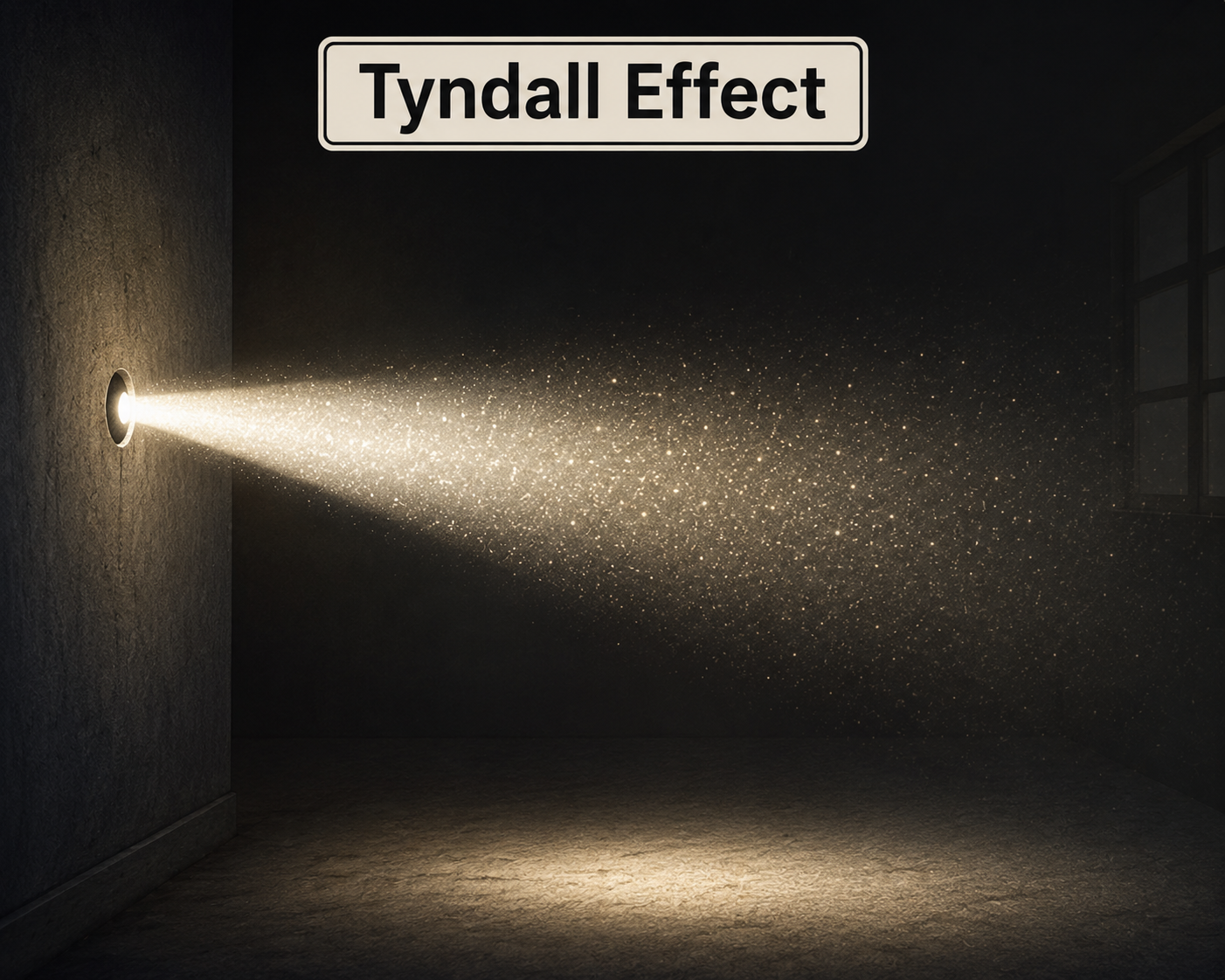
Fig 5.24: Demonstration of Tyndall effect — light scattering through dusty air
🔬 Activity 5.9: Complete the Properties Table
Fill in for solutions, suspensions and colloids:
- Nature (homogeneous/heterogeneous)
- Particle size
- Visibility of particles
- Separation by filtration (possible/not possible)
- Settling when left undisturbed (yes/no)
- Tyndall effect (yes/no)
📝 Questions — 5.5 Tyndall Effect
LOTS What is the Tyndall effect? Who first explained it?
Show Answer
The Tyndall effect is the scattering of light by particles in a colloid or suspension, making the path of a light beam visible. First explained by scientist John Tyndall. Solutions do not show this effect because their particles are too small to scatter light.
Medium Compare solutions, suspensions and colloids based on particle size, settling and Tyndall effect.
Show Answer
Solution: particle size less than 1 nm, does not settle, no Tyndall effect, homogeneous. Suspension: particle size more than 1000 nm, settles when left undisturbed, shows Tyndall effect, heterogeneous. Colloid: particle size 1–1000 nm, does not settle, shows Tyndall effect, appears homogeneous but is heterogeneous.
HOTS Why does the sky appear blue during the day? How is this related to the Tyndall effect?
Show Answer
The atmosphere contains colloidal particles of dust and water droplets. When sunlight passes through, these particles scatter light. Blue light (shorter wavelength) is scattered much more strongly than red or yellow light (longer wavelengths). This scattered blue light reaches our eyes from all directions making the sky appear blue — essentially the Tyndall effect in the atmosphere.
HOTS A student claims all white-coloured liquids are colloids. Is this correct? Justify.
Show Answer
This is incorrect. Colour alone cannot determine whether a liquid is a colloid. The correct identification method is the Tyndall effect test — pass a laser beam through the liquid; if the path is visible it is a colloid or suspension; if invisible it is a true solution. Some colourless liquids are also colloids; some white liquids may be solutions.