
Class 8 Social Science — Exploring Society: India and Beyond
Chapter 5🗳️ Universal Franchise and India’s Electoral System
🎯 Learning Objectives
- Understand the meaning and importance of universal adult franchise in Indian democracy
- Explain the role and structure of the Election Commission of India (ECI)
- Describe the process of voting in Lok Sabha and state assembly elections
- Distinguish between direct and indirect elections with examples
- Explain how Rajya Sabha members, the President, and Vice President are elected
- Understand the Model Code of Conduct and its importance for free and fair elections
- Identify challenges facing India’s electoral system and the way forward
💡 The Big Questions
- What is universal adult franchise?
- What is an electoral system?
- How does India’s electoral system work?
📚 Chapter Index
🗳️ Universal Adult Franchise
🔑 Key Terms
- Franchise: A right granted by the constitution or government. Another term used is ‘suffrage’ — a synonym of franchise.
- Constituency: An area whose voters elect a representative to a legislative body.
- System: A group of interconnected or interdependent elements that work together to achieve a common purpose or function.
- The Constitution makers decided that universal adult franchise would be a feature of Indian democracy right from the outset.
- Every adult citizen gets one vote, and all votes have equal value.
- Every Indian citizen aged 18 and above has the right to vote — irrespective of caste, creed, race, religion, gender, education, income, etc.
- The word ‘universal’ connotes this principle of equal participation for all.
- Universal franchise is a cornerstone of Indian democracy.
- Elections to the Lok Sabha, the legislative assembly of every state and union territory, and all local elections in villages and cities are based on universal franchise (Article 326 of the Constitution).
- No one can vote on another’s behalf.
- To exercise the right to vote, a citizen must be registered as a voter in their constituency.
- One is barred from voting if found guilty of committing certain serious crimes.
- In 2024, about 980 million voters were eligible to exercise their franchise for the 543 constituencies of the Lok Sabha.
🔍 Let’s Explore
- India changed the minimum age for voting from 21 to 18 in 1988. Discuss whether this was a good move.
- Can you calculate how long you have to wait before you can vote?
- In 1947, India’s literacy rate was about 14 per cent (only about 8 per cent among women). Some argued that the right to vote should be given only to literate people. Discuss why the Constitution makers may have decided on universal franchise from the time of Independence itself.
⚠️ Don’t Miss Out
- India has 3.1 million elected representatives (1.3 million of them women) in more than 250,000 local government bodies across India — all democratically elected through universal adult franchise.
- Before Independence, only 13 per cent of Indians were allowed to vote, and franchise was not universal.
- India was among the early nations to grant women the right to vote, ahead of many others around the world.
- For example, women were given the right to vote in Switzerland only in 1971.
- In India, a progressive constitutional vision and deep democratic values rooted in India’s ancient traditions ensured women had voting rights from the very beginning.
🗺️ Why Universal Adult Franchise? (Fig. 5.4)
🧠 Check Your Understanding — Universal Adult Franchise
LOTS At what age does an Indian citizen get the right to vote? Under which Article of the Constitution is universal franchise guaranteed?
Show Answer
Every Indian citizen aged 18 and above gets the right to vote. Universal adult franchise is guaranteed under Article 326 of the Indian Constitution. This covers elections to the Lok Sabha, state assemblies, and local bodies.
Medium What is the difference between ‘franchise’ and ‘suffrage’? Why is it important that no one can vote on another’s behalf?
Show Answer
Franchise and suffrage are synonyms — both mean the right to vote granted by the constitution or government. It is important that no one votes on another’s behalf because: (1) Each person’s political opinion is unique and personal; (2) Allowing proxy voting would let the powerful control the votes of the weak; (3) Democracy is built on each individual freely expressing their own will — any interference makes the election dishonest and unfair.
HOTS India had a literacy rate of only 14% in 1947, yet the Constitution makers granted universal adult franchise from the start. Do you think this was the right decision? Give two strong reasons.
Show Answer
Yes, this was the right decision because: (1) Democracy is for all citizens, not just the educated — literacy does not determine a person’s wisdom or understanding of their own needs. A poor farmer knows what problems they face better than an educated outsider; (2) Restricting votes to literate people would have excluded millions of poor, marginalised, and women voters, making the government unaccountable to them. True democracy requires equal political rights for all from the very beginning, regardless of education levels.
HOTS “One person, one vote” is the foundation of universal franchise. How does this principle help challenge social inequalities based on wealth, caste, or gender? Can you think of a real-world example where this principle is not fully followed?
Show Answer
The principle challenges inequalities because: (1) A poor farmer’s vote equals a rich person’s vote — wealth cannot buy more votes; (2) A Dalit’s vote equals an upper-caste person’s vote — caste cannot determine political power; (3) A woman’s vote equals a man’s vote — gender cannot restrict political participation. However, in practice, money and caste networks can still indirectly influence how people vote through gifts, threats, or misinformation — showing the principle is not always fully followed. This is why the Model Code of Conduct and voter awareness are so important.
🌉 Bridging Barriers, Enabling Participation
- Democracy thrives when every eligible citizen can freely and fairly participate in the electoral process.
- Voting in elections is a powerful way for people to express their will.
- India is a large, diverse, and complex country — the eligible voter population is fifteen times the population of the United Kingdom, and India is six times larger than France in area.
- Geographic diversity is a major challenge in organising elections.
- The Election Commission of India (ECI) organises elections and has taken several innovative accessibility measures to ensure no voter is left behind.
ECI Accessibility Measures
- Electoral officials travel to remote locations to ensure every citizen can exercise their democratic right.
- In 2024, for the first time, the elderly and people with disabilities could cast their votes from home.
- The postal voting option was made available for a specific category of voters.
- Assistive technologies provided: Braille-enabled voter cards; app-based requests for assistance, including wheelchairs and ramps.
- The ECI even organised a polling station for a single woman voter in a remote area.
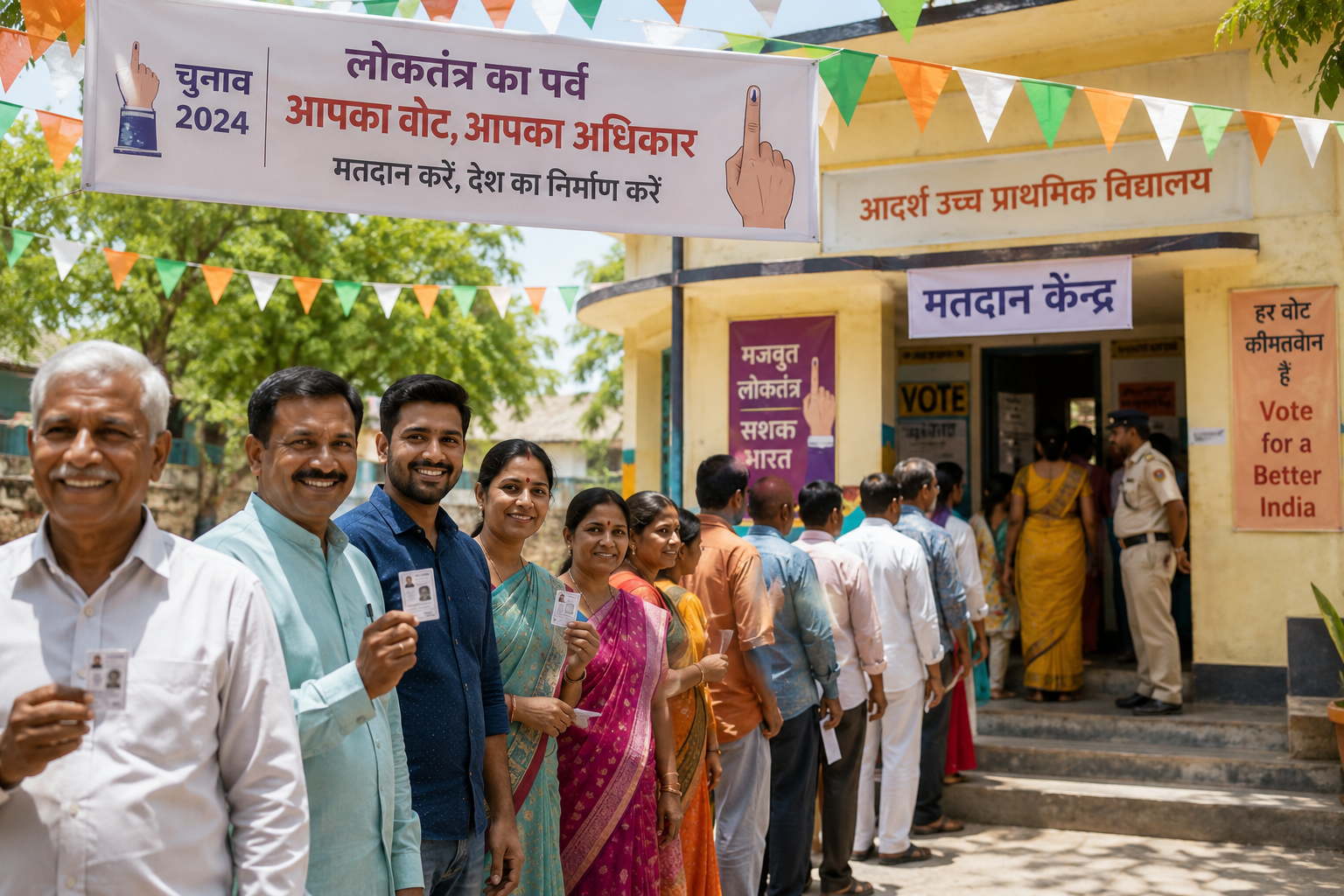
Fig. 5.6 — India’s electoral system enables every citizen to exercise their franchise — including polling stations for single voters, postal voting, and wheelchair assistance.
🔍 Let’s Explore
- About 34 per cent of eligible voters did not exercise their right to vote in the 2024 elections. Why do you think this is so?
- Design and conduct a short survey among adults in your family and neighbourhood. Analyse the data and write a report with suggestions on how everyone can be encouraged to vote.
- Discuss in groups: What role do accessibility measures play in a democracy? How can technology assist in increasing voter participation?
- Visit the ECI website (eci.gov.in/persons-with-disabilities) — identify the various interventions the ECI has taken to facilitate voting by people with disabilities.
⚠️ Don’t Miss Out — Ancient Democratic Traditions
- The Uttaramerur inscriptions from the 10th century describe a transparent process for the selection of representatives.
- Eligible candidates’ names were written on fragments of palm leaves and placed in a pot, which was then sealed.
- On the selection day, the pot was opened publicly and a young boy drew the palm leaves randomly one by one.
- A respected individual, after showing his empty hands to the public, would read out each name of the selected candidates.
- This shows that transparent democratic practices in India go back over a thousand years.
🧠 Check Your Understanding — Bridging Barriers
LOTS Name two accessibility measures introduced by the ECI to ensure people with disabilities can vote.
Show Answer
Two accessibility measures: (1) Braille-enabled voter cards for visually impaired voters; (2) Home voting for the elderly and people with disabilities — introduced for the first time in 2024. Other measures include postal voting, app-based requests for wheelchairs and ramps, and organising polling stations even for a single remote voter.
Medium Why is India’s election management more challenging than that of smaller countries like France or the United Kingdom? Give two specific reasons.
Show Answer
(1) Population — India has about 980 million eligible voters, fifteen times the population of the UK, requiring over 1 million polling stations and massive logistical deployment; (2) Area and Geographic Diversity — India is six times larger than France. Organising polling in remote Himalayan villages, dense forests, border areas, and islands requires extraordinary effort, with officials travelling to extremely difficult terrain to ensure every citizen can vote.
HOTS “34% of eligible voters did not vote in 2024.” What does this tell us about voter awareness and civic responsibility? Suggest three concrete steps to improve voter participation in urban areas.
Show Answer
It tells us that voter awareness and civic responsibility are lacking in a significant section, especially in urban areas where people feel their individual vote does not matter. Three steps: (1) School and college awareness campaigns about civic duty and the importance of every vote; (2) Declare election day a public holiday or allow flexible voting hours so working people can participate without losing income; (3) Use social media and digital influencers to reach young urban voters with the message that every vote counts.
HOTS The Uttaramerur inscriptions describe transparent democratic practices from 10th century India. What values from this ancient system are still relevant today? How do they compare to today’s ECI processes?
Show Answer
Values still relevant: (1) Transparency — names drawn publicly with empty hands shown; today the ECI uses transparent ballot boxes and public counting with party agents present; (2) Fairness through randomness — palm leaves drawn randomly to prevent bias; today NOTA lets voters reject unsuitable candidates; (3) Public witnessing — the community observed the process; today polling agents from all parties witness every stage. Key difference: modern elections use universal franchise (everyone votes, not just eligible landowners), electronic technology (EVMs, VVPAT), and a permanent independent constitutional body (ECI) at a massive national scale.
🏫 Election for Class Representative — Grade 8, Suryodaya School
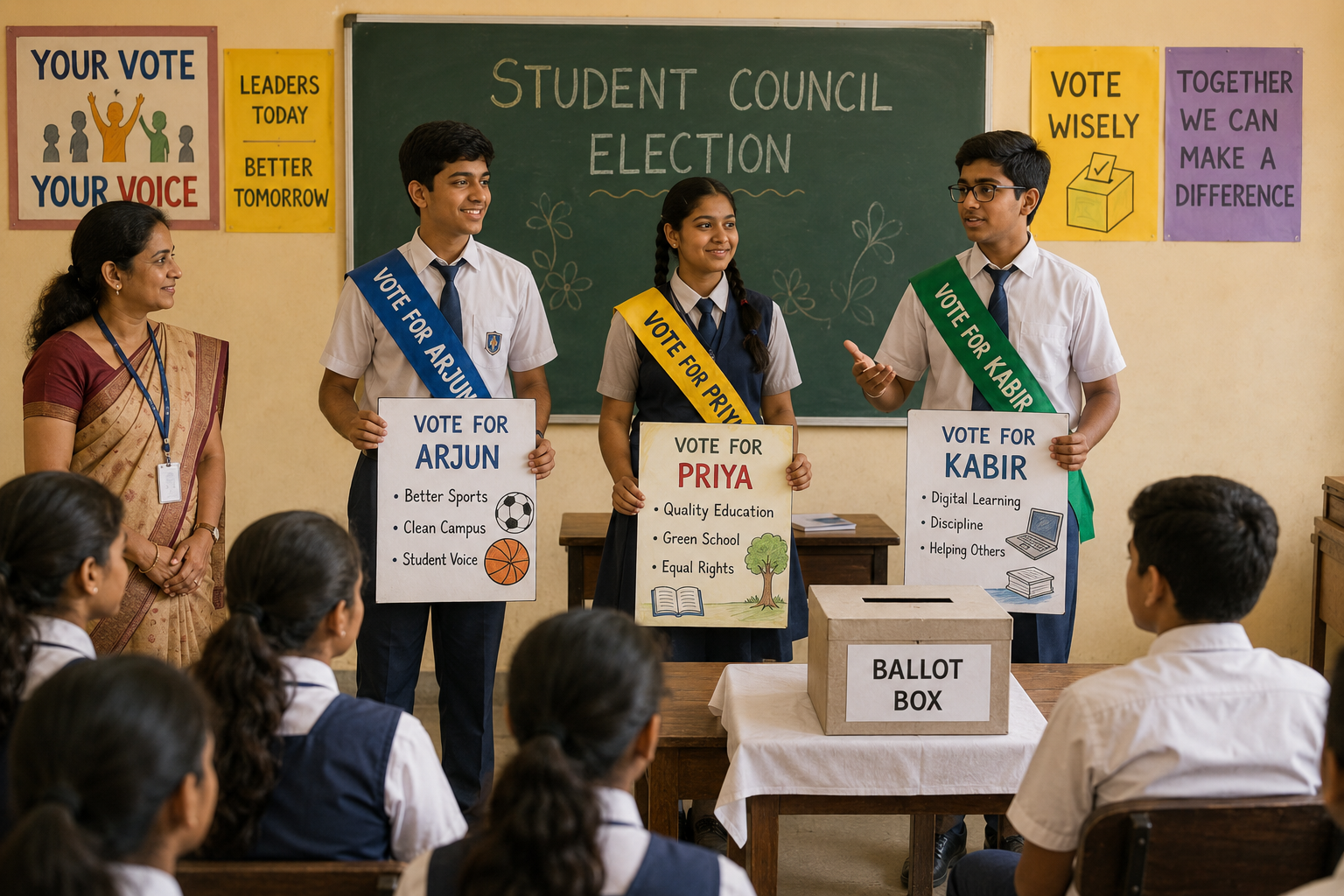
Fig. 5.7 & 5.8 — A classroom election in action: candidates present their ideas while the teacher ensures a fair and transparent process.
📖 The Caselet
- It was time for the annual election of the Class Representative (Class Rep).
- The Class Rep would represent the class in meetings with teachers, organise events, and act as a bridge between students and school authorities.
- Three students contested: Ahmed, Gurmat, and Ravi.
- Class teacher Ms. Usha was appointed as the Election Officer to ensure the process was fair, transparent, and followed all necessary rules.
The Candidates
- Ahmed — promised to improve the cleanliness of the classrooms and the playground.
- Gurmat — proposed creating a system of peer coaching and mutual support to help all classmates learn better.
- Ravi — wanted to make more space in the class timetable for the arts curriculum — music, theatre, and visual art — in line with the new curriculum.
Campaigning
- Ahmed put up posters.
- Gurmat used the noticeboard and spoke to classmates.
- Ravi held a lunchtime music performance to promote his idea.
- Ms. Usha explained the rules to the class, ensuring everyone understood how the secret ballot voting process would work — no one would know who voted for whom.
- She set up voting booths in the corner of the classroom.
Voting Day
- Each student was given a ballot paper with the names of the three candidates.
- Students were asked to mark an ‘X’ next to the name of the candidate they wished to vote for.
- Ms. Usha also ensured there was a ballot paper in braille for Neha.
- After all students voted, Ms. Usha collected the ballots in a box and sealed it until the counting session.
The Results
- After all 33 votes were cast, Ms. Usha called Ms. Sheeba from the next class to witness the counting process.
- One of the ballot papers was not marked — declared invalid.
- Gurmat, with the most votes, was declared the new Class Representative.
- She thanked her classmates and promised to fulfil her commitments.
- Ahmed and Ravi congratulated her and offered to support her.
- Note: Gurmat won with only 12 out of 33 votes — less than 50% — this is the First-Past-the-Post system in action.
🔍 Let’s Explore — The Caselet
- What are the most important aspects of the election process in this caselet?
- Why was it important to have a secret ballot?
- What considerations might the students have had while exercising their choice?
- Do you think the students have any responsibility after Gurmat was elected? If yes, what are they?
- What was the role that Ms. Usha played? Why was it important?
- Why was it important for Ms. Usha to organise a braille ballot paper for Neha?
- What would happen if many students in the class chose not to mark a preference?
⚠️ Don’t Miss Out — NOTA
- Some countries, including India, offer an additional option — NOTA (None Of The Above).
- This option allows voters to reject all candidates if they are not satisfied with any of them.
- It doesn’t change the result but sends a message — voters want better choices.
- NOTA is a quiet but powerful tool in a democracy.
🧠 Check Your Understanding — The Suryodaya School Caselet
LOTS How many votes did Gurmat receive? How many total votes were cast, and how many were declared invalid?
Show Answer
Gurmat received 12 votes. A total of 33 votes were cast, of which 1 was declared invalid (not marked). So 32 valid votes were counted: Ahmed got 8, Gurmat got 12, and Ravi got 10. Gurmat won as she had the highest number of votes.
Medium Gurmat won with 12 out of 33 votes — less than 50%. What does this tell us about the First-Past-the-Post system? Name one advantage and one disadvantage.
Show Answer
Under the First-Past-the-Post system, a candidate wins by getting the most votes — not necessarily more than 50%. Advantage: It is simple to understand, produces a clear winner quickly, and provides stable government. Disadvantage: The winner may not represent the majority’s preference — here, 21 of 32 students voted for someone other than Gurmat, yet she won, so a large portion of voters may feel unrepresented.
HOTS Ms. Usha ensured a braille ballot paper for Neha. How does this reflect the values of inclusivity and universal franchise? What might have been the consequences if this was not arranged?
Show Answer
It reflects: (1) Inclusivity — every eligible voter, regardless of ability, has an equal right to participate; ‘universal’ means truly everyone; (2) Equal treatment — Neha’s right to vote is as important as anyone’s, and the Election Officer’s duty is to ensure no one is excluded. Consequences if not arranged: Neha would have been effectively disenfranchised — unable to express her choice — a failure of duty and a violation of democratic principles. In national elections, the ECI similarly provides braille voter cards, wheelchair access, and home voting so no voter is left behind.
HOTS Imagine you were choosing your class rep. What three factors would you consider before deciding? How does this connect to a voter’s responsibilities in a national election?
Show Answer
Three factors: (1) Credibility and honesty — does the candidate keep promises and show integrity?; (2) Relevance of their agenda — whose plan addresses the real problems of the majority?; (3) Ability to represent everyone — will they listen to all, or only their friends? This mirrors national elections: voters must assess a candidate’s track record, party promises, and ability to represent the whole constituency — which is why voter awareness and informed decision-making are so critical.
🏛️ The Role of the Election Commission of India (ECI)
💡 Let’s Remember
- India is a parliamentary democracy where, at the national level, citizens choose representatives for the Lok Sabha — focusing on issues affecting the entire country.
- Voters also elect representatives from their constituencies to the legislative assemblies in states and union territories — focusing primarily on regional issues.
- In Grade 6, you read about direct elections to gram panchayats and urban local bodies — the State Election Commissions manage these.
A Brief Introduction
- The Election Commission of India (ECI) is an independent constitutional body responsible for conducting free and fair elections.
- Established in 1950.
- Conducts elections to the Lok Sabha, Rajya Sabha, State Legislative Assemblies, and the offices of the President and Vice President.
- The first general elections in independent India were held in 1951–1952.
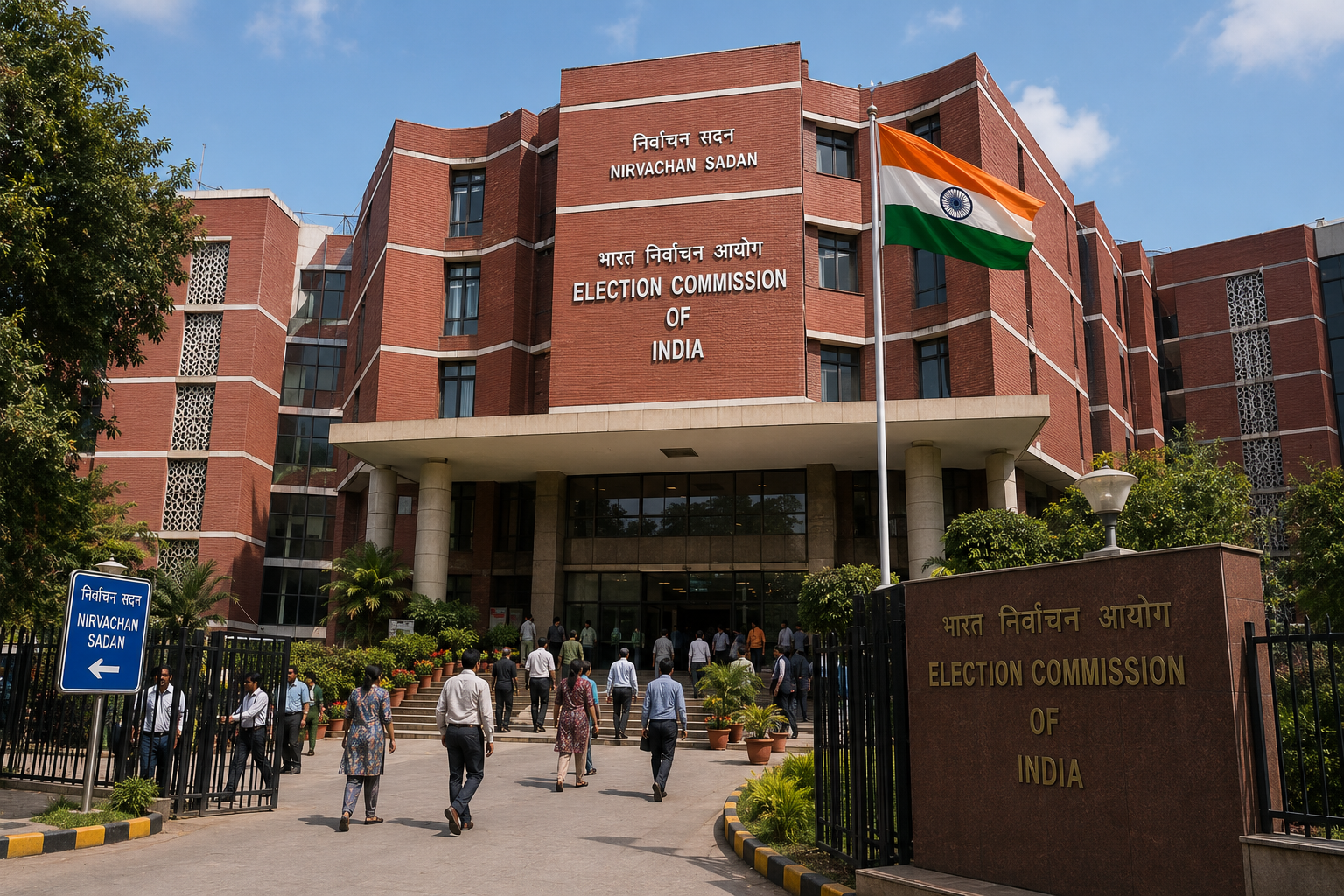
Fig. 5.10 — Office of the Election Commission of India in Delhi
Tasks Performed by the ECI
Structure of the ECI (Fig. 5.11)
🧠 Check Your Understanding — ECI Structure
LOTS When was the Election Commission of India established? Name two types of elections it conducts.
Show Answer
The ECI was established in 1950. It conducts elections to the Lok Sabha and State Legislative Assemblies (it also conducts Rajya Sabha elections and elections for the offices of President and Vice President).
Medium What is the role of the Returning Officer (RO) and the Electoral Registration Officer (ERO)? How are they different?
Show Answer
The Returning Officer (RO) is responsible for conducting elections at the district/constituency level — overseeing polling and counting. The Electoral Registration Officer (ERO) is responsible for managing the voter list — registering eligible voters and maintaining accurate electoral rolls. The RO handles the actual conduct of the election, while the ERO handles voter registration before the election even begins.
HOTS Why is it important that the ECI is an independent constitutional body and not under the control of the government in power? What could happen if it were not independent?
Show Answer
Elections decide who holds power — if the ruling government controlled the ECI, it could manipulate election dates, rules, or results to favour itself, destroying “free and fair” elections. Independence ensures: (1) Neutral enforcement of the Model Code of Conduct on all parties equally, including the ruling party; (2) Trust from citizens and opposition that the process is fair; (3) Accountability — the ECI can act even against powerful leaders. If not independent, elections could become a tool for the ruling party to stay in power indefinitely, turning democracy into a façade.
HOTS The ECI operates at national, state, and district levels. Why is such a multi-level structure necessary for a country like India? What would be the challenges of managing all elections from a single central office?
Show Answer
India has over 1 million polling stations and 980 million voters across diverse states, languages, and terrains. Local officers understand regional issues, languages, and ground realities better than a distant central office. Challenges of a single office: (1) impossible to monitor every booth in real-time; (2) delays in addressing local complaints or logistical problems; (3) lack of local language/cultural understanding causing errors in voter lists or campaign monitoring; (4) slower response during polling-day emergencies.
⚙️ Managing the Electoral Process
- Managing elections in India is a mammoth task — the ECI has been upgrading its capacities to keep pace with modern India.
- The Lok Sabha elections illustrate the scale — state assembly elections follow a similar process.
- All elections take place at different times with some periodicity — several polls are conducted every year across the country.
Scale of the 2024 Lok Sabha Elections (Fig. 5.12)
- Many people are deployed to assist the whole process, including teachers.
⚠️ Don’t Miss Out — Reserved Constituencies
- 84 of the 543 Lok Sabha constituencies are reserved for Scheduled Castes (SC).
- 47 are reserved for Scheduled Tribes (ST).
- The remaining 412 are general constituencies.
- This reservation ensures representation for historically marginalised communities in Parliament.
Process of Voting for Lok Sabha & State Assemblies (Fig. 5.13)
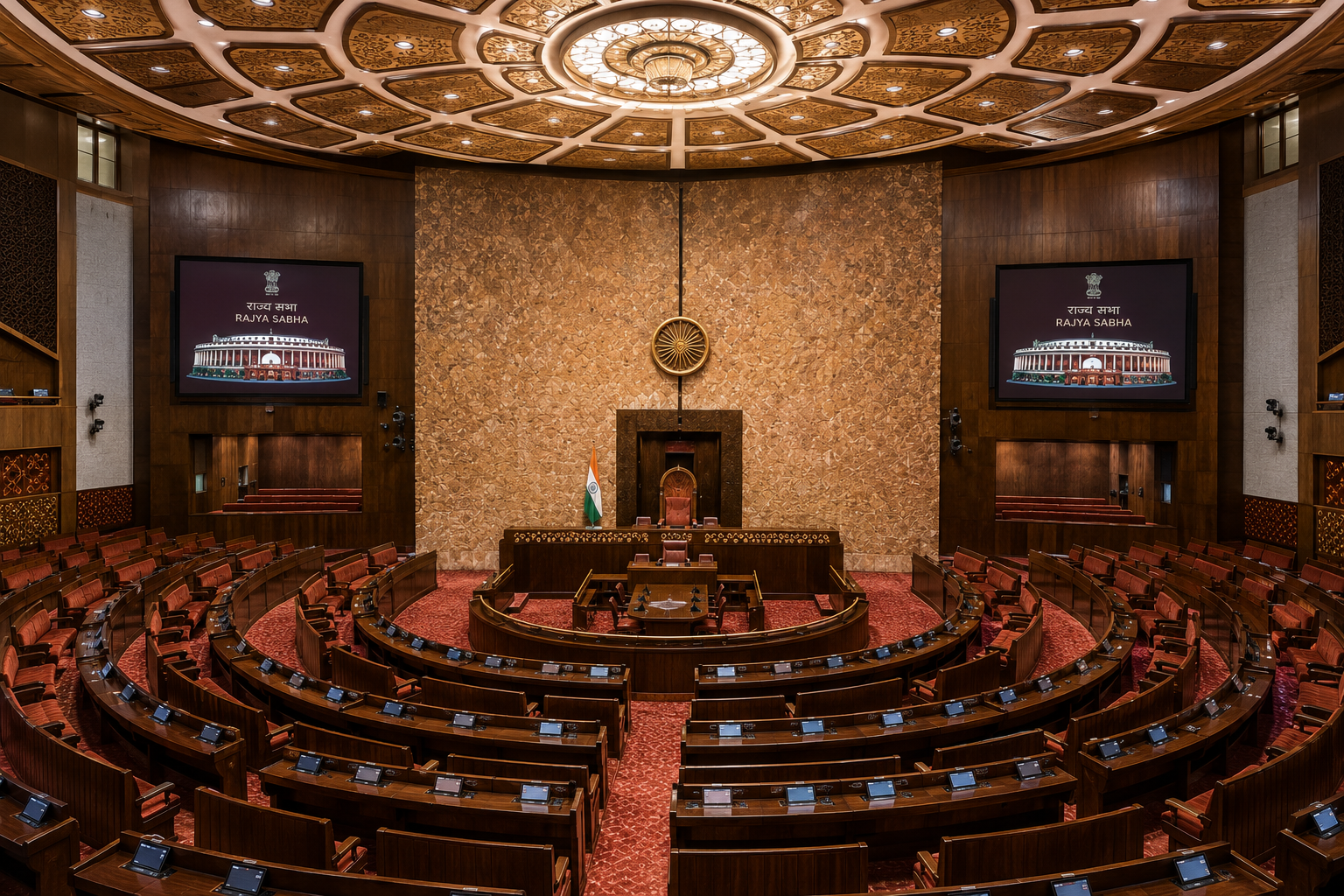
Fig. 5.16 — Electronic Voting Machines (EVM) and VVPAT used in Indian elections
🔍 Let’s Explore — EVMs and VVPAT
- India’s EVMs and VVPAT systems have been used in countries like Namibia and Bhutan with support from the ECI.
- VVPAT produces a physical paper record, allowing voters to verify that their electronic votes were cast correctly — a backup for verification and recounting in case of disputes.
- Identify teachers in your school or vicinity who may have performed election duty. Invite them to your class to share their experiences.
⚠️ Don’t Miss Out — First Voter of India
- Shyam Saran Negi, a school teacher in Himachal Pradesh, was the first voter in India’s general elections of 1951.
- In 2017, he cast his vote at the remarkable age of 100 years.
📋 Model Code of Conduct (MCC)
- The MCC is a set of guidelines and rules listing the dos and don’ts for leaders, political parties, and candidates that must be adhered to during elections.
- It is followed to ensure free and fair elections.
- The MCC was first adopted in Kerala in 1960, voluntarily approved by representatives of the major political parties of the time.
- The ECI circulated it to political parties during the 1962 general elections.
- From 1991, the ECI became proactive in ensuring observance of the MCC.
📜 A Few Elements of the Code
- i. There are rules that the party in government must follow — government resources must not be used for election purposes. For example, no new schemes and projects are to be announced that may influence voters.
- ii. All candidates are expected to exercise discretion and restraint to ensure elections take place peacefully.
- iii. Influencing voters through gifts in return for votes is punishable.
Examples of MCC Violations
- A candidate distributing sarees and household appliances to women voters.
- Abusive language used by the candidate of one party against a candidate from an opposing party.
- Officials of the government campaigning for the ruling party.
- Bundles of currency notes found in the car of a candidate during inspections.
⚠️ Don’t Miss Out — T.N. Seshan
- T.N. Seshan became the Chief Election Commissioner in 1990.
- He brought in reforms to ensure free and fair elections: campaigning to follow precise rules; voter IDs to eliminate proxy voting; strict vigilance on spending by candidates.
- He is often remembered as the officer who made Indian elections fairer, transparent, and fearless.
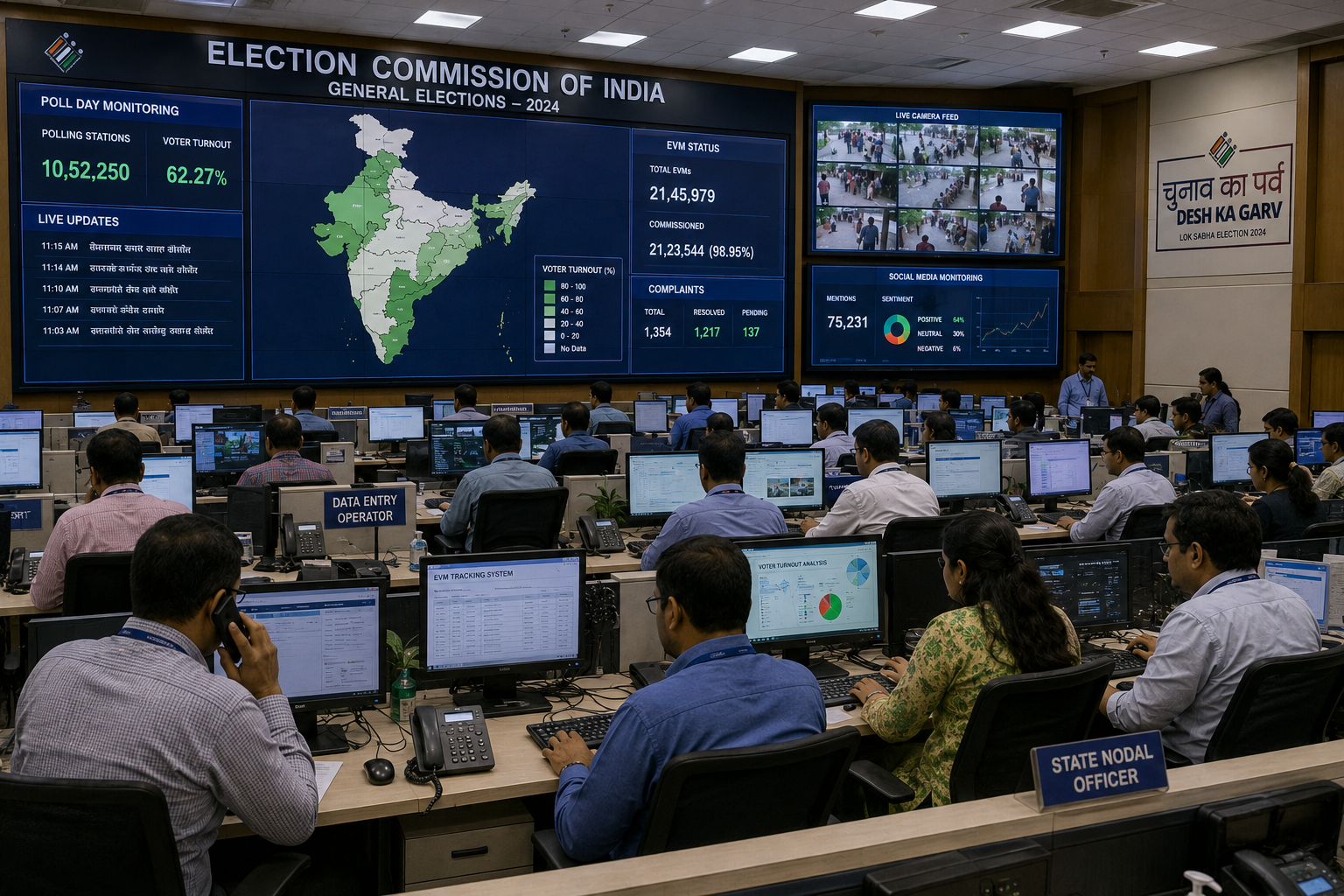
Fig. 5.14 — Managing elections: extensive use of technology in election control rooms
🔍 Let’s Explore
- When is the next election in the region where you are located? Is it to the state, urban local body, or panchayat?
- Look at the four examples of MCC violations shown above. Why do you think each of these might be a violation of the code of conduct?
🧠 Check Your Understanding — Electoral Process & MCC
LOTS What does VVPAT stand for? What is its purpose in the voting process?
Show Answer
VVPAT stands for Voter Verifiable Paper Audit Trail. Its purpose is to produce a physical paper record of the vote cast on the EVM, allowing the voter to verify their vote was recorded correctly. It also serves as a backup for verification and recounting in case of disputes or technical failures.
Medium What is the Model Code of Conduct? Name three rules that candidates and political parties must follow under it.
Show Answer
The MCC is a set of guidelines listing the dos and don’ts for leaders, parties, and candidates during elections to ensure they are free and fair. Three rules: (1) The ruling government cannot announce new schemes or projects that may influence voters; (2) Candidates must exercise discretion and restraint for peaceful elections; (3) Influencing voters through gifts in exchange for votes is punishable.
HOTS T.N. Seshan is credited with making Indian elections “fairer, transparent, and fearless.” Why is it important for a constitutional authority like the ECI to be proactive rather than passive? Give two examples from the chapter.
Show Answer
A proactive ECI is important because rules alone are not enough — they must be actively enforced, especially against powerful politicians who might otherwise ignore them. Examples: (1) T.N. Seshan introduced voter IDs to eliminate proxy voting and enforced strict vigilance on candidate spending — active interventions, not just rule-making; (2) The MCC existed since 1960 but the ECI only became proactive in enforcing it from 1991 — showing that a rule “on paper” differs from actively ensuring it is followed. Proactive enforcement builds public trust and deters violations.
HOTS The MCC prevents the ruling party from announcing new schemes during election season. Do you think this is a fair restriction? Who does it protect and why? Could this rule ever be misused?
Show Answer
Yes, it is fair because it prevents the ruling party from misusing government resources and power to gain an unfair advantage just before elections. It protects: (1) Opposition parties, who lack access to government resources, ensuring a level playing field; (2) Voters, by ensuring decisions are made on genuine governance needs, not vote-bank politics. Possible misuse: it could be used to delay genuinely urgent schemes (like disaster relief) simply because they coincide with an election — which is why the ECI must use judgment rather than a blanket ban.
🏛️ Election to the Lok Sabha and State Legislative Assemblies
- Elections in India are often referred to as the ‘Festival of Democracy’.
- India follows a parliamentary system of government with various levels of elections — Lok Sabha (national), State Legislative Assemblies (state), and local bodies (city/village).
- The country is divided into 543 constituencies for Lok Sabha elections.
- Elected candidates to the Lok Sabha are known as Members of Parliament (MPs).
- Candidates elected to state assemblies are known as Members of Legislative Assembly (MLAs).
- India uses the ‘First-Past-the-Post’ electoral system — the candidate receiving the most votes in a constituency wins.
- A candidate can win without securing even 50% of the total votes (like Gurmat won with only 12 out of 33 votes).
🔑 Key Terms
- Coalition: A group of two or more parties working together to form a government when no single party wins an outright majority.
- Dissolution: Expiry or termination of a legislative body due to the end of its term or other Constitutional reason.
- Represent the nation in the Lok Sabha
- Chosen by direct elections
- Focus on national issues
- 543 MPs in Lok Sabha
- Represent constituencies in state assemblies
- Chosen by direct elections
- Focus on state/regional issues
- Numbers vary by state
Formation of Government
- The political party or coalition winning a majority of seats in the Lok Sabha forms the national government.
- The leader of this majority typically becomes the Prime Minister.
- Similarly, at the state level, the leader of the majority party becomes the Chief Minister.
⚠️ Don’t Miss Out
- The legislative assembly is called by several names in regional languages — for example, Vidhan Sabha and Niyama Sabha.
- The State Election Commission plays an important role not only in general and state elections but also in conducting elections to local bodies at the grassroots level, working in consultation with the ECI.
🔍 Let’s Explore
- Who are the MP and MLA/MLAs of the constituency you are located in?
- Which party does each of them belong to?
- What are the concerns of the MP and MLA, respectively?
🧠 Check Your Understanding — Lok Sabha Elections
LOTS What is the ‘First-Past-the-Post’ system? How many constituencies does India have for Lok Sabha elections?
Show Answer
The First-Past-the-Post system is one in which the candidate who receives the most votes in a constituency wins — even without getting more than 50% of the total votes. India has 543 constituencies for Lok Sabha elections.
Medium What is the difference between an MP and an MLA? At which level does each work?
Show Answer
An MP (Member of Parliament) is elected to the Lok Sabha and represents the country at the national level, focusing on national issues. An MLA (Member of Legislative Assembly) is elected to a State Legislative Assembly and represents their constituency at the state level, focusing on regional issues. Both are chosen through direct elections, but work at different levels of governance.
HOTS In the First-Past-the-Post system, a candidate can win without getting 50% of the votes. Do you think this is truly democratic? What might be a fairer alternative, and what trade-offs would it involve?
Show Answer
For: it produces clear, decisive results and stable governments, and is simple to understand. Against: a candidate can win even when the majority did not want them, so many voters’ preferences are not reflected. A fairer alternative could be a runoff between the top two candidates if no one gets 50%, or proportional representation, where parties get seats by overall vote share. Trade-off: these can be more complex, slower to produce results, and may lead to unstable coalitions — which is why India uses First-Past-the-Post for simplicity and stability.
HOTS “Elections are the Festival of Democracy.” Do you agree? What responsibilities does this festival place on (a) voters, (b) candidates, and (c) the Election Commission?
Show Answer
Yes — elections involve mass participation and celebration of citizens’ rights. Responsibilities: (a) Voters — vote responsibly after evaluating candidates, and actually turn out (recall 34% did not vote in 2024); (b) Candidates — follow the MCC, campaign fairly without money or abusive language, and represent genuine constituency concerns; (c) Election Commission — ensure the process is free, fair, and accessible to all (braille ballots, home voting, reserved constituencies). Only when all three fulfil their roles does the “festival” truly strengthen democracy.
🏛️ Election to the Rajya Sabha
- Rajya Sabha members are also known as Members of Parliament (MPs) but are chosen through indirect elections.
- Total members: 245 — 233 are elected by the elected members of state legislative assemblies (MLAs) through the single transferable vote system; 12 are nominated by the President of India.
- Each state is allotted a different number of Rajya Sabha seats based on population.
- The Rajya Sabha is called the Permanent House — it is never dissolved.
- A member of the Rajya Sabha has a six-year term.
- One-third of its members retire every two years, ensuring continuity.
- It uses the ‘single transferable vote system’ — ensuring smaller states get fair representation.
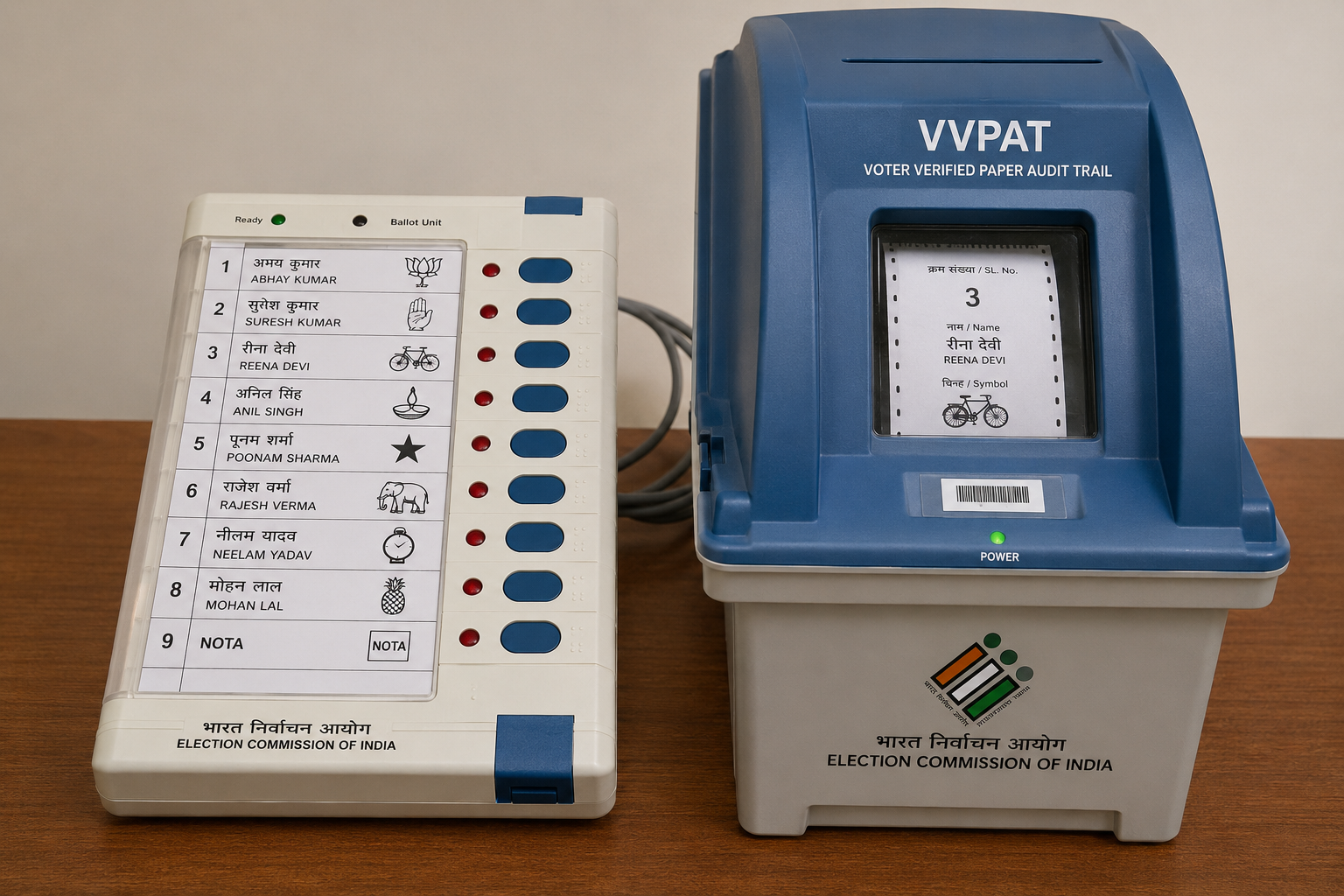
Fig. 5.23 — Rajya Sabha: The Council of States — a permanent body where one-third of members retire every two years
- Direct election by the people
- 543 members
- Term: 5 years
- Can be dissolved
- First-Past-the-Post system
- Indirect election by MLAs + 12 nominated
- 245 members
- Term: 6 years (staggered)
- Never dissolved
- Single transferable vote system
🗳️ Election of the President of India
- The President is not directly elected by the common people.
- An Electoral College is formed to carry out the election, consisting of: MPs from both houses — Lok Sabha and Rajya Sabha; MLAs from each of India’s states and the union territories of Delhi and Puducherry.
- The single transferable vote system is followed.
- More populous states have a greater say.
Who is NOT involved in electing the President?
- Nominated members of Rajya Sabha (12).
- Nominated members of State Legislative Assemblies.
- Members of Legislative Councils (both elected and nominated) in bicameral legislatures.
- Nominated members of union territories of Delhi and Puducherry.
🔑 Key Term
- Bicameral Legislature: A system where the legislative body is divided into two separate chambers or houses.
💡 Think About It
- Why are nominated members not involved in electing the President of India?
- It is because this ensures that only directly elected representatives vote to elect the President — maintaining democratic legitimacy, as the President is meant to represent the will of the people, indirectly but meaningfully.
🗳️ Election of the Vice President of India
- The Vice President is elected by an electoral college of the elected and nominated members of both Houses of Parliament.
- The single transferable vote system is used.
- The Vice President is the Chairperson of the Rajya Sabha.
- If the President cannot discharge their functions, the Vice President steps in.
🧠 Check Your Understanding — Rajya Sabha, President & VP
LOTS How many members does the Rajya Sabha have? Who nominates 12 of them?
Show Answer
The Rajya Sabha has 245 members. Of these, 233 are elected by state MLAs, and 12 are nominated by the President of India.
Medium What is an Electoral College? Who forms the Electoral College for the election of the President of India?
Show Answer
An Electoral College is a body of elected representatives formed specifically to carry out an indirect election (instead of citizens voting directly). For the President, it consists of: (1) elected MPs from both the Lok Sabha and Rajya Sabha; (2) elected MLAs from each state and the union territories of Delhi and Puducherry.
HOTS The President is elected indirectly while the Prime Minister is chosen through direct elections. What does this tell us about the roles each plays? Which role carries more actual governing power and why?
Show Answer
The President is largely a ceremonial/constitutional head representing the unity of the nation, while the Prime Minister is the real executive head who runs the day-to-day government. The PM is chosen (through MPs of the winning party/coalition) by the people’s direct vote, giving a stronger mandate. The Prime Minister holds more actual governing power — leading the Council of Ministers, setting policy, and being directly answerable to Parliament and the electorate — whereas the President mostly acts on the advice of the Council of Ministers in routine matters.
HOTS Why are nominated members of the Rajya Sabha excluded from voting in the Presidential election? What principle does this uphold? Can you see any potential unfairness?
Show Answer
They are excluded because they were not directly elected by the people — they were appointed for distinguished contributions in fields like art, science, or social service. Letting them vote would mean someone with no direct mandate influences who becomes head of state, weakening democratic legitimacy. It upholds the principle that only those who derive authority from the people’s vote should choose the President. Potential unfairness: nominated members may be highly capable individuals whose expertise is excluded purely on a technicality.
🚧 Challenges and The Road Ahead
- India’s electoral system is celebrated as the world’s largest democratic exercise.
- However, it faces challenges: growing influence of money in elections; a significant proportion of candidates with criminal records; voter apathy, particularly in urban areas.
- The way forward lies in empowering voters with the information they need to make thoughtful and responsible choices.
- Media, education, and awareness campaigns must work together to help people — especially the youth — understand the importance of voting wisely.
- An aware and vigilant voter is the strongest safeguard of a democratic system.
📌 Before We Move On…
- Universal adult franchise is the cornerstone of Indian democracy.
- The right to vote is a responsibility, too — voter awareness is important.
- It is important to facilitate the participation of all eligible voters.
- The Election Commission of India is the Constitutional body that conducts elections in the country.
- The ECI oversees all elections, including those of the President and Vice President.
- Indian democracy faces challenges that call for voters’ vigilance and awareness.
📝 Questions and Activities
1. Why is universal adult franchise important for a healthy democracy?
Show Answer
Universal adult franchise gives every adult citizen an equal vote regardless of caste, religion, gender, education or wealth. It makes the government accountable to all the people (not just the powerful), ensures peaceful transfer of power, upholds the principle of equality, and gives every citizen a stake in the nation’s future. A democracy is “healthy” only when all its people can participate in choosing their rulers — which universal franchise guarantees.
2. What is the meaning of ‘secret ballot’? Why is this important in a democracy?
Show Answer
A secret ballot means a voter’s choice is confidential — no one knows who they voted for. It is important because it protects voters from intimidation, bribery, threats and social pressure, allowing them to vote freely according to their conscience. Without secrecy, powerful people could coerce or punish voters for their choices, destroying the fairness of the election.
3. Give examples of direct and indirect elections.
Show Answer
Direct elections (people vote directly for the candidate): Lok Sabha MPs, State Legislative Assembly MLAs, and local body members (gram panchayats, municipalities). Indirect elections (elected representatives vote on the people’s behalf): Rajya Sabha members (elected by MLAs), the President of India, and the Vice President of India (elected by Electoral Colleges).
4. How is the election of members to the Lok Sabha different from that to the Rajya Sabha?
Show Answer
Lok Sabha: members (MPs) are elected directly by the people through the First-Past-the-Post system; 543 members; 5-year term; the house can be dissolved. Rajya Sabha: members are elected indirectly by the elected MLAs of state assemblies through the single transferable vote system, with 12 nominated by the President; 245 members; 6-year staggered term (one-third retire every two years); it is a permanent house that is never dissolved.
5. What, in your view, are the advantages of the EVM over paper ballots?
Show Answer
Advantages of EVMs: (1) Faster counting — results in hours instead of days; (2) No invalid votes — unlike paper ballots that could be wrongly marked (recall the invalid ballot in the caselet); (3) Less paper, so more eco-friendly and easier to transport; (4) Harder to tamper with ballot stuffing; (5) With VVPAT, voters can still verify their vote on a paper slip, combining speed with verifiability.
6. Voter turnout has been declining in some urban areas of India. What could be the reasons, and what steps can encourage more people to vote?
Show Answer
Reasons: urban apathy/feeling that one vote doesn’t matter; people travelling or at work on polling day; long queues; lack of connection to local candidates; cynicism about politics. Steps: awareness campaigns in schools/colleges and workplaces; making polling day a holiday or flexible hours; easy voter registration; using social media to reach youth; improving polling-booth facilities to reduce waiting; civic education emphasising that every vote counts.
7. Why do you think a proportion of seats in the Lok Sabha is reserved for scheduled castes and scheduled tribes? Write a short note.
Show Answer
Of the 543 Lok Sabha seats, 84 are reserved for Scheduled Castes and 47 for Scheduled Tribes. These communities were historically marginalised, oppressed and under-represented for centuries. Reservation ensures they have a guaranteed voice in Parliament to raise their concerns and shape laws affecting them. Without it, dominant groups might crowd them out of political representation. It is a constitutional measure to make democracy genuinely inclusive and to promote social justice and equality.
8. Social media is changing the way we experience elections. Is this strengthening democracy or confusing it? Discuss the benefits, challenges, and the future of elections in a digital age.
Show Answer
Benefits: spreads awareness quickly, reaches young voters, lets citizens question leaders directly, and makes campaigns cheaper and more interactive. Challenges: spread of fake news and misinformation, echo chambers that deepen divisions, paid trolls, and manipulation of opinion. Future: elections will increasingly involve digital campaigning, so voters must develop media literacy to tell truth from propaganda, and the ECI must monitor online campaigning and misinformation. Social media can strengthen democracy if used responsibly, but can confuse it if voters accept everything uncritically.
9. Visit indiavotes.com and explore a parliamentary constituency election from any year, and an assembly election in your state.
Show Answer
Activity guidance: On the website, pick your own Lok Sabha constituency and note the winning candidate, their party, vote share and margin of victory; then do the same for your Assembly (Vidhan Sabha) constituency. Compare how the same area voted in national vs state elections — often people vote differently at the two levels. Present your findings in a small table.
🧠 Final Review — Challenges & The Big Picture
LOTS Name three challenges facing India’s electoral system as mentioned in the chapter.
Show Answer
(1) The growing influence of money in elections; (2) A significant proportion of candidates with criminal records; (3) Voter apathy, particularly in urban areas.
Medium What does the chapter suggest as the way forward? Who are the key groups mentioned?
Show Answer
The chapter suggests empowering voters with information to make thoughtful, responsible choices. The key groups mentioned are media, education (schools), and awareness campaigns, which must work together to help people — especially the youth — understand the importance of voting wisely.
HOTS “An aware and vigilant voter is the strongest safeguard of a democratic system.” Do you agree? What specific actions can a Class 8 student take today to become a more informed future voter?
Show Answer
Yes — laws and institutions can only do so much; ultimately, voters who evaluate candidates carefully and refuse to be swayed by money or false promises keep democracy healthy. Actions a student can take: (1) Stay informed by reading newspapers/credible news on policies and current affairs; (2) Participate in school elections and debates to practise democratic decision-making (as in the Suryodaya caselet); (3) Discuss issues with family and encourage eligible members to register and vote responsibly.
HOTS Design a one-page awareness campaign poster (in words) to convince urban youth to vote. What key message and which chapter facts would you highlight?
Show Answer
Headline: “Your Vote, Your Voice, Your Future!” Message: Every vote counts — don’t let others decide your future. Facts to highlight: (1) “34% of eligible voters didn’t vote in 2024 — don’t be part of that statistic”; (2) Shyam Saran Negi, who voted at age 100, showing voting is a privilege worth valuing; (3) India is the world’s largest democracy, and low youth turnout weakens it. Call to action: “Register. Show up. Vote.” with a QR code to voter registration.