
Chapter 6: Pressure, Winds, Storms, and Cyclones
📚 Chapter Index
🎯 Learning Objectives
- Define pressure and state its formula and SI unit
- Explain how liquids and gases exert pressure in all directions
- Describe atmospheric pressure and its magnitude
- Explain how differences in air pressure cause wind formation
- Understand how high-speed winds lower air pressure
- Explain the formation of storms, thunderstorms, and lightning
- Describe the formation, structure, and effects of cyclones
- Identify safety measures during lightning and cyclones
- Why are winds stronger on some days than on others?
- Why are water tanks usually placed at a height?
- Can air pressure really crush us?
- What causes storms and cyclones? If the Earth stopped rotating, would cyclones still form?
- Wind exerts force on fallen leaves, trees, doors, windows, and clothes — the force exerted by wind creates wind pressure
- In this chapter, we explore the relationship between force and pressure, and understand how they shape powerful natural events like thunderstorms and cyclones
6.1 Pressure
The Megha and Pawan Story
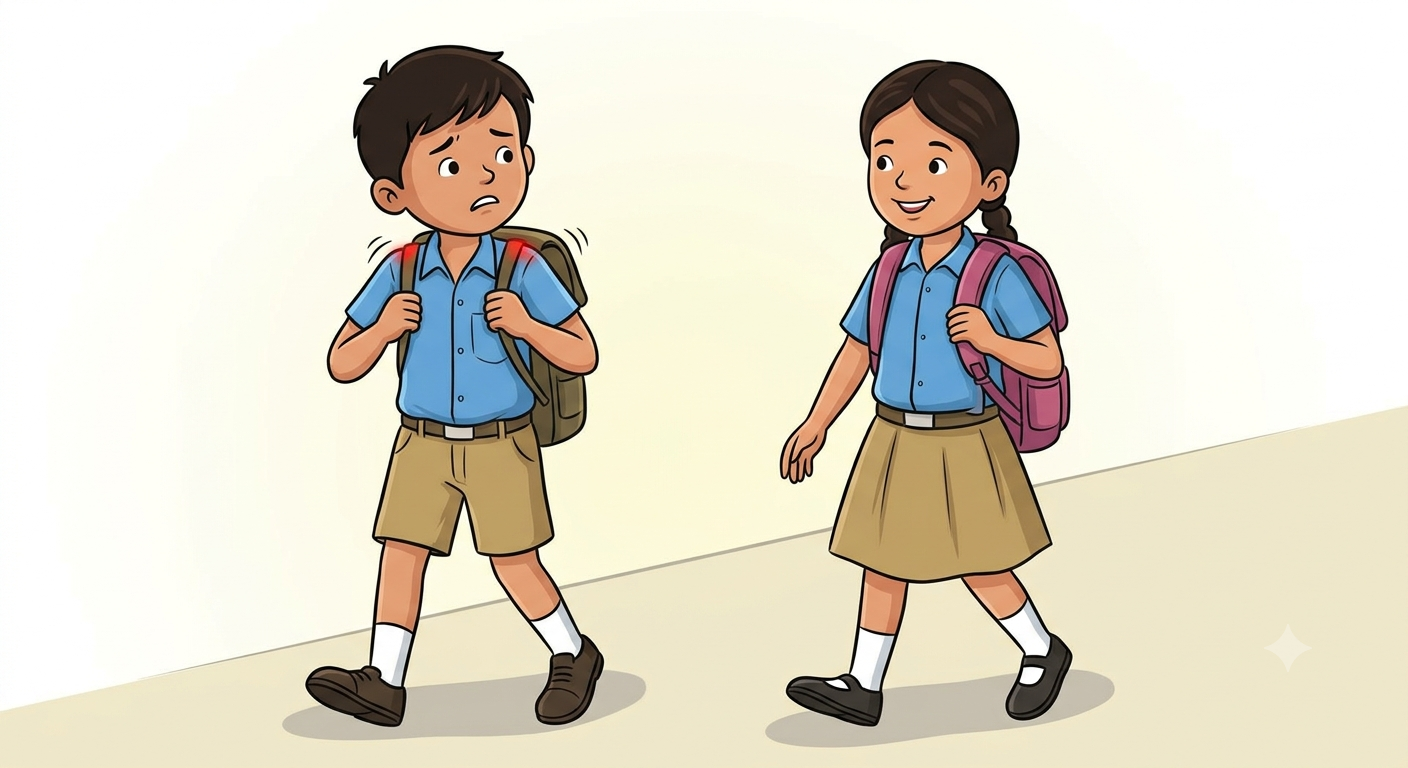
Fig. 6.1 — Megha and Pawan carrying their bags. Pawan’s narrow straps hurt his shoulders; Megha’s broad straps are comfortable — same weight, different pressure!
- Megha and her brother Pawan carry identical bags to a picnic — both bags are equally heavy
- Pawan’s bag hurts his shoulders; Megha’s does not — the difference: Pawan’s bag has narrow straps, Megha’s has broad straps
- The weight of the bag with narrow straps acts on a smaller area — more pressure on Pawan’s shoulders
- The weight of the bag with broad straps is spread over a larger area — less pressure on Megha’s shoulders
- Since the area over which force acts is involved, we define a quantity called pressure — the force per unit area
- We consider only those forces which act perpendicular to the surface on which pressure is computed
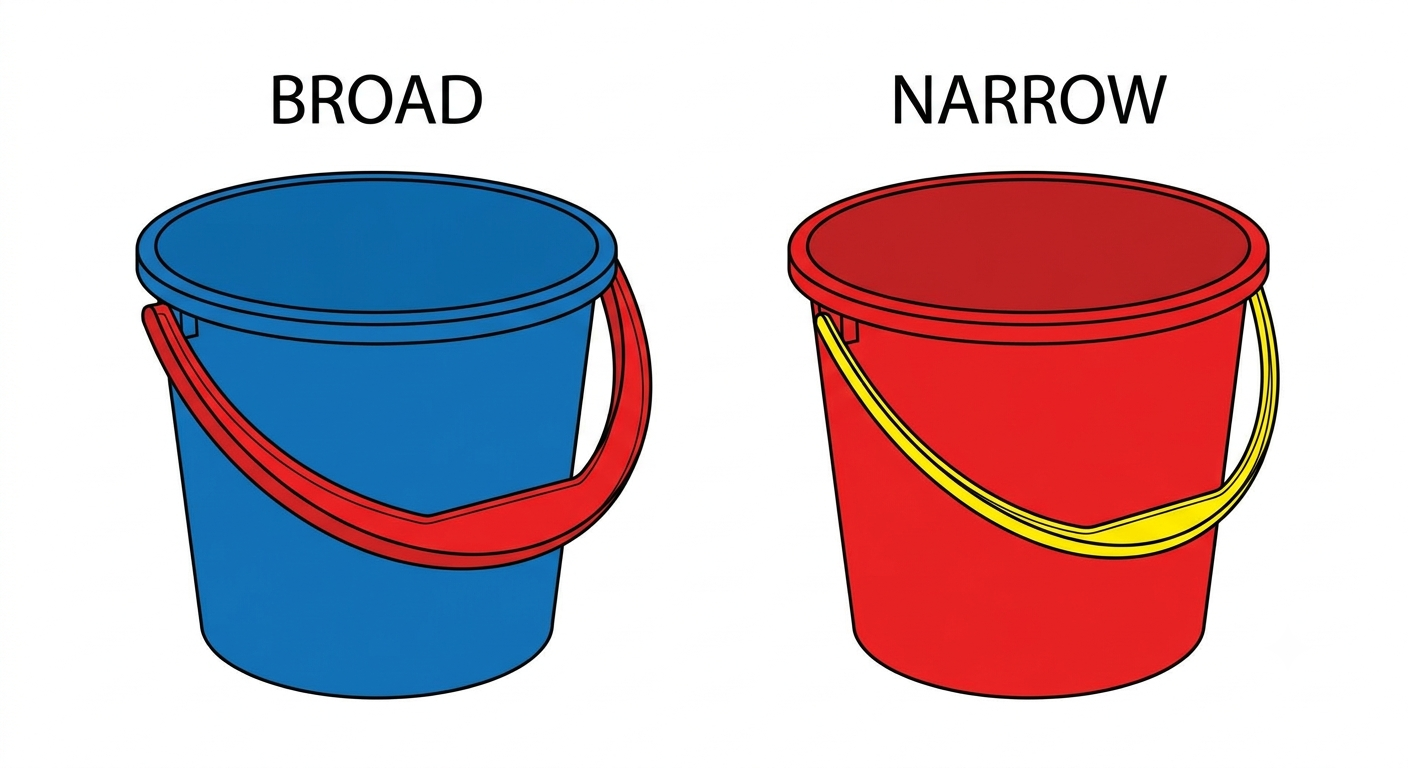
Fig. 6.2 — Buckets with broad and narrow handles. Broad handle reduces pressure on fingers.
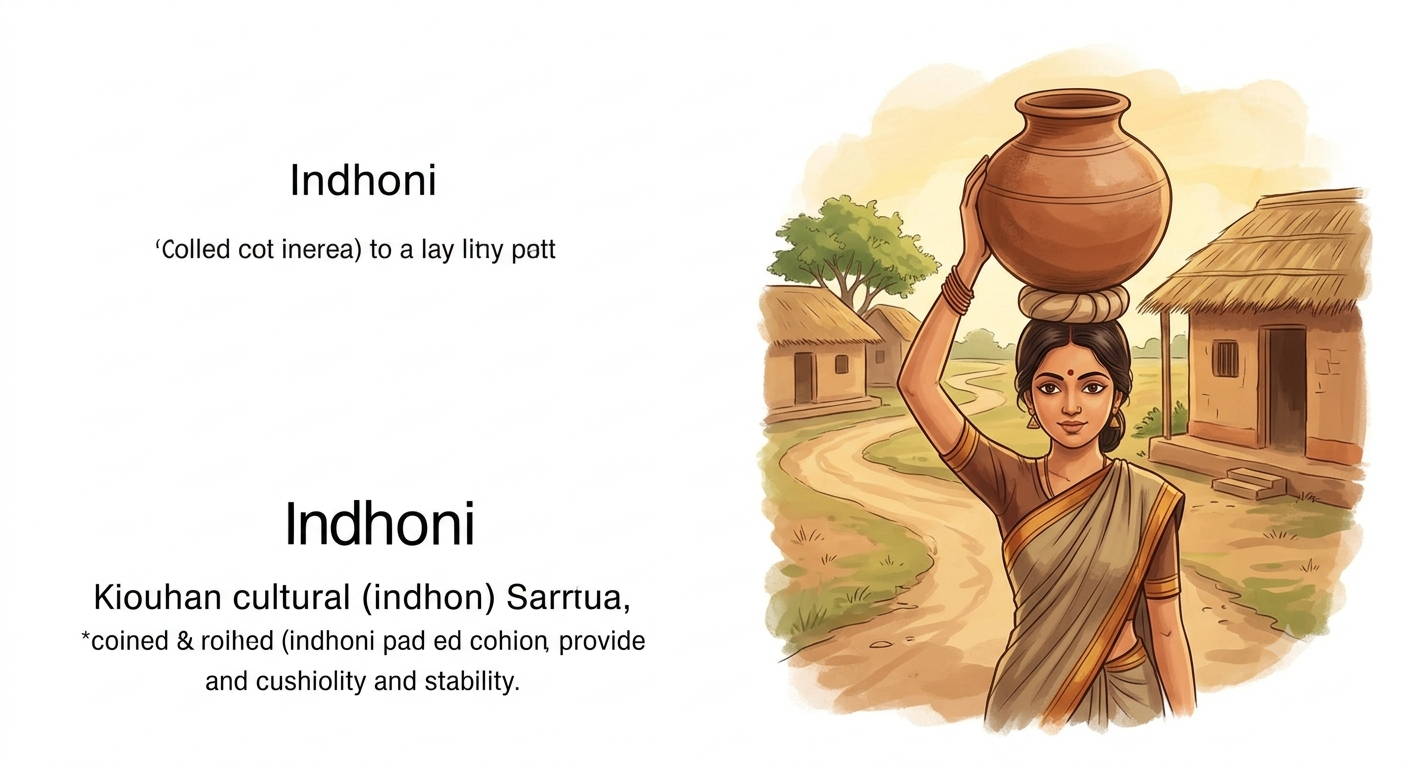
Fig. 6.3 — A round piece of cloth is placed under the load to increase the area and reduce pressure.
- It is easier to lift a water-filled bucket with a broad handle than a narrow handle — broad handle increases area, reducing pressure on fingers
- People carrying loads on their heads place a round cloth under the load — to reduce pressure by increasing area
SI Unit of Pressure
- SI unit of force = newton (N); SI unit of area = metre² (m²)
- Therefore, SI unit of pressure = newton/metre² (N/m²), also called a pascal (Pa)
📐 Worked Example
If a force of 100 N is applied on a cardboard of area 2 m²:
Show Solution
The activities listed in Table 6.1 should be conducted under the supervision of an adult.
Table 6.1 — Record Your Observations
| Activity | Modes of Action | Easy or Difficult? Give Reasons. |
|---|---|---|
| Driving an iron nail | By the head (large area) vs. by the pointed end (small area) | Easier by pointed end — smaller area means greater pressure with same force |
| Cutting an apple with a knife | Using the sharp edge (small area) vs. blunt edge (large area) | Easier with sharp edge — smaller area creates greater pressure, cutting easily |
Conclusion: When area is smaller, pressure is higher for the same force — making certain tasks easier.
Do Liquids Also Exert Pressure?
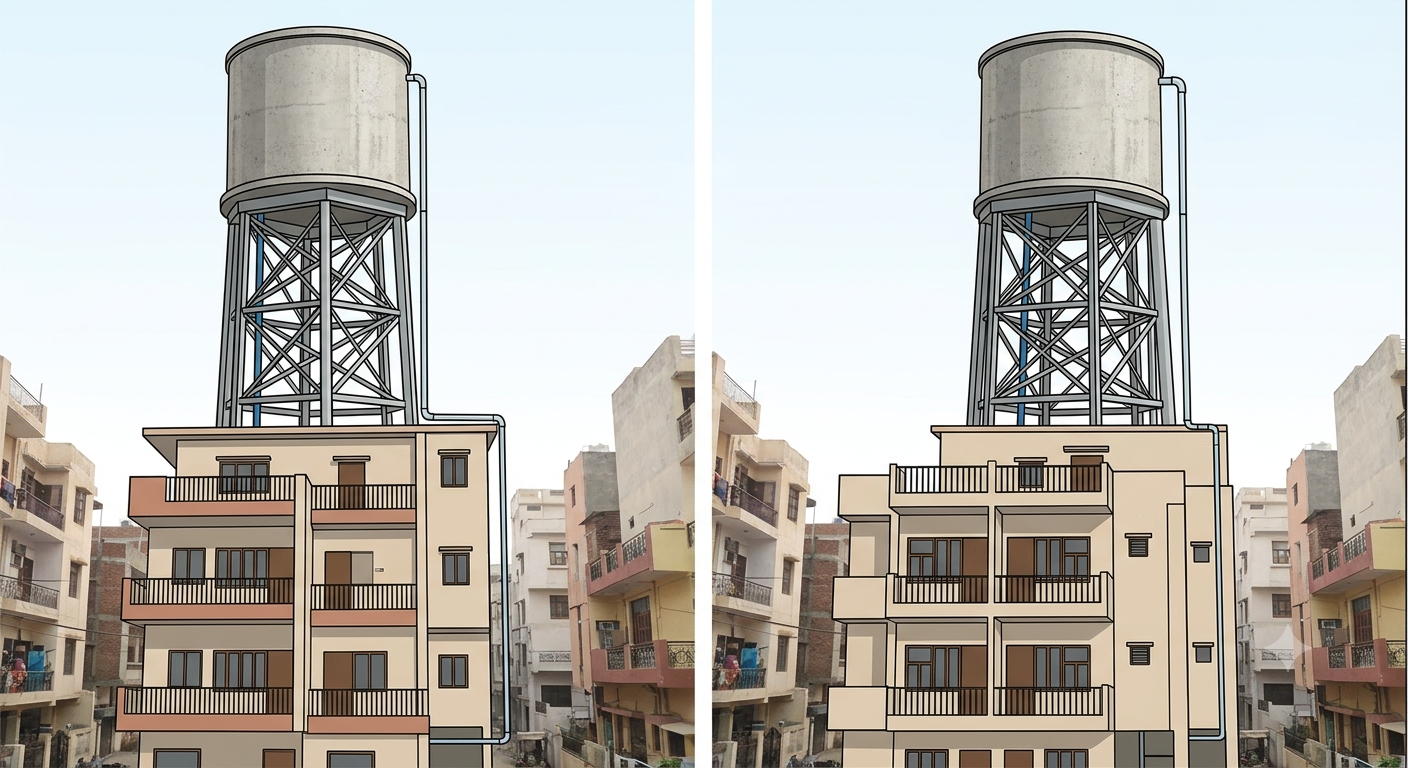
Fig. 6.4 — Overhead water tank placed at a height to increase water pressure in taps below.
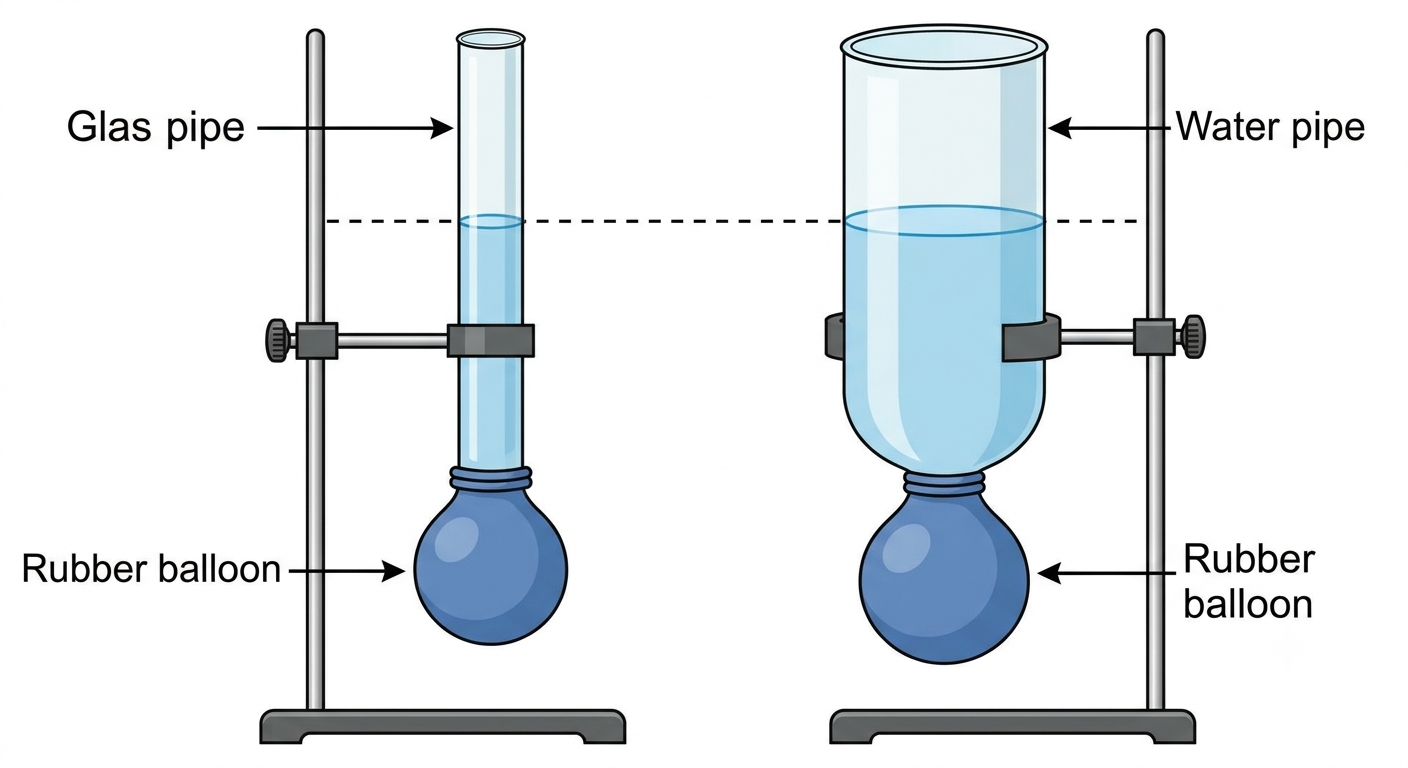
Fig. 6.5 — Equal heights of water columns produce the same bulge in balloons, despite different pipe diameters.
- Two transparent pipes of the same length but different diameters — rubber balloons attached at bottom of each
- Fill both pipes with water to the same level
- Observation: Both balloons bulge to the same extent
- Inference: The weight of water is different (different diameters), but the bulge is equal → it is the pressure of the water column, not the weight, that causes the bulge
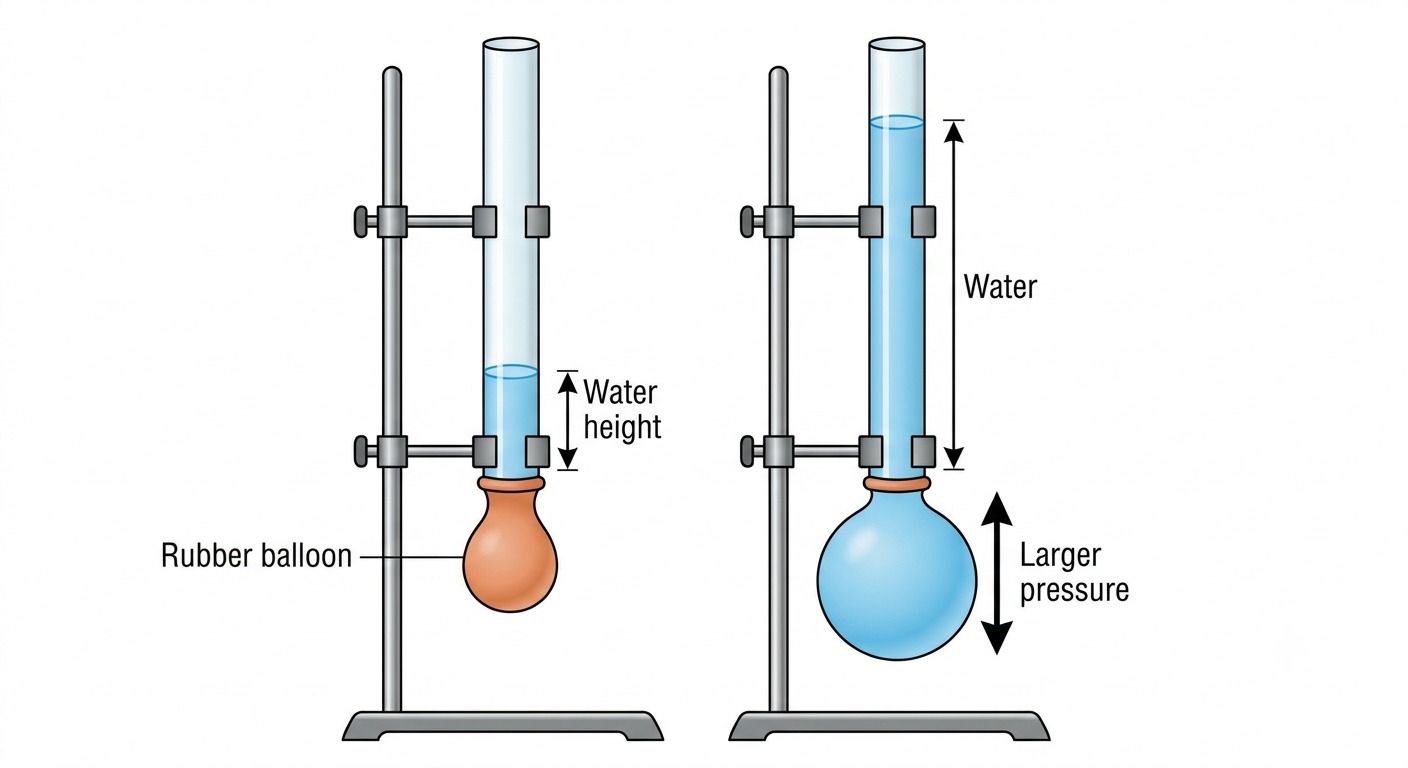
Fig. 6.6 — Higher heights of water column produce a bigger bulge of the balloon.
- Adding more water (increasing column height) causes the balloon to bulge more
- Conclusion: The pressure exerted by a liquid depends on the height of its column
- This is why overhead tanks are placed at a height — greater height → greater pressure → good stream of water from taps
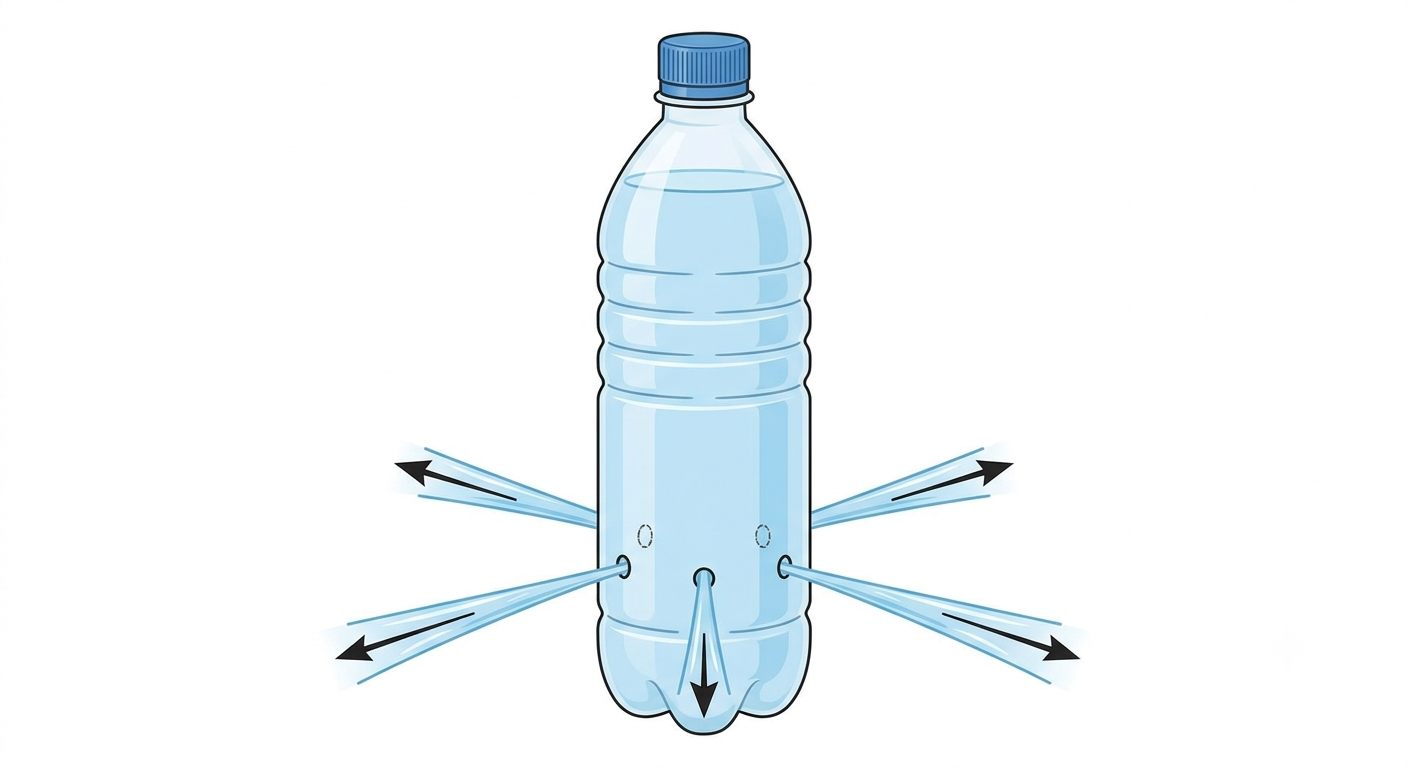
Fig. 6.7 — Liquid exerts pressure on the walls of the container — water shoots out in all directions from the side holes.
- Make four small holes near the bottom around the sides of a plastic bottle (at the same height) — fill with water, remove tape
- Observation: Water flows out through holes on the sides of the bottle
- Conclusion: Liquids exert pressure in all directions — at the bottom, on the sides, and in every direction
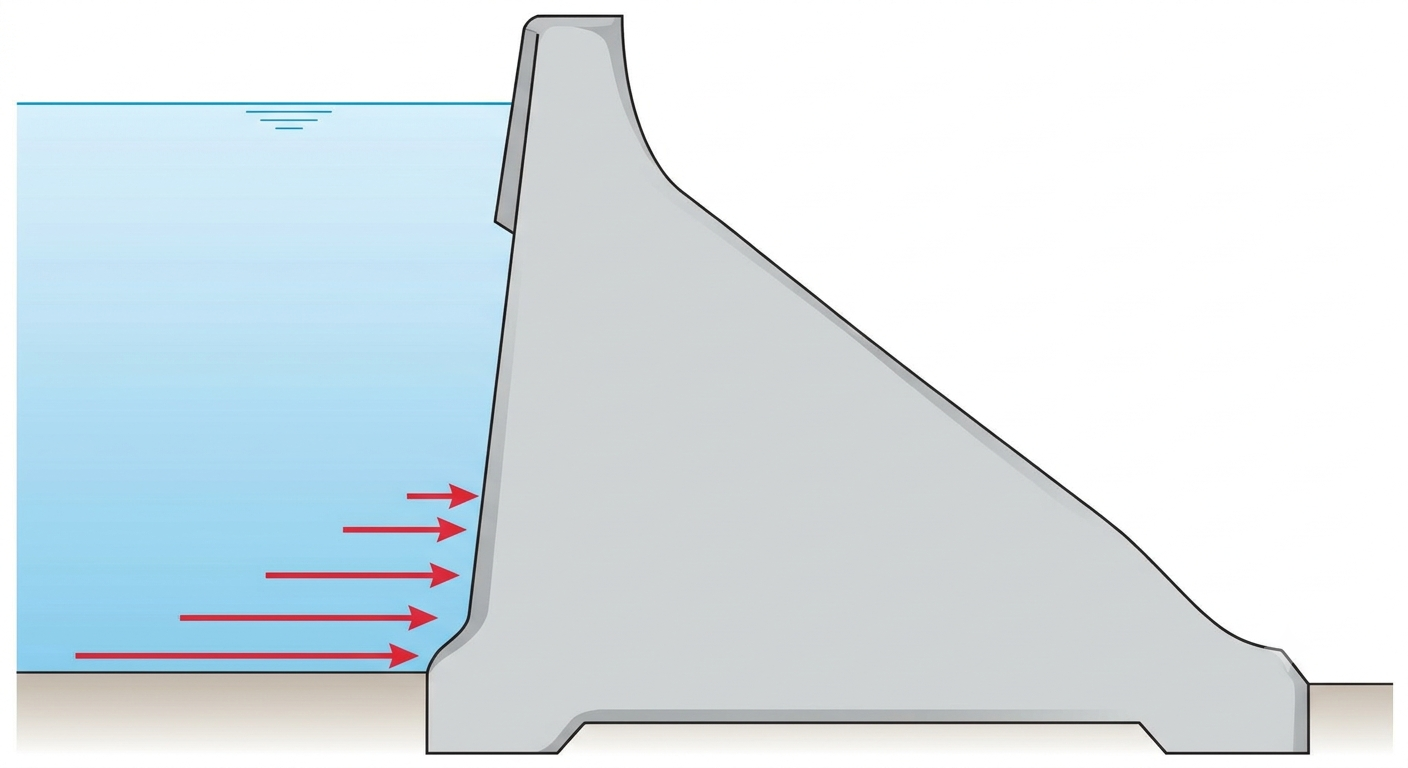
Fig. 6.8 — The base of a dam is made broader to withstand the very large horizontal water pressure near the bottom.
- The base of a dam is much broader than the top
- Water exerts horizontal pressure on the walls and vertical pressure on the floor
- The horizontal pressure is very large near the bottom
- To withstand this large pressure, the base is made broader
6.2 Pressure Exerted by Air
- Air is all around us — the envelope of air surrounding the Earth is called the atmosphere
- Contains nitrogen, oxygen, argon, carbon dioxide, and other gases in small quantities
- The atmosphere extends up to many kilometres above the surface of the Earth
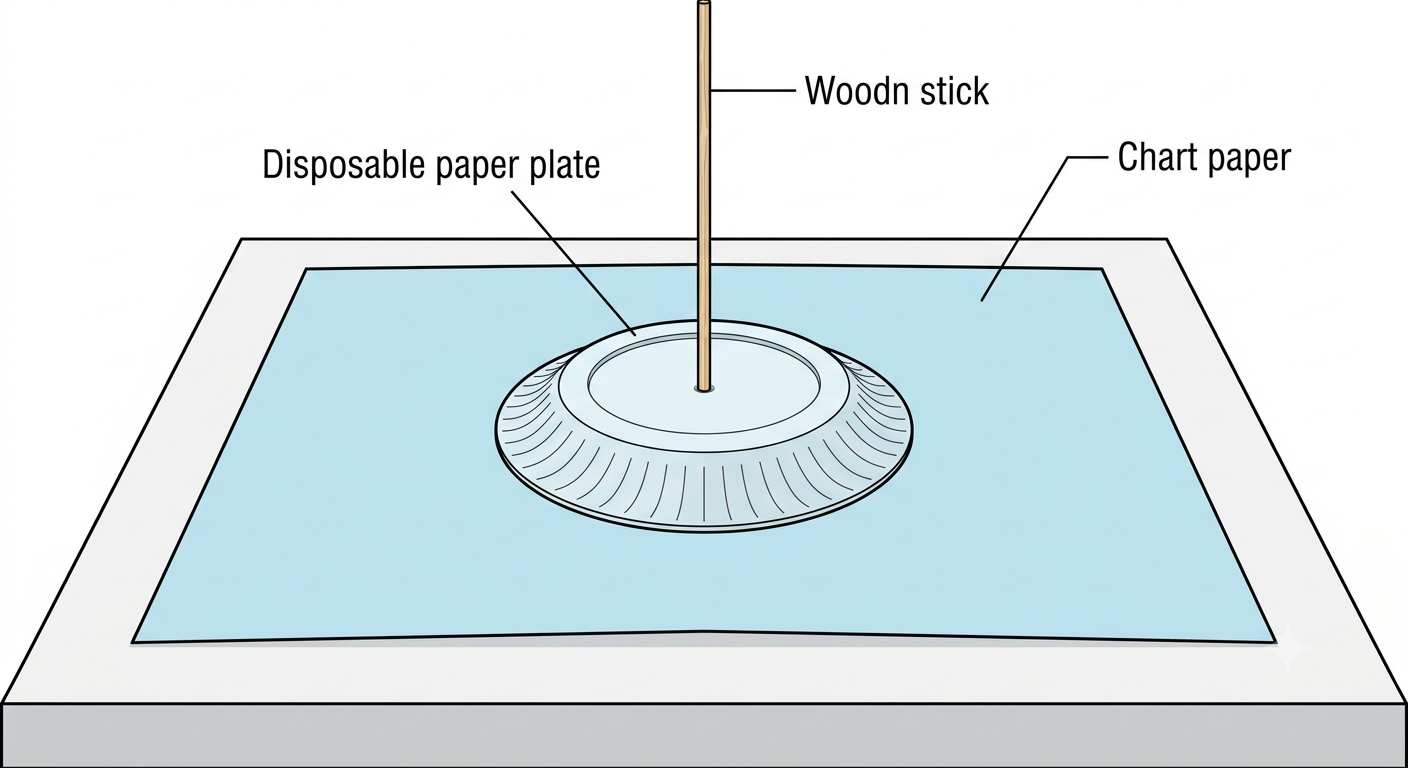
Fig. 6.9 — Inverted paper plate with chart paper covering: with larger unfolded sheet (more area), more effort is needed to lift — proving air exerts pressure proportional to area.
- With folded chart paper (smaller area) — less effort needed to lift paper plate
- With unfolded chart paper (larger area) — more effort needed to lift paper plate
- The weight of the sheet has not changed — only the area increased
- Inference: Air exerts force on the covering sheet — this force increases with increasing area
- Conclusion: Air exerts pressure on all objects. Pressure exerted by air around us = atmospheric pressure
- Air exerts pressure in all directions — that is why an inflated balloon expands in all directions
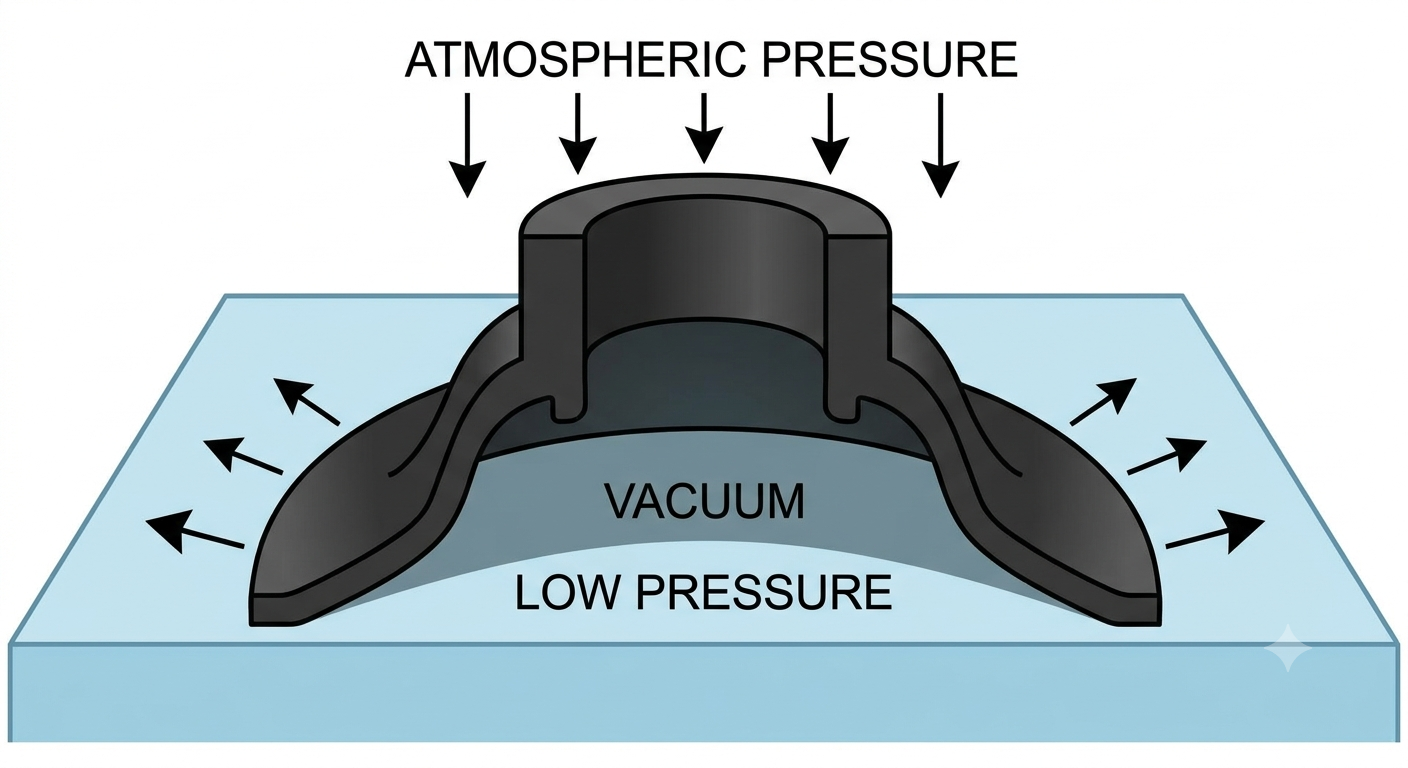
Fig. 6.11 — A rubber sucker pressed on a smooth surface: air pushed out reduces internal pressure; higher atmospheric pressure outside holds it firmly in place.
- Press a rubber sucker firmly against a smooth flat surface — it sticks; difficult to pull off
- When pressed, most air inside is pushed out → air pressure inside is reduced
- Higher atmospheric pressure outside holds the sucker against the surface
- To pull it off, force must overcome the pressure difference
How Large is Atmospheric Pressure?
- Force exerted by atmospheric air column over an area of 15 cm × 15 cm ≈ weight of 225 kg (2250 N)
- We are not crushed because the pressure inside our body equals atmospheric pressure — the two balance each other
- Internal pressure is caused by movement of fluids and gases in tissues and organs of the body
- SI unit: N/m² = pascal (Pa)
- Practical unit: millibar (mb) = 100 Pa
- Also expressed in hectopascal (hPa) = 100 Pa
🧠 Check Your Understanding — Pressure (6.1 & 6.2)
1. Define pressure. Write its formula and SI unit.
Show Answer
Formula: Pressure = Force ÷ Area
SI unit: newton/metre² (N/m²), also called pascal (Pa)
2. Why are overhead water tanks placed at a height?
Show Answer
3. In Activity 6.1, the two pipes had different diameters but the balloons bulged equally. What does this prove about liquid pressure?
Show Answer
4. Why does a sucker stick to a smooth surface but not to a rough surface?
Show Answer
5. The base of a dam is broader than its top. Using the concept of liquid pressure, explain why this design is necessary.
Show Answer
6. We are not crushed by atmospheric pressure even though it equals the weight of 225 kg on a 15×15 cm area. Explain why. What would happen if body pressure suddenly dropped to zero?
Show Answer
📐 Numerical Practice Questions
🔢 Numerical Questions
A force of 200 N is applied on a surface of area 4 m². Calculate the pressure exerted.
Show Answer
A girl weighing 500 N stands on her toes. Total toe area = 0.005 m². Calculate pressure on toes. Compare with standing flat-footed (area = 0.04 m²).
Show Answer
Flat-footed: Pressure = 500 ÷ 0.04 = 12,500 Pa
Standing on toes exerts 8× more pressure — this is why high heels leave marks on soft floors that heavier flat-shoe wearers don’t.
An elephant stands on four feet. Area of one foot = 0.25 m². Weight = 20,000 N. Calculate pressure exerted on the ground.
Show Answer
Pressure = 20,000 ÷ 1 = 20,000 Pa (20,000 N/m²)
Elephants don’t sink into soft ground as much as expected because their large feet distribute the enormous weight over a large area, reducing pressure.
6.3 Formation of Wind
- On some days, wind blows strongly; on other days, it is calm
- Recall: air escapes from an inflated balloon when opened, and from a punctured bicycle tube — in both cases, air moves from high pressure to low pressure
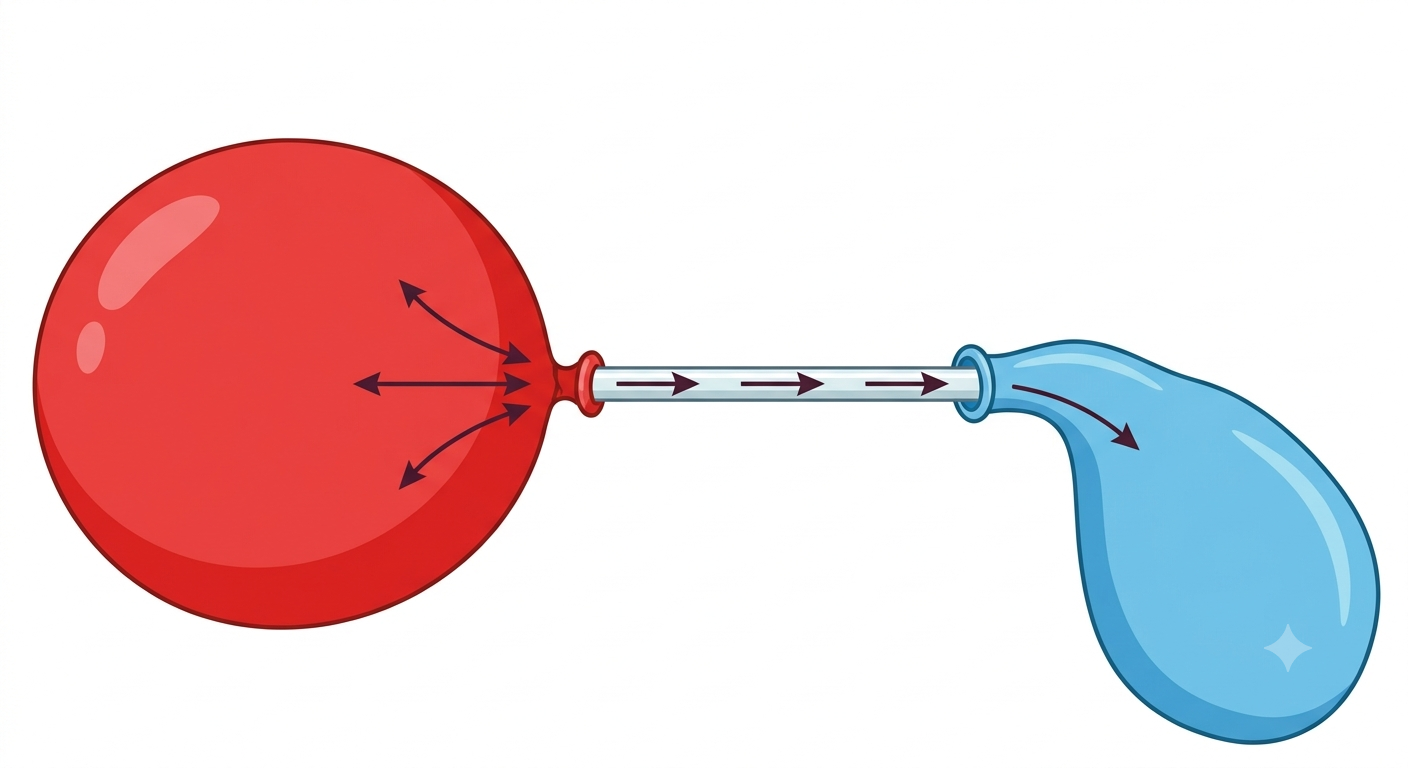
Fig. 6.12 — Air moves from the inflated balloon (high pressure) to the uninflated balloon (low pressure) through the straw, until pressure equalises.
- One end of straw inside an uninflated balloon; other end inside an inflated balloon
- Observation: Air moves from the inflated balloon (high pressure) to the uninflated balloon (low pressure) — both eventually reach the same size; flow stops when pressures are equal
- Conclusion: Air moves from a region of high pressure to a region of low pressure
How Wind Forms — Sea Breeze and Land Breeze
- During the day: land heats faster → warm air above land rises → low pressure over land → cool sea air rushes in = sea breeze
- At night: water is warmer than land → warm air above sea rises → low pressure over sea → land air blows towards sea = land breeze
- Land breeze and sea breeze are due to pressure differences over land and sea
- The speed of air is higher when the pressure difference is higher
- Warm air rises → creates low pressure area
- Cool air from surrounding high pressure areas moves in → forms wind
- The greater the pressure difference, the stronger the wind
6.4 High-Speed Winds Result in Lowering of Air Pressure
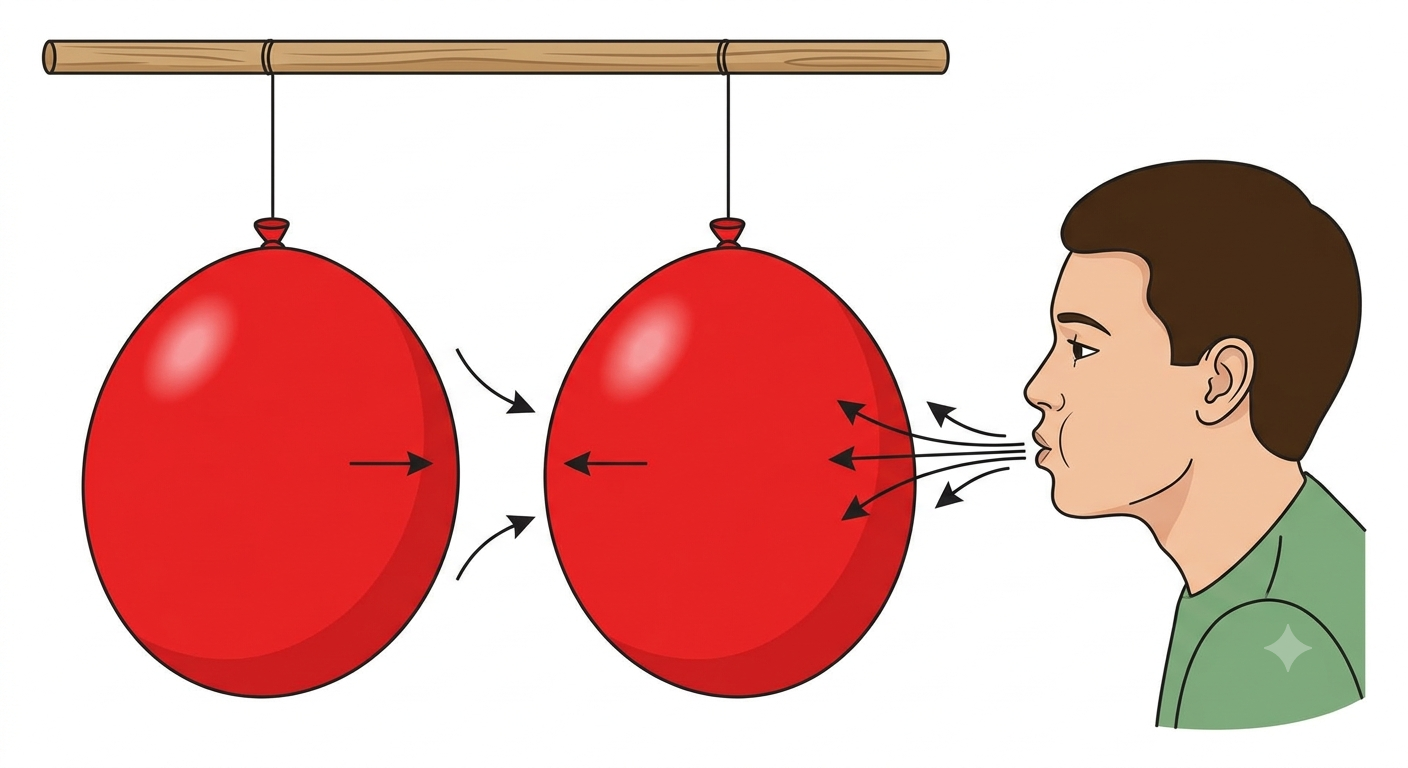
Fig. 6.13 — Blowing between two hanging balloons creates a low-pressure area between them; surrounding higher pressure pushes them together. Blowing harder brings them closer faster.
- Inflate two balloons; hang from a stick with a gap of 6–10 cm; blow air into the narrow space between them
- Observation: The balloons move towards each other; blowing harder = approach faster
- Explanation: Blowing creates a low-pressure area between balloons; higher surrounding pressure pushes them together
- Conclusion: High-speed winds are accompanied by reduced air pressure
Why High-Speed Winds Can Blow Off Roofs
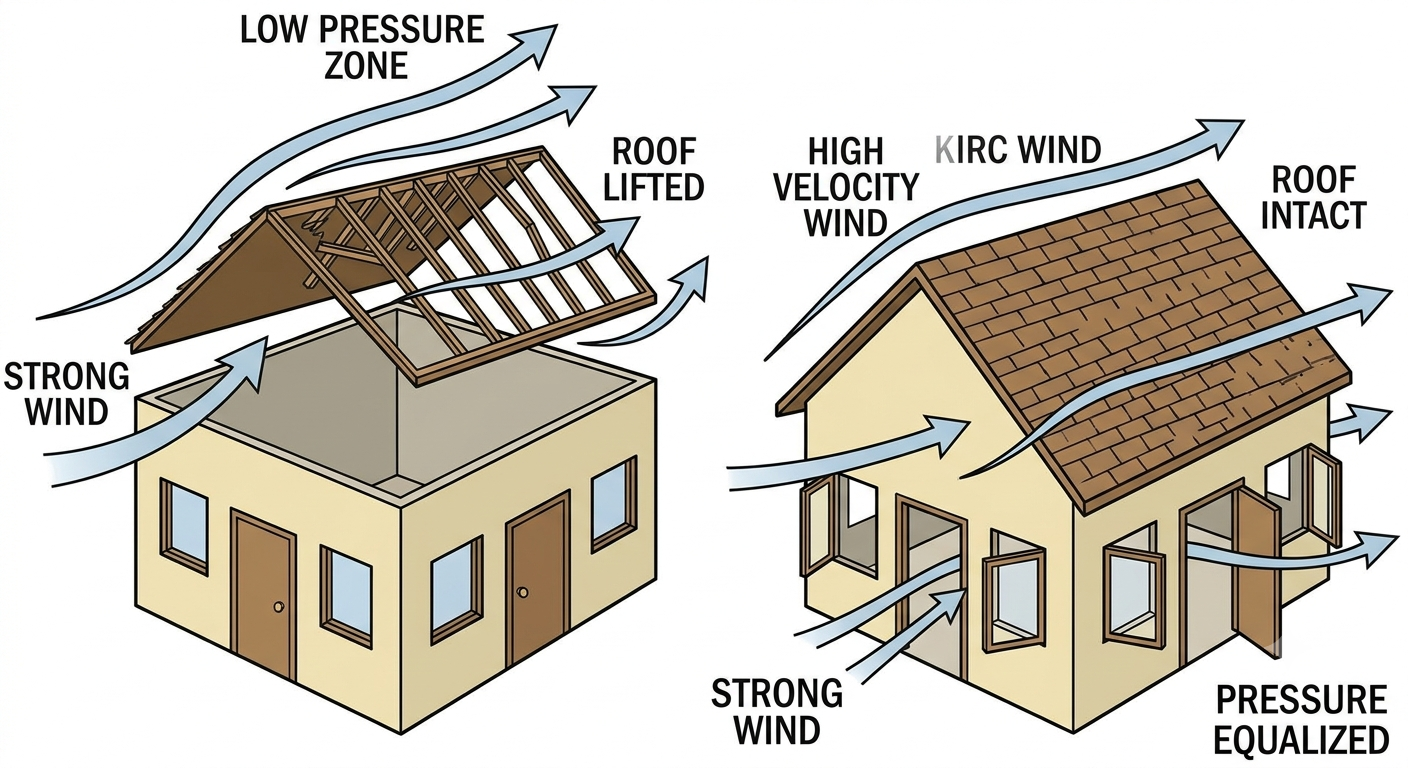
Fig. 6.14 — (a) Roof blown away when high-speed winds create low pressure above and doors/windows are closed; (b) Roof intact when windows are open, equalising pressure.
- High-speed winds over houses create a low-pressure area above roofs
- Air pressure above roofs is lower than pressure below — if pressure difference is large and roof is weak, roof gets blown away
- Safety measure: Keep doors and windows open during storms — this equalises pressure inside and outside, preventing roof from blowing off
🧠 Check Your Understanding — 6.3 & 6.4
1. In which direction does air move — from high to low pressure, or from low to high pressure?
Show Answer
2. What safety measure should you take with doors and windows during a storm? Why?
Show Answer
3. Explain how sea breeze and land breeze form using the concept of air pressure differences.
Show Answer
Land breeze (nighttime): Water retains heat; warmer than land at night → warm air over sea rises → low pressure over sea. Cooler high-pressure land air blows towards sea → land breeze.
4. Using Activity 6.6’s principle, explain why an aircraft wing generates lift.
Show Answer
6.5 Storms, Thunderstorms, and Lightning
How a Storm Forms
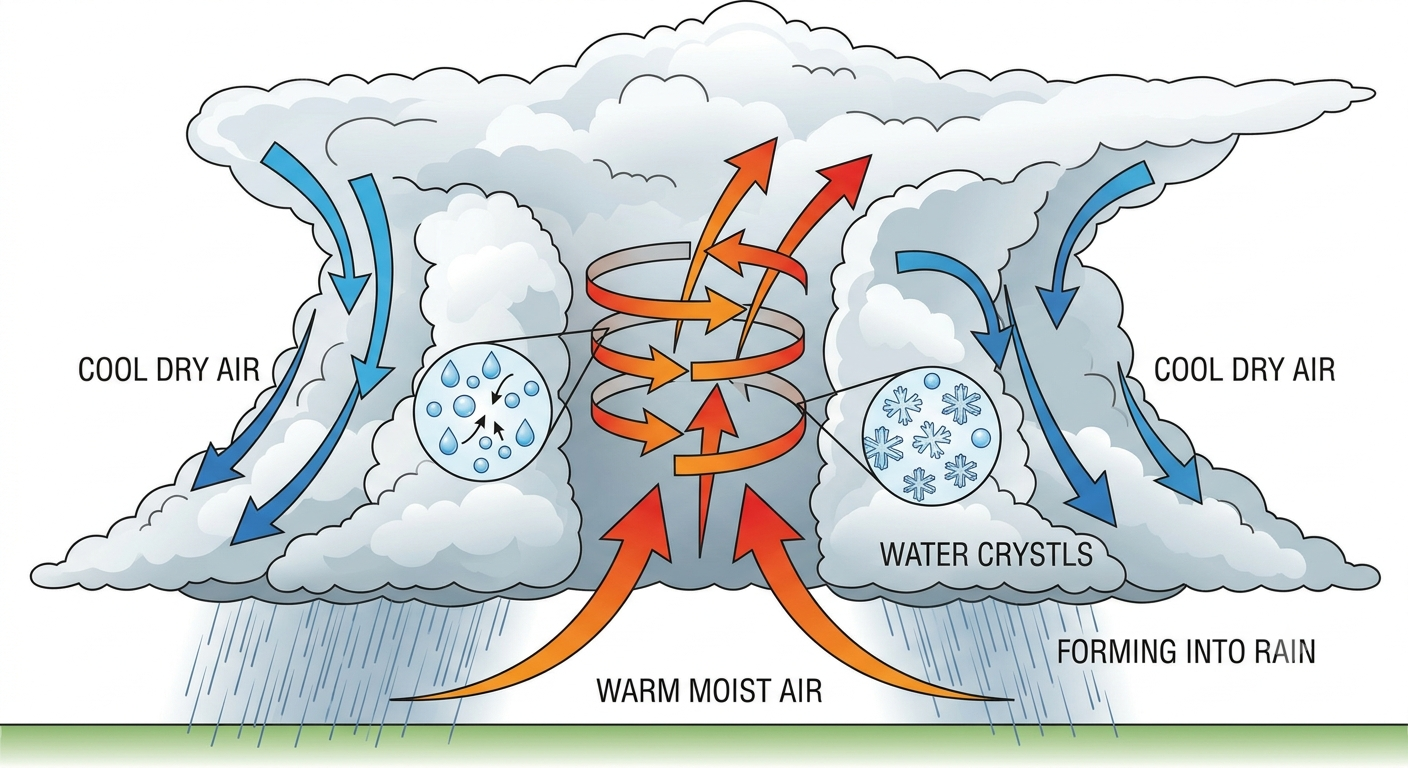
Fig. 6.15 — Strong winds going up and down inside a storm cloud facilitate rubbing between water droplets and ice particles, generating electric charges.
How Charges Develop in Clouds — Leading to Lightning
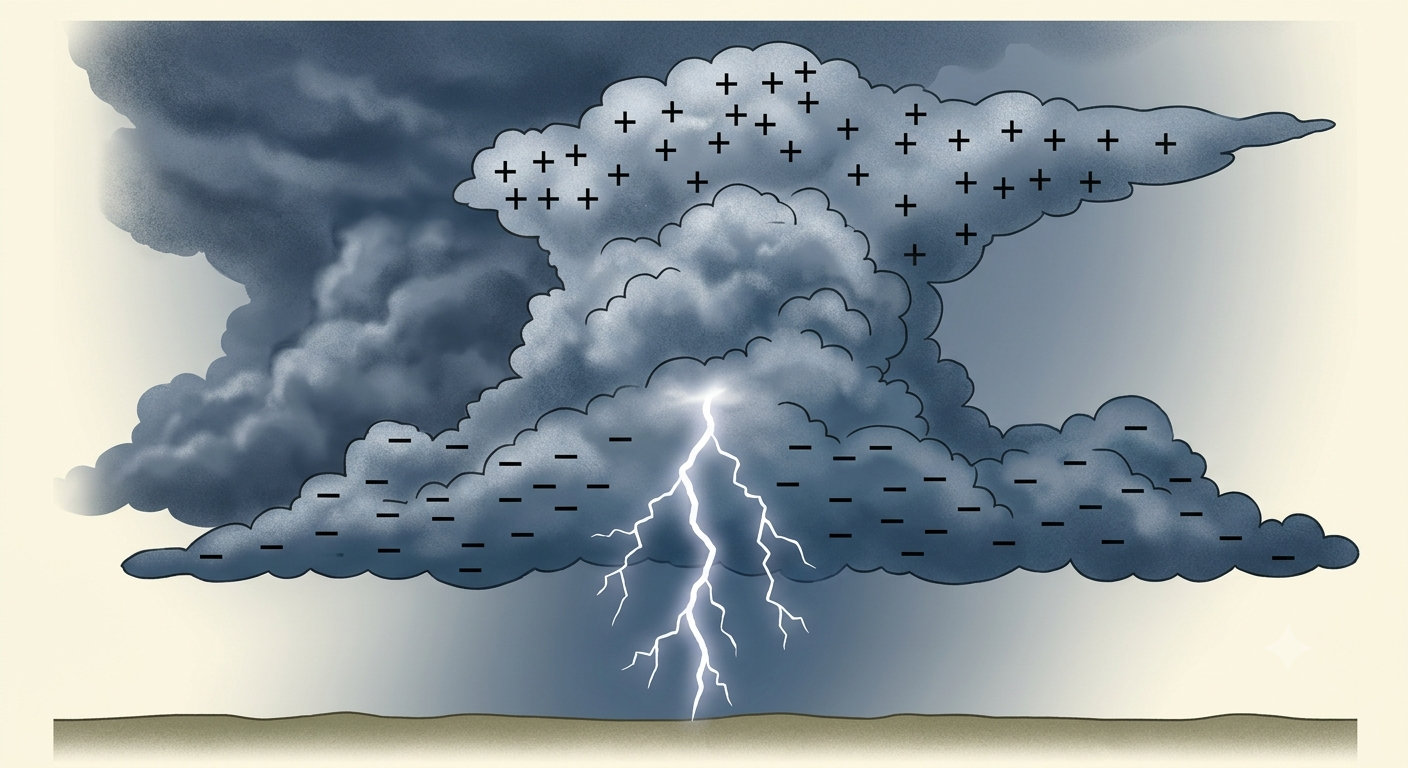
Fig. 6.16 — Lightning: positive charges accumulate at the top of the cloud (lighter ice particles) and negative charges at the bottom (heavier water droplets). A sudden discharge produces the bright flash.
- Strong winds blowing upwards and downwards cause water droplets and ice particles to rub → static electric charges develop in clouds
- Positively charged lighter ice particles → upper part of cloud
- Negatively charged heavier water droplets → lower part of cloud → this is charge separation
- Negatively charged lower cloud makes the ground and nearby objects (trees, buildings) positively charged
- Normally, air is an electrical insulator — but when charge build-up becomes enormous, insulating property breaks down
- A sudden flow of charges → bright flash of light = lightning
- Lightning can occur within a cloud, between clouds, or between cloud and ground
- Lightning heats surrounding air → rapid expansion → loud sound = thunder
- A storm with lightning and thunder = thunderstorm
- Kalboishakhi — West Bengal, Bihar, Jharkhand
- Bordoisila — Assam (both before monsoon, help kharif crops)
- Mango showers — Kerala, Karnataka, Tamil Nadu (support mango ripening)
- Local thunderstorms in Karnataka help coffee plant growth
Safety Measures During Lightning
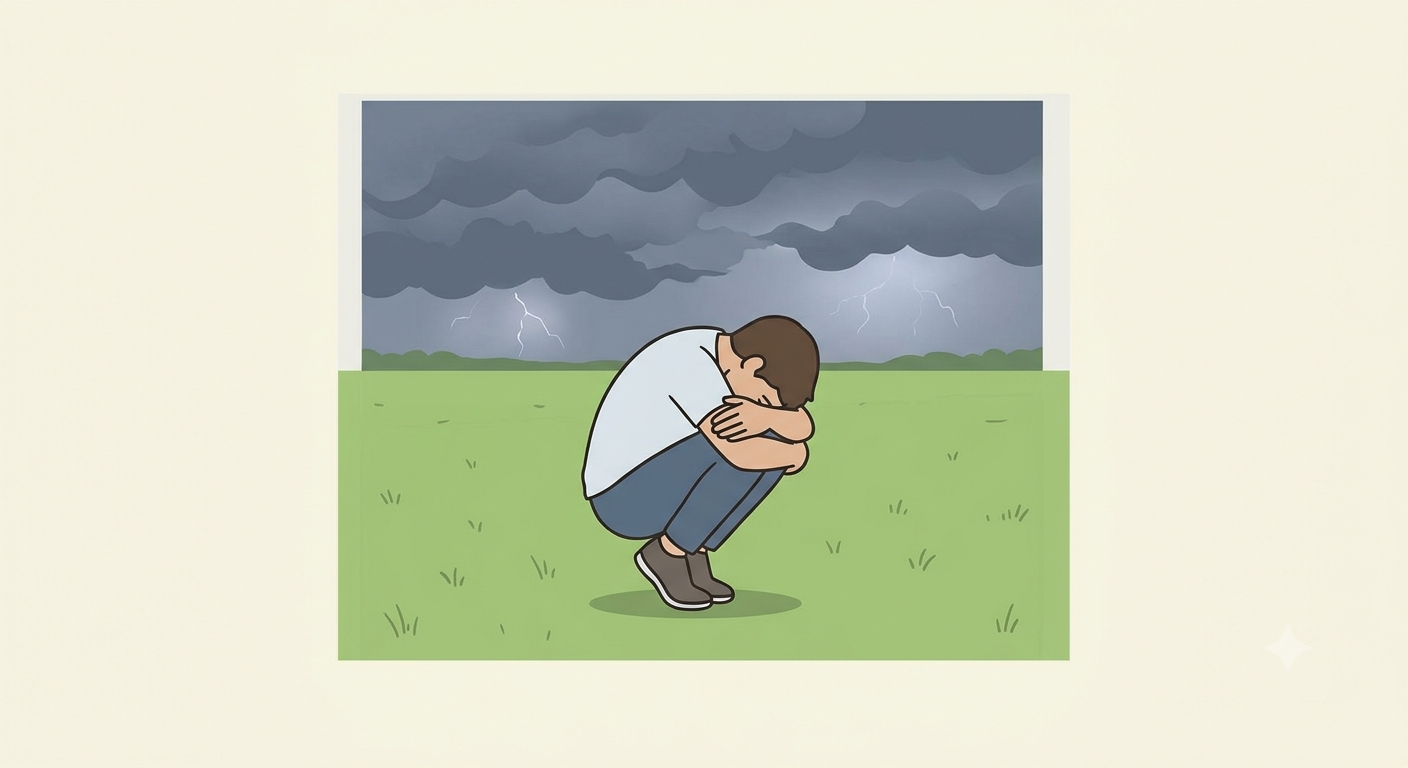
Fig. 6.17 — Safe position during lightning: crouch low in an open area, minimise ground contact, do not lie flat.
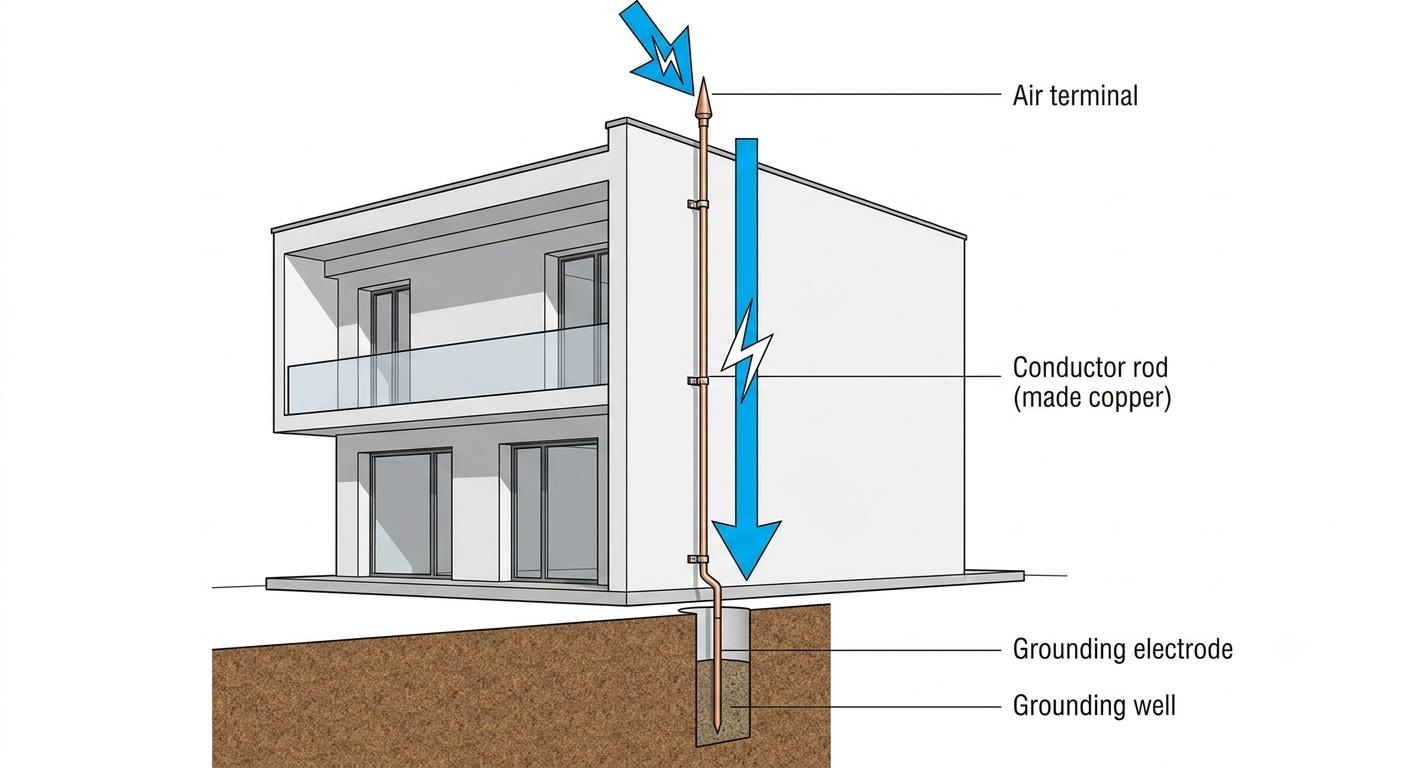
Fig. 6.18 — A lightning conductor provides an easy path for electric charges to safely flow into the ground, protecting the building.
⚡ What To Do During Lightning
- Stay away from tall objects (trees, buildings, poles)
- Find a low-lying open area and crouch down
- Minimise contact with the ground — do not lie down flat
- Avoid using an umbrella with a metallic rod
- If in water, get out immediately
- If inside a bus or car, you are comparatively safer
- A metallic rod installed along building walls — pointed top higher than the building’s highest point, other end buried in the ground
- Provides an easy path for electric charges to flow safely into the ground
🧠 Check Your Understanding — 6.5 Storms, Thunderstorms & Lightning
1. What is a thunderstorm? What are the important requirements for its formation?
Show Answer
2. Explain the process that causes lightning.
Show Answer
3. Why is it safer to be inside a car during a lightning storm rather than standing under a tree?
Show Answer
4. Why are holes made in banners and hoardings?
Show Answer
5. Would lightning occur if air and clouds were good conductors of electricity?
Show Answer
6.6 Cyclone
🌀 What is a Cyclone?
- Cyclones are large storms that form over warm ocean waters
- The region of lowest pressure at the centre = eye of the cyclone — wind is calm at the eye
- The surrounding region experiences strong winds and heavy rainfall
- This spinning system of clouds, winds, and rain is called a cyclone
How a Cyclone Forms
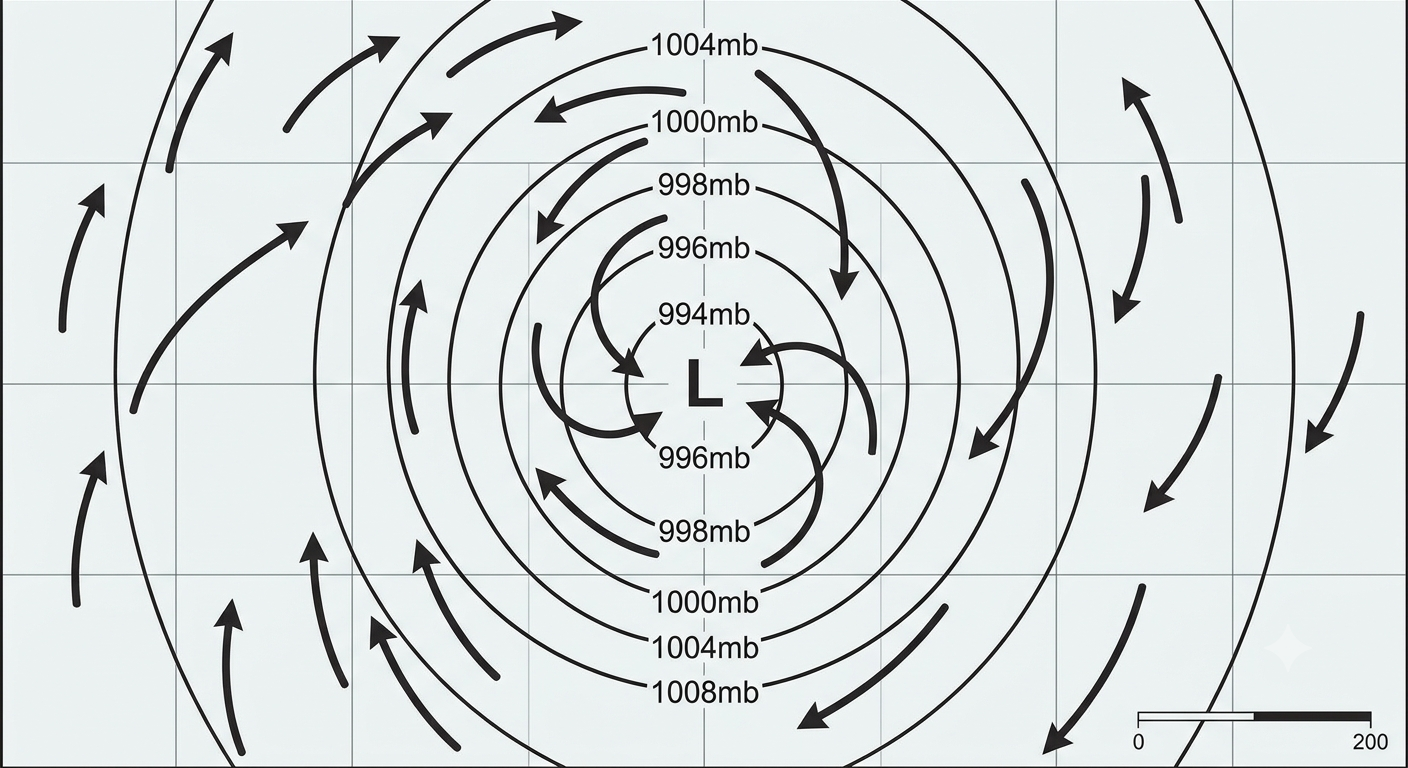
Fig. 6.19 — Winds blowing from surrounding high-pressure areas (1008 mb) towards the central low-pressure area (994 mb) of a cyclone — Earth’s rotation causes the moving air to spin.
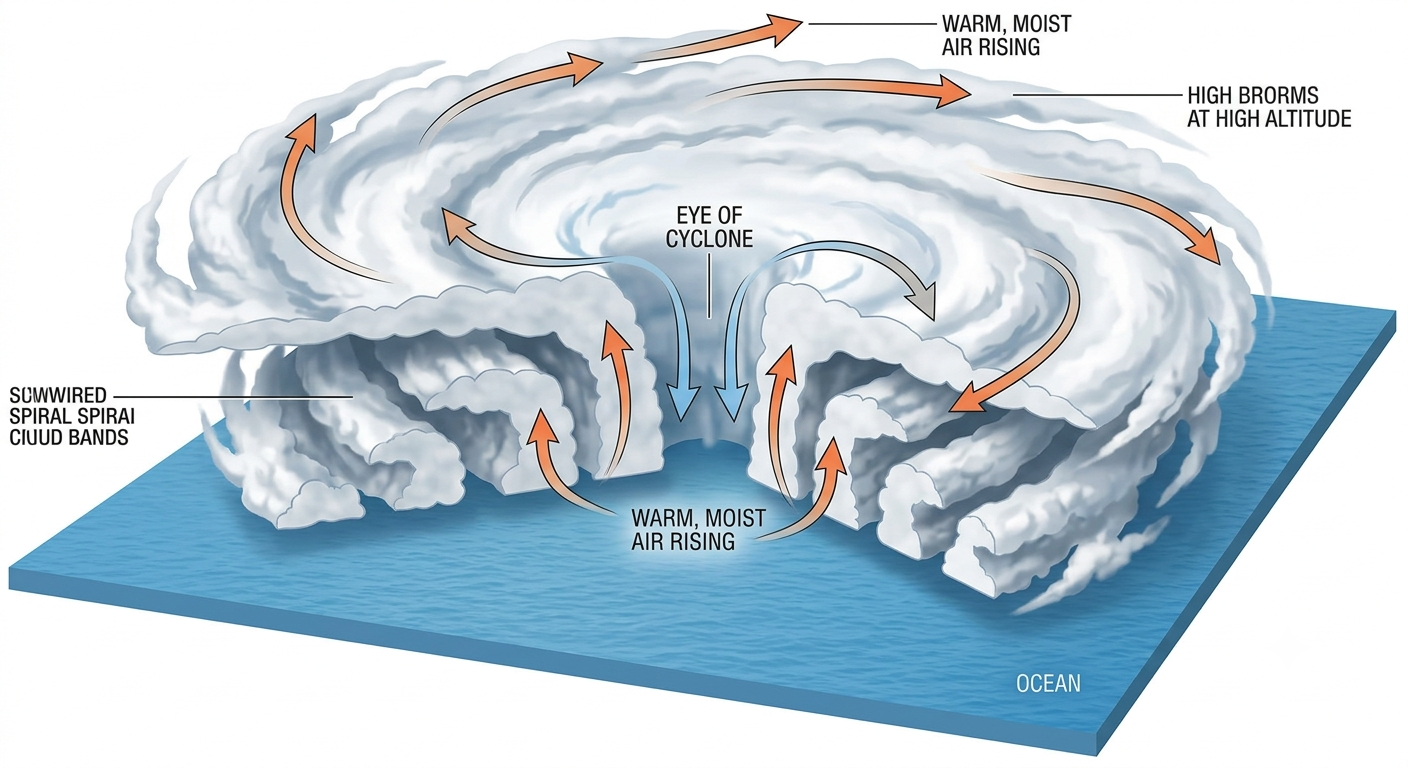
Fig. 6.20 — A cyclone: the eye at the centre is calm, surrounded by a wall of high-speed spinning winds and spiral cloud bands. Once it moves over land, the moist ocean air supply is cut off and it weakens.
🌊 Destruction Caused by Cyclones
- Even as a cyclone loses strength over land, it leaves a trail of destruction taking months or years to repair
- Example: Amphan cyclone (2020) — peak wind speeds of 270 km/h
- Strong winds push ocean water towards shore → wall of water 3–12 metres high → floods coastal areas
- Heavy rainfall → rivers overflow and landslides
- Seawater inland → contaminates drinking water, damages farmland (salt makes soil less fertile)
- Roads blocked by fallen trees; power outages lasting days
🛡️ How to Protect Yourself During Cyclones
- Stay updated on alerts and warnings by the India Meteorological Department (IMD)
- Weather monitoring satellites can track cyclones and predict their path
- Keep an emergency kit ready if you live in a cyclone-prone area
- During a cyclone, move quickly to a nearby designated cyclone shelter
Let Us Wrap Up — Storm and Cyclone Formation
- Warm air rises → low-pressure area
- Cool air rushes in to fill the low-pressure area
- Warm air cools → water vapour condenses → clouds
- Bigger drops fall as rain, hail, or snow
- Strong winds (up and down) → charges develop in clouds
- Positive and negative charges meeting → lightning
- Under certain conditions, storms develop into cyclones
🧠 Check Your Understanding — 6.6 Cyclone
1. What is the ‘eye of the cyclone’? What is the weather like at the eye?
Show Answer
2. Why does a cyclone lose its strength once it reaches land?
Show Answer
3. Explain how a storm becomes a cyclone.
Show Answer
4. If the Earth stopped rotating, would cyclones still form? Give a reasoned answer.
Show Answer
📌 Snapshots
- Pressure is defined as force per unit area
- The SI unit of pressure is N/m², also called pascal (Pa)
- Liquids and gases exert pressure on the walls of a container
- The pressure exerted by the air around us is known as atmospheric pressure
- Differences in air pressure cause winds to blow
- Warm air rises, creating a low-pressure area. Cooler air from surrounding higher-pressure regions moves in
- Important requirements for thunderstorms: moisture and strong winds
- Strong winds moving upwards and downwards facilitate rubbing of ice particles with water droplets → electric charges develop in clouds
- Collision of electric charges within a cloud, between clouds, or between cloud and ground → lightning
- Lightning strikes can cause destruction to life and property
- Lightning conductors protect buildings from the effects of lightning
- The India Meteorological Department (IMD) constantly monitors cyclones and thunderstorms in India
📝 Keep the Curiosity Alive
1. Choose the correct statement.
- Vessel R is filled with water. When pouring stops, the level of water will be ___
(a) highest in P (b) highest in Q (c) highest in R (d) equal in all three vessels - Sucker M on smooth surface, sucker N on rough surface:
(a) Both stick (b) Both don’t stick (c) M sticks but N does not (d) N sticks but M does not - To get more water pressure on ground floor:
(a) Increase height H (b) Decrease H (c) Replace with larger tank at same height (d) Replace with smaller tank - Vessels A and B with water at same level — PA, PB = pressure at bottom; FA, FB = force at bottom:
(a) PA=PB, FA=FB (b) PA=PB, FA<FB (c) PA<PB, FA=FB (d) PA>PB, FA>FB
2. True [T] or False [F]:
- Air flows from higher pressure to lower pressure. [T]
- Liquids exert pressure only at the bottom of a container. [F]
- Weather is stormy at the eye of a cyclone. [F] — the eye is calm
- During a thunderstorm, it is safer to be in a car. [T]
3. In which case does the boy sink more in sand — lying horizontally or standing vertically? Give reasons.
Show Answer
4. An elephant stands on four feet. Area of one foot = 0.25 m², weight = 20,000 N. Calculate pressure exerted on the ground.
📐 Solution
Show Answer
Pressure = 20,000 ÷ 1 = 20,000 Pa
5. Boat A: area 7 m², 5 persons. Boat B: area 3.5 m², 3 persons. Each person weighs 700 N. Which boat has more pressure on its base and by how much?
📐 Solution
Show Answer
Boat B: Force = 3×700 = 2100 N; Pressure = 2100 ÷ 3.5 = 600 Pa
Boat B experiences more pressure by 100 Pa
6. Would lightning occur if air and clouds were good conductors of electricity? Give reasons.
Show Answer
7. What will happen to balloons A and B at the bottom of a bottle when water is filled to a certain height? Will they bulge equally?
Show Answer
8. Explain how a storm becomes a cyclone.
Show Answer
9. Trees along the sea coast in a summer afternoon bend towards side A. Which side is land — A or B? Explain.
Show Answer
10. Describe an activity to show that air flows from high pressure to low pressure.
Show Answer
11. What is a thunderstorm? Explain the process of its formation.
Show Answer
12. Explain the process that causes lightning.
Show Answer
13. Explain why holes are made in banners and hoardings.
Show Answer
🧠 Final Review — Cyclone & Big Picture
1. Name the organisation in India that monitors cyclones and thunderstorms.
Show Answer
2. List any four types of destruction caused by cyclones.
Show Answer
3. A cyclone weakens once it moves over land. Identify the specific factor that is “cut off” and explain why removing it stops intensification.
Show Answer
- Hold a strip of paper (18 cm long, 2 cm wide) between thumb and forefinger hanging freely. Predict what happens when you blow over the paper. Perform the activity and interpret your results. (Hint: high-speed winds lower air pressure!)
- List three major cyclones in India in the last 20 years. List two major destructions caused by each. What measures did local government/communities take? Suggest two improvements to propose to the government.
- Collect data on thunderstorm strength for various regions of India. Identify which regions are more prone and give reasons for your findings.