
Health: The Ultimate Treasure — Class 8 Science Chapter 3
Curiosity — Textbook of Science for Grade 8 | Complete NCERT Notes with Activities, Questions and Answers
🎯 Learning Objectives
- Understand that health means complete physical, mental, and social well-being, and not merely the absence of disease.
- Identify the habits and lifestyle choices that keep us healthy, and those that harm our health.
- Explain how a clean environment and clean air and water affect our health.
- Distinguish between a symptom and a sign of illness.
- Define disease and classify diseases as communicable and non-communicable.
- Describe how pathogens spread — through air, water, food, direct and indirect contact, and vectors.
- Name the causal agent, site of infection, symptoms and preventive measures for common communicable diseases.
- Explain how non-communicable, deficiency and chronic diseases are caused.
- Understand immunity, the immune system, vaccines and acquired immunity.
- Describe Edward Jenner’s discovery of the smallpox vaccine and India’s traditional practice of variolation.
- Explain what antibiotics do, and why antibiotic resistance is a growing danger.
📚 Chapter Index
📌 BULLETIN BOARD
❓ Probe and Ponder
- How does your body respond to an infection such as common cold?
- We rarely see cases of smallpox or polio these days, but diseases like diabetes and heart problems are more common. Why?
- Could climate change lead to new types of diseases?
- How do emotions like stress or worry affect us and make us sick?
- Why do some groups of people get affected more than others during disease outbreaks?
- Share your questions
3.1 Health: Is It More Than Not Falling Sick?
- What do the news clippings on the notice board tell you about people’s health in our country?
- Is being healthy just about not having diseases?
- Health also includes feeling good physically, staying positive, and having strong relationships.
- A healthy person takes care of their body, maintains a positive mindset, and enjoys social life.
- Let us now explore what it truly means to be healthy.
🔬 Activity 3.1: Let us read
- A Grade 8 student moved to a new school in another city.
- With no friends in his new environment and busy parents, he felt lonely.
- To cope, he spent more time on his phone and social media, but this made him feel worse.
- He stopped trying to make friends, had headaches, lost weight, and could not sleep well.
- A doctor advised less screen time and meeting a counsellor.
- The school counsellor arranged help to support him in making friends and improving his health.
Think and Reflect: What was the cause of the boy’s health problems? How did his habits and surroundings affect his well-being?
Show Answer
Cause of his health problems: The root cause was loneliness and lack of social connection, not any germ or infection. Moving to a new city left him without friends, and his parents were busy, so he had no one to talk to. This shows that health problems can begin in the social and mental areas of life, not just the physical.
How his habits affected him: He tried to cope by spending more time on his phone and social media. This was a harmful habit because it replaced real friendship with screen time and actually made him feel worse. Excessive screen time then led to headaches, poor sleep and weight loss — showing how a mental problem produced clear physical symptoms.
How his surroundings affected him: His new environment offered no friendly peer group, and his home offered little parental attention. Both surroundings failed to give him the social support a person needs.
The lesson: His case shows that physical, mental and social health are connected. He recovered only when both parts were addressed — reducing screen time (habit) and getting counselling and help in making friends (social support).
- As per the World Health Organization (WHO), health is defined as a ‘state of complete physical, mental, and social well-being, and not merely the absence of disease’.
- A healthy person can generally perform various tasks more efficiently and cope well in different and difficult situations.
- A healthy person can adjust well with peer groups and other members of society.
Fig. 3.1: Aspects of health
🏛️ Our Scientific Heritage
- Ayurveda teaches us that true health is a balance of body, mind, and surroundings.
- Following dinacharya (daily routine) and ritucharya (seasonal routine) helps maintain this balance.
- Eating fresh, wholesome food suited to one’s prakriti (body constitution) is essential.
- Regular exercise, cleanliness, restful sleep, and a calm mind support overall well-being.
- This can also be achieved through practices like yoga, meditation, and mindfulness.
3.2 How Can We Stay Healthy?
- For staying healthy we must:
- Eat nutritious food
- Maintain hygiene
- Stay in a clean place
- Exercise regularly
- Get proper sleep
- Spend time with family and friends
- Have a positive attitude
- What should we do and what should we avoid to keep ourselves healthy?
🔬 Activity 3.2: Let us list
List some good habits that your parents, teachers, or elders often encourage you to follow. How many of these are already a part of your daily routine? Which ones would you like to start following? Add to the list below:
- Keep yourself clean by maintaining personal hygiene.
- Eat a healthy and balanced diet.
- Exercise regularly.
- Make time to relax or meditate every day.
Now, think about habits that are not good for your health. Add more to the list below:
- Spending too much time on mobile phones or other digital screens.
- Eating fast food and other junk food every day.
- Sleeping very late or not getting enough sleep.
- Skipping meals, especially breakfast.
Taking care of our body and mind is important. Healthy habits support a healthy body as well as a healthy mind.
Discuss your findings with your friends and teacher. From the activity you participated in and the discussions, you may have realised that our health depends on many factors. These factors include our lifestyle (how we live) and our environment (our surroundings).
Show More Habits You Can Add
More good habits you could add:
- Washing hands with soap before eating and after using the toilet.
- Drinking enough clean, boiled or filtered water every day.
- Brushing teeth twice a day.
- Eating breakfast every morning.
- Playing outdoors instead of indoor screen games.
- Covering the mouth and nose while coughing or sneezing.
- Keeping nails trimmed and clean.
- Sitting and standing with correct posture.
- Talking to parents or teachers when feeling worried.
- Keeping the classroom and home surroundings clean.
More harmful habits you could add:
- Drinking sugary cold drinks instead of water.
- Eating with unwashed hands.
- Spending long hours sitting without movement.
- Using earphones at very high volume.
- Sharing personal items like towels, handkerchiefs or water bottles.
- Eating uncovered street food exposed to flies and dust.
- Reading or using a phone in poor light.
- Keeping worries to oneself instead of sharing them.
3.2.1 Maintain a healthy lifestyle
- Eat a balanced diet with plenty of fruits, vegetables, and whole grains.
- Avoid processed, fatty, or sugary food and drinks.
- Stay physically active by playing outdoors, walking, running, cycling, or exercising.
- Limit screen time and spend more time in nature.
- Get enough sleep to help your body and mind rest and recover.
- Practice yoga or simple breathing exercises like pranayama regularly.
- Say ‘NO’ to harmful substances like tobacco, alcohol, and addictive drugs.
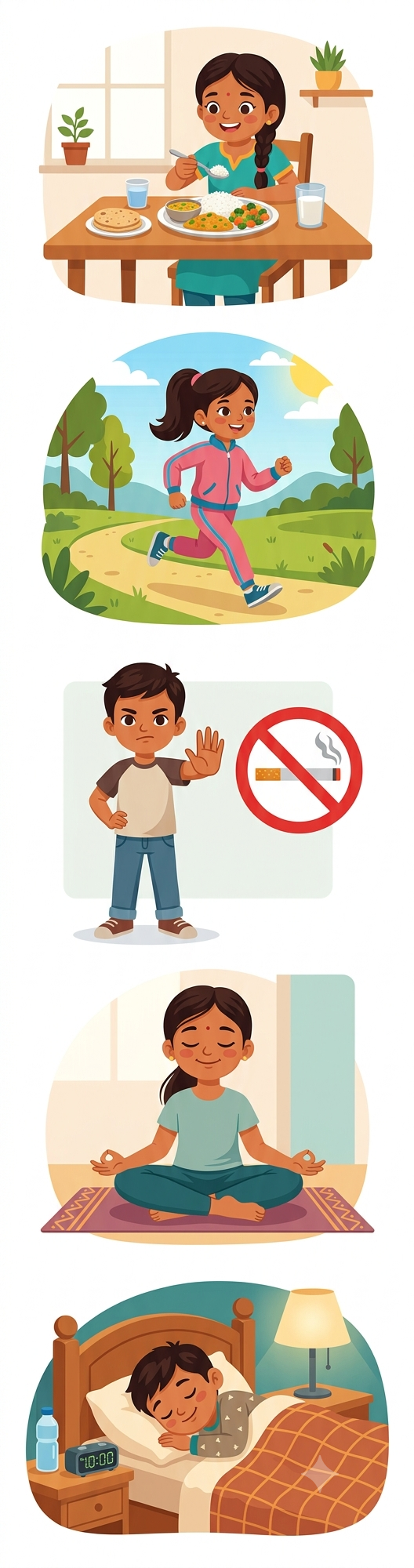
Fig. 3.2: How to be healthy
3.2.2 Keep the environment clean
🔬 Activity 3.3: Let us compare
- Look at Fig. 3.3a and Fig. 3.3b. Which playground would you like to play in, and why?
- Most of us would like to play in the playground shown in Fig. 3.3a as it is clean, well-maintained, and looks beautiful. The playground in Fig. 3.3b is polluted, dirty, unhygienic, and full of flies and mosquitos. People living in such areas may fall sick more often.
- In addition to inculcating good habits and adopting a healthy lifestyle, we must keep ourselves and our surroundings clean.
- Have you ever found it hard to breathe in a place with a lot of smoke or dust? That is because clean air and water are important for our health. In cities, air pollution from vehicles and factories can cause problems like coughing or asthma. The Air Quality Index (AQI) helps us know how clean the air is. A cleaner environment helps us stay healthy and feel better.
- But health is not only about the body. Our feelings and relationships matter too. Even if we eat well and live in a clean place, we may not feel good if we are lonely or upset. Spending time with friends and family, talking, laughing, and having fun help keep our minds healthy too.
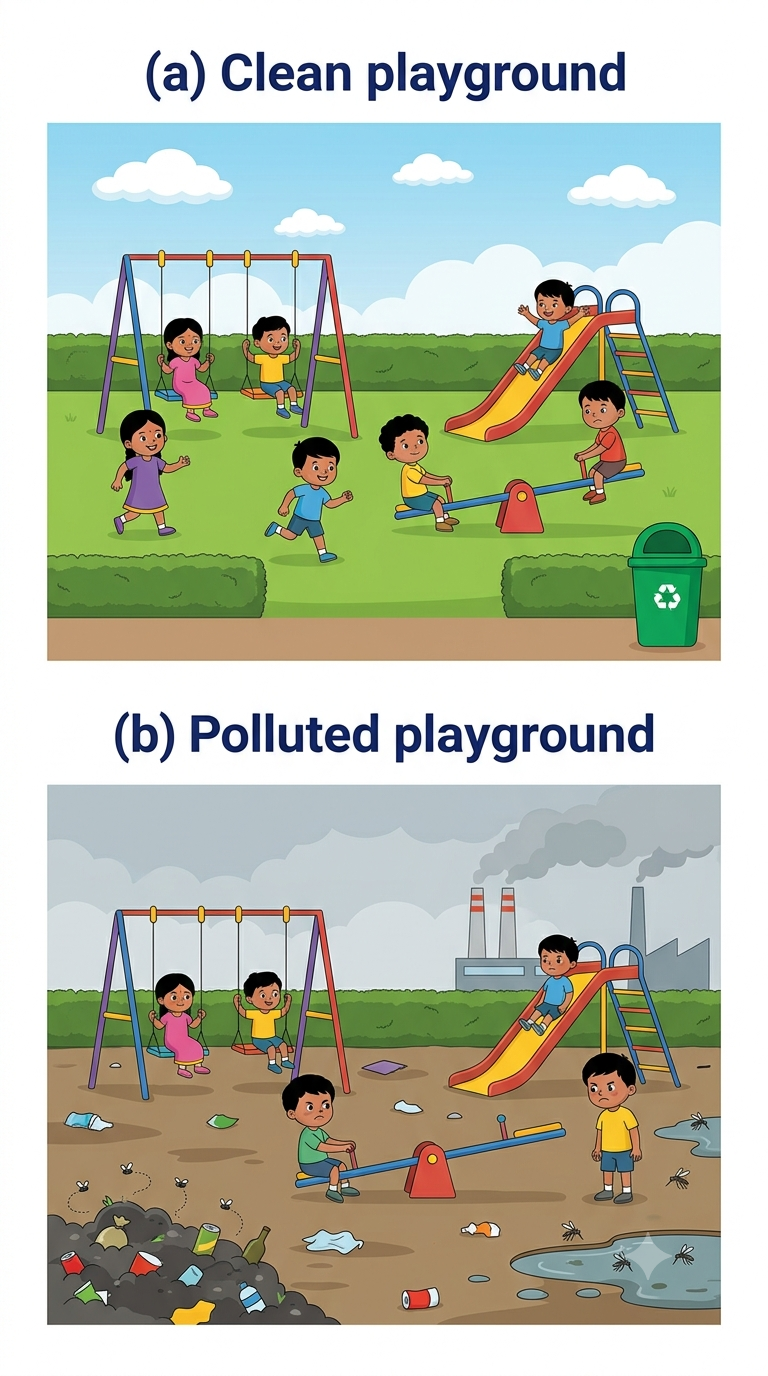
Fig. 3.3: Two different playgrounds
3.3 How Do We Know That We Are Unwell?
- Our body usually works in a certain way to keep us healthy.
- When we feel unwell, it means something inside us may not be working as it should.
- We may have symptoms, such as pain, tiredness, or dizziness.
- We may have signs like fever, rash, high blood pressure, or swelling that indicate we are unwell.
- A symptom is what we feel (like pain).
- A sign is something that can be seen or measured (like high body temperature when we have fever).
- These help doctors understand what might be making us unwell.
🔑 Key Terms
- Health: A state of complete physical, mental, and social well-being, and not merely the absence of disease (WHO definition).
- Dinacharya: Daily routine, as taught in Ayurveda.
- Ritucharya: Seasonal routine, as taught in Ayurveda.
- Prakriti: Body constitution; food should be suited to it.
- Air Quality Index (AQI): A measure that helps us know how clean the air is.
- Symptom: What we feel, such as pain, tiredness or dizziness.
- Sign: Something that can be seen or measured, such as fever, rash, high blood pressure or swelling.
📝 Practice Questions
LOTS State the WHO definition of health.
Show Answer
As per the World Health Organization (WHO), health is defined as a ‘state of complete physical, mental, and social well-being, and not merely the absence of disease’.
MEDIUM Differentiate between a symptom and a sign, giving two examples of each.
Show Answer
A symptom is what we feel. It is experienced by the patient and cannot be directly observed by anyone else. Examples: pain and tiredness (also dizziness).
A sign is something that can be seen or measured. It can be observed by a doctor or detected using an instrument. Examples: fever (high body temperature, measured with a thermometer) and rash (visible on the skin). Others include high blood pressure and swelling.
Both symptoms and signs help doctors understand what might be making us unwell.
HOTS In Activity 3.1, the boy had no infection, yet he became genuinely unwell. Explain how this supports the WHO definition of health.
Show Answer
The boy’s case supports the WHO definition almost perfectly, because it shows that health is not merely the absence of disease.
No pathogen entered his body. By the narrow view — “he has no infection, so he is healthy” — he should have been fine. Yet he clearly was not: he had headaches, lost weight, and could not sleep well.
Trace the three aspects of health in his story. His social well-being failed first — he had no friends and busy parents, so he was lonely. That damaged his mental well-being — he felt worse, and stopped even trying to make friends. Finally his physical well-being broke down, with headaches, weight loss and sleeplessness.
The treatment confirms it. A medicine alone would not have cured him. He needed less screen time (habit), a counsellor (mental support) and help in making friends (social support). Only by restoring all three aspects did his health improve — exactly what the WHO definition of “complete physical, mental, and social well-being” means.
HOTS Two families live in the same city and eat equally nutritious food. One family falls sick far more often than the other. Suggest reasons based on this section.
Show Answer
Good food alone does not decide health. Several other factors from this section could explain the difference:
- Cleanliness of surroundings. As Activity 3.3 shows, a place that is polluted, dirty, unhygienic and full of flies and mosquitos causes people living in such areas to fall sick more often. One family may live near stagnant water or garbage.
- Air quality. If one family lives near heavy traffic or factories, air pollution can cause problems like coughing or asthma. The AQI in the two localities may differ.
- Personal hygiene. Regular handwashing reduces infection by 50%, as the bulletin board notes. One family may be more careful about washing hands, covering the mouth while sneezing, and not sharing personal items.
- Physical activity. One family may play outdoors, walk and cycle, while the other spends long hours on screens.
- Sleep. Enough sleep helps the body and mind rest and recover; sleeping very late weakens this recovery.
- Mental and social well-being. A family that talks, laughs and spends time together keeps their minds healthy, while stress and loneliness can make people fall ill, as happened to the boy in Activity 3.1.
- Harmful substances. Tobacco or alcohol use in one household would damage health regardless of diet.
- Water safety. Safe drinking water reduces cases of water-borne and vector-borne diseases; one family may drink boiled or filtered water while the other does not.
3.4 Diseases: What Are the Causes and Types?
- A disease is a condition that affects the normal working of the body or mind.
- It can happen when one or more organs or organ systems stop functioning properly.
- Some diseases are caused by germs like bacteria, viruses, fungi, worms, or even by protozoa (single-celled organisms).
- These disease-causing organisms are called pathogens.
- Other diseases may result from poor nutrition or an unhealthy lifestyle.
- Some diseases last for a short time, while others can continue for a long time and need regular treatment or care.
- Diseases can be grouped into two major types based on their causes and how they spread.
Non-communicable diseases
- Some diseases, like cancer, diabetes, or asthma, are not caused by pathogens.
- They do not spread from one person to another.
- They are usually linked to lifestyle, diet, and/or environment.
Communicable diseases
- Diseases caused by pathogens are called communicable diseases.
- They can spread from one person to another.
- Some examples are typhoid, dengue, flu, chickenpox, and COVID-19.
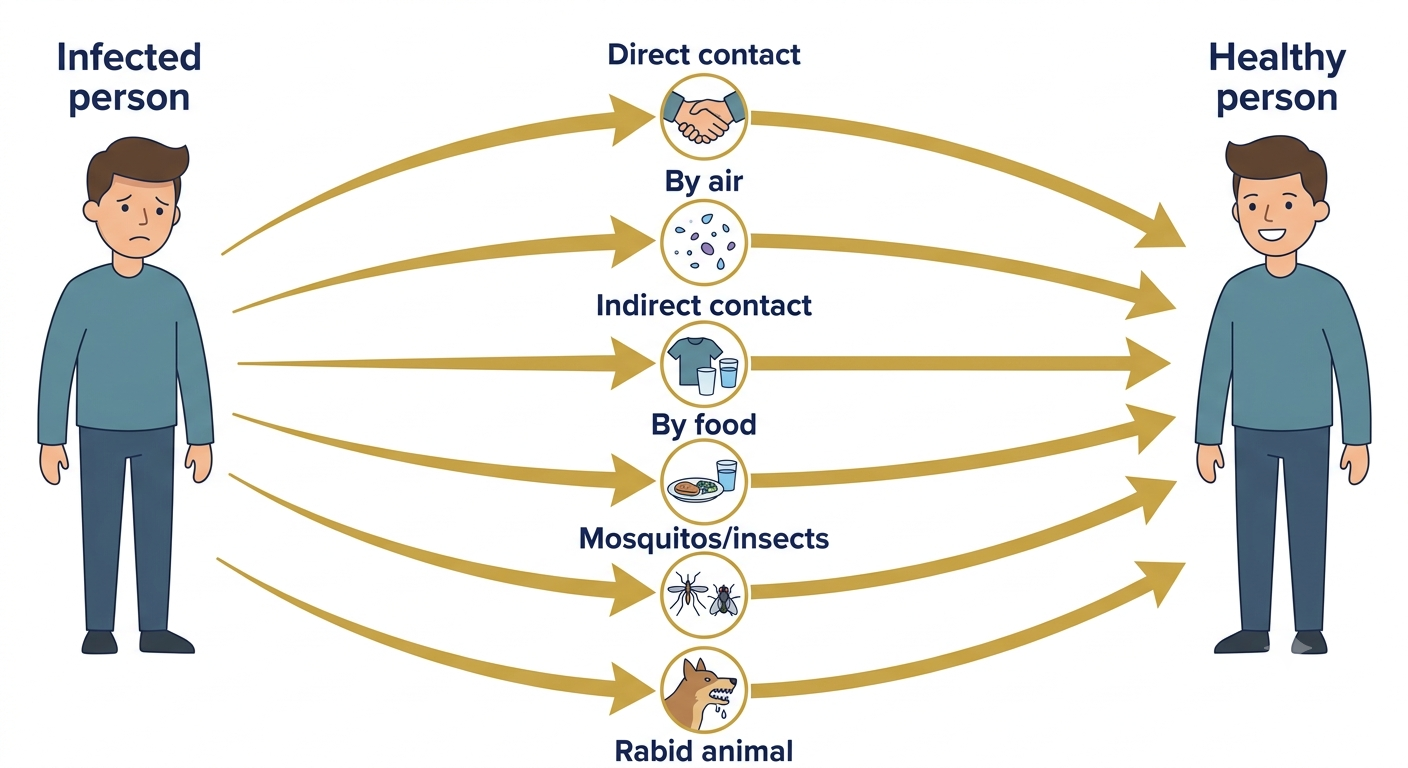
Fig. 3.4: Common methods of transmission of diseases
- In recent years, non-communicable diseases (NCDs) like diabetes, heart disease, and cancer have become more common in India.
- This is happening because of changes in how people live — such as:
- Eating more processed food
- Getting less exercise
- Living longer lives
- Today, most deaths in India are caused by NCDs.
- Understanding the difference between these two types helps us know how diseases spread and how to prevent them.
3.4.1 How are communicable diseases caused and spread?
- All communicable diseases are caused by pathogens.
- These pathogens can enter our body through the air we breathe or by consuming contaminated food or water and more.
- But how do these pathogens spread from one person to another?
- One common way is through air, when an infected person coughs or sneezes.
- Through direct contact like shaking hands.
- Indirectly by sharing personal items of an infected person.
- Some communicable diseases spread through contaminated drinking water or food.
- Some pathogens are also spread by insects like mosquitos and houseflies — these insects are called vectors.
- By understanding how diseases spread, we can take simple steps to protect ourselves and others.
🔬 Activity 3.4: Let us find out
- Grade 8 students listed some common communicable diseases in Table 3.1 during a community campaign and a library search.
- Check the information listed by referring to books, trusted websites, or asking your science teacher. Add any missing details.
- Study the table and think about what simple steps can help prevent each disease.
← Swipe the table sideways to see all columns →
| Diseases | Causal agent | Site of infection | Symptoms | Preventive measures |
|---|---|---|---|---|
| Diseases spread through the air | ||||
| Common cold and influenza | Virus | Respiratory tract | Nasal congestion and discharge, sore throat, fever, cough, body ache | Washing hands frequently, not sharing personal items, covering the mouth and nose using a mask |
| Chickenpox | Virus | Respiratory tract, skin | Mild fever, itchy skin, rashes, blisters | Complete isolation of the patient, covering the mouth and nose, vaccination |
| Measles | Virus | Skin, respiratory tract | Fever, sore throat, and reddish rashes on the neck, ears and other parts of the skin | Isolation of the patient, covering the mouth and nose, maintaining good hygiene, vaccination |
| Tuberculosis (TB) | Bacteria | Lungs | Cough, fever, fatigue, loss of appetite, night sweats | Avoiding close contact with TB-infected people, covering the mouth and nose, maintaining good hygiene, getting vaccinated |
| Diseases spread through contaminated water and food | ||||
| Hepatitis A | Virus | Liver | Fatigue, fever, loss of appetite, nausea, vomiting, jaundice, pain in the upper right abdomen | Drinking boiled water, vaccination |
| Cholera | Bacteria | Intestine | Diarrhoea and dehydration | Maintain personal hygiene and good sanitary habits, consumption of properly cooked food and boiled drinking water, vaccination |
| Typhoid | Bacteria | Intestine | Headache, abdominal discomfort, fever, and diarrhoea | Maintain personal hygiene and good sanitary habits, consumption of properly cooked food and boiled drinking water, vaccination |
| Ascariasis (roundworms) | Worms | Intestine | Worms in stool, loss of appetite, poor growth, diarrhoea, weight loss, anaemia | Maintain personal hygiene and good sanitary habits, consumption of properly cooked food and boiled drinking water |
| Diseases transmitted by insects | ||||
| Malaria | Protozoa | Skin, blood | High fever, profuse sweating, periodic chills | Use of mosquito nets and repellents, wearing long-sleeved clothes, control of mosquito breeding in and around your home |
| Dengue fever (Break bone fever) | Virus | Skin, blood | Fever, headache, muscle and joint pain, nausea | Use of mosquito nets and repellents, wearing long-sleeved clothes, control of mosquito breeding in and around your home, avoiding areas with still water |
Table 3.1: Some common communicable diseases affecting humans
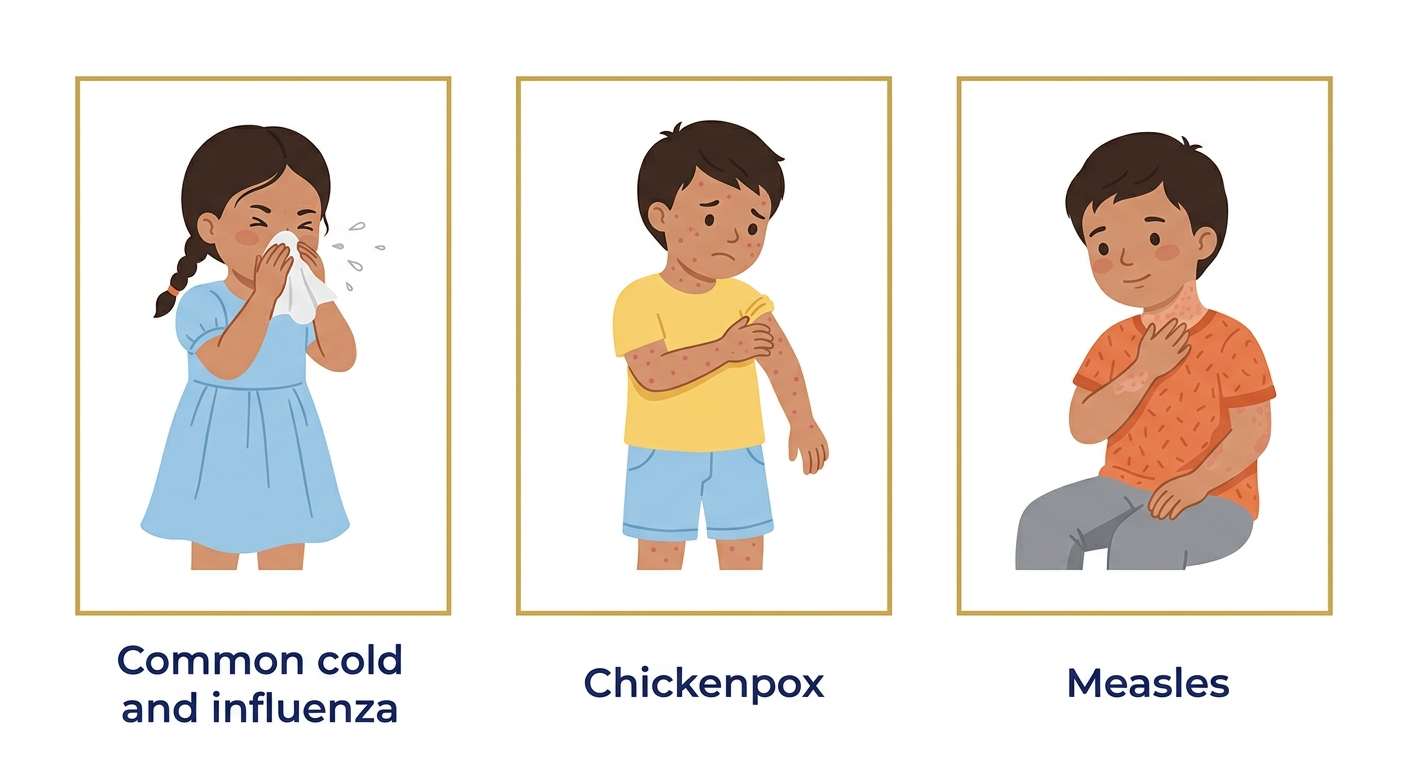
Diseases spread through the air
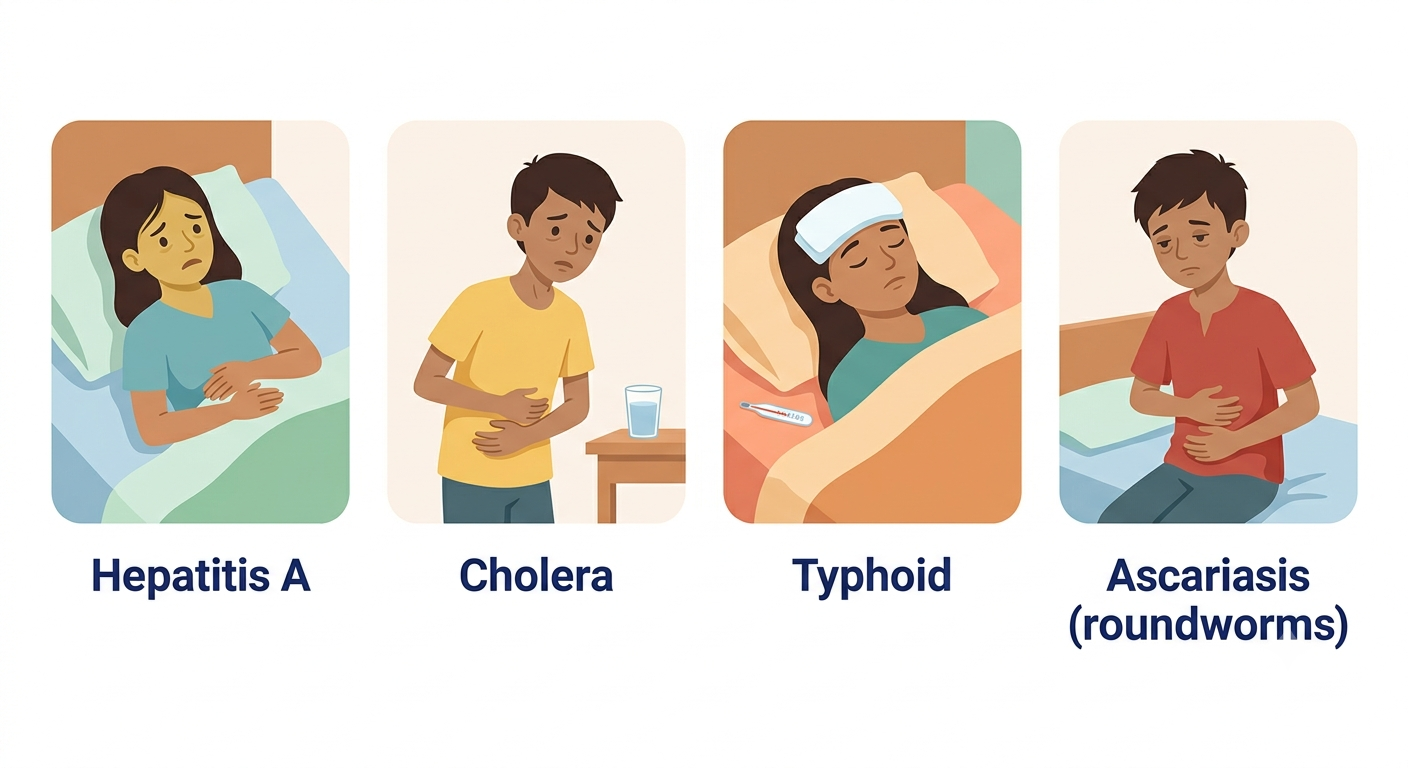
Diseases spread through contaminated water and food
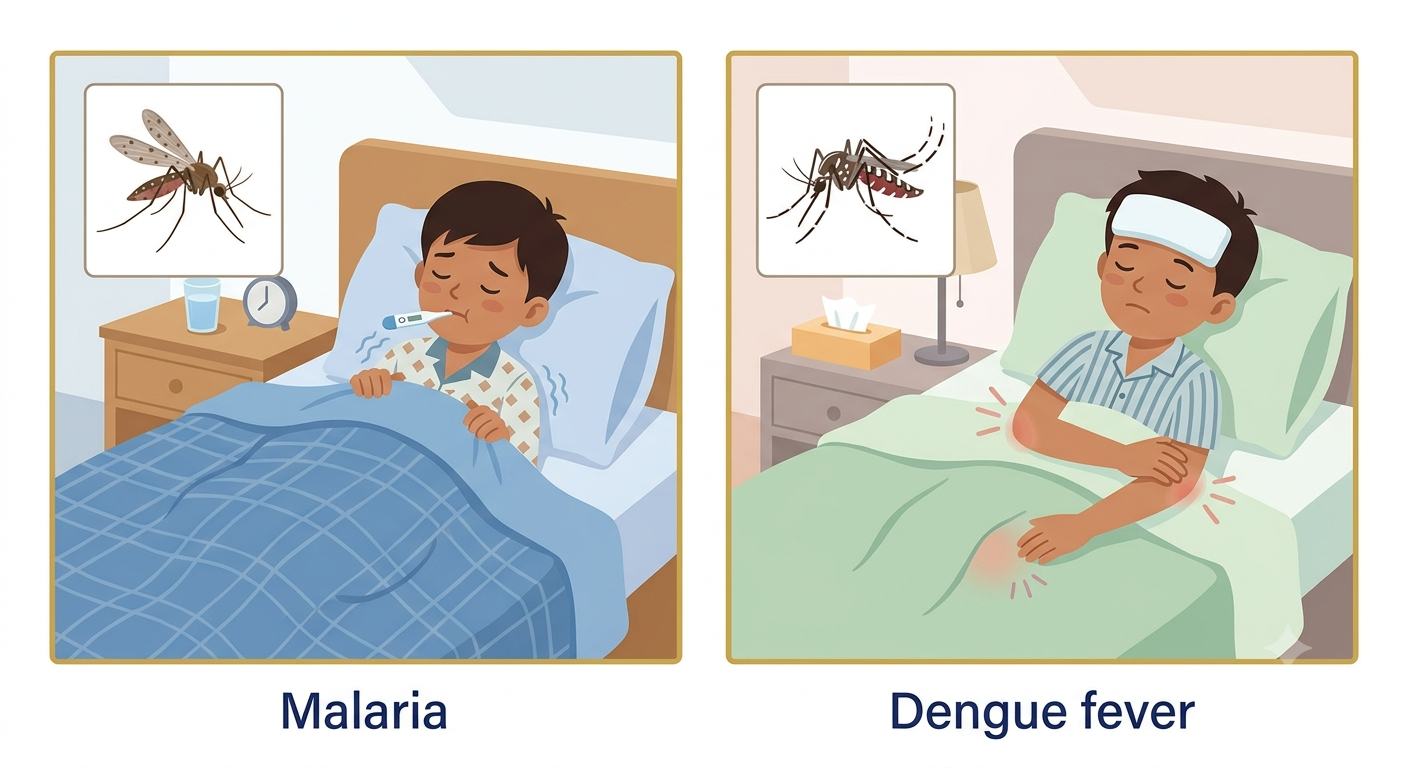
Diseases transmitted by insects
Simple but Important Precautions
By studying the Table 3.1, we can understand how infectious diseases spread and how to prevent them. Here are some simple but important precautions:
- Keeping ourselves and our surroundings clean.
- Practising basic hygiene every day.
- Washing hands with soap and water to remove pathogens.
- Covering our mouth and nose while coughing or sneezing.
- Wearing a mask in crowded places provides protection.
- Avoid sharing of personal items like towels and handkerchiefs.
- Keeping our home, food, and water clean.
- Staying at home and resting when we are unwell helps the body recover and minimises spreading the disease to others.
- Some infectious diseases are caused by worms that live inside our bodies, especially in the digestive system.
- They feed on nutrients and live as parasites — organisms that live in or on another living being.
- These worms usually spread through contaminated food, water, soil, or contact with infected people or animals.
3.4.2 How are non-communicable diseases caused?
- You learnt that non-communicable diseases like cancer, diabetes, and asthma are linked to lifestyle, diet, and/or environment.
- They are the most common cause of death in India.
- In Grade 6, you also learnt about diseases like scurvy, anaemia, and goitre, which are caused by a lack of specific nutrients in the diet.
- These are called deficiency diseases and are also non-communicable.
- Diseases such as cancer, diabetes, and asthma may often persist for a long time (more than 3 months) and are referred to as chronic diseases.
- Diabetes is a common disease which is becoming more prevalent in adults as well as children.
- In fact, India now has one of the highest numbers of people with diabetes in the world.
- It often develops due to a combination of:
- Hormonal imbalances
- Unhealthy eating habits
- Lack of physical activity
- Being overweight or obese
- Other reasons
🔬 Activity 3.5: Let us survey
- Find out the three most common lifestyle-related diseases in your neighbourhood.
- Talk to a doctor, nurse, health worker or even a family member who knows about health and what kind of lifestyle changes can help prevent or manage these diseases.
- You can also consult trusted health websites, books, teachers and doctors.
- Fill in Table 3.2 and learn more about lifestyle-related diseases.
| S. No. | Name of common lifestyle-related diseases | Signs and symptoms | Suggested lifestyle change(s) |
|---|---|---|---|
| 1. | Obesity | — | Eating a balanced diet and exercising regularly |
| 2. | Diabetes | Frequent urination; Excessive thirst; Weight loss; Tiredness; Slow healing | — |
| 3. | High blood pressure | — | — |
| 4. | ………………………. | ………………………. | ………………………. |
Table 3.2: Non-communicable diseases
Show Model Completed Table
1. Obesity — Signs and symptoms: Excess body weight and body fat, breathlessness on mild exertion, tiredness, joint pain, difficulty in physical activity. Suggested lifestyle changes: Eating a balanced diet and exercising regularly (given in the textbook).
2. Diabetes — Signs and symptoms: Frequent urination, excessive thirst, weight loss, tiredness, slow healing (given in the textbook). Suggested lifestyle changes: Reduce sugar and processed food, eat a balanced diet with whole grains and vegetables, exercise regularly, maintain healthy body weight, get regular blood sugar checks.
3. High blood pressure — Signs and symptoms: Often no clear symptoms at first; may include headache, dizziness, breathlessness, and is detected by measuring blood pressure. Suggested lifestyle changes: Reduce salt and oil in the diet, exercise regularly, manage stress through yoga or meditation, get enough sleep, avoid tobacco and alcohol.
4. Asthma (a suitable fourth entry) — Signs and symptoms: Difficulty in breathing, wheezing, coughing, tightness in the chest. Suggested lifestyle changes: Avoid dust, smoke and polluted air, keep surroundings clean, check the AQI before outdoor activity, follow the doctor’s advice.
Other diseases you might record from your own neighbourhood survey: heart disease, thyroid problems, or arthritis.
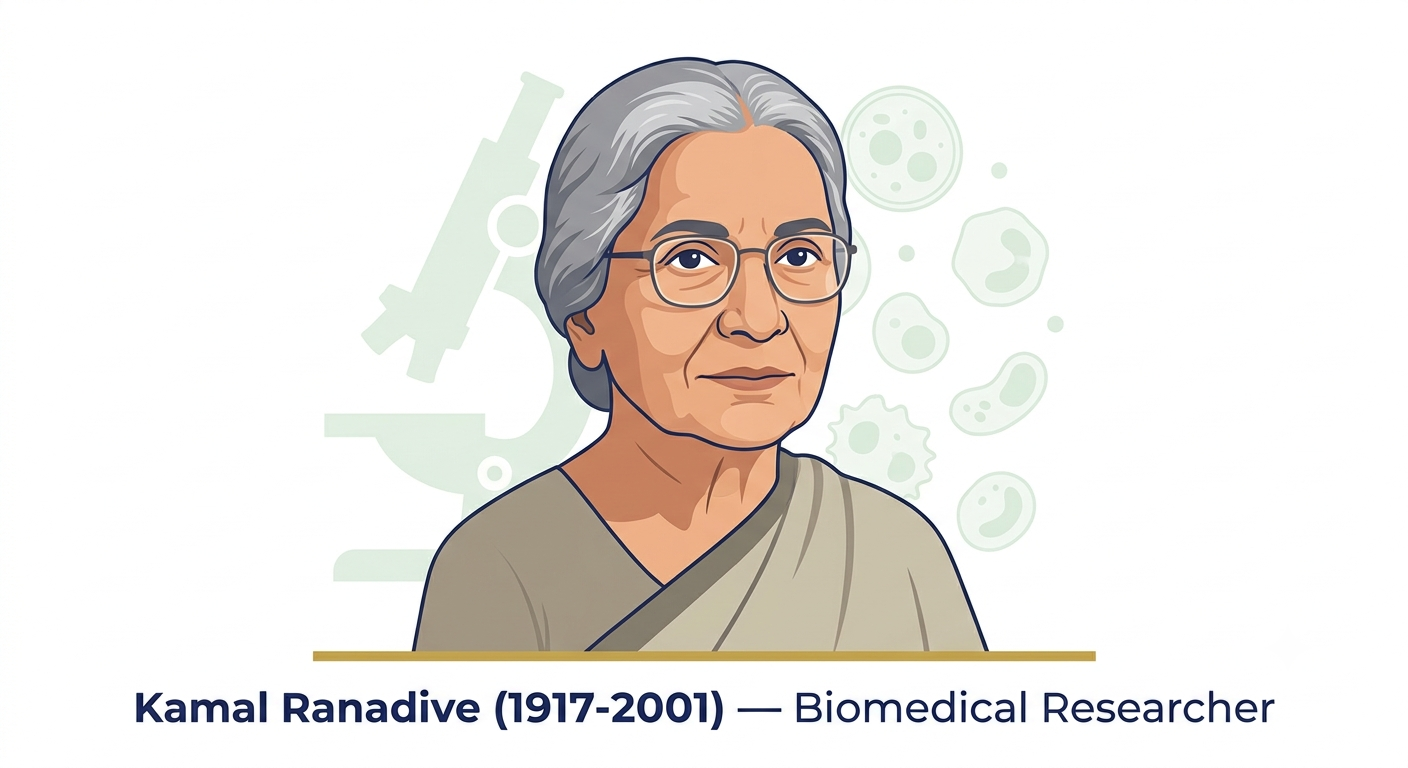
Kamal Ranadive (1917–2001)
🔬 Be a scientist
- Kamal Ranadive (1917–2001) was a pioneering biomedical researcher.
- She studied how hormones and certain viruses are linked to cancer, helping improve its treatment and prevention.
- Her work also showed how tobacco, diet, and pollution can raise the risk of cancer, highlighting the importance of a healthy lifestyle.
🔑 Key Terms
- Disease: A condition that affects the normal working of the body or mind.
- Pathogens: Disease-causing organisms such as bacteria, viruses, fungi, worms and protozoa.
- Non-communicable diseases: Diseases not caused by pathogens that do not spread from person to person; linked to lifestyle, diet and/or environment.
- Communicable diseases: Diseases caused by pathogens that can spread from one person to another.
- Vectors: Insects like mosquitos and houseflies that spread pathogens.
- Parasites: Organisms that live in or on another living being.
- Deficiency diseases: Diseases caused by a lack of specific nutrients in the diet, such as scurvy, anaemia and goitre; these are also non-communicable.
- Chronic diseases: Diseases that persist for a long time, more than 3 months, such as cancer, diabetes and asthma.
📝 Practice Questions
LOTS Name the causal agent and site of infection for malaria, typhoid, tuberculosis and hepatitis A.
Show Answer
- Malaria — causal agent: Protozoa; site of infection: skin, blood.
- Typhoid — causal agent: Bacteria; site of infection: intestine.
- Tuberculosis (TB) — causal agent: Bacteria; site of infection: lungs.
- Hepatitis A — causal agent: Virus; site of infection: liver.
MEDIUM List the five ways in which pathogens spread from an infected person to a healthy person, giving one example disease for each.
Show Answer
- Through air — when an infected person coughs or sneezes. Example: common cold and influenza, or tuberculosis.
- Direct contact — such as shaking hands with an infected person. Example: chickenpox.
- Indirect contact — by sharing personal items such as towels and handkerchiefs of an infected person. Example: common cold.
- Through contaminated water and food — Example: cholera, typhoid, hepatitis A or ascariasis.
- Through vectors — insects like mosquitos and houseflies. Example: malaria and dengue fever.
The chapter also shows transmission from a rabid animal in Fig. 3.4.
HOTS Both cholera and dengue are communicable, but the preventive measures for them are completely different. Explain why, and state what this teaches us about disease prevention.
Show Answer
The preventive measures differ because the route of spread differs.
Cholera is caused by bacteria and spreads through contaminated water and food into the intestine. So its prevention targets what enters the mouth: maintaining personal hygiene and good sanitary habits, consuming properly cooked food and boiled drinking water, and vaccination.
Dengue is caused by a virus and spreads through a vector — the mosquito, entering through the skin into the blood. Boiling water would do nothing to prevent it. Its prevention targets the mosquito: using mosquito nets and repellents, wearing long-sleeved clothes, controlling mosquito breeding in and around the home, and avoiding areas with still water.
What this teaches us: Prevention must break the specific chain of transmission. There is no single measure that stops all diseases. To prevent a disease effectively you must first ask how does this particular pathogen travel? — and then block that route. This is exactly why Table 3.1 groups diseases by their mode of spread rather than by their symptoms.
HOTS The chapter says most deaths in India today are caused by NCDs, though earlier communicable diseases were the bigger killer. Explain this shift.
Show Answer
Two changes happened at the same time — communicable diseases came down while non-communicable diseases went up.
Why communicable diseases declined:
- Vaccination. Smallpox was eradicated worldwide and polio is now rare, exactly as the Probe and Ponder question notes.
- Better sanitation. Community campaigns like the one in Bhadrak district, Odisha, reduced open defecation and led to fewer cases of diarrhoea and infections.
- Safe drinking water reduced water-borne and vector-borne diseases.
- Antibiotics made bacterial infections treatable.
Why non-communicable diseases rose: The chapter gives three reasons — people are eating more processed food, getting less exercise, and living longer lives.
The third reason is easy to miss but important. NCDs like cancer, heart disease and diabetes usually develop over many years. When people died young of infections, they never lived long enough to develop these conditions. So rising NCD deaths are partly a side effect of success — longer life expectancy.
Modern lifestyle explains the rest: more fast food (a leading cause of diabetes), more screen time and less outdoor play, and rising obesity at 28.6% of Indians. This is why India now has one of the highest numbers of people with diabetes in the world. The encouraging part is that NCDs can often be prevented by healthy habits and lifestyle changes.
3.5 How to Prevent and Control Diseases?
- You might have heard the phrase ‘Prevention is better than cure.’
- It is important to protect ourselves from both communicable and non-communicable diseases.
🔬 Activity 3.6: Let us read
Odisha — community-led sanitation campaign
- In Bhadrak district, Odisha, a community sanitation campaign helped more people build and use toilets.
- This reduced open defecation significantly, and improved child health, with fewer cases of diarrhoea and infections.
What do you infer from this case study? Simple steps like good sanitation can greatly reduce the spread of communicable diseases. Find about such community campaigns held in your location. Share in your class and discuss with your peers about the impact of such initiatives.
Show Answer
What we infer from this case study:
- Prevention works better than cure. No medicine was involved — simply building and using toilets reduced disease.
- Breaking the transmission chain stops disease. Diseases like cholera, typhoid, hepatitis A and ascariasis spread through contaminated water and food. Open defecation lets excreta contaminate water sources; toilets cut that route.
- Health is a community matter, not only a personal one. One family alone building a toilet would not have protected the shared water supply. The whole community had to change together.
- Children benefit most. Repeated diarrhoea causes poor growth and weakness in children, so fewer infections directly improved child health.
- Simple, low-cost measures can have large effects. Sanitation is far cheaper than treating thousands of cases of illness.
Similar campaigns in India you could research: the Swachh Bharat Mission for sanitation and toilet construction, the Fit India Movement mentioned on the bulletin board, Pulse Polio immunisation drives, Mission Indradhanush for child vaccination, and local anti-dengue drives that remove stagnant water before the monsoon.
Ability of the body to fight diseases
- You would have noticed that some people get sick more frequently than others, although living in a similar environment. Do you know why?
- The natural ability of our body to fight diseases is known as immunity.
- Our body has a special system called the immune system that helps fight against diseases.
- You might have taken some drops or injections in your childhood to protect yourself from certain diseases, such as polio, measles, tetanus, and hepatitis.
- These are vaccines that help prevent serious infections caused by viruses and bacteria.
- A vaccine helps our body fight certain diseases by training the immune system to recognise and attack harmful germs.
- This provides what is known as acquired immunity — protection developed after exposure to a pathogen or a vaccine.
- Vaccines can be made in different ways:
- From weakened or dead pathogens (like viruses or bacteria)
- From inactive or harmless parts of the pathogen
- Some newer vaccines instruct our own body cells to make a harmless part of the germ, which our immune system then learns to fight
- For example, a tetanus shot, often given after an injury, protects against infection by the tetanus-causing bacteria. It contains an inactivated bacterial toxin that helps the immune system develop protection without causing the disease.
Edward Jenner and the smallpox vaccine
- Smallpox was a deadly disease that caused blisters and killed millions.
- A milder disease called cowpox, seen in cows, could also infect humans.
- In the late 1700s, English doctor Edward Jenner discovered that people who had cowpox did not get smallpox.
- This led to the invention of the first vaccine and helped protect people from smallpox.
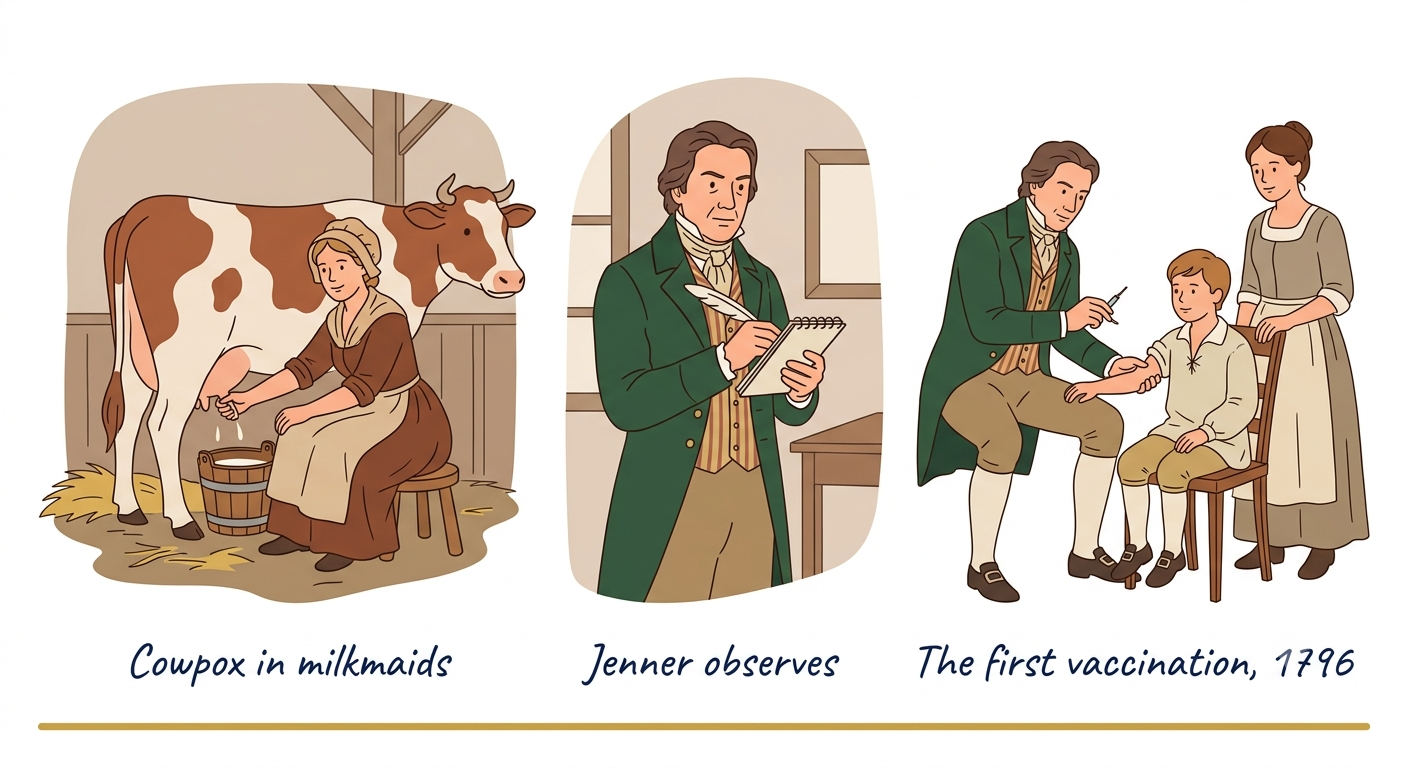
Edward Jenner and the discovery of the first vaccine
🏛️ Our Scientific Heritage
- Long before modern vaccines, India had a traditional method called variolation to protect against smallpox.
- It involved using material from a smallpox sore to scratch the skin and create a mild infection and build immunity.
- People who performed this practice were known as teekedaars.
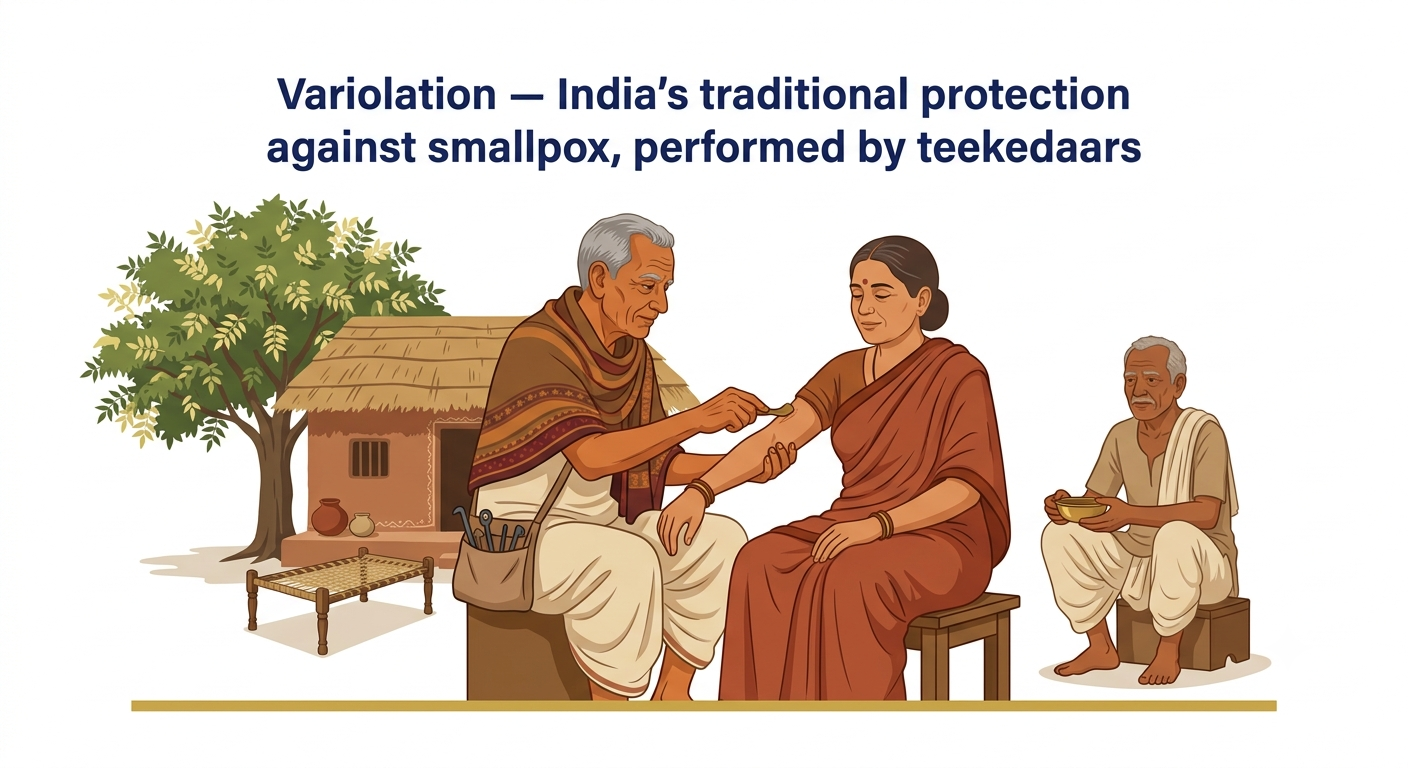
Variolation — India’s traditional practice, performed by teekedaars
🔭 Think like a scientist
Observations
Jenner observed that milkmaids who had cowpox did not catch smallpox, likely because the two viruses are related.
Hypothesis
Content in the pus of cowpox blisters protected people from smallpox.
Experimentation
He tested this by injecting cowpox sap into a boy, who later showed no illness when exposed to smallpox.
Results
He found that people who were infected with cowpox sap were now resistant to smallpox.
Application
Mass vaccination eventually helped eradicate smallpox worldwide.
Countries reporting smallpox (1950–1980)
Y-axis: Number of Countries Reporting Cases | X-axis: Year
1965: Vaccine campaign begins • 1979: Smallpox eradicated
- Vaccines are one of the most effective ways to protect people of all ages — from infants to the elderly — against many serious diseases.
- They help prevent illnesses, reduce the spread of infections, and save millions of lives every year.
- It is important to remember that vaccines are preventive, not curative — they can help minimise serious diseases before they happen, but do not treat them once someone is already sick.
- Some people may fear or doubt vaccines, but scientists and doctors carefully test them for safety.
- Getting vaccinated not only protects you but also the people around you.
💡 Ever heard of …
India’s Role in Vaccine Production
- India is one of the world’s largest vaccine producers.
- It manufactures vaccines on a massive scale and supplies them to many countries.
- Indian vaccine companies played a key role during the COVID-19 pandemic and continue to support global health efforts.
🔬 Be a scientist
- Maharaj Kishan Bhan was a well-known Indian doctor and scientist.
- As Secretary of the Department of Biotechnology, he helped promote science and innovation in India.
- He played a key role in developing the Rotavirus vaccine, which protects children from diarrhoea.
- He believed in using research to create affordable healthcare and made a big difference in India’s health and biotechnology sectors.
3.5.1 Treatment of diseases
- If our immune system fails to protect us against an infectious disease, we fall ill and need to visit a doctor.
- The doctor may give us medicines called antibiotics, which kill the bacteria that might have caused the disease.
- Antibiotics work only against bacterial infections because they target parts of bacterial cells that are different from human or other animal cells.
- They do not work against viruses or diseases caused by protozoa.
🔭 Think like a scientist
Discovery of the first antibiotic, Penicillin
- Penicillin was discovered in 1928 by Alexander Fleming, a bacteriologist from London.
- While studying harmful bacteria, he noticed that a mould on a discarded petri dish stopped the bacteria from growing.
- He realized the mould released a substance that killed the bacteria.
- This chance discovery led to the discovery of penicillin, the first antibiotic used to treat bacterial infections.
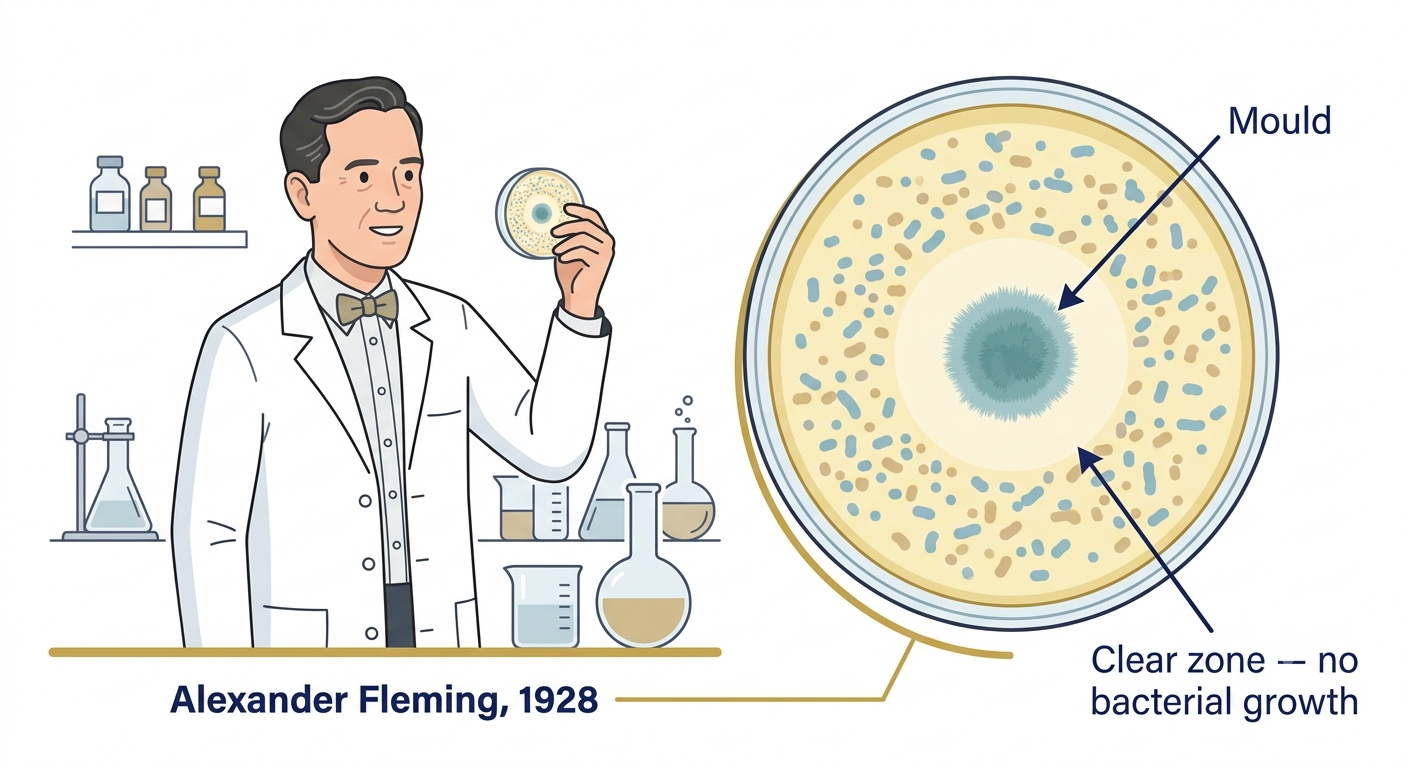
Alexander Fleming and the discovery of penicillin
🔑 Key Terms
- Immunity: The natural ability of our body to fight diseases.
- Immune system: A special system in our body that helps fight against diseases.
- Vaccines: Preparations that help prevent serious infections caused by viruses and bacteria by training the immune system.
- Acquired immunity: Protection developed after exposure to a pathogen or a vaccine.
- Variolation: India’s traditional method of protecting against smallpox by using material from a smallpox sore to scratch the skin.
- Teekedaars: People who performed the practice of variolation.
- Antibiotics: Medicines that kill the bacteria that might have caused a disease; they work only against bacterial infections.
📝 Practice Questions
LOTS What is immunity, and what is acquired immunity?
Show Answer
Immunity is the natural ability of our body to fight diseases. Our body has a special system called the immune system that helps fight against diseases.
Acquired immunity is protection developed after exposure to a pathogen or a vaccine. A vaccine provides it by training the immune system to recognise and attack harmful germs.
MEDIUM Explain the three ways in which vaccines can be made, and why a tetanus shot does not give you tetanus.
Show Answer
Vaccines can be made in different ways:
- From weakened or dead pathogens, such as viruses or bacteria.
- From inactive or harmless parts of the pathogen.
- Some newer vaccines instruct our own body cells to make a harmless part of the germ, which our immune system then learns to fight.
Why a tetanus shot does not cause tetanus: The tetanus shot contains an inactivated bacterial toxin. Because the toxin has been inactivated, it cannot harm the body or cause the disease — but the immune system still recognises its shape and learns to fight it. This helps the immune system develop protection without causing the disease.
HOTS Jenner’s work is presented as a model of scientific method. Trace his five steps and explain why the order matters.
Show Answer
Jenner’s five steps were:
- Observation — he noticed that milkmaids who had cowpox did not catch smallpox.
- Hypothesis — he proposed that content in the pus of cowpox blisters protected people from smallpox.
- Experimentation — he tested this by injecting cowpox sap into a boy, who later showed no illness when exposed to smallpox.
- Results — he found that people infected with cowpox sap were now resistant to smallpox.
- Application — mass vaccination eventually helped eradicate smallpox worldwide.
Why the order matters:
Observation must come first, because a hypothesis needs something real to explain. Jenner did not invent the idea from nothing — he noticed a pattern in the world around him.
The hypothesis must come before the experiment, because it tells you what to test. Without a clear prediction, an experiment has no meaning; you would not know what result would count as success or failure.
Experimentation must come before results are claimed. Many people had noticed the milkmaid pattern before Jenner, but noticing is not proving. Only a deliberate test could show that cowpox caused the protection rather than merely appearing alongside it.
Application comes last, and only after results are established. Vaccinating millions of people on the strength of an untested guess would have been dangerous. It was because Jenner’s method was sound that the world could confidently act on it — and by 1979 smallpox was eradicated.
HOTS India practised variolation long before Jenner, yet Jenner’s method replaced it worldwide. Suggest why, based on how each method worked.
Show Answer
The key difference lies in what material each method used.
Variolation used material from a smallpox sore itself to scratch the skin and create a mild infection. The intention was sound — build immunity before a serious natural infection strikes — and it did work, showing that Indian practitioners understood the principle of acquired immunity centuries before it was formally explained.
But it carried a real risk. The material was live smallpox, and smallpox was a deadly disease that caused blisters and killed millions. A “mild” infection could sometimes become severe, and the treated person could also spread genuine smallpox to others.
Jenner’s method used cowpox instead — a much milder disease that happened to be caused by a related virus. The immune system learned to recognise the smallpox virus without ever meeting it. The person became resistant to smallpox while facing only the far lesser risk of cowpox.
So Jenner’s advance was not the idea of building immunity — variolation and the teekedaars already had that. His advance was finding a safe substitute for the dangerous pathogen. That is what made mass vaccination possible on a global scale, and it remains the founding principle of vaccines today: expose the immune system to something harmless that resembles the real threat.
Antibiotic Resistance
- Though antibiotics are effective in protecting us against bacterial infections and have saved millions of lives since their discovery, their indiscriminate use has led to a decline in their effectiveness.
- Nowadays, there are news headlines about antibiotic resistance — a phenomenon where bacteria that were earlier killed by a given antibiotic are found to survive and multiply despite treatment with that antibiotic.
- This makes common infections harder to treat and increases the risk of complications, prolonged illness, and even death.
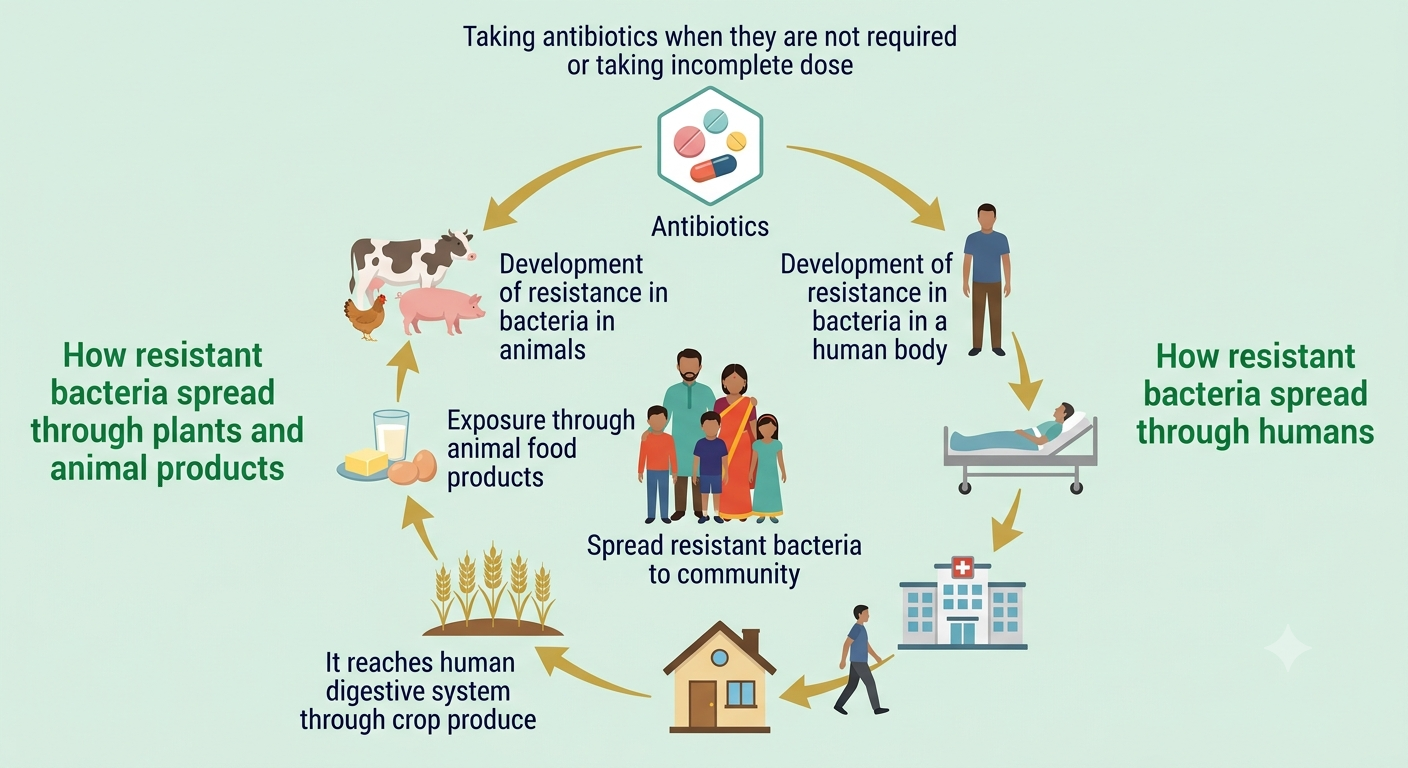
Fig. 3.5 (a): Spread of antibiotic-resistant bacteria in community
🔄 HOW ANTIBIOTIC RESISTANCE SPREADS IN THE COMMUNITY?
It begins with taking antibiotics when they are not required, or taking an incomplete dose.
Path 1 — Development of resistance in bacteria in animals
Antibiotics given to cattle, pigs and poultry → resistant bacteria develop in the animals.
How resistant bacteria spread through plants and animal products
Exposure through animal food products such as milk, butter and eggs. Also, spread through soil in a crop field via manure/animal faeces → it reaches the human digestive system through crop produce.
Path 2 — Development of resistance in bacteria in a human body
A person taking unnecessary or incomplete antibiotics develops resistant bacteria in their body.
How resistant bacteria spread through humans
The person may have serious illness and gets care at a hospital → resistant bacteria spread directly to other patients or indirectly through healthcare workers → spread in hospital through dirty surfaces → patients go home.
The result
Both paths converge to spread resistant bacteria to the community.
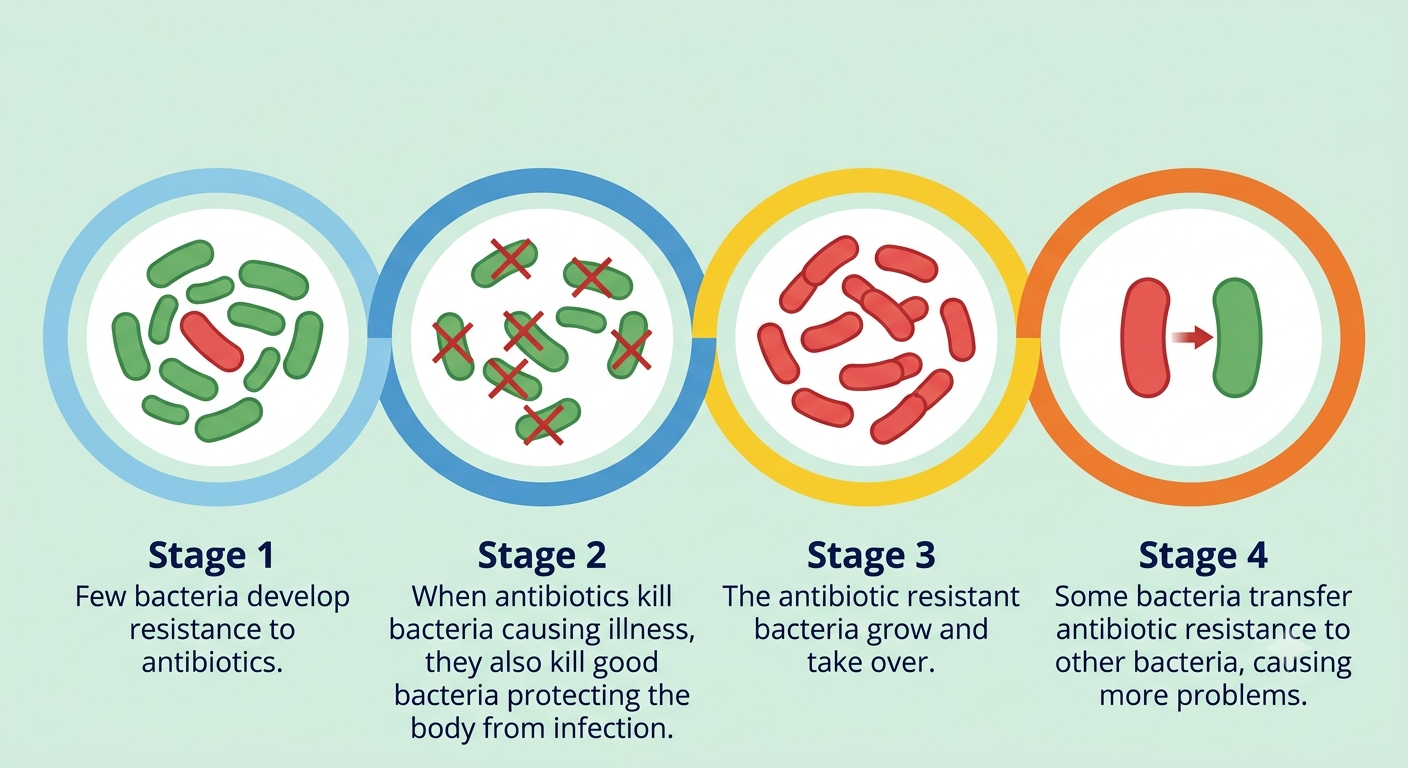
Fig. 3.5 (b): Development of antibiotic-resistant bacteria and preventive measures
🦠 HOW BACTERIA BECAME RESISTANT TO ANTIBIOTICS?
Stage 1
Few bacteria develop resistance to antibiotics.
Stage 2
When antibiotics kill bacteria causing illness, they also kill good bacteria protecting the body from infection.
Stage 3
The antibiotic resistant bacteria grow and take over.
Stage 4
Some bacteria transfer antibiotic resistance to other bacteria, causing more problems.
Preventive messages shown in Fig. 3.5(b):
- “I need antibiotic for my mother. She has a sore throat and a fever.” → “You must get a prescription from a doctor.”
- “Are you giving antibiotics to your cattle?” → “No. I am not using any antibiotics.”
- “No… No. Do not give antibiotic injection to your cattle.” → “It will develop antibiotic resistance otherwise.”
🔬 Activity 3.7: Let us infer
- Study the infographic given in Fig. 3.5b. How do you think the antibiotic resistance has been developed in bacterial pathogens? What precautions may be taken to reduce antibiotic resistance?
- To tackle the problem of antibiotic resistance, we must use antibiotics wisely — only when prescribed by a doctor, in the correct dose, and for the right duration. Avoiding unnecessary use helps prevent the rise of resistant bacteria and keeps antibiotics effective for future generations.
Show Answer
How antibiotic resistance developed:
- In any large population of bacteria, a few bacteria already have resistance to a given antibiotic by chance.
- When an antibiotic is taken, it kills the bacteria causing illness and also the good bacteria that protect the body from infection. The resistant few survive.
- With their competitors removed, the resistant bacteria grow and take over — they now have plenty of space and food.
- Worse, some bacteria transfer antibiotic resistance to other bacteria, so resistance spreads even to bacteria that never met the antibiotic.
- This is made far worse by taking antibiotics when they are not required, or taking an incomplete dose. An incomplete course kills the weak bacteria but leaves the tougher ones alive to multiply.
Precautions to reduce antibiotic resistance:
- Take antibiotics only when prescribed by a doctor — never buy them directly for a sore throat or fever.
- Take them in the correct dose and for the right duration — always complete the full course even after feeling better.
- Never take antibiotics for viral infections like colds, coughs and flu, since they do not work against viruses.
- Do not give antibiotics to cattle and poultry unnecessarily, as resistance then reaches us through milk, meat, eggs and crops grown in manured soil.
- Maintain hygiene and clean surfaces, especially in hospitals, to stop resistant bacteria spreading between patients.
- Prevent infections in the first place through vaccination, handwashing and clean water — fewer infections mean fewer antibiotics needed.
Traditional Medicine Systems and Therapies
- Traditional medicine systems like Ayurveda, Siddha, and Unani have been used in India for many years to manage common health problems.
- They use natural substances like herbs, oils, and minerals for managing illnesses and promoting recovery, and focus on a healthy lifestyle and balanced diet.
- While these systems can help with some conditions, and are useful for everyday well-being, they may not be effective for all diseases and at all stages.
- Therapies for non-communicable diseases focus on managing symptoms and improving quality of life through medication, lifestyle changes, and rehabilitation.
- Early diagnosis and continuous care are key to control the disease progression and prevent complications.
📌 Snapshots
- Health means complete physical, mental, and social well-being — not just the absence of disease.
- Being happy helps us stay active and healthy, and good health also improves our mood. Health and happiness are closely related.
- A disease affects the normal working of the body or mind.
- Symptoms are what we feel (like pain or tiredness); signs are what can be seen or measured (like fever or rash).
- Non-communicable diseases like diabetes and heart disease are caused by lifestyle and environmental factors, not germs. They can often be prevented with healthy habits, lifestyle changes, and regular exercise.
- Infectious diseases are caused by pathogens like bacteria, viruses, or worms.
- Our immune system helps protect us from harmful pathogens.
- Vaccines train the immune system using dead, weakened, or harmless parts of a germ to prevent disease.
- Diagnosis and treatment are important for managing and curing diseases.
🤔 Keep the Curiosity Alive
1. Group the diseases shown in the images as communicable or non-communicable. (Cold and flu, Typhoid, Diabetes, Asthma, Chickenpox)
Show Answer
Communicable diseases (caused by pathogens, spread from person to person):
- Cold and flu — caused by a virus, spreads through the air.
- Typhoid — caused by bacteria, spreads through contaminated water and food.
- Chickenpox — caused by a virus, spreads through the air and contact.
Non-communicable diseases (not caused by pathogens, do not spread):
- Diabetes — linked to lifestyle, diet and hormonal imbalance.
- Asthma — linked to environment and lifestyle.
2. Diseases can be broadly grouped into communicable and non-communicable diseases. From the options given below, identify the non-communicable diseases.
(i) Typhoid (ii) Asthma (iii) Diabetes (iv) Measles
(a) (i) and (ii) (b) (ii) and (iii) (c) (i) and (iv) (d) (ii) and (iv)
Show Answer
Correct answer: (b) (ii) and (iii) — Asthma and Diabetes.
Explanation: Asthma and diabetes are non-communicable — they are not caused by pathogens and do not spread from one person to another. They are linked to lifestyle, diet and/or environment.
Typhoid is communicable, caused by bacteria and spread through contaminated water and food. Measles is communicable, caused by a virus and spread through the air. So options (a), (c) and (d) are incorrect because each includes at least one communicable disease.
3. There is a flu outbreak in your school. Several classmates are absent, while some are still coming to school coughing and sneezing.
Show Answer
(i) Immediate actions the school should take:
- Advise students showing symptoms to stay at home and rest — this helps the body recover and minimises spreading the disease to others.
- Ask everyone to cover the mouth and nose while coughing or sneezing, and to use masks in crowded areas like the assembly hall and classrooms.
- Ensure soap and water are available at every washbasin and encourage frequent handwashing.
- Tell students not to share personal items such as handkerchiefs, water bottles, tiffin boxes or pencils.
- Clean and disinfect frequently touched surfaces such as desks, door handles and taps.
- Improve ventilation by keeping windows open so fresh air circulates.
- Inform parents and, if the outbreak is large, consult the local health authorities.
(ii) Responding considerately to a classmate showing symptoms:
- Speak kindly and privately, never in front of the whole class, and never tease or avoid them in an obvious way.
- Say something caring such as, “You don’t look well — you should rest at home and get better soon.”
- Offer practical help — share notes with them, or tell the class teacher so they can inform the parents.
- Politely suggest they use a mask or handkerchief, framing it as concern for them, not disgust.
- Remember they are unwell, not at fault. Anyone can catch flu, and it could easily be you next.
(iii) Protecting yourself and others:
- Wash hands with soap and water frequently, especially before eating.
- Wear a mask in the crowded classroom.
- Avoid touching your eyes, nose and mouth with unwashed hands.
- Do not share water bottles, food or personal items.
- Sit at a slight distance from someone coughing, if seating allows.
- Keep your own immunity strong — eat well, sleep enough and stay active.
- If you develop symptoms yourself, stay home rather than spreading it further.
4. Your family is planning to travel to another city where malaria is prevalent.
Show Answer
(i) Precautions before, during and after the trip:
Before:
- Consult a doctor about preventive medicines and check any health advisories for that region.
- Pack mosquito repellent, mosquito nets and long-sleeved clothes.
- Find out whether the area has a peak season for malaria, such as after the monsoon.
During:
- Sleep under a mosquito net, especially at night.
- Wear long-sleeved clothes and full trousers, particularly at dawn and dusk.
- Apply mosquito repellent on exposed skin.
- Keep doors and windows closed or screened; avoid areas with still water where mosquitos breed.
- Ensure the place you stay has no stagnant water in coolers, pots or tyres nearby.
After:
- Watch for symptoms — high fever, profuse sweating and periodic chills — for several weeks after returning.
- If any appear, see a doctor immediately and mention the travel history, since early diagnosis matters.
- Do not self-medicate with leftover medicines.
(ii) Explaining mosquito nets and repellents to a younger sibling:
You could say: “Malaria doesn’t spread by touching someone or sharing food — it spreads only through a mosquito bite. The mosquito is like a tiny carrier that picks up the germ from a sick person and injects it into the next person it bites. So if we stop the mosquito from biting us, we simply cannot get malaria. The net is like a shield around your bed at night, and the repellent is like an invisible coat that keeps mosquitos away from your skin. Wearing full-sleeved clothes gives them less skin to land on.”
(iii) What could happen if travellers ignore health advisories:
- They may fall seriously ill with high fever, sweating and chills, which can become severe if untreated.
- Illness could ruin the trip and require hospitalisation far from home.
- They could carry the disease back to their own city. If local mosquitos bite them, malaria could begin spreading in a place where it was previously rare.
- Children and elderly travellers are at greater risk of complications.
- Delayed diagnosis is likely, because doctors at home may not suspect malaria unless told about the travel.
5. Your uncle has started smoking just to fit in with his friends, even though it is well known that smoking can seriously harm health and even cause death.
Show Answer
(i) What you could say to him, without being rude:
- Speak from care, not accusation: “Uncle, I read in my science chapter that tobacco raises the risk of cancer. I care about you and I don’t want you to get ill.”
- Mention Kamal Ranadive’s research, which showed how tobacco, diet and pollution can raise the risk of cancer.
- Point out that smoking harms the family too, since others breathe the smoke.
- Frame it around friendship pressure: “Real friends won’t think less of you if you say no.”
- Offer support rather than a lecture — suggest he speak to a doctor, and encourage healthier ways to relax such as walking, yoga or pranayama.
- Avoid scolding or shaming, which usually makes people defensive rather than willing to change.
(ii) If a friend offers you a cigarette at a party:
- Say no clearly and politely — “No thanks, I don’t smoke.” A simple, confident refusal works best.
- You need not justify yourself, but you can add a light reason: “It’s bad for my fitness” or “My asthma acts up.”
- Change the subject or move to another group.
- Remember that the chapter says clearly: say ‘NO’ to harmful substances like tobacco, alcohol, and addictive drugs.
- If a friend keeps pressuring you, that pressure itself says something about the friendship.
- Tell a trusted adult if you are being repeatedly pressured.
(iii) How schools can help prevent such harmful habits:
- Run awareness programmes showing the real health effects of tobacco, alcohol and drugs.
- Invite doctors to speak to students and answer their questions directly.
- Teach refusal skills — how to say no confidently when pressured by peers.
- Provide counsellors students can talk to privately, as happened for the boy in Activity 3.1.
- Encourage sports, yoga and cultural activities so students have healthy outlets and belong to positive groups.
- Maintain a strict tobacco-free campus so that teachers and staff model the behaviour.
- Organise poster, debate and street-play competitions on the dangers of addiction.
- Involve parents through awareness meetings, since habits often begin at home.
6. Saniya claims to her friend Vinita that “Antibiotics can cure any infection, so we don’t need to worry about diseases.” What question(s) can Vinita ask her to help Saniya understand that her statement is incorrect?
Show Answer
Vinita could ask Saniya the following questions:
- “If antibiotics cure any infection, why doesn’t the doctor give them for a common cold or flu?” — This leads Saniya to see that antibiotics work only against bacterial infections. Colds, flu, dengue, chickenpox and measles are caused by viruses, and antibiotics do not work against them.
- “Malaria is an infection — is it caused by bacteria?” — Malaria is caused by protozoa, and antibiotics do not work against diseases caused by protozoa either.
- “What about ascariasis, caused by worms? Would an antibiotic kill a roundworm?” — Another pathogen type antibiotics do not target.
- “Have you heard about antibiotic resistance in the news?” — This raises the key danger: bacteria that were earlier killed by an antibiotic now survive and multiply despite treatment, making common infections harder to treat and increasing the risk of complications, prolonged illness and even death.
- “If we use antibiotics carelessly for everything, will they still work when we truly need them?” — This shows why her attitude is dangerous, not merely wrong. Indiscriminate use is exactly what creates resistance.
- “Are all diseases even infections?” — Diabetes, asthma, cancer and heart disease are non-communicable and are today the most common cause of death in India. No antibiotic can touch them; they need lifestyle change and long-term care.
- “So should we stop worrying about diseases, or should we still try to prevent them?” — This brings her to the chapter’s main message: prevention is better than cure.
7. The following table contains information about the number of dengue cases reported in a hospital over a period of one year. Make a bar graph of the number of cases on the Y-axis and the month on the X-axis. Critically analyse your findings and answer the following.
← Swipe the table sideways to see all months →
| S. No. | 1 | 2 | 3 | 4 | 5 | 6 |
|---|---|---|---|---|---|---|
| Month | January | February | March | April | May | June |
| No. of dengue cases | 10 | 12 | 15 | 18 | 22 | 40 |
| S. No. | 7 | 8 | 9 | 10 | 11 | 12 |
|---|---|---|---|---|---|---|
| Month | July | August | September | October | November | December |
| No. of dengue cases | 65 | 65 | 65 | 30 | 30 | 20 |
Bar Graph — Dengue Cases by Month
Show Answer
(i) In which three months were the dengue cases highest?
July, August and September — each with 65 cases, the peak of the year.
(ii) In which month(s) were the cases lowest?
January, with only 10 cases. February is next lowest at 12.
(iii) What natural or environmental factors during the peak months might contribute to the increase?
- The monsoon. July to September is the rainy season in most of India, and the bulletin board itself notes that the arrival of monsoon leads to an increase in malaria and dengue cases.
- Stagnant water collects everywhere — in pots, tyres, coolers, drains, tarpaulins and construction sites. Dengue mosquitos breed in this still water, and the chapter advises avoiding areas with still water.
- Warm, humid weather helps mosquito eggs hatch faster and lets adult mosquitos live longer, so the mosquito population multiplies rapidly.
- Waterlogging and blocked drains create many new breeding sites in towns and cities.
- Cases stay high in October and November because the mosquito population takes time to fall after the rains stop, then decline into the drier, cooler winter.
(iv) Preventive steps the community or government can take before the peak season:
- Launch anti-dengue drives before the monsoon, in May and June, rather than waiting for cases to rise.
- Clear stagnant water from public spaces, empty and scrub coolers weekly, and cover water storage tanks.
- Clean and unblock drains before the rains to prevent waterlogging.
- Carry out fogging and spraying of insecticide in affected localities.
- Distribute or subsidise mosquito nets and repellents, especially in poorer areas.
- Run awareness campaigns through schools, radio and posters teaching people to check their own homes for breeding sites.
- Encourage wearing long-sleeved clothes during peak mosquito hours.
- Prepare hospitals in advance with extra beds, medicines and testing kits for the July–September surge.
- Use biological control such as releasing larvae-eating fish in ponds and water tanks.
8. Imagine you are in charge of a school health campaign. What key messages would you use to reduce communicable and non-communicable diseases?
Show Answer
Messages to reduce communicable diseases:
- “Wash your hands, wash away disease” — regular handwashing with soap reduces infection by 50%.
- “Cover your cough, protect your class” — always cover the mouth and nose while coughing or sneezing.
- “Sick? Stay home” — resting at home helps you recover and protects everyone else.
- “Don’t share, stay fair to your health” — never share towels, handkerchiefs, water bottles or tiffin.
- “Boil it, cook it, or leave it” — drink boiled or filtered water and eat properly cooked food.
- “No standing water, no dengue” — check the school and home weekly for stagnant water.
- “Vaccines protect you and everyone around you” — complete all recommended vaccinations.
- “A clean campus is a healthy campus” — keep classrooms, toilets and grounds clean.
Messages to reduce non-communicable diseases:
- “Fill half your plate with fruits and vegetables” — eat a balanced diet with whole grains.
- “Less sugar, less oil, more life” — cut down processed, fatty and sugary food and drinks.
- “One hour outdoors, every day” — play, walk, run or cycle instead of sitting.
- “Screens down, health up” — limit screen time, which is linked to obesity, sleep disorders, anxiety and dry eye.
- “Sleep is not lazy — it is repair time” — get enough sleep so body and mind recover.
- “Breathe, stretch, relax” — practise yoga and pranayama to manage stress.
- “Say NO — to tobacco, alcohol and drugs”.
- “Never skip breakfast”.
Messages covering both, and mental health:
- “Prevention is better than cure.”
- “Health is physical, mental AND social” — talk to someone if you feel low or lonely.
- “Antibiotics only on a doctor’s prescription” — and always complete the full course.
How I would run the campaign: weekly assembly talks, student-made posters in corridors, a handwashing demonstration at the washbasins, a doctor’s visit with a question session, a “clean classroom” competition, and a health diary for each student to track food, exercise, sleep and screen time.
9. It is recommended that we should not take an antibiotic for a viral infection like a cold, a cough, or flu. Can you provide the possible reason for this recommendation?
Show Answer
There are two reasons, and both matter.
Reason 1 — Antibiotics simply do not work on viruses. Antibiotics work only against bacterial infections because they target parts of bacterial cells that are different from human or other animal cells. Viruses have a completely different structure and do not possess those bacterial parts, so there is nothing for the antibiotic to attack. Colds, coughs and flu are caused by viruses. Taking an antibiotic for them gives no benefit whatsoever — the person recovers because of their own immune system, not the medicine.
Reason 2 — It actively causes harm by breeding antibiotic resistance. This is the more serious reason. When an antibiotic is taken unnecessarily:
- It kills the good bacteria that protect the body from infection.
- The few bacteria that already have resistance survive, and with their competitors gone, they grow and take over.
- These resistant bacteria can transfer resistance to other bacteria, spreading the problem further.
- Resistant bacteria then spread into the community through hospitals, families and even food.
The consequence: the next time that person — or anyone around them — gets a genuine bacterial infection, the antibiotic may no longer work. This makes common infections harder to treat and increases the risk of complications, prolonged illness and even death.
So taking antibiotics for a cold gives you zero help today and real danger tomorrow. Antibiotics should be taken only when prescribed by a doctor, in the correct dose, and for the right duration.
10. Which disease(s) among the following may spread if drinking water gets contaminated by the excreta from an infected person? Hepatitis A, Tuberculosis, Poliomyelitis, Cholera, Chickenpox.
Show Answer
The diseases that may spread are: Hepatitis A, Poliomyelitis and Cholera.
- Hepatitis A — a viral disease of the liver, listed in Table 3.1 under diseases spread through contaminated water and food. Its prevention is drinking boiled water and vaccination.
- Cholera — a bacterial disease of the intestine, also listed under diseases spread through contaminated water and food, causing diarrhoea and dehydration.
- Poliomyelitis — the polio virus is passed out in the excreta of an infected person and spreads through contaminated water. This is exactly why the Odisha sanitation campaign, which reduced open defecation, improved child health.
The diseases that would NOT spread this way:
- Tuberculosis (TB) — spreads through the air, and its site of infection is the lungs. It is contracted by breathing in droplets from an infected person’s cough, not through drinking water.
- Chickenpox — spreads through the air and contact, with the respiratory tract and skin as the sites of infection, not through contaminated water.
The wider lesson: This question shows why safe drinking water and proper sanitation matter so much. A single contaminated water source can spread several serious diseases at once — which is why safe drinking water reduces cases of water-borne diseases, and why building and using toilets improved child health in Bhadrak district.
11. When our body encounters a pathogen for the first time, the immune response is generally low but on exposure to the same pathogen again, the immune response by the body is much more compared to the first exposure. Why is it so?
Show Answer
This happens because the immune system remembers pathogens it has met before.
On first exposure: The pathogen is completely new to the body. The immune system has never encountered it, so it must first recognise the invader and then build the specific defences needed to fight it. This takes time, which is why the response is slow and low, and why we usually fall ill during a first infection.
What happens afterwards: Once the infection is defeated, the immune system retains a memory of that particular pathogen — it keeps a record of what the germ looks like. This is what the chapter calls acquired immunity: protection developed after exposure to a pathogen or a vaccine.
On second exposure: The immune system recognises the pathogen immediately. It does not need to start from the beginning, so the defence is much faster and much stronger. The pathogen is usually destroyed before it can multiply enough to make us ill — which is why we often do not fall sick a second time from diseases like chickenpox or measles.
Why this matters — it is exactly how vaccines work. A vaccine deliberately gives the immune system a safe first exposure, using dead or weakened pathogens, harmless parts of the pathogen, or instructions for our cells to make a harmless part. The immune system is trained to recognise and attack the harmful germ without our ever suffering the disease. Then, if the real pathogen ever arrives, the body responds as though it were a second exposure — fast and strong.
This is precisely why Jenner’s cowpox worked. The two viruses are related, so the immune memory built against cowpox also recognised smallpox.
🌐 Discover, design, and debate
- Students maintain a health diary for at least a month to track food, hygiene, exercise, sleep, screen time, and emotional state.
- Read about Indian scientists like Suniti Solomon, Asima Chatterjee, Yellapragada Subbarao, Mary Poonen Lukose for their contributions in the field of health and diseases.
- The deadly disease smallpox was eradicated by vaccination. Discover how this was done and why it worked. Debate whether everyone should be required to get vaccinated to protect others.
- According to current guidelines, learn the correct sequence of steps for performing cardiopulmonary resuscitation (CPR) on an adult in case of sudden stoppage of breathing. School may invite a doctor or a professional to demonstrate a mock drill.
- Invite a doctor to the school. Students may be encouraged to interact with the doctor on the issues of malnutrition, under-nutrition, and over-nutrition.
- If you are given an opportunity to create a health card, what all would you like to include in it. Create your own health card and have discussion about it.
- Have a debate on ‘Are there ill-effects of fast food on companion animals?’