

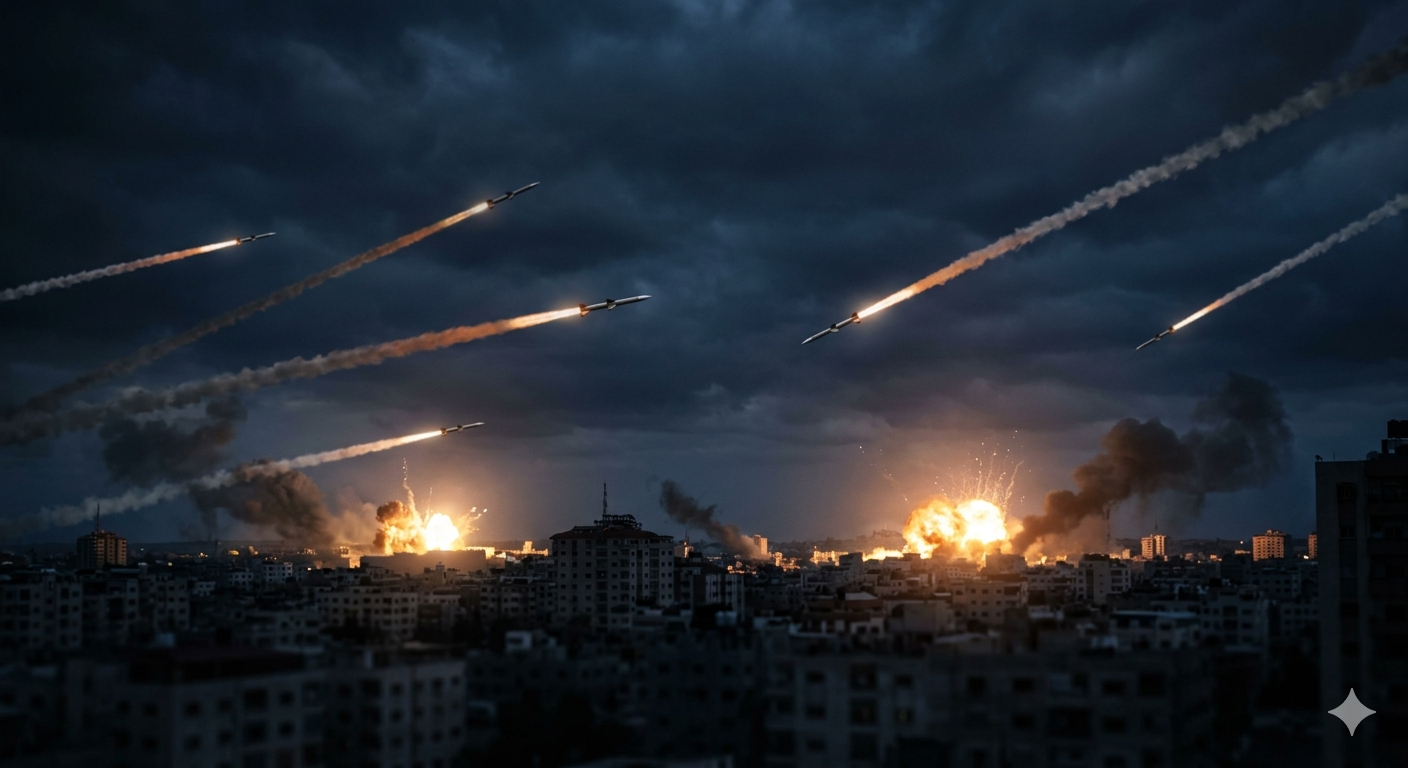
On February 28, 2026, at mid-morning, nearly 900 missiles and bombs rained down on Iran in just 12 hours. The Supreme Leader of the Islamic Republic — Ayatollah Ali Khamenei — was dead. Tehran was in flames. The world held its breath. And then, just weeks later, Donald Trump went on television and said a deal was “largely negotiated.” Iran’s foreign ministry responded that the two sides were “very far and very close” simultaneously. A 60-day ceasefire was being discussed. Then talks collapsed. Then resumed. Then collapsed again. If your head is spinning trying to follow this conflict — you are not confused. The conflict itself is designed to be confusing. And once you understand why, everything becomes terrifyingly clear.
🔥 How Did We Get Here? The Full Timeline
To understand 2026, you need to go back to 2015 — the year the world thought it had solved the Iran problem.
The Joint Comprehensive Plan of Action — JCPOA — was signed by Iran, the United States, the European Union, China, Russia, the UK, France and Germany. Iran agreed to dramatically limit its nuclear enrichment in exchange for sanctions relief. For three years, it largely worked. Then in 2018, Donald Trump — in his first term — tore it up. He called it the worst deal ever made. He reimposed sanctions. Iran, seeing no benefit in restraint, began enriching uranium again — faster, to higher purity levels, closer to weapons-grade.
By late 2024, US intelligence assessed that Iran had 440 kilograms of uranium enriched to 60% purity — enough, if further enriched to 90%, for as many as 10 nuclear weapons. More critically, Iran was assessed to be less than two weeks away from enriching enough for one bomb. The clock was not ticking. It had nearly run out.
In June 2025, Israel launched the first strike — a 12-day war that significantly damaged Iran’s nuclear facilities and killed senior commanders. Iran rebuilt. By November 2025, Iranian Foreign Minister Abbas Araghchi was boasting publicly that Iran’s missile power “far surpasses” pre-war levels. The message was unmistakable: you hit us, we came back stronger.
Indirect talks mediated by Oman collapsed in February 2026 when Iran rejected every proposal to give up uranium enrichment. Two days later, on February 28, 2026 — the United States and Israel launched Operation Epic Fury. Nearly 900 strikes in 12 hours. Khamenei dead. Iran’s air defences destroyed. Nuclear sites bombed. The world changed overnight.
☢️ The Nuclear Question — The Heart of Everything
Every other explanation for this conflict — oil, hegemony, Israeli politics, Trump’s ego — is real. But they all orbit one central fact: Iran was on the verge of having a nuclear weapon.
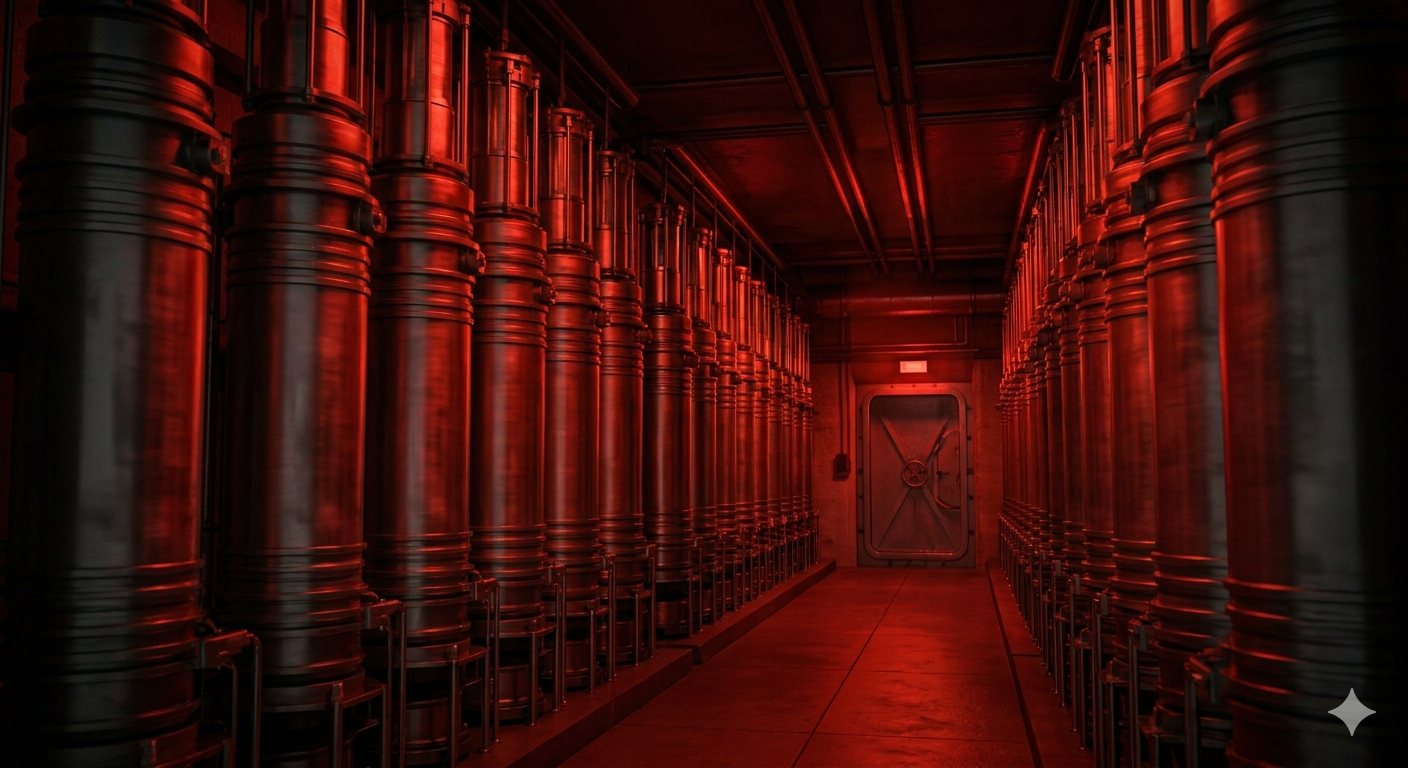
Why does a nuclear Iran terrify Israel so completely? Because Israel is a small country — roughly the size of New Jersey. A single nuclear weapon detonated over Tel Aviv would kill hundreds of thousands of people instantly and render the country uninhabitable. Iran’s Supreme Leader had, for decades, called Israel a “cancerous tumour” that must be eliminated. Whether that rhetoric was genuine or performative, Israel could not afford to guess wrong.
The Atlantic Council’s analysis was blunt: Iran entered 2026 with ambitions to scale its ballistic missile arsenal from roughly 2,000 to 10,000 missiles capable of reaching Israel. At that scale, Iranian missiles would overwhelm Israel’s Iron Dome and Arrow missile defence systems through sheer numbers. Israel had a narrow window — before Iran achieved that scale — to act. The February 2026 strikes were that window being used.
For the United States, the calculation was different but equally urgent. Trump had publicly stated that Iran could “soon” have missiles capable of reaching the American homeland. Intelligence experts disputed the timeline — saying such capability was years away. But Trump’s point was strategic: once Iran has nuclear weapons AND long-range missiles, the entire geopolitical equation of the Middle East changes permanently. Saudi Arabia would pursue its own nuclear programme. Turkey might follow. The nuclear non-proliferation architecture — already fragile — would collapse in the most volatile region on earth.
🛢️ The Hidden Agenda — Oil, Hegemony and the New Middle East
Now here is where the story gets darker and more honest.
The nuclear threat is real. But it is not the only agenda. Renowned Columbia University economist Jeffrey Sachs — speaking to Global Times immediately after the February 28 strikes — was direct: “The US is trying to control the oil of the Middle East.” This is not a fringe view. It is the assessment of serious scholars and analysts across the political spectrum.
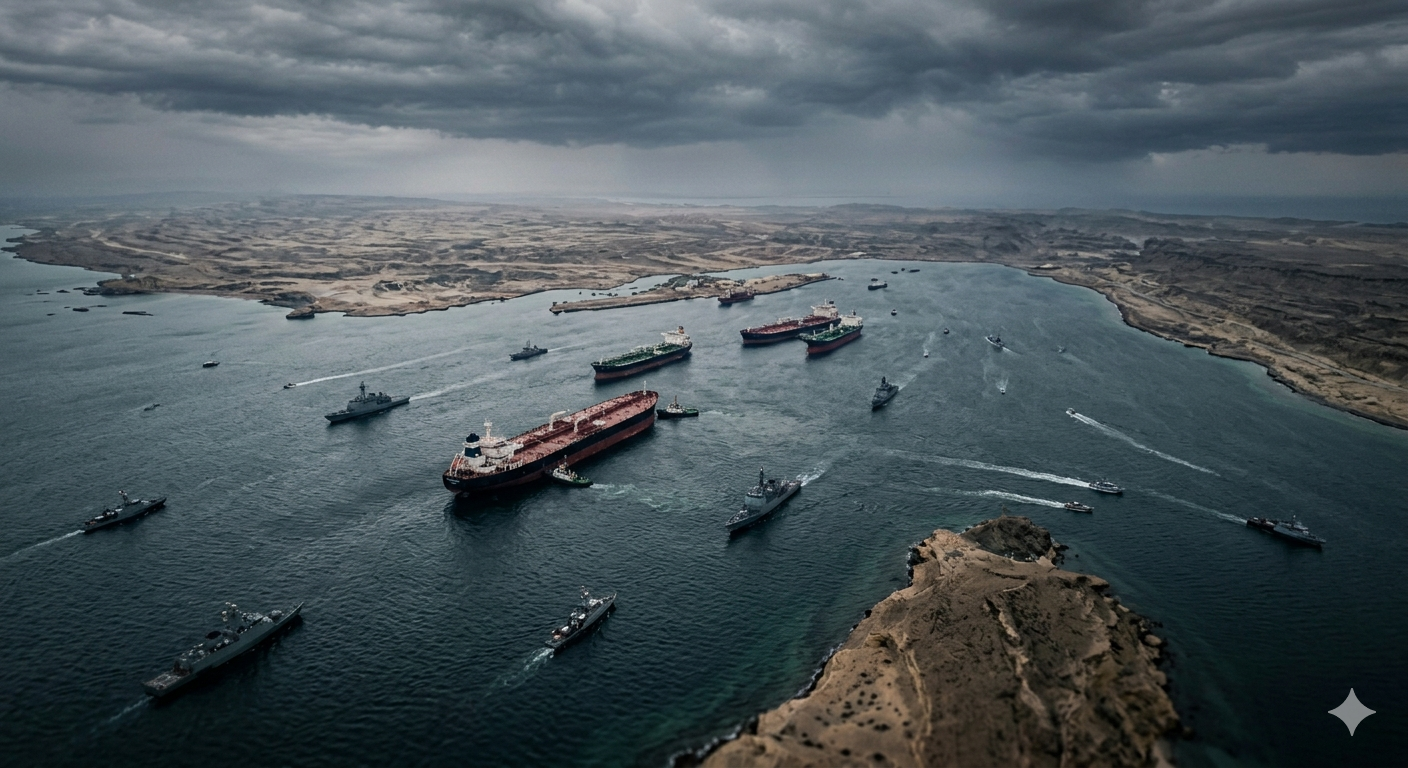
The Middle East sits on top of the world’s largest oil reserves. The Strait of Hormuz — the narrow waterway that Iran closed after the strikes — carries 20% of the world’s oil and liquefied natural gas supply every single day. Whoever controls the Strait of Hormuz has leverage over China, India, Japan, South Korea and every major economy that depends on Middle Eastern oil. Iran closing the strait sent oil prices to $126 per barrel and triggered the worst FII outflows from India in history.
An Iran reduced to “strategic irrelevance” — as the Atlantic Council put it — removes the single greatest obstacle to US and Saudi dominance of the Middle East energy landscape. Saudi Arabia, which had been quietly normalising relations with Iran through a 2023 Beijing-brokered agreement, now stands to gain immensely from an Iran that can no longer project regional power. The destruction of Iran’s proxy networks — Hezbollah in Lebanon, Hamas in Gaza, the Houthis in Yemen — removes the tools Iran used to threaten Gulf Arab states for decades.
For Israel, the agenda goes even further. Georgetown University analysts described Netanyahu’s 18-year political career as having “made regime change in Iran the central theme.” This was not just security policy — it was Netanyahu’s political identity. The February 2026 strikes came when his coalition was behind in polls and he faced active criminal charges for bribery and fraud. The war, analysts noted, served his domestic political survival as much as Israel’s security.
🚀 Iran’s Secret Weapon — And Why It Surprised Everyone
Here is what the world did not fully anticipate: Iran hit back harder than expected.
After the February 28 strikes, Iran launched sustained waves of ballistic missiles and drones targeting Israeli population centres, US military bases across 9 Arab countries, oil infrastructure in the Gulf, and ships in the Strait of Hormuz. UK bases in Bahrain, Qatar and Cyprus were hit. Four US service members were killed. Three US fighter jets were downed in a friendly fire incident over Kuwait. Iran’s missiles managed to penetrate Israeli and US missile defence systems in some cases — a capability that alarmed military planners who had assumed Iran’s precision strike capability was limited.
Even more remarkably — after the June 2025 12-Day War had supposedly destroyed much of Iran’s missile capacity — Iranian Foreign Minister Araghchi declared in November 2025 that Iran’s missile power “far surpasses” pre-war levels. Iran had used the period between strikes to rebuild, disperse and upgrade its arsenal. It had learned from being hit. Each bombing campaign taught Iran how to harden and hide its capabilities better.
This is the central military paradox of the Iran conflict: bombing Iran’s nuclear and missile infrastructure degrades it temporarily but cannot permanently eliminate it as long as the knowledge, the engineers and the political will to rebuild remain. Iran’s parliamentary speaker Mohammad Bagher Ghalibaf put it with chilling clarity in a social media post during negotiations: “We seize concessions not through dialogue, but with missiles. The winner of any agreement is the one who is better prepared for war from the day after.”
🎭 The Roller Coaster Negotiations — Why Deals Keep Failing
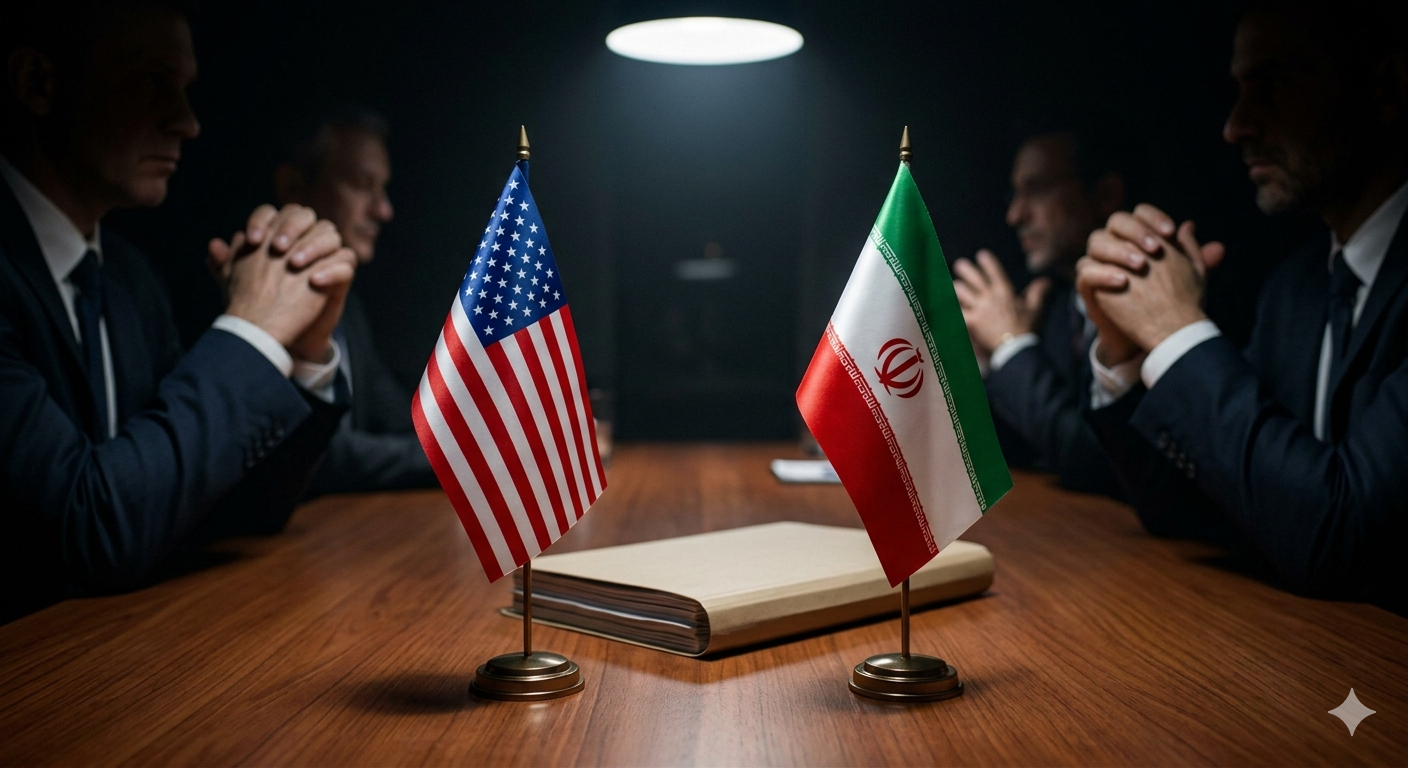
The deal-no deal-deal-no deal cycle that has defined 2026 is not confusion. It is rational strategy from both sides.
For Iran, every day of negotiations is a day it is not being bombed. Every ceasefire is a window to rebuild, regroup, and relocate surviving nuclear material and missile components. Iran’s position in talks has been consistent: it will discuss Hormuz, sanctions relief, and frozen funds — but nuclear enrichment is non-negotiable. Iran’s identity as a potential nuclear power is its only remaining strategic deterrent. Give that up and it has nothing left to stop the next attack.
For Trump, every negotiation is a domestic political opportunity. He can claim credit for a deal if one emerges. If it fails, he can blame Iran and restart bombing. His approach has been to set deadlines — March 21, then March 23, then April 7 — threaten “unconditional surrender” publicly, then quietly extend the ceasefire while talks continue. This creates the impression of strength while avoiding the costs of sustained war.
The talks are mediated by Pakistan — a remarkable choice that reflects both the limitations of traditional mediators and Pakistan’s unique position as a Muslim-majority nuclear state with relations with both Washington and Tehran. Two rounds of talks have been held. The first collapsed when Iran’s team had to return to Tehran for approval — a sign of the fractured internal decision-making in post-Khamenei Iran, where the new Supreme Leader (Khamenei’s son) has not yet consolidated the same authority as his father.
A draft 60-day Memorandum of Understanding was reportedly agreed — extending the ceasefire, opening Hormuz within 30 days, and setting up nuclear talks. But as of June 2026, it has not been signed. Iran’s foreign ministry says the sides are “very far and very close.” Trump says the deal is “largely negotiated.” Both statements are simultaneously true and false — a perfect description of a negotiation where neither side fully trusts the other and both are preparing for what happens if it fails.
🌍 Who Else Is Playing This Game — China, Russia and the Wider Stakes
No major geopolitical conflict exists in isolation. The USA-Israel-Iran war is also a proxy theatre for the larger contest between the United States and China.
China buys significant amounts of Iranian oil — in defiance of US sanctions — and had brokered the 2023 Saudi-Iranian normalisation agreement that briefly changed the Middle East’s diplomatic landscape. A weakened, isolated Iran serves US strategic interests not just in the Middle East but in the broader contest to limit Chinese influence over global energy supply chains.
Russia, meanwhile, has been a quiet beneficiary of Middle East chaos. Every barrel of oil that cannot flow through Hormuz increases the value of Russian oil exports. Every dollar that global energy prices rise fills the Russian state budget. Moscow has no interest in a quick resolution that stabilises Middle Eastern energy markets.
The Gulf Arab states — Saudi Arabia, UAE, Qatar — find themselves in the most complex position. They host US military bases that Iran targeted. They want Iran’s regional power destroyed. But they are also terrified of what a collapsed Iranian state looks like — a power vacuum filled by non-state actors, mass refugee flows, and ethnic fragmentation that could destabilise their own carefully constructed stability. Saudi Arabia’s Vision 2030 economic transformation depends on regional stability and foreign investment. A permanently burning Middle East serves nobody’s long-term economic interests.
🔮 What Happens Next — The Three Possible Futures
Military and geopolitical analysts see three realistic scenarios unfolding from here.
Scenario 1 — The Deal. The 60-day MOU is signed. Hormuz reopens. Nuclear talks begin. Iran agrees to verifiable limits on enrichment in exchange for sanctions relief and reconstruction funding. This is the best case — but it requires Iran’s fractured post-Khamenei leadership to reach internal consensus and requires Trump to accept something less than “unconditional surrender.” Both are significant political challenges.
Scenario 2 — Frozen Conflict. No deal is signed but no major new bombing campaign is launched. The ceasefire holds informally. Iran slowly rebuilds. The Strait of Hormuz reopens partially. The world learns to live with a permanently unstable Middle East — higher baseline oil prices, ongoing proxy conflicts, and the permanent threat of renewed escalation. This is arguably the most likely outcome based on current trajectory.
Scenario 3 — Renewed War. Talks collapse completely. Trump, facing domestic political pressure to appear strong, resumes bombing. Iran, having rebuilt some capacity, retaliates more aggressively than before. The Strait of Hormuz closes again. Oil hits $150 per barrel. The global economy enters recession. This is the nightmare scenario that every mediator — Pakistan, Oman, the UN — is working desperately to prevent.
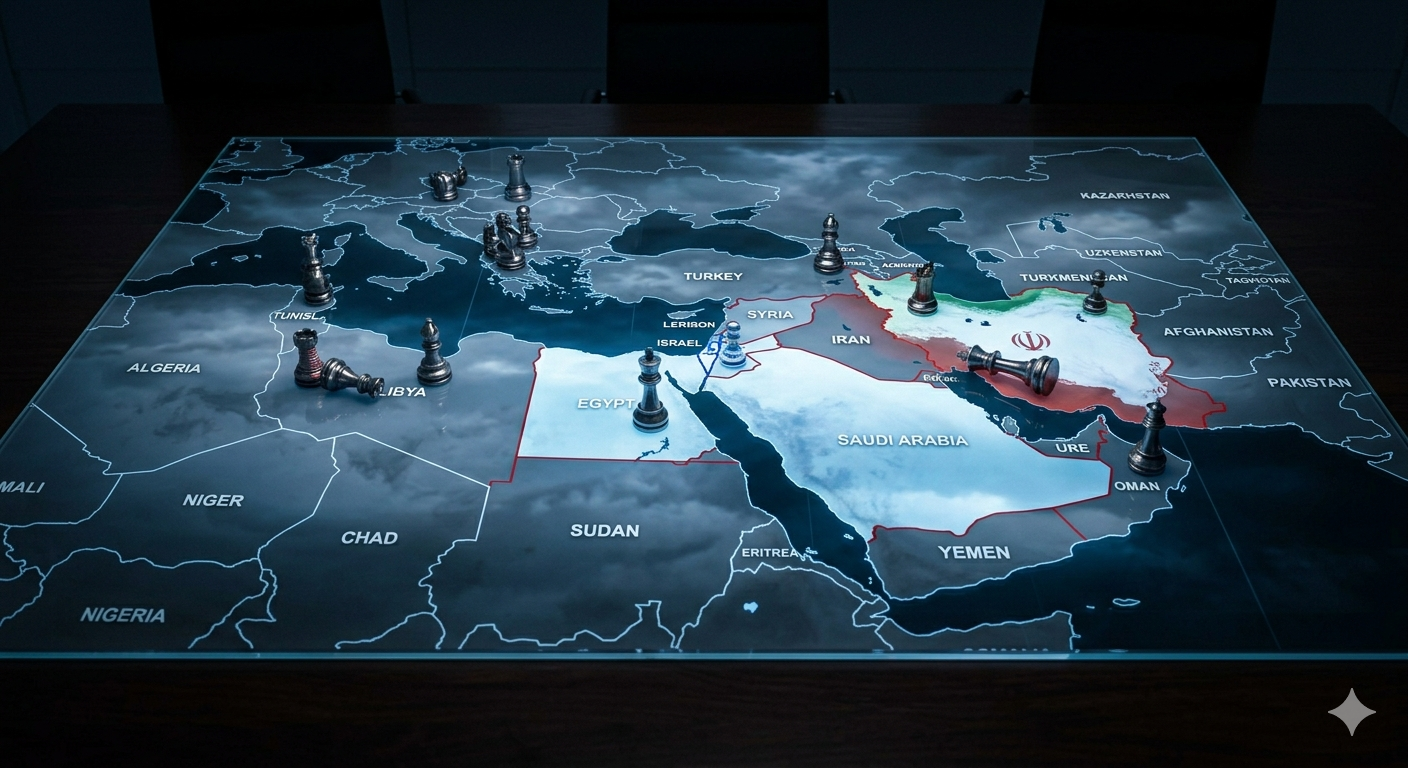
🇮🇳 What This Means for India — The Forgotten Victim
Every Indian reading this has already felt the consequences of this conflict — in their petrol bill, in their grocery prices, in their mutual fund returns.
India imports over 85% of its crude oil. A significant portion travels through the Strait of Hormuz. When Iran closed the strait, Brent crude surged to $126 per barrel. Indian Oil Marketing Companies lost ₹30,000 crore per month. The rupee fell to a record 97 per dollar. FIIs pulled out ₹55,963 crore from Indian stocks in May alone.
India has no seat at the table in these negotiations. It is not a party to the conflict. It cannot control what happens in the Strait of Hormuz. It is a spectator to a geopolitical game whose rules are written in Washington and Tehran — but whose costs are paid at petrol pumps in Hyderabad, Bengaluru and Mumbai.
This is why India’s energy independence — through solar, wind, nuclear and electric vehicles — is not just an environmental goal. It is a national security imperative. Every percentage point of oil imports India replaces with domestic energy is a percentage point less vulnerable it becomes to wars it did not start and cannot stop.
💡 The Lesson History Keeps Teaching — And Nobody Keeps Learning
Every major US military intervention in the Middle East — Iraq 2003, Libya 2011, Syria, Afghanistan — has followed the same pattern. A genuine threat is identified. Military action is taken. The regime is damaged or destroyed. And then the question nobody answered in advance — “what comes next?” — produces years of instability, power vacuums, and consequences far worse than the original problem.
Iran in 2026 is different in important ways — the Iranian state has not collapsed, the strikes were more precisely targeted, and both sides have economic incentives to eventually reach a deal. But the fundamental question remains unanswered: what does a post-conflict Iran look like? Who governs it? What fills the space left by decades of theocratic control if the Islamic Republic is fatally weakened?
Iran’s parliamentary speaker said the quiet part loud: “The winner of any agreement is the one who is better prepared for war from the day after.”
Both sides are preparing for the day after. The rest of the world is just hoping there is one.
❓ FAQs: What People Are Actually Asking
Did Iran actually have nuclear weapons in 2026?
No. But it was assessed to be weeks away from having enough enriched uranium for one weapon. The distinction matters — Iran had the material and the knowledge but had not yet assembled a weapon.
Why did talks keep failing if both sides wanted a deal?
Because the core demand — Iran giving up nuclear enrichment permanently — is something Iran considers an existential red line. Without enrichment capability, Iran has no deterrent against future attacks. With it, the world will never fully lift sanctions. There is no easy middle ground.
Is this really about oil or really about nuclear weapons?
Both. The nuclear threat is genuine and was the immediate trigger. But the broader strategic agenda — controlling Middle Eastern energy, eliminating Iran’s proxy network, reshaping regional power — was equally present in every decision made in W