

A teacher in Bengaluru opens her laptop at 6 AM on Sunday. She needs five lesson plans, three quiz sets, twenty parent communication emails, and differentiated worksheets for her 42-student class that includes three students with learning difficulties. In 2019, this would have taken her entire weekend. In 2026, it takes her 90 minutes — because she uses AI. This is not a story about replacing teachers. It is a story about giving India’s 8.5 million teachers something they have never had before: time. Time to teach. Time to connect. Time to actually change lives — which is why most of them became teachers in the first place.
🇮🇳 Why AI for Teachers Matters More in India Than Anywhere Else
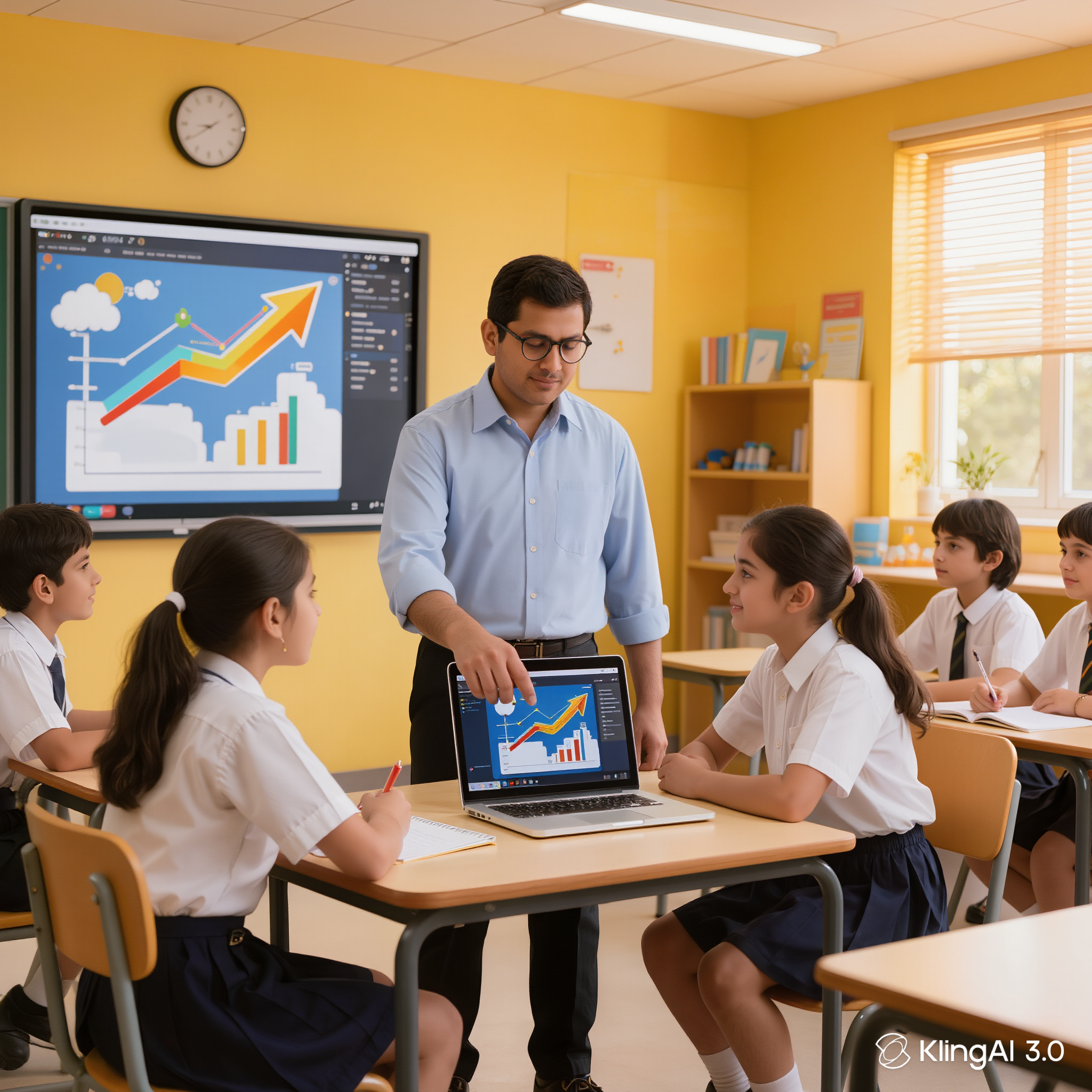
India has the largest education system on earth. According to EY India, there are 1.5 million schools, more than 8.5 million primary and secondary teachers, and more than 260 million enrolments into the school system every year. The scale is almost incomprehensible.
But here is the reality inside those numbers. A faculty member at a state university in Uttar Pradesh or Rajasthan may have a 1:80 or 1:100 student-to-teacher ratio. Individual attention is structurally impossible. A single teacher in a government school in rural Andhra Pradesh may teach five subjects across three grade levels in the same room. Resources are limited. Infrastructure is inconsistent. And yet these teachers are expected to produce outcomes that compete with private schools charging ₹1 lakh per year in fees.
AI does not solve every problem in Indian education. But for the teacher who spends Sunday night creating worksheets instead of resting — for the teacher who has 80 students to give written feedback to by Monday morning — AI is not a luxury. It is a lifeline.
Haryana’s State Council of Educational Research and Training has already trained master trainers across every district in AI fundamentals, prompt engineering, and classroom applications. The Government of India’s National Education Policy 2020 explicitly envisions AI integration at school, college and university levels. The policy window is open. The tools are available. What is missing for most Indian teachers is a clear, honest guide to what actually works.
This is that guide.
🧠 What AI Can Actually Do for Teachers — The Honest List
Before listing tools, let us be precise about what AI can and cannot do — because unrealistic expectations lead to abandoned tools and wasted time.
AI CAN:
- Generate complete lesson plans from a topic and grade level in under 2 minutes
- Create quizzes, MCQs, fill-in-the-blanks and short answer questions instantly
- Differentiate the same content for multiple reading levels simultaneously
- Draft parent communication emails in seconds
- Provide feedback suggestions on student writing
- Translate content into Hindi, Telugu, Tamil, Marathi, Bengali and other regional languages
- Generate rubrics, grading criteria and assessment frameworks
- Create visually engaging presentations and classroom materials
- Summarise long documents, textbook chapters and research papers
- Answer student questions 24/7 as a supplementary tutor
AI CANNOT:
- Replace human judgment about what a specific student needs
- Build the relationship between a teacher and student that drives motivation
- Detect the emotional state of a child who is struggling silently
- Guarantee accuracy on highly specialised or regionally specific content without verification
- Work without the teacher reviewing and editing its output
The best teachers using AI in 2026 describe it the same way: AI handles the repetitive drafting, they handle the teaching. Lesson plans get drafted by AI and edited by teachers. Parent emails get drafted by AI and sent by teachers. The judgment stays human. The grunt work goes to the machine. That is the only version of this that works.
🛠️ The 10 Best AI Tools for Teachers in 2026 — With India-Specific Guidance
1. MagicSchool AI — Best Overall for Classroom Teachers
MagicSchool AI is the most complete classroom-specific AI toolkit available in 2026. Unlike general AI chatbots, it offers 80+ ready-made tools specifically designed for educators — lesson plans, rubrics, quizzes, feedback writing, differentiated instruction, IEP support, parent communication and more.
How Indian teachers use it: A Class 9 Science teacher in Hyderabad can type “photosynthesis, Class 9 CBSE, mixed ability class” and receive a complete lesson plan with differentiated activities, a quiz, and a parent newsletter update — all in under three minutes.
Pricing: Free tier covers most daily needs. Paid plans from $3/month for individuals.
Best for: Any teacher wanting one tool that covers the full range of classroom preparation work.
2. Diffit — Best for Differentiated Learning Materials
Diffit does one job better than any other tool: it takes any text, article, or YouTube video and adapts it to multiple reading levels simultaneously. You paste in a passage, pick your grade bands, and Diffit generates versions for struggling readers and advanced students from the same source. Vocabulary lists and comprehension questions come with each version automatically.
Why this matters for India: In a typical Indian classroom with 40+ students, learning levels vary enormously. Diffit supports over 60 languages including Hindi and Telugu — meaning a teacher can generate differentiated materials in regional languages from English source content instantly.
Pricing: Free tier covers most daily use. Premium at $14.99/month.
Best for: Teachers managing mixed-ability classrooms or multilingual students.
3. Canva for Education — Best for Visual Content Creation
Canva for Education is completely free for eligible K-12 teachers. The drag-and-drop interface, thousands of education-specific templates, and AI features like Magic Write and text-to-image mean that creating a polished handout, classroom anchor chart, or visually engaging presentation is now a matter of minutes, not hours.
How Indian teachers use it: Creating bilingual classroom posters in English and Telugu. Generating visually engaging CBSE chapter summaries. Building professional-looking worksheets without design skills. Making attractive notice boards and school displays.
Pricing: Free for verified teachers. Canva Pro available at ₹3,999/year.
Best for: Any teacher who creates visual materials, presentations or classroom displays.
4. Brisk Teaching — Best for Fast Feedback on Student Work
Brisk Teaching is a Chrome extension that works directly inside Google Docs, Google Slides, and Google Classroom. It provides inline grading and browser-based feedback faster than any dedicated app. You can give personalised written feedback on 30 student essays in the time it used to take to do five.
Why this matters for India: Many Indian schools already use Google Classroom and Google Workspace. Brisk requires zero migration — it works inside the tools teachers already use.
Pricing: Free tier available. Plus plan at $10/month.
Best for: Teachers who give written feedback on student assignments regularly.
5. Khan Academy Khanmigo — Best for Student Tutoring Support
Khanmigo is Khan Academy’s AI tutoring assistant — the strongest one-on-one tutoring tool available for students. Rather than giving students the answer, it asks guiding questions — mirroring what an excellent human tutor does.
How Indian teachers use it: Assign Khanmigo as a homework support tool. Students who are stuck on a concept after school hours can get guided help in English, and increasingly in Hindi. It reduces the pressure on teachers to be available 24 hours a day for student queries.
Pricing: Free for students in most regions. Teacher dashboard available through Khan Academy schools.
Best for: Teachers who want to provide out-of-hours academic support without bearing that load personally.
6. Taskade — Best for All-in-One Classroom Management
Taskade is the best all-around AI tool for teachers who want a single workspace. It collapses lesson planning, classroom management, seating charts, attendance tracking, worksheet generation, grading prep, and parent communication into a single workspace with reusable AI Agents.
Best for: Teachers who want to reduce the number of apps they manage and have one organised AI-powered workspace for everything.
Pricing: Free tier available. Pro at $19/month.
7. ElevenLabs — Best for Audio and Voice Content
ElevenLabs is the dominant voice generation platform in 2026. A teacher can paste a chapter, pick a voice, and generate a full audio lesson instantly. Hindi, Marathi, Tamil, Telugu, Bengali — voices that sound natural, not like accented English.
Why this matters for India: For students in rural areas whose first language is not English, audio content in regional languages dramatically improves comprehension. A teacher can convert any NCERT chapter into a full audio lesson in under 10 minutes.
Pricing: Free tier with limited monthly characters. Starter plan at $5/month.
Best for: Teachers creating audio content, flipped classroom recordings, or regional language materials.
8. Quillionz — Best for Indian Competitive Exam Prep
Quillionz is an Indian-origin tool that generates MCQs, quizzes, and learning objectives using AI. Just input your content — Quillionz does the rest. It is highly useful for test prep, especially in competitive exam coaching setups.
Why this matters for India: Teachers preparing students for NEET, JEE, UPSC, APPSC and other competitive exams can generate hundreds of MCQs from any source material in minutes.
Best for: Coaching institute teachers and school teachers preparing students for competitive exams.
9. Microsoft Copilot for Education — Best for Microsoft Schools
Many Indian schools and government institutions use Microsoft Office and Teams. Microsoft Copilot helps teachers draft assignments, generate rubrics, and schedule meetings — integrated into the Microsoft ecosystem already used by many Indian schools.
Best for: Schools and institutions already using Microsoft 365.
10. Claude / ChatGPT — Best for Custom Flexible AI Assistance
General AI assistants like Claude and ChatGPT are the most flexible tools available. A teacher can write a prompt entirely in Telugu and receive a complete lesson plan in Telugu. No translation needed.
Best for: Tech-comfortable teachers who want maximum flexibility and are willing to invest time in learning effective prompting.
📝 Practical AI Prompts Every Indian Teacher Should Know
Lesson Planning Prompt:
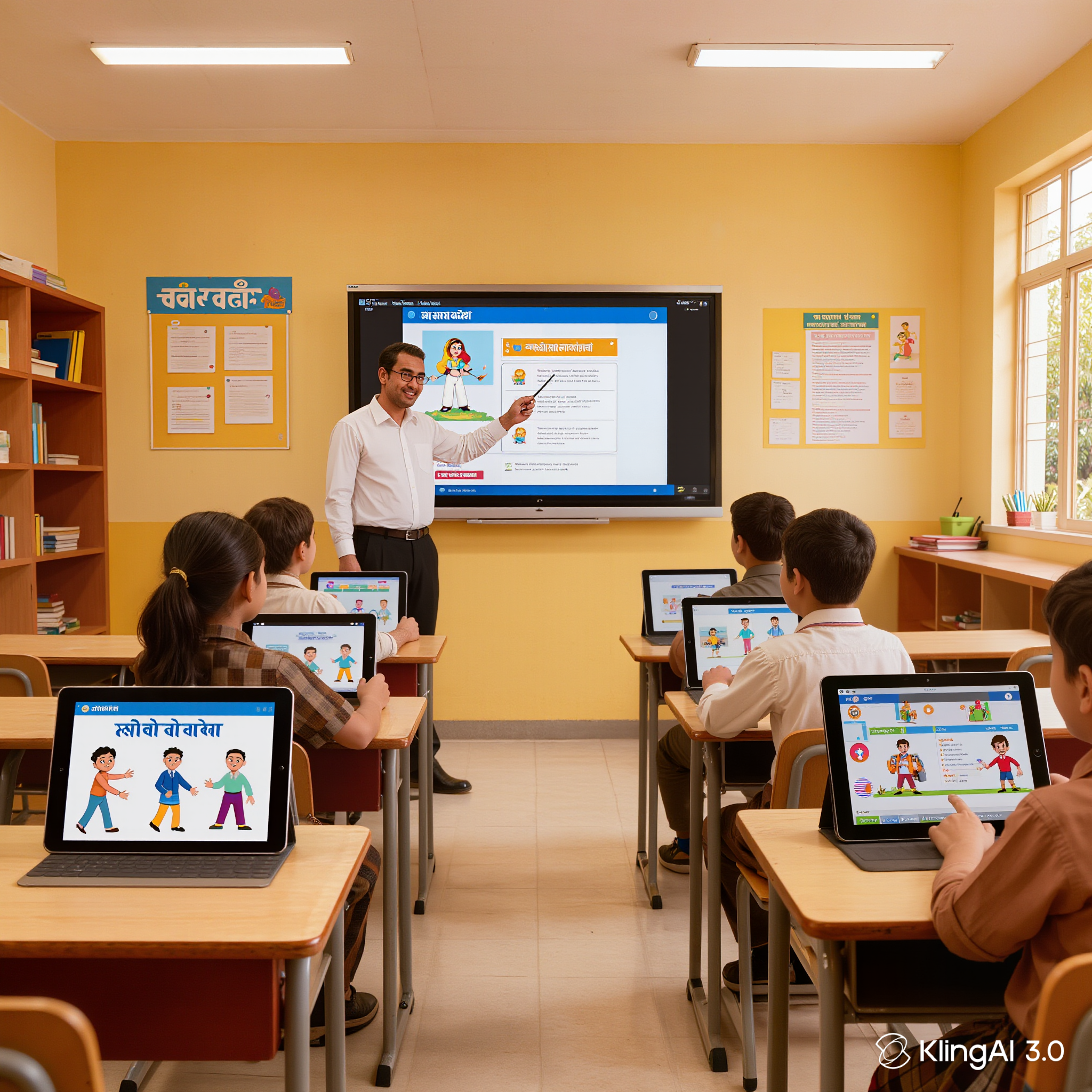
“Create a 45-minute lesson plan for Class 8 CBSE Science on the topic of ‘Cell Structure and Functions.’ The class has 42 students with mixed abilities — some are strong in English, others are more comfortable in Telugu. Include: learning objectives, a 5-minute warm-up activity, a 20-minute main explanation with a simple analogy, a 15-minute group activity, and a 5-minute exit quiz with 3 questions. Make the language simple and accessible.”
Quiz Generation Prompt:
“Create 20 MCQ questions on Chapter 3 of Class 10 CBSE History — ‘Nationalism in India.’ Include 5 easy, 10 medium, and 5 difficult questions. For each question, provide the correct answer and a one-line explanation of why it is correct. Format it so I can copy it directly into a Google Form.”
Differentiation Prompt:
“I have the following paragraph from a Class 9 Science textbook about photosynthesis: [paste paragraph]. Please rewrite it at three levels: (1) for a student reading 2 grades below level, (2) at grade level, and (3) for advanced students who need more challenge. Keep all three versions accurate.”
Parent Communication Prompt:
“Write a parent communication message in both English and Hindi informing parents that their child has been struggling with Chapter 4 of Maths — Quadratic Equations. The tone should be supportive and solution-focused, not alarming. Suggest 2 specific things parents can do at home to support their child. Keep it under 150 words in each language.”
Feedback on Student Writing Prompt:
“Here is a Class 7 student’s essay on ‘My Favourite Festival’: [paste essay]. The student is 12 years old and English is their second language. Please provide: (1) two specific things they did well, (2) two specific areas to improve, and (3) one concrete suggestion for their next draft. Keep the feedback encouraging and age-appropriate.”
⏱️ A Realistic 30-Day Plan for Teachers Starting with AI
Most AI tools fail in schools not because the tools are bad but because the rollout is chaotic. Here is the realistic 30-day plan that works:
Week 1 — One Tool, One Task: Pick MagicSchool AI. Create one lesson plan using Ai
Week 2 — Add Quiz Generation: Use MagicSchool AI or Quillionz to generate your next quiz or test. Compare the AI-generated questions with what you would have created manually. Note where it is strong and where it needs editing.
Week 3 — Try Differentiation: Take one existing lesson and use Diffit to create versions for your lowest and highest ability students. See how students respond to materials at the right level for them.
Week 4 — Automate One Communication Task: Use AI to draft your next five parent emails. Review and edit each one before sending. Notice how much time you save compared to writing each from scratch.
By Day 30, most teachers report saving 5–8 hours per week. That is time that goes back to actual teaching, student relationships, and personal wellbeing.
🚧 Challenges Indian Teachers Face with AI — And How to Solve Them
Challenge 1 — No reliable internet in rural schools. Solution: Download and save AI-generated materials when internet is available. Many AI outputs can be generated at home and used in school without an internet connection.
Challenge 2 — AI tools are mostly in English. Solution: Both Claude and ChatGPT work effectively in Hindi, Telugu, Tamil, Bengali, Marathi and other Indian languages. OpenEduCat’s platform accepts input in Hindi, Tamil, Telugu, Malayalam, Bengali, and Marathi natively.
Challenge 3 — AI gives wrong or inaccurate information. Solution: Always verify AI-generated content before using it in class. AI is a drafting tool, not an authority. Your subject expertise is the quality check.
Challenge 4 — Students use AI to cheat on assignments. Solution: Design assignments that require personal experience, opinion, or in-class demonstration. Shift more assessment toward discussion, demonstration and project-based tasks rather than take-home essays.
Challenge 5 — School administration does not support AI use. Solution: Start with tools that require no school approval. Document your time savings and improved output quality. Then present the evidence to administration.
🏛️ What the Indian Government Is Doing — And Why Teachers Should Pay Attention
Haryana’s SCERT has already developed a comprehensive five-day training module for teachers covering AI fundamentals, prompt engineering, classroom applications, assessment and exam preparation. Two master trainers from each district have been trained and are now leading sessions for other teachers across the state.
The Government of India’s education vision for Viksit Bharat 2047 is to create an inclusive, high-quality education system for skill development and life abilities. NEP 2020 explicitly calls for AI integration at every level of education. Teachers who build these skills now will be positioned as leaders in their schools when formal AI training programs arrive.
💰 Free vs Paid: What Indian Teachers Actually Need to Spend
- MagicSchool AI Free — covers lesson planning, quiz creation, rubrics, parent emails
- Canva for Education Free — covers all visual content creation for verified teachers
- Khan Academy Khanmigo Free — covers student tutoring support
- ChatGPT Free — covers flexible AI assistance in any language
- Claude Free — covers complex content generation and explanation
- Diffit Free — covers basic differentiated materials
If you want to invest in one paid tool, MagicSchool AI at approximately ₹250/month gives the best return for classroom teachers.
🔮 The Future of AI in Indian Classrooms — What Is Coming Next

Voice interfaces in regional languages — where a student can ask a question in Odia or Rajasthani and receive a response — represent one of the highest-impact access innovations for rural India. Within two to three years, a student without a smartphone will be able to ask questions to an AI tutor through a basic feature phone via SMS or voice call.
Real-time dashboards will show teachers which students are struggling before they fall behind. AI will identify coverage gaps in the syllabus instantly and flag students at risk of dropping out based on attendance and engagement patterns.
The role of the teacher will not disappear. It will evolve — from a content deliverer to a learning experience designer, empowered by intelligent tools to do what only humans can do: inspire, connect, and nurture the potential in every child.
🎯 Your Action Plan — Start Today, Not Monday
- Go to magicschool.ai and create a free account
- Click “Lesson Plan” and type your next topic with your class and board
- Read the output — edit what needs editing
- Use it in your next class
- Notice how long it took vs how long your usual lesson planning takes
India has 8.5 million teachers. If each one saves just 5 hours per week using AI — that is 42.5 million additional hours of teaching, connecting, and inspiring students every single week.
You became a teacher to change lives. AI gives you more time to do exactly that.
❓ FAQs
Is AI free for teachers in India?
Yes — the most useful tools have generous free tiers. MagicSchool AI, Canva for Education, Khan Academy, ChatGPT, and Claude all offer free versions that cover most daily teaching needs.
Can AI tools work in Hindi and Telugu?
Yes. Claude and ChatGPT work effectively when prompted in Hindi, Telugu, Tamil, Bengali, Marathi and other Indian languages. ElevenLabs generates natural-sounding audio in these languages.
Will AI replace teachers in India?
No. AI handles repetitive preparation tasks — it cannot build the human relationship that drives a student’s motivation to learn. The teacher’s role evolves from content deliverer to learning experience designer.
What is the best AI tool for CBSE teachers?
MagicSchool AI is the best starting point for CBSE teachers. Combine it with Canva for Education for visual materials and Diffit for differentiated content.
How much time can AI save a teacher per week?
Most teachers who consistently use 2-3 AI tools report saving 5-8 hours per week. Over a school year that is 200-320 hours — the equivalent of 5-8 full working weeks returned to actual teaching.
Is it ethical to use AI for lesson planning?
Yes — AI is a planning tool, not a cheating tool. The professional judgment remains entirely human. A teacher using AI to draft a lesson plan is still responsible for teaching it effectively.
📚 Sources
- Taskade — 17 Best AI Tools for Teachers 2026
- Brisk Teaching — The 6 Best AI Tools for Teachers in 2026
- Monsha AI — 18 Best AI Tools for Teachers 2026
- EY India — How AI Is Activating Step Changes in Indian Education
- OpenEduCat — How Schools in India Are Using AI to Improve Learning Outcomes
- OpenEduCat — AI Tools for Indian Educational Institutions
- Eklavvya — 10 Best AI Tools for Education Content Creation 2026
- VAPS Tech — Top 5 AI Tools for Education Every School Should Use in 2026
- CyberSquare — Top AI Tools for Teachers in India
- Tribune India — State Government Schools to Begin AI Courses