

In April 2026, temperatures crossed 46 degrees Celsius in dozens of Indian cities. At least 37 people died from heat alone — and those are only the reported deaths. Farmers in Assam watched their paddy fields flood before they could even transplant seedlings. In Mumbai, scientists confirmed the city is sinking into the sea at 2 mm per year. Climate change in India is no longer a future threat mentioned in textbooks — it is a present crisis happening to real people, right now, in your state, in your city, possibly in your neighbourhood.
According to the World Bank, climate change in India could reduce GDP by 6.4 to 10 percent by 2100 and push 50 million Indians into poverty. The 2026 heatwave alone caused record-high electricity demand as cooling needs surged across the country, while agricultural drought conditions affected over one million square kilometres of farmland. Climate change in India is not an environmental issue — it is an economic emergency, a food security crisis and a public health catastrophe rolled into one.
The 2026 Heatwave — When India Became One of the Hottest Places on Earth
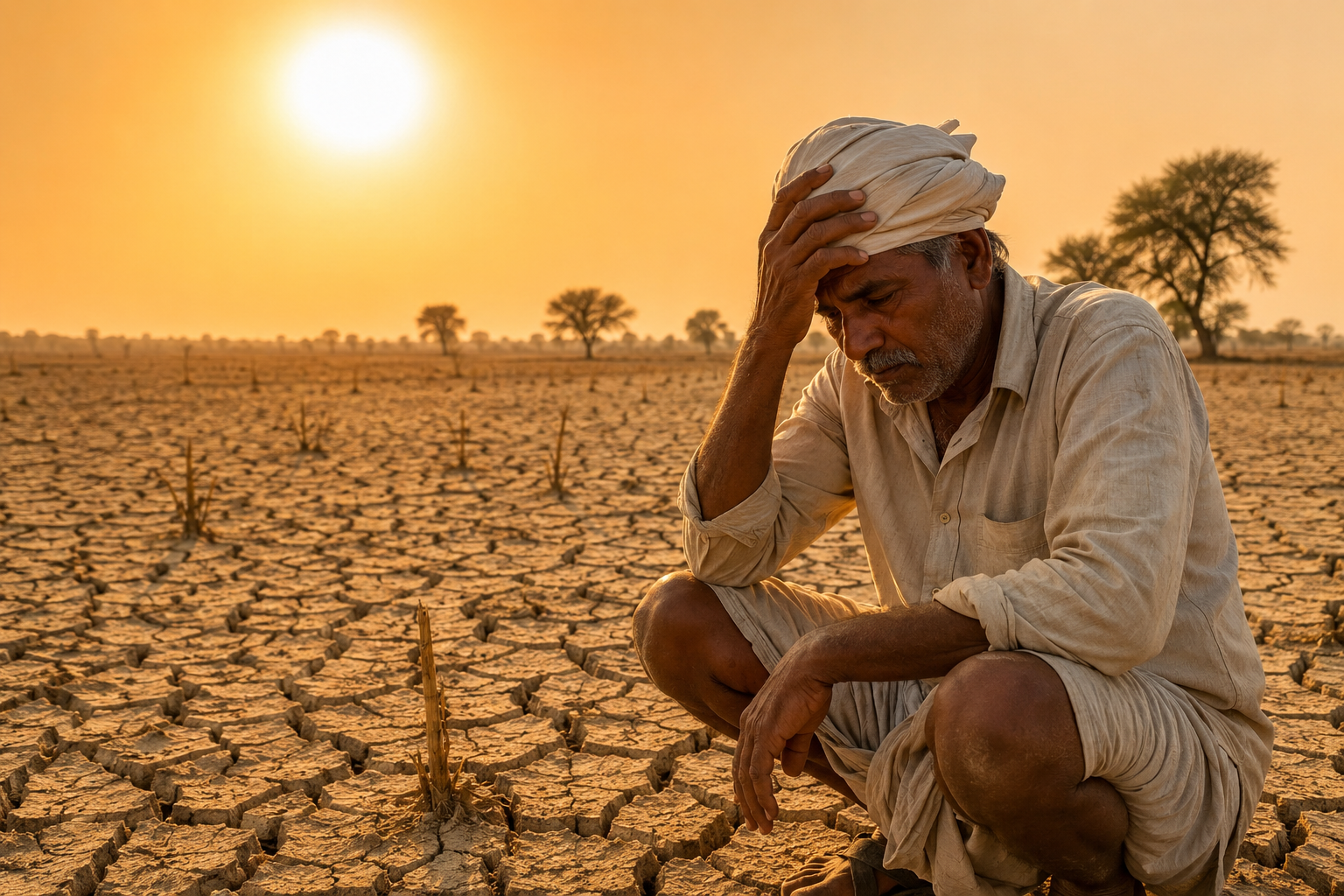
The World Health Organization confirmed in 2026 that 98 of the 100 hottest cities on earth are currently in South Asia — and India dominates that list. From mid-April to late May 2026, temperatures above 46 degrees Celsius were recorded across multiple cities in northern, central and western India. Scientists from the World Weather Attribution group confirmed that climate change approximately tripled the probability of this heatwave occurring. The same event would have been 1 degree Celsius cooler in a pre-industrial climate.
The human cost is staggering. A 2024 Lancet report found that heat exposure in India resulted in the loss of 247 billion potential labour hours — mostly in agriculture and construction — amounting to an economic loss of approximately $194 billion in a single year. With 2026 temperatures running hotter and the season arriving earlier, economists now warn that extreme summers are no longer episodic shocks to India’s economy. They are becoming a structural drag on GDP growth, with productivity losses projected at up to 4.5 percent by 2030.
The heatwave crisis disproportionately destroys the lives of those who cannot escape it — daily wage workers, street vendors, construction labourers and farmers who must work under the open sky to survive. For millions of Indians, climate change is not a policy debate. It is a daily health risk they face without protection, compensation or acknowledgement. Just as the NEET controversy exposed how systemic failures hurt those with the least power, India’s climate crisis hits the poorest and most vulnerable with the greatest force.
Mumbai Is Sinking — And Three More Coastal Cities Face the Same Fate
Mumbai, India’s financial capital with over 20 million residents, is facing a dual crisis that no infrastructure project can fully reverse. The city is simultaneously experiencing rising sea levels from climate change and land subsidence — the city is physically sinking into the sea at 2 mm per year due to groundwater extraction, wetland reclamation and the sheer weight of urban infrastructure built on reclaimed land. Mumbai has already seen a sea level rise of 4.44 cm between 1987 and 2021, and projections show a rise of 28 cm by 2050.
The Indian Institute of Tropical Meteorology projects that Kolkata faces the worst sea level rise of all Indian cities — 35 cm by 2050 — amplified by the natural subsidence of the Gangetic delta. Chennai, Kochi, Visakhapatnam and Mangaluru all face moderate to high flood risk under current emission trajectories. The World Bank estimates ₹1.5 to 2 lakh crore in annual property losses across India by 2040, with 1.2 million homes vulnerable in Kerala and Tamil Nadu alone.
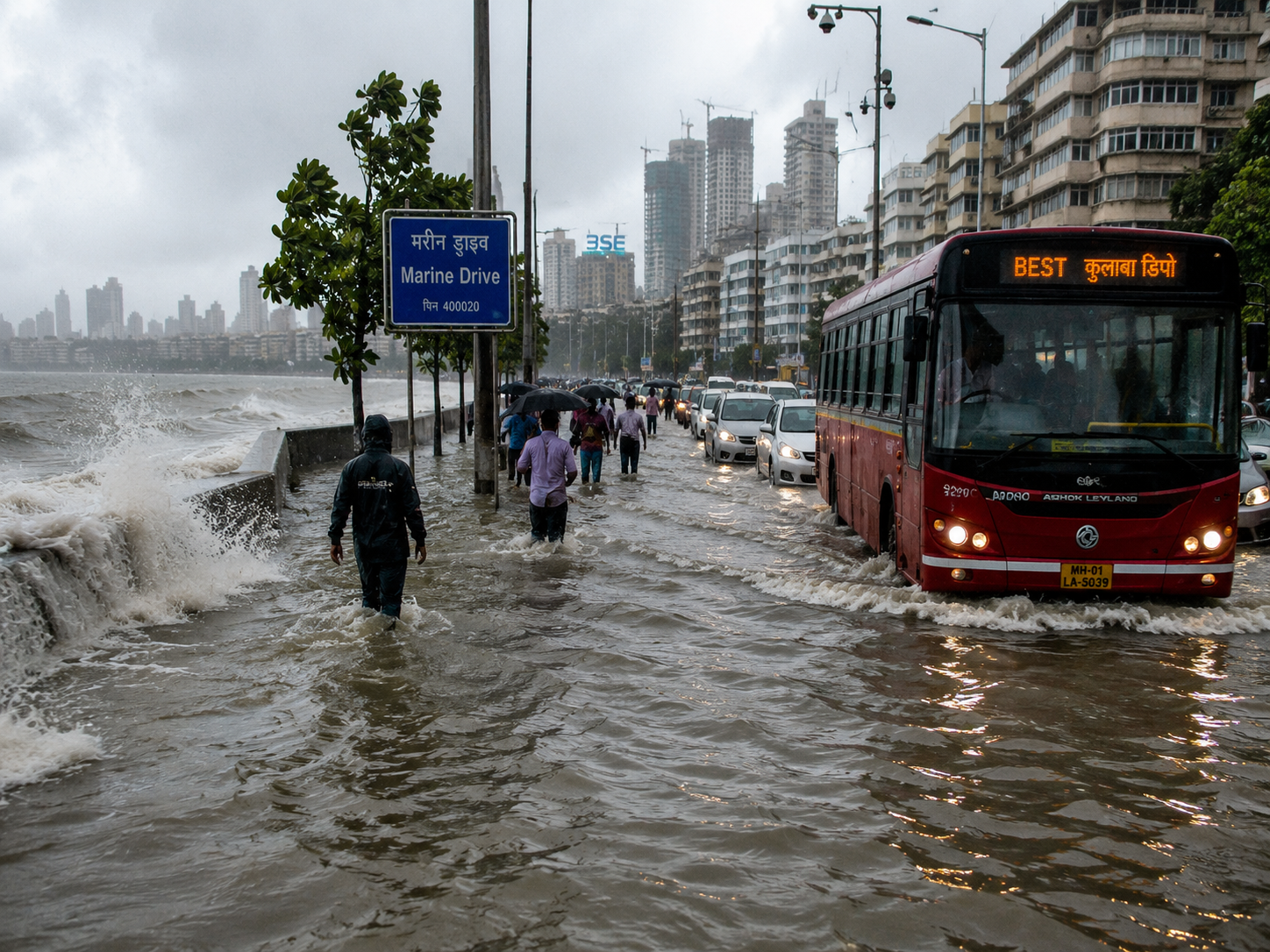
Beyond the cities, over 250 million Indians live within 50 km of the coastline and depend on coastal ecosystems for food, water and livelihood. Seawater intrusion is already damaging farmland and contaminating freshwater sources across coastal Andhra Pradesh, Odisha, West Bengal and Kerala. Mangroves and coral reefs — the natural barriers that protect coastlines from cyclones and erosion — are under increasing stress from warming ocean temperatures. Losing these natural defences will exponentially increase the damage from every future cyclone that makes landfall.
India’s Farmers Are Caught Between Drought and Flood — Sometimes in the Same Month
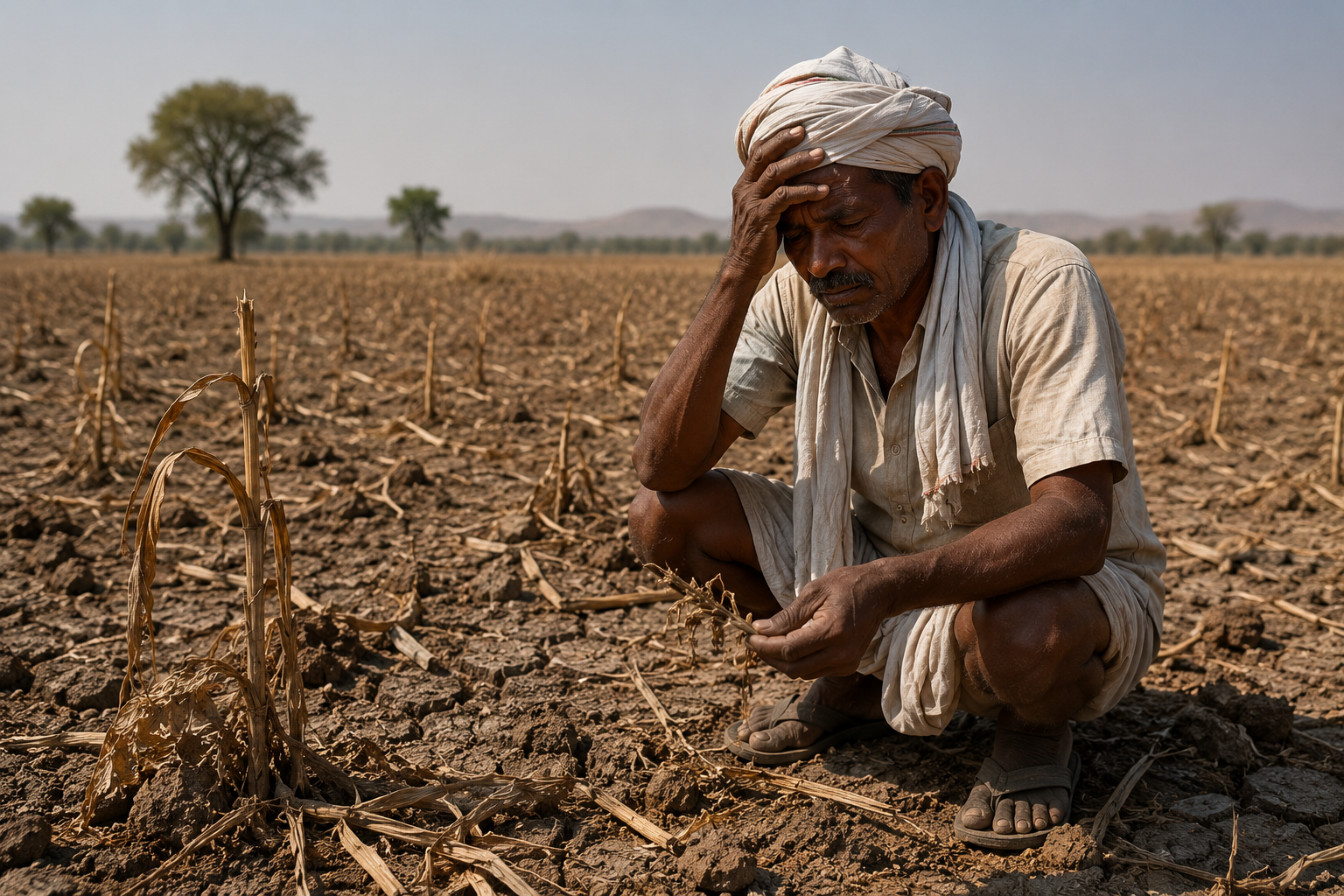
The 2026 State of Environment report confirmed a significant increase in compound meteorological droughts and heatwaves across India over the last four decades. Several regions — north-central, western and north-eastern India, along with southeastern coastlines — have emerged as hotspots for compound heatwave-drought events that arrive together and amplify each other’s damage. A farmer in these regions faces failed crops from drought heat before the monsoon, then faces flooding that destroys whatever survives after the monsoon arrives.
Madhusudan Goala, a farmer in Cachar district of Assam, described what climate change looks like from a paddy field: heavy rains flooded his farm just before transplantation, rising above ankle level across his fields within days. He said that over the last decade his farmlands have suffered tremendously — rendered essentially useless during critical growing periods. This is not an isolated story. It is the lived reality of millions of Indian farmers whose crop cycles, income and survival depend on weather patterns that climate change is making increasingly unpredictable and extreme.
The Himalayan Glaciers Are Melting — And Taking India’s Water Security With Them
The Himalayas are often called the Third Pole — after the Arctic and Antarctic, they contain the largest concentration of freshwater ice on earth. India’s major rivers — the Ganga, Yamuna, Brahmaputra, Indus and their tributaries — are fed by Himalayan glaciers and snowmelt. As climate change accelerates glacial melting, these rivers first experience dangerous flooding from excess meltwater, then gradually reduce in flow as the glaciers shrink and eventually disappear. India is heading toward a future where its most important rivers become seasonal — full and destructive during monsoon and nearly dry during summer.
The Climate Risk Index 2026 confirmed that groundwater use in India has risen from 10 to 20 cubic kilometres annually in the 1970s to 240 to 260 cubic kilometres today — a tenfold increase driven by agricultural demand. Gangetic aquifers are falling at approximately 4 cm per year. When both glacier meltwater and groundwater are exhausted simultaneously, India will face a water crisis of a scale that no previous generation has experienced. The regions most at risk include Punjab, Haryana, Uttar Pradesh and Rajasthan — the states that grow the majority of India’s food.
Glacial Lake Outburst Floods — called GLOFs — are another growing danger. As glaciers melt, the water pools behind unstable natural ice dams. When these dams collapse, walls of water rush down Himalayan valleys destroying villages, roads and bridges in seconds. The frequency of GLOFs in India has increased sharply over the last two decades and is expected to continue rising as warming accelerates. These are communities that had nothing to do with the industrial emissions causing climate change, yet they pay the highest price for it. Just as India’s debt burden falls hardest on those least equipped to handle it, the climate burden falls hardest on those least responsible for creating it.
What India Is Doing — And What Must Happen Next
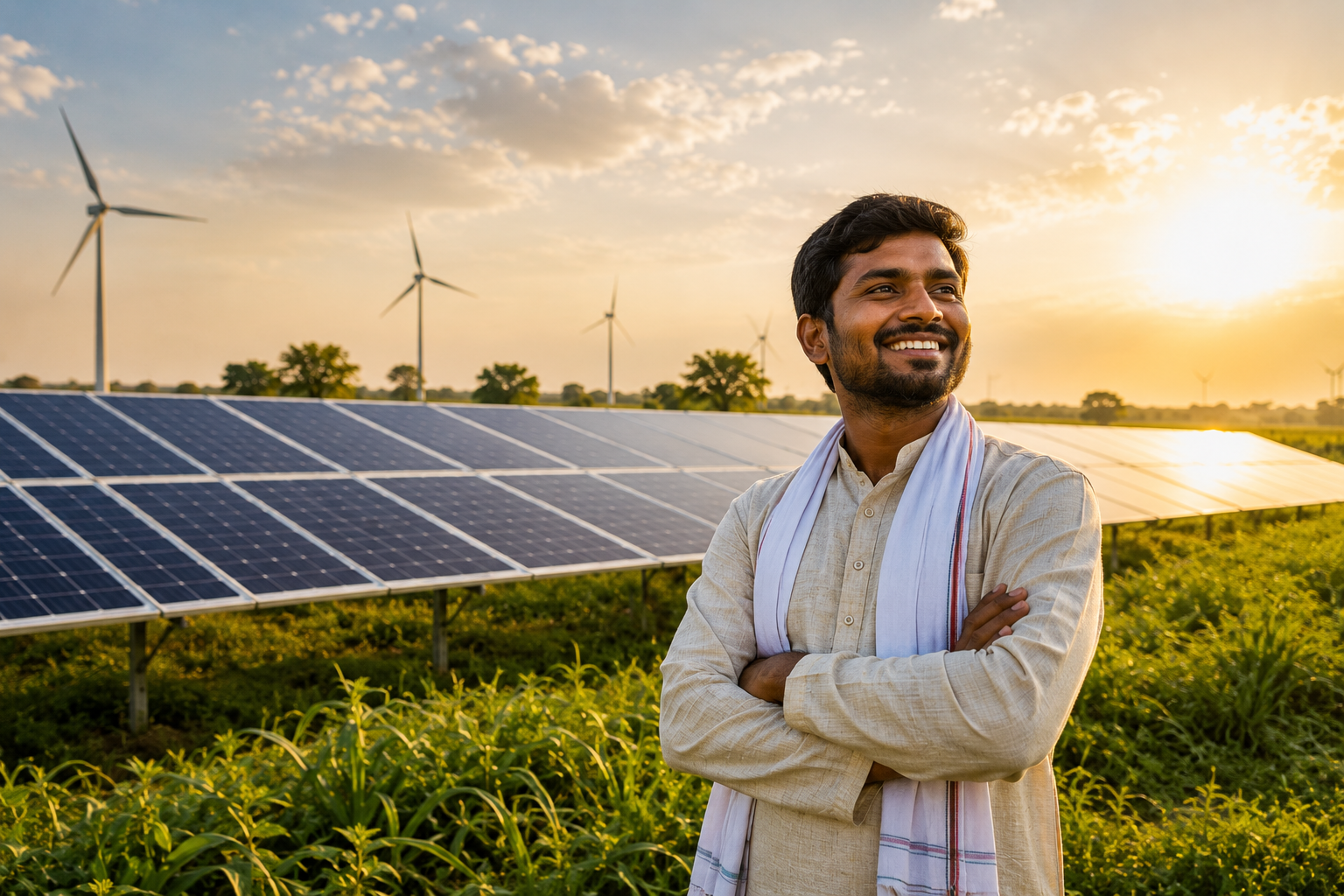
India has made significant commitments under the Paris Agreement — targeting net zero emissions by 2070 and 50 percent of electricity generation from non-fossil fuel sources by 2030. India’s installed renewable energy capacity has grown dramatically, with solar power leading the expansion. The International Solar Alliance, headquartered in India, is working to bring affordable solar energy to developing nations globally. These are genuine achievements that deserve recognition in the international climate conversation.
But commitments and targets are not the same as action on the ground. India’s emissions rose 7 percent in 2024. Coal continues to dominate India’s electricity generation. Policy responses to heatwaves remain reactive — schools are closed, advisories are issued, temporary water distribution is organised — but none of these measures address the root causes or protect workers who cannot afford to stay home. The gap between India’s climate ambitions and its climate actions is vast, and the communities suffering most from climate change are not the ones making energy policy decisions.
Three immediate priorities stand out for India’s climate response. First — a national heatwave protection law that legally mandates outdoor work restrictions above 43 degrees Celsius, similar to laws governing workplace safety. Second — accelerated mangrove restoration along all 7,500 km of India’s coastline, which costs a fraction of the infrastructure damage that unprotected coastlines will suffer. Third — crop insurance reform that automatically compensates farmers for climate-related losses without requiring them to prove damage through bureaucratic processes that most rural farmers cannot navigate. Climate change is already here — the question is whether India’s policy response will arrive before the damage becomes irreversible.
The Human Face of Climate Change in India
Behind every climate statistic in India is a human story that the data cannot fully capture. A fisherwoman in coastal Andhra Pradesh whose boat cannot go out because cyclone frequency has doubled. A construction worker in Delhi who loses income every time the temperature crosses 45 degrees and the site is shut down. A child in a Rajasthan village walking 4 kilometres for water because the community well dried up three years ago and never refilled. A family in the Sundarbans whose island home is 30 centimetres shorter above sea level than it was when their parents were born.
These are not statistics. They are the present reality of climate change in India — a country that contributed less than 4 percent of historical global emissions but hosts 18 percent of the world’s population in some of its most climate-vulnerable geography. India did not cause this crisis at the scale that industrialised nations did. But India will pay for it with its land, its water, its food, its economy and its people — unless the global response to climate change becomes faster, fairer and far more serious than it has been so far.
Frequently Asked Questions
How is climate change affecting India right now in 2026?
Climate change in India is currently causing record heatwaves with temperatures crossing 46 degrees Celsius, agricultural droughts affecting over one million square kilometres of farmland, accelerating sea level rise threatening coastal cities like Mumbai and Kolkata, and increasingly erratic monsoons that alternate between drought and devastating floods within the same season.
Which Indian cities are most at risk from sea level rise?
Mumbai, Kolkata, Chennai, Kochi and Visakhapatnam face the highest risk from sea level rise due to climate change in India. Kolkata faces a projected rise of 35 cm by 2050 due to natural delta subsidence, while Mumbai could see 28 cm of rise. The World Bank estimates ₹1.5 to 2 lakh crore in annual property losses across India by 2040.
How does climate change affect Indian farmers?
Climate change in India creates compound crises for farmers — heatwaves and droughts destroy crops before monsoon, then erratic heavy rainfall floods fields during planting season. The loss of predictable seasonal patterns makes crop planning nearly impossible. Agricultural drought conditions in 2026 affected over one million square kilometres of Indian farmland, devastating livelihoods across multiple states.
What is India doing about climate change?
India has committed to net zero emissions by 2070 and 50 percent renewable electricity by 2030 under the Paris Agreement. India leads the International Solar Alliance and has rapidly expanded solar power capacity. However, India’s emissions rose 7 percent in 2024 and coal remains the dominant energy source, revealing a significant gap between climate commitments and current ground-level action on climate change in India.
How much could climate change cost India economically?
The economic cost of climate change in India is already massive. The 2026 heatwave caused an estimated $194 billion in lost labour productivity. The World Bank projects that climate change could reduce India’s GDP by 6.4 to 10 percent by 2100 and push 50 million Indians into poverty. Productivity losses from extreme heat alone could reach 4.5 percent of GDP by 2030.