
The Rise of the Marathas
📚 Chapter Index
🎯 Learning Objectives — After this chapter you will be able to:
- Understand who the Marathas were and their cultural roots in the Deccan plateau
- Describe the rise of Chhatrapati Shivaji and his vision of Swarājya
- Explain key military strategies like guerrilla warfare and the role of forts and navy
- Understand Maratha administration — civilian, military, maritime, judicial and trade
- Know the contributions of Maratha women like Tarabai and Ahilyabai Holkar
- Appreciate the cultural contributions of the Marathas including the Thanjavur legacy
- Analyse the Maratha legacy and their role in India’s freedom movement
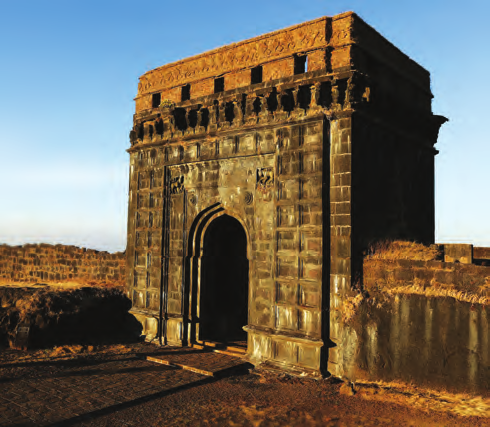
Fig 3.1 — Raigad Fort, Maharashtra, where Chhatrapati Shivaji Maharaj was crowned in 1674
- The Marathas are a group of people native to the Deccan plateau, more specifically present-day Maharashtra.
- They are identified with the language they speak — Marathi — which has had a rich and continuous literary history since the 12th century.
- During the 13th century, most of Maharashtra was ruled by the Yadava dynasty with Devagiri (present-day Daulatabad) as its capital.
- In the early 14th century, the Yadava dynasty was overcome by the Khilji Sultanate from Delhi.
- Amidst political changes, cultural traditions continued — particularly those related to bhakti (devotion to the divine or a particular deity).
- Between the 7th and the 17th centuries, saints and seekers from several parts of India preferred the path of bhakti — composing devotional songs and poetry in the languages of the masses.
- In Maharashtra, many saints like Dnyaneshwar, Namdev, Tukaram, Ramdas etc. gained popularity — they helped translate important texts like the Upanishads and the Bhagavad Gītā into Marathi.
- Some saints also focused on social organisation and political awareness — similar to the Sikh gurus.
- As a result, the society acquired a solid cultural foundation, which later helped the Marathas organise themselves into a political power.
📝 Questions — Who are the Marathas?
Who are the Marathas? Where are they native to and what language do they speak?
Show Answer
Name four Maratha saints and explain how they helped society acquire a solid cultural foundation.
Show Answer
How did the bhakti movement contribute to the political rise of the Marathas? Explain the connection.
Show Answer
Why was the Yadava dynasty’s fall to the Khilji Sultanate significant for Maharashtra’s history?
Show Answer
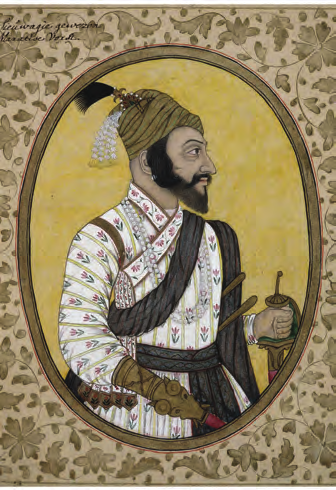
Fig 3.5 — A painting of Shivaji made in the 1680s (British Museum)
- In 1630, Shivaji was born in the Bhonsle clan to Shahji and Jijabai.
- Shahji served the Deccan sultanates and was often away from his family — Shivaji grew up in his jāgīr at Pune under the watchful eyes of Jijabai and some trusted officials.
- At just 16 years, Chhatrapati Shivaji launched military campaigns — first consolidating his hold over the Pune region by capturing neglected forts and strengthening their defences.
- His vision of a sovereign kingdom or ‘Swarājya’ grew over the years, extending to political, economic and cultural aspects.
- He established a navy to secure access to the resources of coastal regions — a truly revolutionary step, as neither the Bijapur Sultanate nor the Mughal Empire had a full-time naval force.
- Chhatrapati Shivaji used guerrilla warfare — using small groups of people with speed, surprise and knowledge of the terrain to defeat bigger armies.
- He killed the veteran Bijapur general Afzal Khan at the foot of Pratapgad fort using the wāgh nakh (tiger’s claw weapon).
- He raided Shaista Khan’s camp at night with only a few soldiers — the Khan barely escaped, losing a few fingers. This daring raid resembles the modern-day surgical strike.
- As retaliation for three years of attacks, Chhatrapati Shivaji sacked Surat — a wealthy Mughal port in Gujarat — obtaining enormous treasure worth almost one crore rupees. These events appeared in the London Gazette.
- Aurangzeb sent Rajput general Jai Singh to defeat Shivaji — he had to concede defeat at Purandar Fort and give up part of his kingdom.
- At Agra, Aurangzeb put Shivaji under house arrest — but Shivaji escaped by hiding in baskets of fruits and sweets along with his son Sambhaji. Aurangzeb could never capture him again.
- In 1674, Chhatrapati Shivaji was coronated with full Vedic rites at Raigad fort — his formal title was ‘Shri Raja Shiva Chhatrapati’; he started his own era, the Rājyābhisheka shaka.
- After coronation, he embarked on the dakshina-digvijaya (conquest of the South) — including present-day northern Tamil Nadu and parts of Karnataka.
- While in the South, he forbade the Dutch from trading slaves — showing his deep concern for his subjects.
- A fever claimed Chhatrapati Shivaji’s life when he was fifty — the Europeans compared him with ancient generals like Alexander.
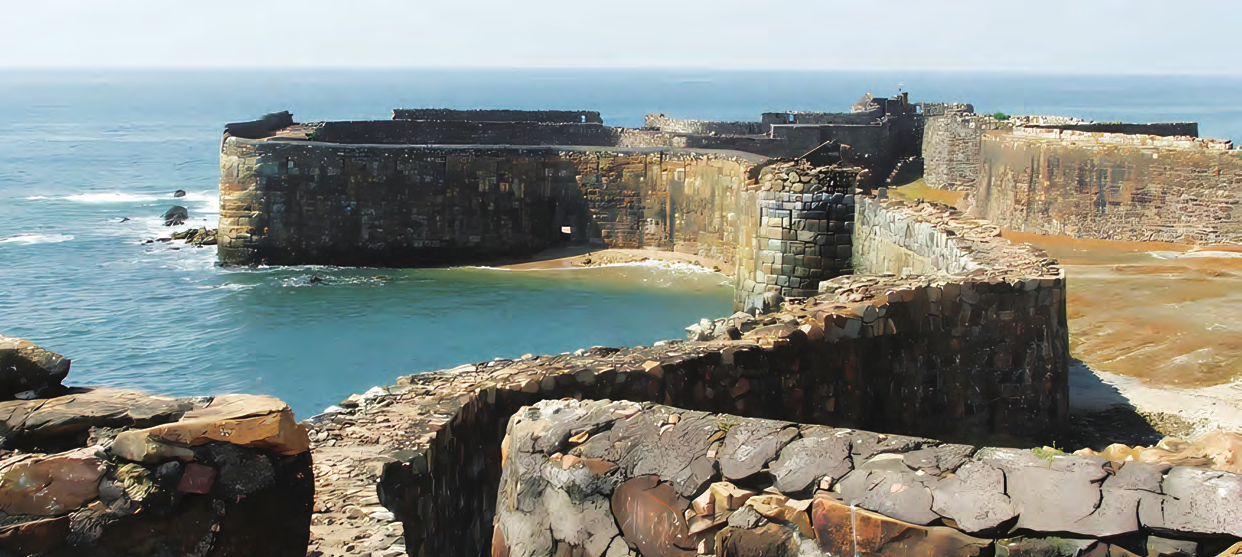
Fig 3.6 — The Sindhudurg Fort near the Maharashtra-Goa border, one of the naval fortifications built by the Marathas
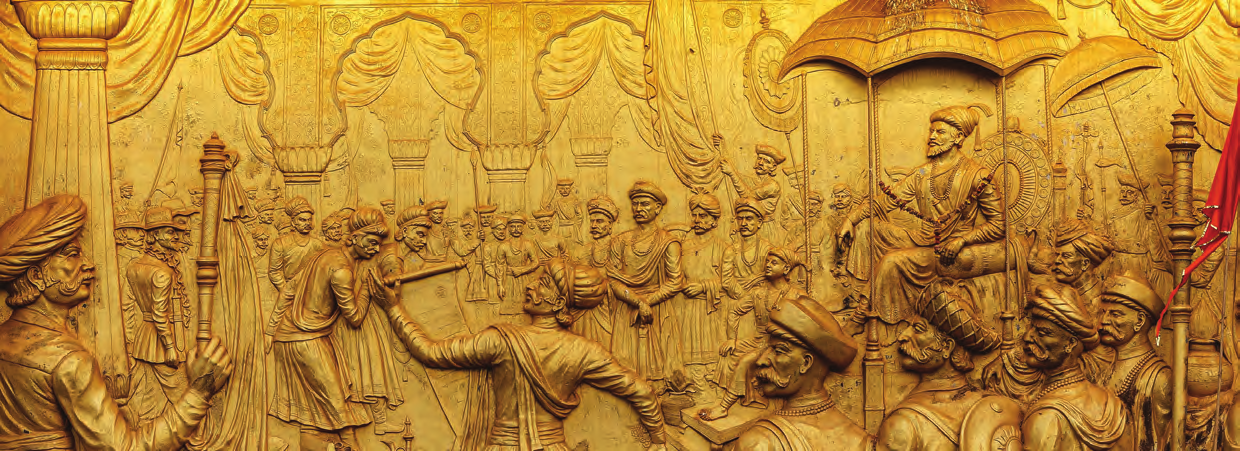
Fig 3.8 — A court scene with Chhatrapati Shivaji on his throne receiving visitors (panel in Chhatrapati Shivaji Maharaj Park, Mumbai)
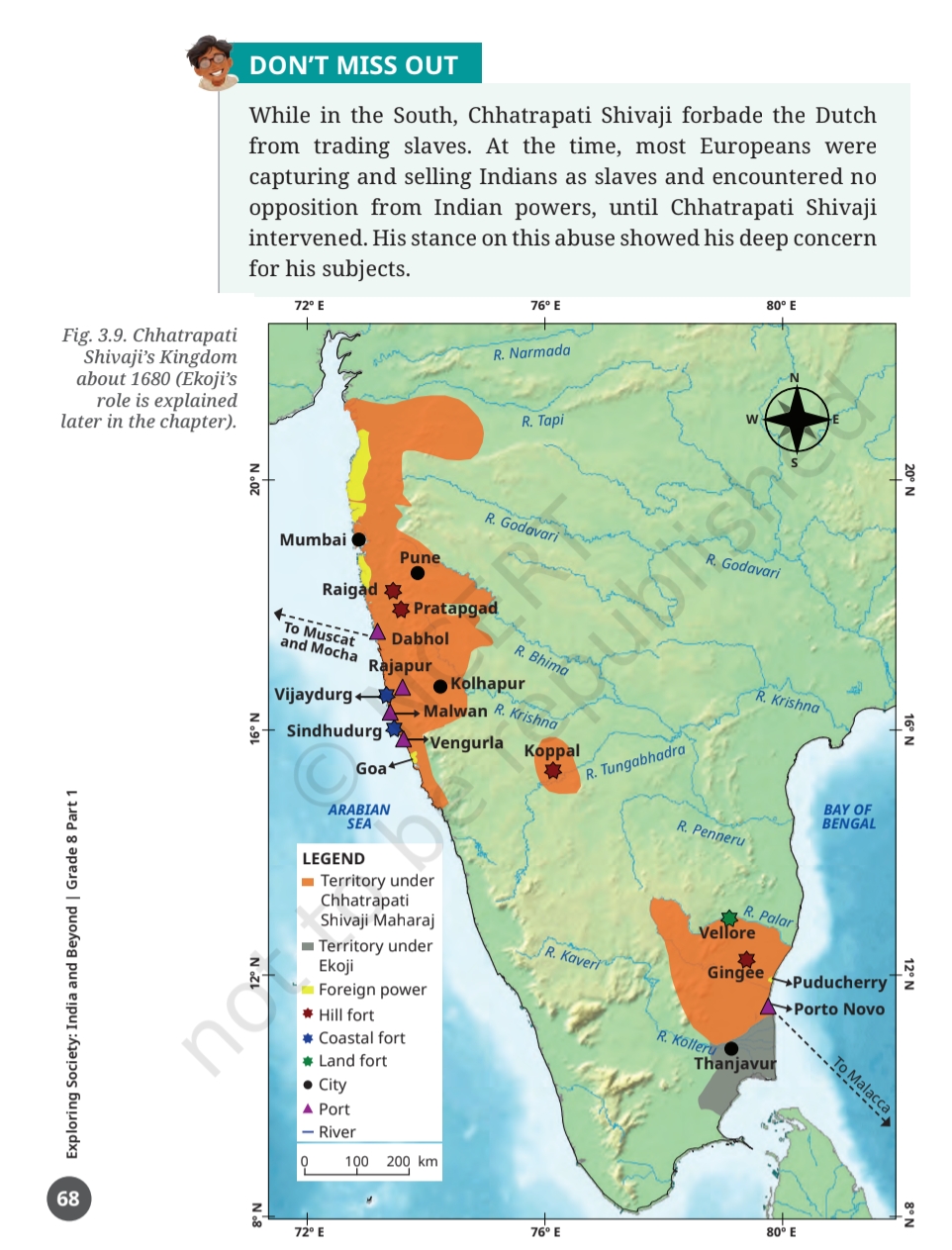
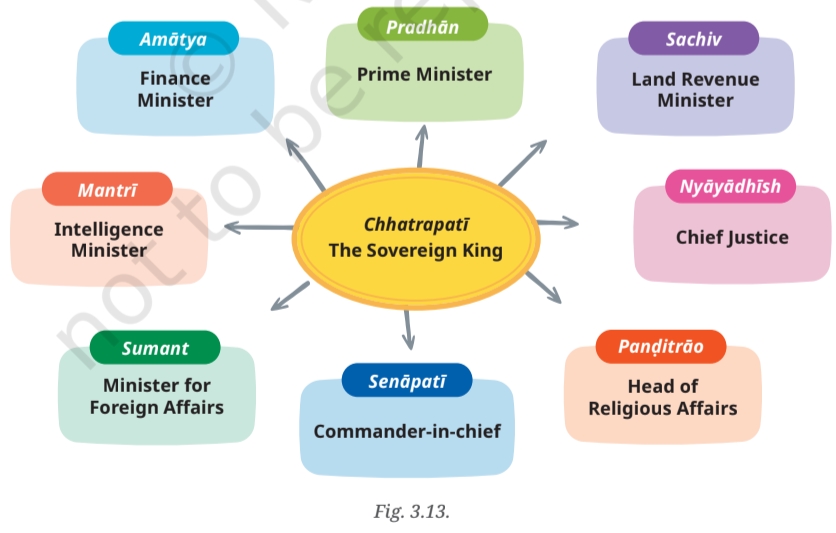
Fig 3.9 — Chhatrapati Shivaji’s Kingdom about 1680
📝 Questions — Rise of Chhatrapati Shivaji
When and where was Chhatrapati Shivaji born? Who was his mother?
Show Answer
What is guerrilla warfare? How did Chhatrapati Shivaji use it effectively against bigger armies?
Show Answer
Why was Shivaji’s establishment of a navy considered a revolutionary step? Compare it with the Mughals and the Bijapur Sultanate.
Show Answer
What does Shivaji’s escape from Agra in baskets tell us about his character and intelligence?
Show Answer
- Chhatrapati Shivaji had two sons — Sambhaji and Rajaram. After Shivaji’s death, Sambhaji became the Chhatrapati.
- Aurangzeb invaded the Deccan and conquered the Bijapur (Adil Shahi) and Golconda (Qutb Shahi) Sultanates. He then captured Sambhaji, tortured him brutally and executed him. He also captured Raigad, the Maratha capital.
- After Sambhaji, Rajaram became the Chhatrapati and fled to Gingee (present-day Tamil Nadu) — spreading the Mughal-Maratha conflict to south India.
- The Marathas staunchly defended their fortresses and often had the upper hand over the Mughals. Aurangzeb was unable to leave the Deccan and died without having succeeded in subduing the Marathas.
- The Marathas, led by Tarabai (Rajaram’s queen), made large-scale inroads into Mughal territories, eventually conquering large parts of India.
- The centralised state from Shivaji’s time gave way to a more decentralised structure — the Peshwa (a Persian term for ‘prime minister’) wielded great influence, even over the Chhatrapati himself.
- Peshwa Bajirao I and his son Nanasaheb Peshwa were instrumental in the pan-Indian expansion of the Marathas.
- In their northward expansion, the Marathas briefly controlled Lahore, Attock and even Peshawar (modern-day Pakistan).
- Despite suffering a disastrous defeat at the Battle of Panipat in 1761, they quickly recovered during the time of Peshwa Madhavrao I.
- Under Mahadji Shinde (Mahadji Scindia), they recaptured Delhi in 1771, which remained under their control till the British captured it three decades later.
- Three Anglo-Maratha wars were fought between 1775 and 1818. Owing to Maratha internal disunity and superior British organisational and technological abilities, the British succeeded in ending Maratha power.
- “The British took India from the Marathas more than from the Mughals or any other power.”
- Nana Phadnavis, a powerful official under the Peshwas, is credited with organising the first pan-Indian anti-British alliance — uniting even old adversaries like Hyder Ali of Mysore and the Nizam of Hyderabad.
📝 Questions — The Marathas after Shivaji
Who was the Peshwa? Name two important Peshwas who helped expand the Maratha Empire.
Show Answer
What happened at the Battle of Panipat in 1761? How did the Marathas recover from this defeat?
Show Answer
Why does the chapter say “The British took India from the Marathas more than from the Mughals or any other power”? What evidence supports this?
Show Answer
How did Aurangzeb’s prolonged campaign against the Marathas weaken the Mughal Empire?
Show Answer
- Chhatrapati Shivaji instituted a relatively centralised administration for his kingdom.
- He abolished hereditary posts (generally practised under the Sultans or the Mughals) and land assignments — paid a salary to every government official out of the state treasury.
- Many officials were periodically transferred — ensuring they would not have enough power to dictate terms to the king.
- He gave pensions to widows of soldiers who died in battles, even offering military posts to their sons — demonstrating his care for soldiers and their families.
- He had an aṣhṭa pradhāna manḍala (council of eight ministers):
- Pradhān — Prime Minister
- Amātya — Finance Minister
- Sachiv — Land Revenue Minister
- Mantrī — Intelligence Minister
- Sumant — Minister for Foreign Affairs
- Senāpatī — Commander-in-chief
- Panḍitrāo — Head of Religious Affairs
- Nyāyādhīsh — Chief Justice
- The Marathas levied taxes called chauth (25 per cent) and sardeshmukhi (an additional 10 per cent) from provinces not directly under them — in return, the Marathas protected those provinces.
- Chhatrapati Shivaji minted gold and copper coins in his own name in Devanagari script — signifying his sovereignty and asserting his cultural identity.
- The Maratha armed forces were divided into three parts — infantry, cavalry and navy.
- The cavalry was made up of two types:
- Bārgīrs — horses and equipment paid for by the state
- Shiledārs — horses and equipment paid for by the soldiers themselves
- In the 18th century, the Marathas noticed the superiority of European-style disciplined troops and artillery — tried to raise and recruit such troops; Mahadji Shinde had a large European-style army.
- Swords and lances were the preferred weapons of the Marathas — they also used guns and rockets. By 1770, metal tube rockets were also being used.
- Forts were the core of Maratha power — as Ramachandrapant Amatya wrote in Ādnyāpatra: “Forts are the core of the state… it was due to forts that the [Maratha] state survived despite decades of onslaught.”
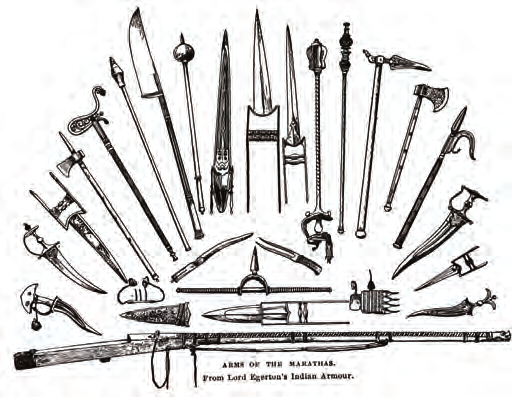
Fig 3.15 — Some of the weapons used by the Marathas
- Chhatrapati Shivaji created a navy to secure the west coast.
- In the 18th century, Kanhoji Angre guided the Marathas to victory in many naval battles — through clever use of geography and battle tactics, despite Maratha ships not being as technologically advanced as European ones.
- Europeans forced Indians to purchase naval trade passes (cartaz in Portuguese) — any ship without a pass was confiscated.
- The Marathas challenged this practice and started demanding passes from the Europeans themselves — who showed their frustration by labelling Kanhoji Angre a ‘pirate’!
- In 1665, four ships from Shivaji’s fleet reached Muscat (Oman) — on hearing that Shivaji’s navy contained more than a hundred ships, the ruler of Muscat retreated inside the harbour.
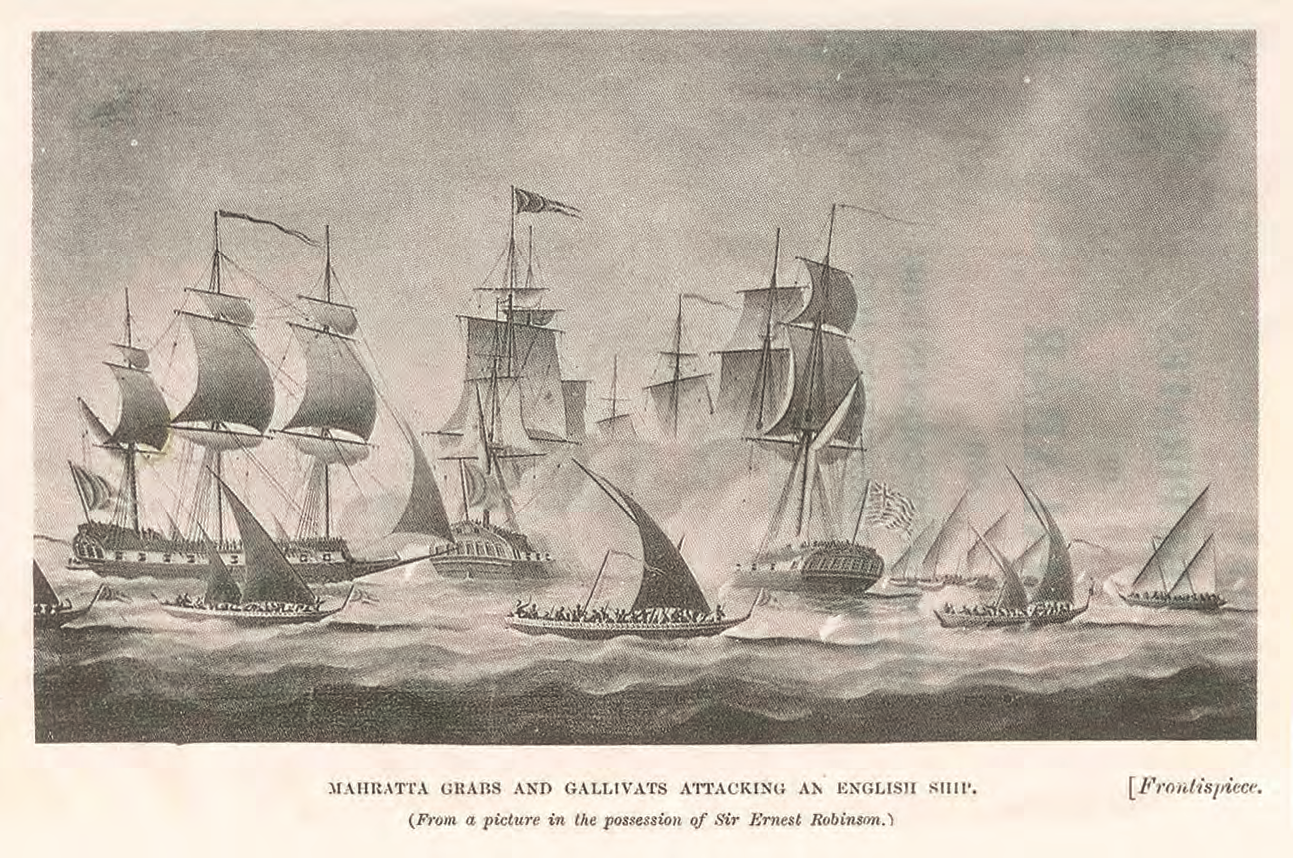
Fig 3.16 — Maratha ships attacking English ships
- The Marathas had an efficient judicial system, remarkable for its moderation in using capital punishment (the death penalty).
- The panchāyat was a local gathering of officials and prominent men — the main body that delivered justice.
- An appeal could be made to a Maratha chief in case of an unsatisfactory verdict.
- The kotwāl (police) was deployed in prominent towns like Pune and Indore to ensure law and order.
- Chhatrapati Shivaji encouraged trade and actively participated in maritime foreign trade himself.
- He and his officials had their own ships, regularly sent to ports as far away as Mocha (Yemen), Muscat (Oman), and Malacca (Malaysia).
- Roads were constructed and maintained; a network of ferries was maintained for riverine transport in places like Odisha; bridges were built over rivers and small streams.
📝 Questions — Maratha Administration
What were chauth and sardeshmukhi? What percentage were they?
Show Answer
What was the aṣhṭa pradhāna manḍala? Name any four ministers and their roles.
Show Answer
How did Shivaji’s abolition of hereditary posts and periodic transfer of officials strengthen his administration?
Show Answer
Why did Europeans call Kanhoji Angre a ‘pirate’? Was this label fair? Explain.
Show Answer
- The Marathas contributed substantially to India’s cultural developments.
- Chhatrapati Shivaji’s vision of Swarājya is evident in his seal, which carried a Sanskrit inscription — a notable departure from the prevalent Persian seals: “This seal of Chhatrapati Shivaji, the son of Shahji, waxing like the new moon, revered by the world, reigns for the welfare of the people.”
- He commissioned a treatise called Rājya-Vyavahāra-Koṣha — providing Sanskrit equivalents for prevalent Persian words used in diplomatic exchanges; the percentage of foreign loanwords in Maratha diplomacy decreased considerably.
- Chhatrapati Shivaji was a devout Hindu who respected other religions while upholding his own — his saffron-coloured flag was adopted by all Marathas.
- He rebuilt desecrated temples, promoted Sanskrit and Marathi literature, religious institutions and traditional arts.
- The Moḍī script (a cursive form of Devanagari) was the main script used by Marathas for their correspondence.
- The Bhonsles of Nagpur supported local culture and revived the worship of deity Jagannath at Puri in Odisha.
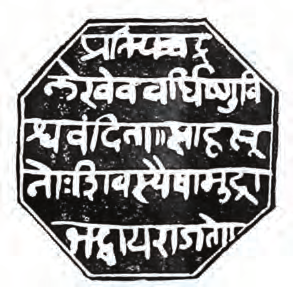
Fig 3.18 — Tarabai in battle (painting by M.V. Dhurandhar)
- Tarabai was a fearless Maratha warrior queen who ruled in the early 18th century after the death of her husband Rajaram.
- Realising that with the Mughal army in the Deccan, north India was unprotected — she organised large Maratha armies and sent them to invade Mughal territories in the north.
- She was the architect of the northward Maratha expansion — her military strategy and tenacity outsmarted the Mughal Empire and preserved Maratha independence during a critical period.
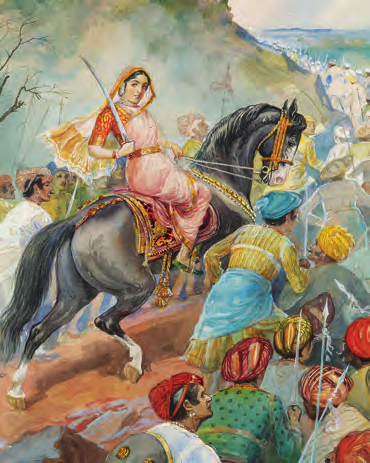
Fig 3.19 — A postage stamp commemorating Ahilyabai Holkar
- Ahilyabai Holkar was a scion of the Holkar dynasty — during the 18th century, this dynasty ruled a kingdom around present-day Indore in central India.
- Even after losing her husband and son, she bravely governed the state for thirty years, administering it wisely while caring for the common people.
- She built and restored hundreds of temples, ghats, wells and roads throughout India — from Kedarnath in the north to Rameswaram in the south.
- Most famously, she rebuilt the Kashi Vishwanath temple in Varanasi (destroyed by Aurangzeb) and the Somnath temple in Gujarat (destroyed by Mahmud of Ghazni).
- She is also credited with promoting the Maheshwar weaving industry in Madhya Pradesh — revitalising traditional handloom crafts that continue to thrive today.
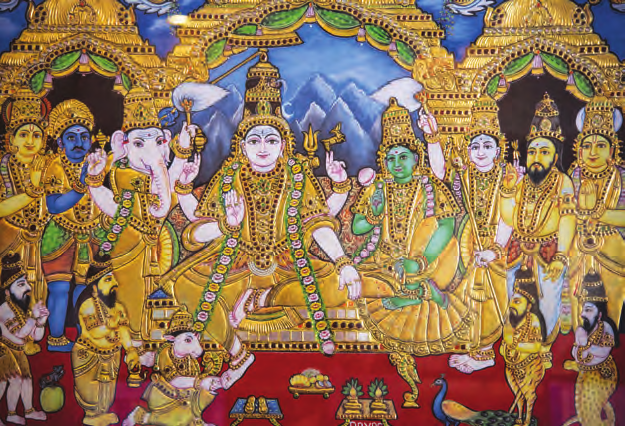
Fig 3.21 — A traditional Thanjavur style painting, featuring delicate gold foil work; this style flourished under the patronage of the Marathas
- Ekoji, the half-brother of Chhatrapati Shivaji, conquered the Thanjavur region (present-day Tamil Nadu) in the late 17th century — marking the beginning of Maratha rule in the area.
- The Thanjavur Marathas helped create a syncretic culture — rich and full of innovation; they were great patrons of the arts, and many rulers themselves were poets and dramatists.
- Of all the Thanjavur Maratha rulers, the contributions of Serfoji II are the most notable:
- Well-versed in many Indian and European languages — wrote a Marathi play Devendra Kuravanji describing world geography
- It was during his time that modern Carnatic music took shape and the early stages of Bharatanatyam developed
- Established the Dhanwantari Mahal — a centre of medicine offering free treatment using both Indian and Western medicine
- Started a printing press — the first such example in India by a native ruler
- Got the history of the Bhonsle family inscribed on the walls of the Brihadishwara temple at Thanjavur — one of the largest single inscriptions in India
- The cultural environment of Thanjavur was multilingual — local Tamil culture, Telugu culture of the former rulers, and Marathi culture interacted with each other freely.
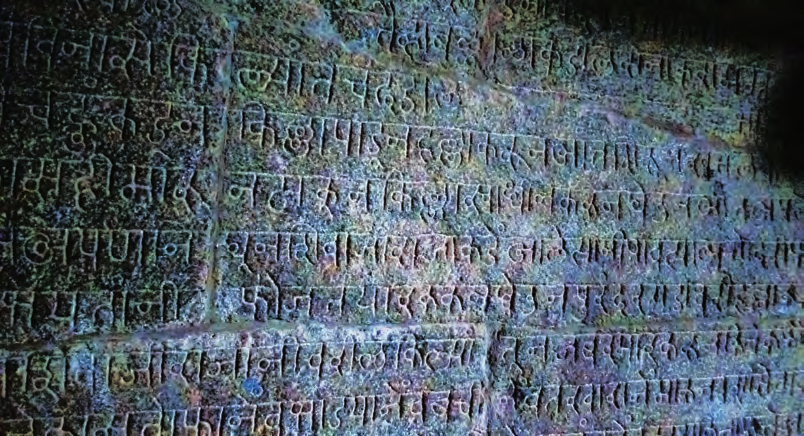
Fig 3.22 — Marathi inscription on a wall of the Brihadishwara temple recording the history of the Bhonsle family
📝 Questions — Cultural Revival
What was the Rājya-Vyavahāra-Koṣha? Why did Shivaji commission it?
Show Answer
What were the contributions of Serfoji II to culture and medicine in Thanjavur?
Show Answer
How did Ahilyabai Holkar demonstrate that a woman could be an effective and compassionate ruler?
Show Answer
What does the syncretic culture of Thanjavur tell us about Maratha rule in south India?
Show Answer
- The Maratha rule challenged Mughal dominance and established the largest Indian empire before the British took over the Subcontinent — controlling much of central and northern India.
- They set up a new way of governing with an efficient administration and revived local Hindu traditions without religious discrimination.
- Their brave fight against oppressive rule and foreign power was driven by the fiery ideal of Swarājya.
- Later it inspired many Indians to believe they could govern themselves — planting the early seeds for India’s freedom movement.
- Key summary points:
- Chhatrapati Shivaji Maharaj founded the Maratha kingdom in the 17th century — its decades-long resistance to Mughal power helped in its pan-Indian expansion in the 18th century
- The British captured India effectively from the Marathas more than from any other Indian power
- Forts were the core of Maratha state — the Marathas controlled hundreds of forts, strategically strengthening their control
- Their formidable navy resisted European naval supremacy for quite some time despite lack of the latest technology
- The Marathas inspired a new cultural confidence amongst Indians in various regions, contributing to cultural revival and innovation
📝 Questions — The Maratha Legacy
Name any three aspects of the Maratha legacy mentioned in the chapter.
Show Answer
How did the concept of Swarājya inspire India’s freedom movement?
Show Answer
Analyse how geography (particularly mountains and coastlines) guided Maratha military strategy and state formation.
Show Answer
What do you think was the most important contribution of the Marathas to Indian history? Give reasons.