

India has one of the most complicated legal systems in the world — not because of one law, but because of many different laws for different religions. A Hindu woman and a Muslim woman going through a divorce in the same city, in the same court, on the same day — face completely different legal outcomes. One is governed by the Hindu Marriage Act. The other by Muslim Personal Law. This is the reality that the Uniform Civil Code — UCC — promises to change. It is also the reality that makes UCC one of the most explosive political debates in Indian history. This is everything you need to know — the truth that both supporters and opponents would rather you did not fully understand.
⚖️ The Hidden Legal Reality That Every Indian Lives With But Nobody Talks About
India does not have one civil law. It has many — divided by religion.
Hindus, Sikhs, Buddhists and Jains are governed by the Hindu Marriage Act, Hindu Succession Act, and Hindu Adoption and Maintenance Act. Muslims are governed by Muslim Personal Law — based on Sharia — for marriage, divorce, inheritance and adoption. Christians are governed by the Indian Christian Marriage Act and Indian Divorce Act. Parsis have their own Parsi Marriage and Divorce Act.
This patchwork of personal laws creates real, measurable inequality. A Muslim man can legally have up to four wives under personal law — a Hindu man cannot. A Hindu woman has equal inheritance rights under the Hindu Succession Act (amended 2005) — a Muslim woman inherits significantly less than her male counterparts under Muslim personal law. A Christian couple seeking divorce must wait two years of separation — a Hindu couple can divorce on grounds of cruelty or desertion without the same wait.
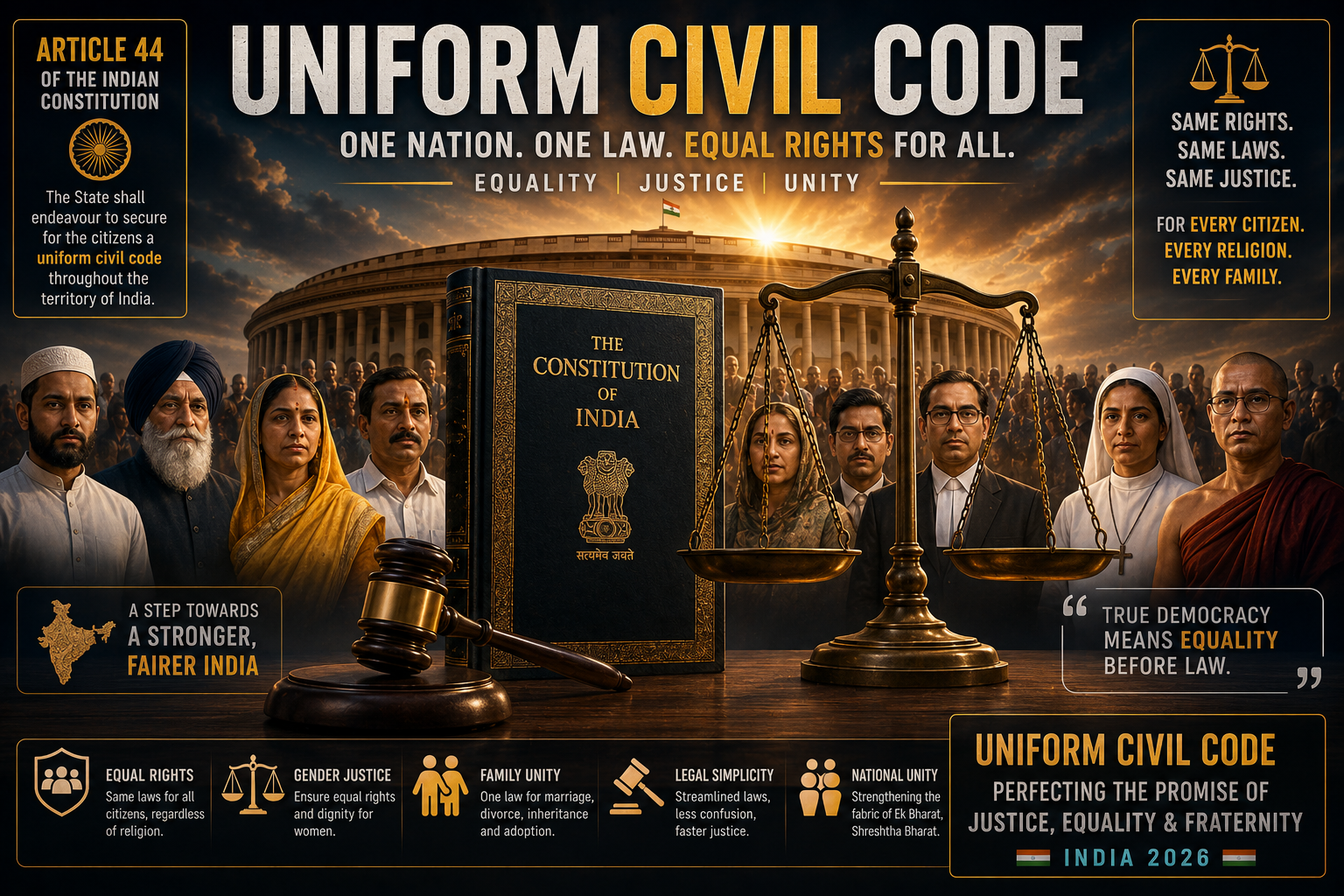
The Uniform Civil Code refers to a single set of laws governing personal matters such as marriage, divorce, adoption, inheritance, and succession for all citizens of India — regardless of religion. It would replace all these different personal laws with one common civil code applicable to every Indian equally.
📜 The Constitutional Promise That Has Waited 75 Years
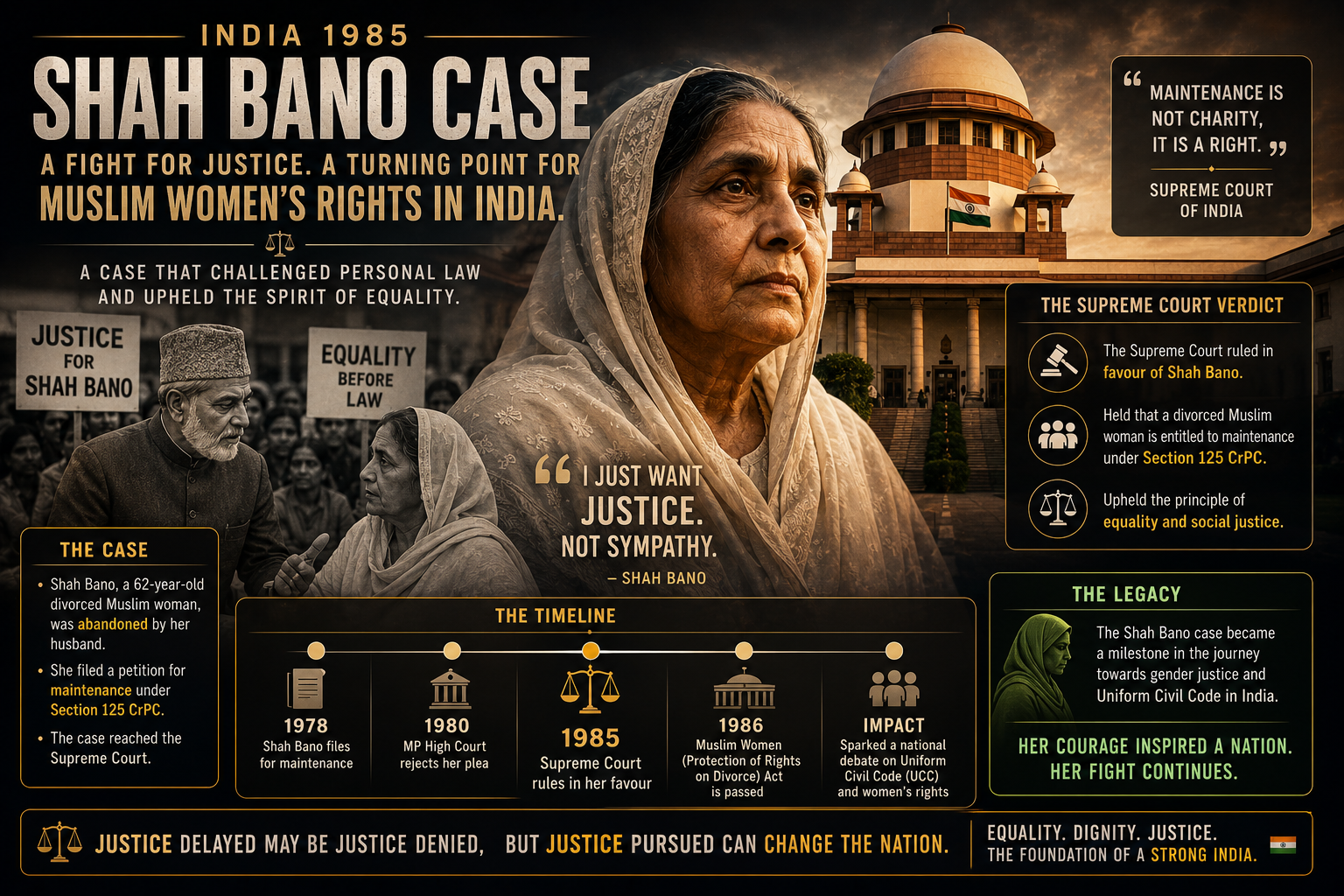
The Uniform Civil Code is not a new idea. It was written into India’s Constitution in 1949 — 75 years ago.
Article 44 of the Indian Constitution — under Directive Principles of State Policy — states that the State shall endeavour to secure a Uniform Civil Code for citizens throughout the territory of India. The critical word is “endeavour.” Unlike Fundamental Rights, Directive Principles are not enforceable by courts. They are aspirations — goals the state should work toward, not legal obligations it must fulfil.
Why did India’s founding fathers put UCC in the non-enforceable section?
The Constituent Assembly debated UCC intensely. Dr. B.R. Ambedkar and K.M. Munshi strongly advocated for it. But religious leaders raised serious concerns about infringement on religious freedoms — leading to its placement in the non-justiciable section of the Constitution. It was a political compromise — acknowledging the ideal while deferring its implementation to a future when India might be ready.
Seventy-five years later — India is still debating whether it is ready.
🔥 The Shah Bano Case — The Moment That Changed Everything
To understand why UCC became a political flashpoint, you need to understand what happened in 1985.
Shah Bano was a 62-year-old Muslim woman from Indore whose husband divorced her after 43 years of marriage by pronouncing triple talaq. He paid her the mandatory iddat maintenance of ₹3,000 and considered his legal obligations fulfilled. Shah Bano went to court asking for maintenance under Section 125 of the Criminal Procedure Code — the same law available to all Indian women regardless of religion.
What happened next is one of the most consequential political decisions in Indian history. The Rajiv Gandhi government — facing pressure from Muslim clerics and religious leaders — passed the Muslim Women (Protection of Rights on Divorce) Act 1986, which effectively overturned the Supreme Court ruling and excluded Muslim women from Section 125 protections.
The Shah Bano case became the defining moment for UCC debate in India. It showed how religious personal laws could be used to deny women rights available to other Indian citizens — and how political calculations could override judicial rulings on gender justice.
🏔️ Uttarakhand Did It First — What Actually Changed and What Did Not
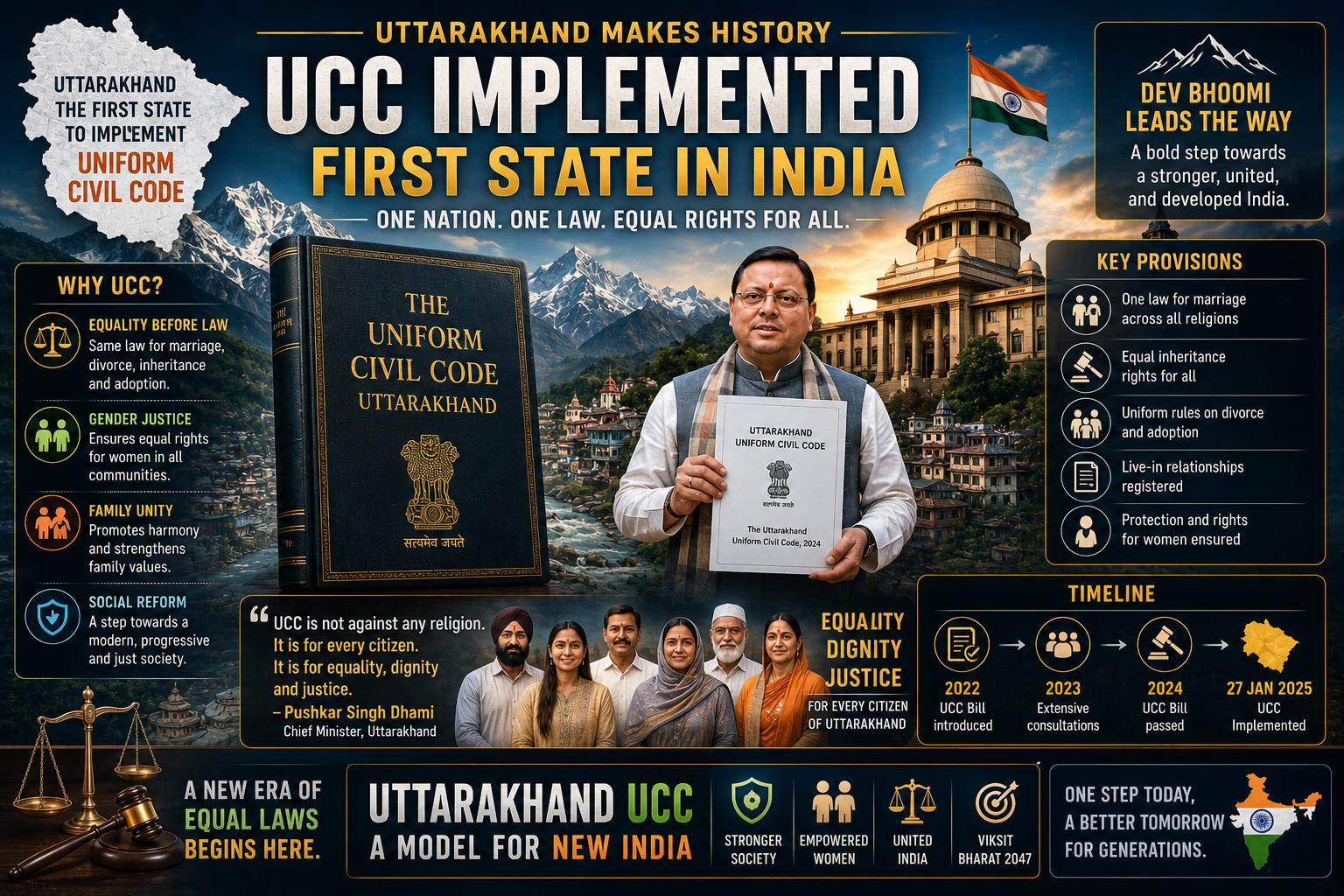
In February 2024, Uttarakhand became the first Indian state to pass and implement a Uniform Civil Code — making history after 75 years of debate.
Key provisions of the Uttarakhand UCC include: prohibition of polygamy for all communities, mandatory registration of marriages and live-in relationships, equal inheritance rights for daughters and sons, abolition of triple talaq within the state, and uniform divorce procedures regardless of religion.
One significant exception: the UCC does not apply to Scheduled Tribes of Uttarakhand — preserving their customary practices. This exception reveals the political difficulty of truly uniform application.
After Uttarakhand, Assam became the third state to pass a UCC Bill — proposing a polygamy ban and mandatory live-in registration. The BJP’s stated goal is a national UCC — but the path from state-level implementation to national law is considerably more complex.
🤔 The Arguments Both Sides Make — And What They Are Not Telling You
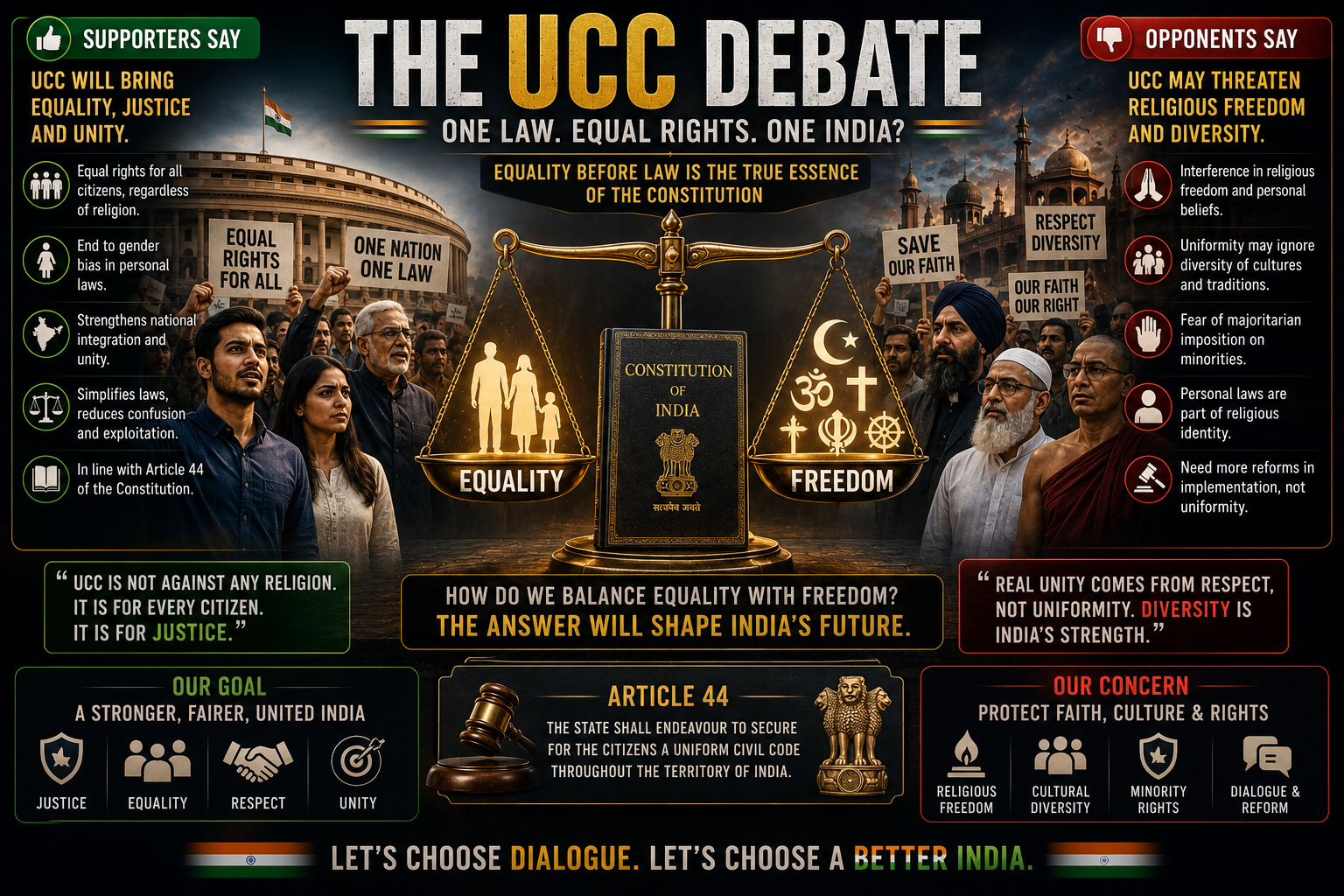
The case FOR UCC — what supporters argue:
Gender equality is the strongest argument. Under Muslim personal law, a woman can receive significantly less inheritance than her brother. Under some interpretations, a husband can divorce instantly while a wife faces a lengthy process. A UCC would give every Indian woman — regardless of her religion — the same legal protections in marriage, divorce and inheritance.
National integration is the second argument. Having different laws for different citizens based on religion creates a psychological division — an “us and them” in the legal system itself. A UCC would make every Indian equal before the same civil law.
Secularism is the third argument. A truly secular state should not govern citizens differently based on their religion. The Indian state taxes all citizens equally, drafts all citizens for jury duty equally, and prosecutes all citizens under the same criminal law. Why should civil matters like marriage and inheritance be different?
The case AGAINST UCC — what opponents argue:
Religious freedom is the primary objection. Article 25 guarantees freedom of religion, which is often cited by those opposing UCC, as personal laws are integral to religious practices. For many Muslims, Christians and tribal communities, personal law is not separate from religion — it is an expression of it.
The “whose code” question is the second objection. Critics ask — when India creates a “uniform” code, whose traditions will it be based on? If the UCC closely resembles Hindu personal law — as some critics argue the Uttarakhand version does — it is not truly uniform. It is Hindu law renamed.
The tribal rights question is the third objection. India’s Scheduled Tribes have unique customary practices around land, marriage, and inheritance that have been protected since independence. A national UCC risks erasing these protections — which is why even the Uttarakhand UCC exempts tribal communities.
🔮 Will India Get a National UCC — The Honest Answer
The BJP has promised a national UCC for decades. It is in every manifesto. But implementing it nationally faces challenges that state-level implementation does not.
Northeast India’s tribal communities have constitutional protections that a national UCC cannot simply override. Nagaland, Mizoram, and Meghalaya have specific protections for customary law in their statehood agreements. Any national UCC that attempts to apply to these regions would face immediate constitutional challenges.
The political arithmetic is also complex. The BJP does not have a majority in the Rajya Sabha. A constitutional amendment — which may be required for a comprehensive national UCC — needs a two-thirds majority in both houses. Getting that majority requires coalition partners whose vote banks include communities that strongly oppose UCC.
The 22nd Law Commission of India solicited public opinions on UCC in 2023. Its report — expected to guide national legislation — has not yet been formally released. The national UCC remains a stated aspiration rather than imminent legislation.
For more on India’s constitutional debates, read our complete guide on Article 370 — The Complete Truth and our analysis of India-China Border Dispute.
❓ FAQs
What is the Uniform Civil Code in simple words?
UCC means one common law for all Indians — regardless of religion — covering marriage, divorce, inheritance and adoption. Currently different religions follow different personal laws. UCC would replace all of them with a single secular law applicable to every citizen equally.
Which state has implemented UCC in India?
Uttarakhand became the first Indian state to implement UCC in 2024. Assam has also passed a UCC Bill. Uttarakhand’s UCC bans polygamy, mandates marriage registration, and gives equal inheritance rights — but exempts Scheduled Tribes from its provisions.
Does UCC violate religious freedom?
This is the central debate. Supporters argue UCC strengthens equality without touching religious worship or practice — it only covers civil matters like marriage and inheritance. Opponents argue personal law is inseparable from religious identity and imposing a common code violates Article 25’s guarantee of religious freedom.
What is Article 44 of the Indian Constitution?
Article 44 is a Directive Principle of State Policy that says the State “shall endeavour to secure for the citizens a uniform civil code throughout the territory of India.” It is not enforceable by courts — it is an aspiration the state is encouraged to work toward, not a legal obligation it must fulfil immediately.
📚 Sources
- Drishti IAS — India’s Uniform Civil Code Conundrum
- Vajirao Mandravi — Uniform Civil Code in India: Arguments For and Against
- Library of Congress — Uttarakhand Enacts Uniform Civil Code
- ALEC — India’s Uniform Civil Code: Legal Perspectives and Challenges
- Kodem Law — Uniform Civil Code in India: A Step Towards Equality
- PMF IAS — Uniform Civil Code: Need, Challenges and Different Views
- Business Standard — What is Uniform Civil Code: Latest News